


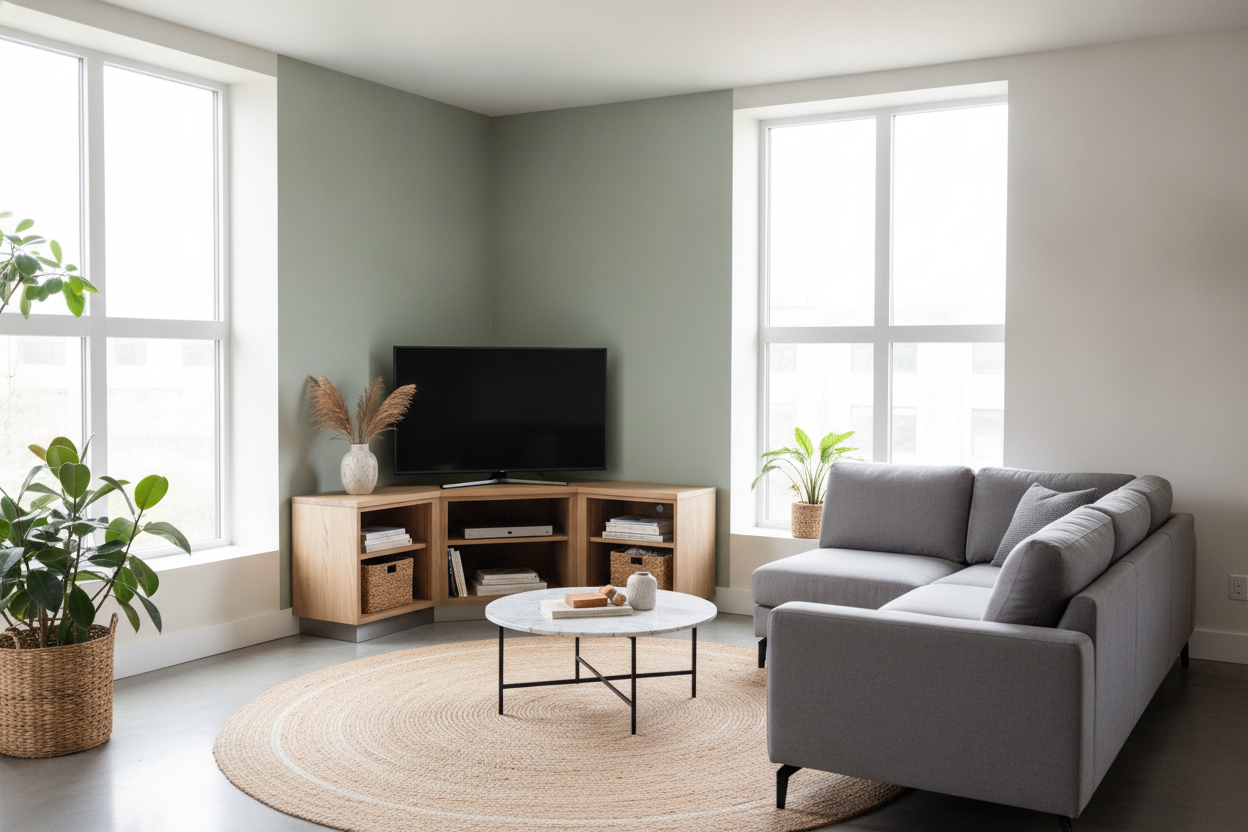
I once spent three hours moving a 7-piece sectional around a living room that was shaped like a shoebox. Every time I put the TV against the long wall, the couch ended up twelve feet away, making my 55-inch screen look like a postage stamp and leaving a weird, empty void in the middle of the rug. That is when I realized that corner television stands aren't just for people living in tiny studio apartments—they are a legitimate design solution for anyone dealing with a floor plan that feels like a bowling alley.
Quick Takeaways
- Fixes the 'tunnel effect' in long, narrow living rooms.
- Angled layouts naturally create a tighter, more intimate seating circle.
- Modern designs have ditched the bulky '90s look for slim, minimalist profiles.
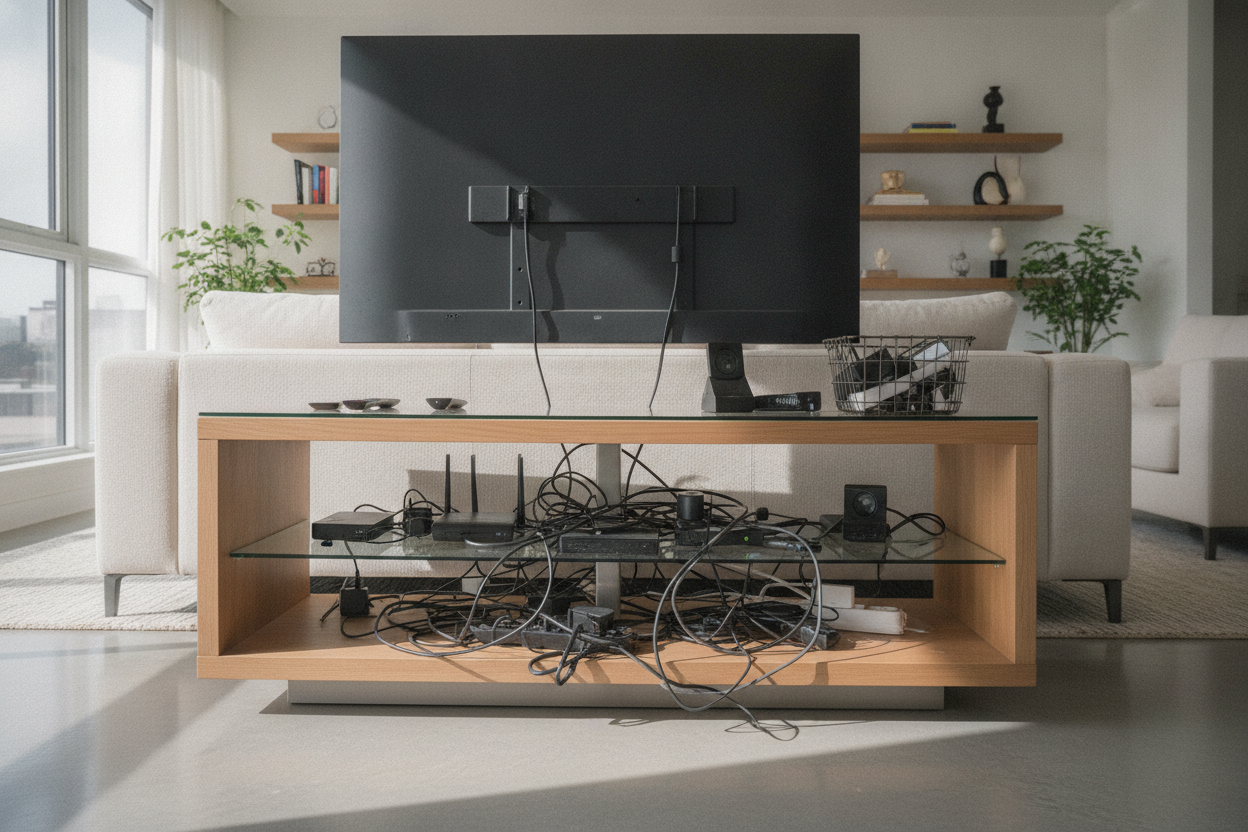
- Corner placement is the easiest way to hide messy cables and power strips.
The 'Bowling Alley' Living Room Problem
Most of us default to putting the TV on the widest wall because that is what the builder intended. But in a narrow room, this creates a disaster. You end up with a long, cold stretch of floor between you and the screen. It feels disconnected. You can't reach the coffee table, and the room feels like a hallway rather than a home.
When you force a standard rectangular console onto a long wall, you’re stuck with rigid 90-degree angles that highlight the room's limitations. It’s a layout that says 'I didn't know what else to do with this space.' Shifting that focal point changes the entire energy of the room.
Why Shifting to the Corner Fixes the Geometry
Moving your setup to a 45-degree angle is like a magic trick for floor plans. A well-placed corner entertainment center rounds out a boxy room, pulling the furniture away from the walls and toward the center. This creates a natural flow where people can actually walk behind the chairs instead of shimmying past the TV.
For smaller spaces, small corner television stands are a godsend. They occupy that dead zone where two walls meet—space that usually just collects dust or a lonely floor lamp. By choosing modern TV stands specifically cut for corners, you reclaim several square feet of usable floor space, making the room feel significantly larger than the square footage suggests.
Avoiding the 'Grandma's House' Aesthetic
We’ve all seen those dated, honey-oak corner entertainment units from 1994 that took up half the zip code. Forget those. A contemporary corner tv stand today is sleek. I’m talking about tapered legs, matte black metal accents, or warm walnut finishes that look mid-century, not 'thrift store find.'
Scale is everything here. If you have a massive screen, you need a rustic corner TV stand for 65 inch TV that has enough visual weight to balance the tech without looking like a giant wooden tooth wedged in the corner. Look for low-profile units with clean lines to keep the sightlines open.
Floating vs. Solid Wood Corner Cabinets
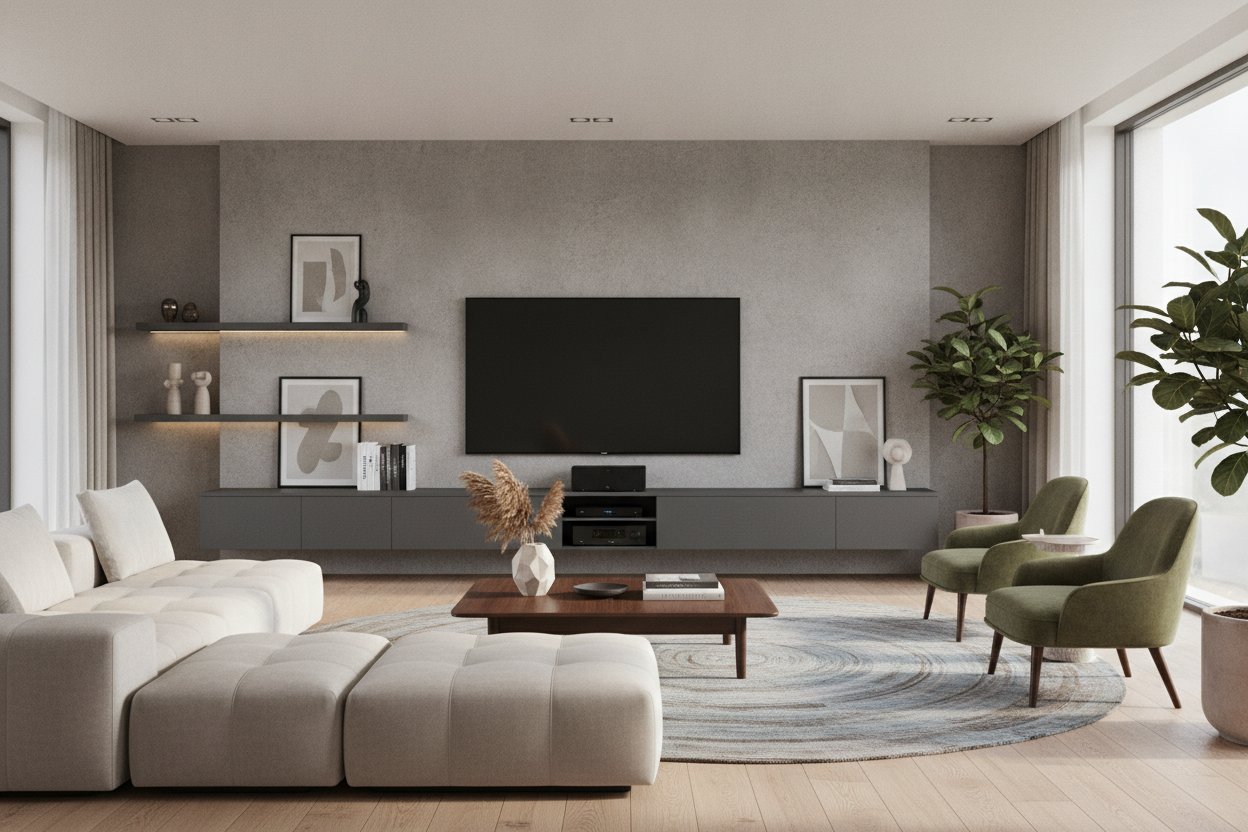
If you want the room to feel airy, go for corner tv shelves or a wall-mounted unit. It keeps the floor visible, which is an old designer trick to make a room feel bigger. However, if you’re like me and have a collection of consoles, a solid wood corner tv stand is better. It provides the 'grounding' the room needs and hides the inevitable rat's nest of HDMI cables that come with a gaming setup.
The 'Hidden Tech' Alternative
Not everyone wants their TV to be the main character of the room when it’s turned off. A corner tv cabinet with doors allows you to tuck the screen away entirely. It turns your media center back into a piece of furniture, which is great if your living room pulls double duty as a formal sitting area.
If you really want to get fancy, you can skip the traditional cabinet and look into an electric vertical lift TV cabinet. These are perfect for corners because they can sit lower than a standard hutch, and the TV simply disappears when you're done with your Netflix binge. It’s the ultimate way to maintain a minimalist vibe.
3 Rules for Styling Your New Corner Setup
First, don't push the stand all the way into the point of the corner. Leave a few inches for airflow and cords. Second, balance the diagonal line. If your TV is in the right corner, put a tall fiddle-leaf fig or a floor lamp in the opposite corner to keep the room from feeling lopsided. Finally, use a round or oval rug. It softens the harsh angles of the corner placement and helps anchor your seating area into a cohesive 'zone.'
My Honest Experience
I once bought a cheap corner tv stand made of hollow-core MDF because the price was too good to pass up. Big mistake. Within six months, the weight of my soundbar caused the top shelf to bow, and the 'walnut' finish started peeling off like a bad sticker. If you’re buying a corner unit, check the weight capacity. Spend the extra money on kiln-dried hardwood or high-grade plywood. Your floor—and your electronics—will thank you.
FAQ
Will a corner TV stand fit a 65-inch TV?
Yes, but you need to check the width of the stand's front edge. Most 'large' corner units are designed specifically for 55 to 65-inch screens, but always measure the distance between your TV's feet first.
Do corner TV stands save space?
Absolutely. They utilize the 'dead space' in a room's corner, allowing you to move your seating closer together and opening up the main walkways of the room.
How do I hide cables in a corner unit?
Most corner cabinets have a pre-drilled hole in the back 'point.' Because the unit sits at an angle, there is naturally a small triangular gap behind the stand where you can hide power strips and excess cord length out of sight.

Laisser un commentaire
Ce site est protégé par hCaptcha, et la Politique de confidentialité et les Conditions de service de hCaptcha s’appliquent.