


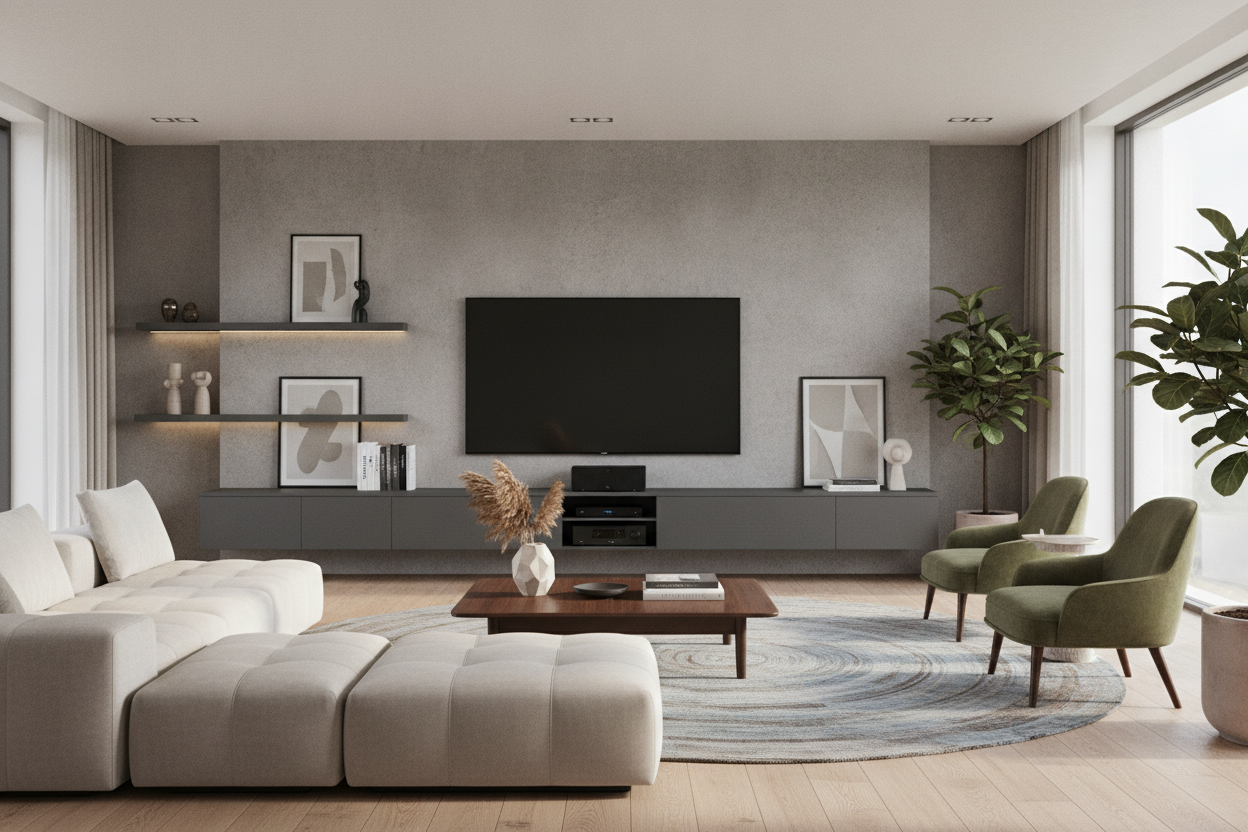
I remember the day my 85-inch TV arrived. I had it temporarily sitting on a console that was only 60 inches wide, and it looked like a bodybuilder trying to balance on a barstool. It wasn't just ugly; it felt precarious. That is when I realized that for a screen this size, you can't just 'make it work' with whatever furniture you have lying around.
If you are staring at a massive screen and wondering if an 86 inch floating tv stand will swallow your living room whole, I have some good news. It actually does the opposite. While a 7-foot piece of furniture sounds like a lot of wood to commit to, mounting it to the wall is the secret to making a standard-sized room feel like a custom theater instead of a cluttered basement.
Quick Takeaways
- Visual balance requires the stand to be at least 10-20% wider than the TV itself.
- Floating designs keep the floor visible, which tricks the eye into thinking the room is larger.
- Structural safety is easy as long as you hit at least three wall studs.
- Large consoles prevent the 'top-heavy' look that makes rooms feel cramped and chaotic.
The Giant Screen Dilemma (Why Standard Consoles Look Silly)
There is a mathematical reason why your living room feels 'off' when you put a massive screen on a small cabinet. It is all about the golden ratio. When your TV is wider than the furniture beneath it, the setup looks top-heavy and unstable. A floating tv stand for 86 inch tv screens provides the necessary horizontal 'runway' to anchor that massive black rectangle on your wall.
If your stand is too short, the TV looks like it is swallowing the wall. By choosing a wider unit, you create a dedicated zone for your tech. You can find the specific width you need in a floating tv stand to ensure your screen has enough breathing room on either side. Trust me, having those extra few inches of console extending past the TV edges makes the whole setup look intentional rather than accidental.
The Magic of Floor Space (Why I Didn't Buy a Cabinet)
The biggest mistake people make in small-to-medium rooms is buying heavy, boxy furniture that sits on the floor. When a piece of furniture touches the ground, your brain registers that floor space as 'occupied' and 'gone.' By using a floating entertainment center for 86 inch tv setups, you keep the sightline to the baseboards clear.
I compared this to standard floor-resting tv stands in my own house, and the difference was night and day. Even though the floating unit was technically longer, the room felt airier because I could see the rug underneath it. I previously had a similar floating tv stand for 75 inch tv in my old apartment, and it was the only thing that kept that 12x12 living room from feeling like a storage unit. It is a psychological design trick that works every single time.
Wait, Will This Rip My Drywall Down?
This is the number one fear I hear: 'That thing is going to fall and take the wall with it.' Let's be real—a floating tv stand 86 inch model is heavy, especially if it is made of solid wood or high-density MDF. But your house is stronger than you think. The key is your studs.
Standard US homes have studs every 16 inches. A 7-foot console is going to span at least five or six studs. If you secure your mounting bracket into at least three or four of those with heavy-duty lag bolts, that shelf isn't going anywhere. I have seen people try to use drywall anchors for smaller units, and that is a recipe for a 2 AM disaster. For a unit this big, find the studs, pre-drill your holes, and you could practically sit on the thing (though I wouldn't recommend it).
How to Style a 7-Foot Console Without It Looking Like an Altar
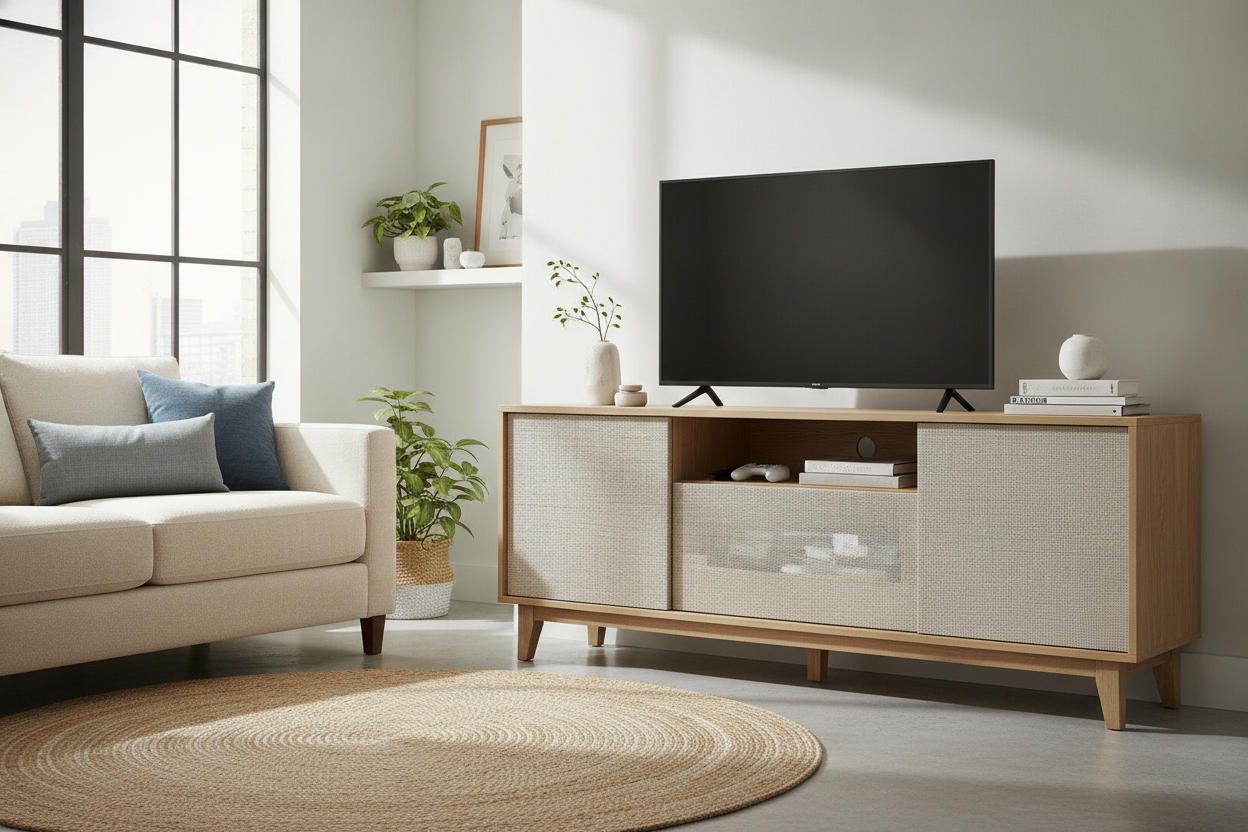
Once you have this massive 7-foot surface, the temptation is to line up all your gaming consoles and cable boxes like a retail display. Don't do that. You want this to look like a piece of architecture, not a tech shelf. I always suggest a sleek wall mounted media console with hidden cable management so you don't have a 'rat's nest' of wires hanging down.
To style it, go asymmetrical. Put a tall, leafy plant on one end to break up the horizontal lines. On the other end, stack a few oversized coffee table books. Leave the middle relatively clear so the TV has room to 'breathe.' This keeps the focus on the clean lines of the furniture rather than the clutter sitting on top of it.
Personal Experience: The 'Oops' Moment
I once tried to save twenty bucks by buying a cheap, hollow-core floating shelf for a large TV setup. Within three months, the center started to bow because it couldn't handle the weight of my soundbar and a few decor pieces. It looked terrible and felt cheap. When I finally upgraded to a heavy-duty, 86-inch unit with a reinforced internal frame, the entire room suddenly felt more expensive. If you are going big, you have to go sturdy. Don't let a sagging shelf ruin your $2,000 television aesthetic.
FAQ
Do I need a professional to install an 86-inch stand?
If you can find a stud and use a level, you can do it yourself. However, because of the length, you definitely need a second person to help you lift it onto the bracket. Don't try to solo this one.
What is the best height to mount a floating stand?
Aim for about 8 to 12 inches off the floor. You want enough space to run a vacuum under it, but not so high that the TV ends up at 'waiting room' heights. Your eyes should hit the middle of the screen when sitting.
Can I mount this on a plaster wall?
Yes, but you need to be extra careful. Use a deep-scan stud finder to locate the lath and studs. If you have an older home with crumbly plaster, you might want to use a mounting board behind the unit to distribute the weight.

Laisser un commentaire
Ce site est protégé par hCaptcha, et la Politique de confidentialité et les Conditions de service de hCaptcha s’appliquent.