


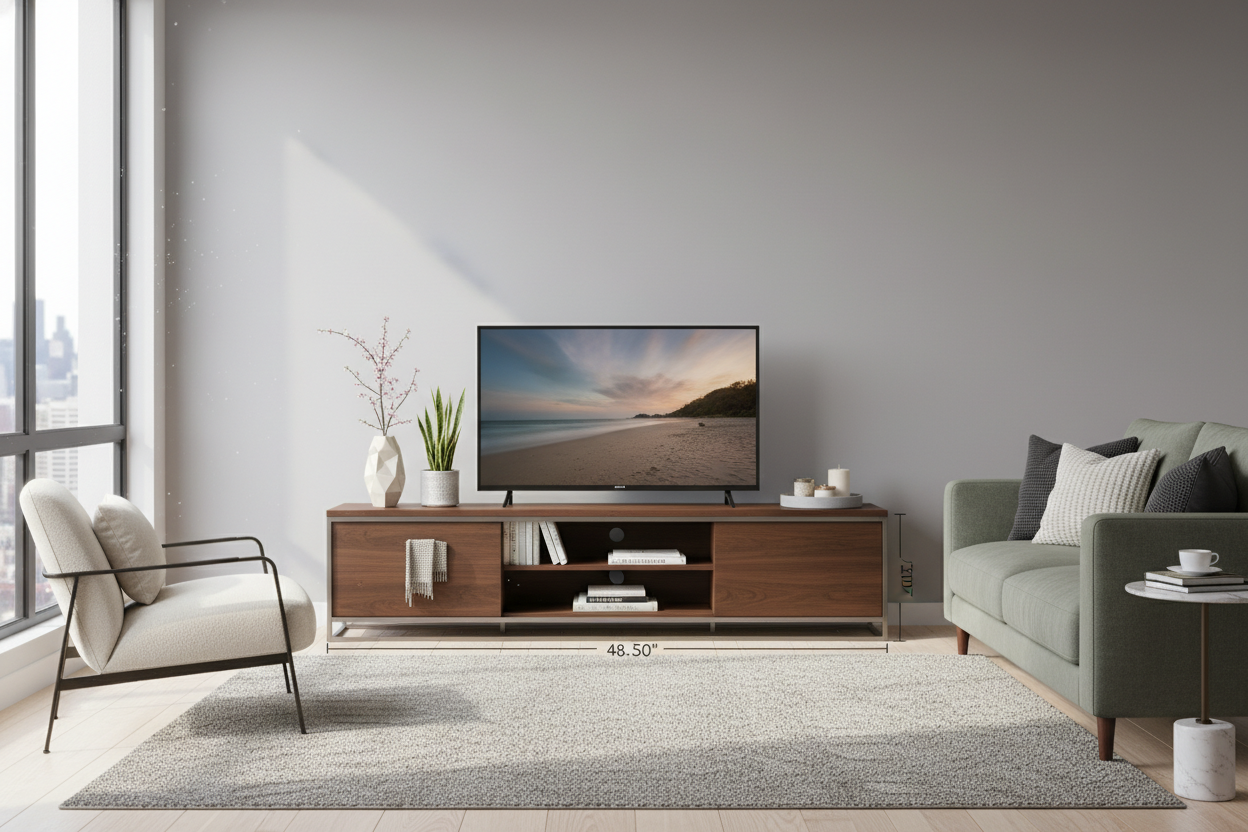
I once spent three weeks’ rent on a 75-inch TV that turned my living room into a Buffalo Wild Wings. It was glorious for exactly two hours of a Sunday night football game, then it became a giant, soul-sucking black void that dominated every conversation and piece of furniture in the room. I couldn't even put a plant next to it without the leaf blocking the corner of the screen. I was living in a tech cave, not a home.
Eventually, I wised up. I realized that unless you live in a literal warehouse, a 50 inch tv and stand is the absolute 'Goldilocks' zone of home tech. It’s big enough to feel like a cinematic treat, but small enough that your living room still looks like a place where humans live, not just a place where content is consumed. It fits the wall, it fits the budget, and most importantly, it fits the vibe.
- Scale is everything: A 50-inch TV has a physical width of about 44 inches, making it manageable for most walls.
- The 20% Rule: Your stand should be at least 20% wider than the TV to avoid that awkward top-heavy look.
- Check your height: If you're watching from bed, you specifically need a high tv stand for 50 inch tv setups.
- Storage matters: Look for a 50 inch tv stand with drawers to hide the inevitable cable nest and remote collection.
Why I Finally Downsized to a 50-Inch Screen
The tech industry wants us to believe that bigger is always better, but they aren't the ones trying to fit a 65-inch beast into a 300-square-foot studio. In my last apartment, I had a massive entertainment center for 50 in tv screens that I tried to stuff an oversized panel onto. The overhang was hideous, and the screen felt like it was leaning over me. It was visually exhausting and made the whole room feel cramped.
Moving to a 50-inch screen changed the energy of the room immediately. Suddenly, the wall had breathing room. I had space for a lamp on one side and a stack of coffee table books on the other. A tv stand 50 inches wide actually allows a 50-inch screen to sit comfortably without looking like it’s about to tip over. It’s the unsung hero of apartment living because it respects the architecture of the room rather than trying to replace it.
I found that with tv stands 50 inch tvs look intentional. You can frame the TV with art or greenery, and it becomes a part of the decor instead of a tech-heavy eyesore. If you’ve been staring at a screen that makes your sofa look like dollhouse furniture, it might be time to scale down. Using a dedicated entertainment stand for 50 inch tv setups or even simple stands for 50 tv units allows the room to feel balanced and curated.
The Math Behind a Perfectly Proportioned Console
Here is the mistake most people make: they buy a 50 in wide tv stand because they have a 50-inch TV. Then they unbox it and realize the TV screen hangs off the edges or sits perfectly flush with the ends. It looks cramped, cheap, and temporary. Remember, a '50-inch TV' is a diagonal measurement; the actual horizontal width is usually around 43.5 to 44.5 inches. If your stand is the same width, you have no room for error.
To get that high-end, custom look, you want visual breathing room. I generally follow the oak 50 inch TV stand rule, which suggests your console should be at least 6 to 10 inches wider than the TV itself. For a 50-inch screen, a tv console 50 inch wide is the bare minimum, but a 54 or 60-inch stand is where the magic happens. This prevents the 'lollipop' effect where a massive head sits on a tiny stick.
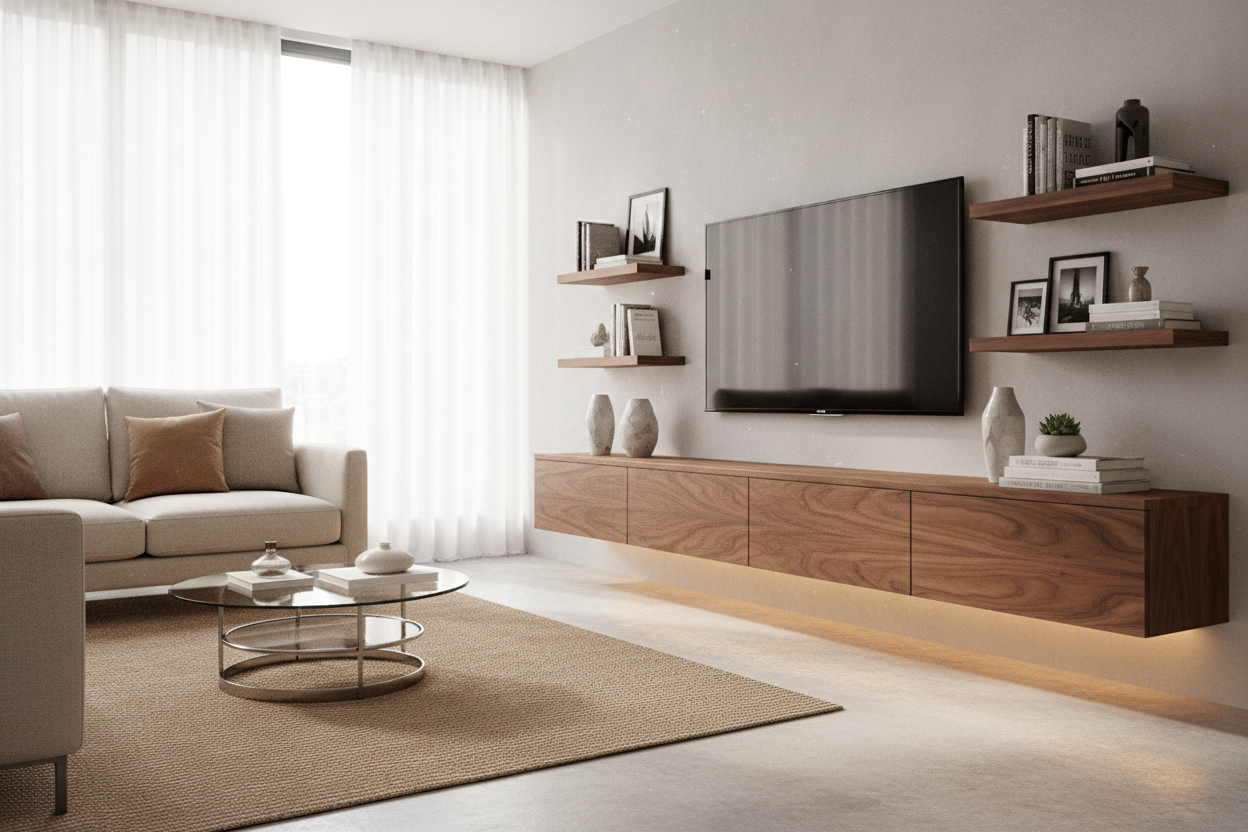
When you use a wooden tv stand for 50 inch tv setups that offers that extra width, you create a visual 'base' that anchors the room. Whether you prefer a wood tv stand 50 inch model or a sleek 50 inch white tv stand, the goal is to avoid overcrowding. A media console 50 inches long or more provides space for a soundbar or a couple of ceramic pieces to soften the hard edges of the tech. I personally love the warmth of a wood tv stands 50 inch unit paired with a matte black screen—it feels more like furniture and less like an appliance.
My Favorite Trick: The Hidden Lift Cabinet
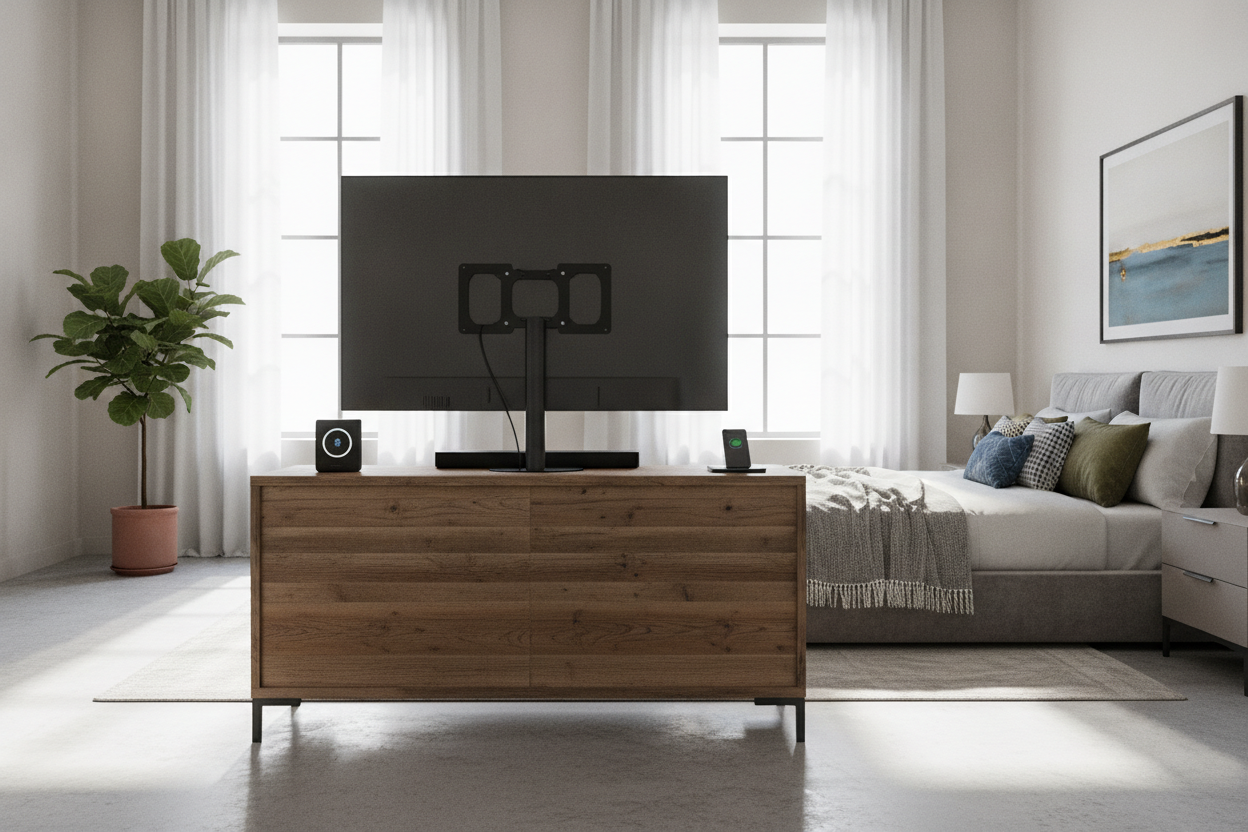
If you live in a studio or use your bedroom as a secondary cinema, you know the struggle. You want the TV, but you don't want to look at a dead black screen while you're trying to sleep or work. This is where a modern tv stand 50 inch design with a motorized lift comes in. It’s the ultimate 'now you see it, now you don't' flex for people who care about their interior design as much as their Netflix queue.
I recently tested an electric vertical lift TV cabinet and it completely solved my layout paralysis. During the day, it looks like a beautiful, minimalist wooden sideboard or a media console 50 inches wide. When I’m ready for a movie, the TV rises up smoothly with a remote. It keeps the 50 inch tv tv stand footprint small while maximizing the floor space when the TV isn't in use.
This kind of entertainment unit for 50 inch tv storage is perfect for multi-use spaces. You aren't committed to the 'media room' aesthetic 24/7. Plus, it protects the screen from dust and accidental bumps if you have pets or kids. It’s a bit more of an investment than a standard 50 inch table for tv, but for the clean lines and the ability to hide the tech entirely, it’s a total win. It's the best way to handle a media console for 50 inch tv needs without sacrificing your style.
Why You Might Actually Need a Taller Console
The current trend is all about low-slung, mid-century modern consoles that sit about 18 inches off the floor. That’s great if you have a low sofa and a massive wall, but it’s a nightmare for ergonomics in a bedroom or a room with deep, upright seating. If you’re propped up on pillows in bed, you’re going to be straining your neck looking down at a small tv stand for 50 inch flat screen units. You need height.
Don't be afraid of a tall 50 inch tv stand. A 50 inch height tv stand or even a 50 inch high tv stand (which is essentially a media chest) puts the screen at eye level when you're in a taller bed or a deep-seated lounge chair. You can browse modern TV stands that offer this extra height without looking like a dated armoire from the 90s. A tall tv stand for 50 inch tv also gives you way more vertical storage for things like extra blankets or a 50 media cabinet for your vinyl collection.
I personally use a 50 inch tv cabinets setup in my guest room that sits higher than my main living room console. It doubles as a dresser, making the room feel less like a 'media room' and more like a functional suite. Look for units that include adjustable shelving so you can hide your gaming consoles, routers, and messy power strips behind closed doors.
The One Measurement Mistake Everyone Makes
I’ve seen it happen a dozen times: someone buys a tv stand 50 inches long thinking it’s a perfect match for their 50-inch TV, only to find out the legs of the TV are spaced 48 inches apart. Not all tv stands 50 inch tvs are created equal. Some TVs have a center pedestal, but many modern ones have 'duck feet' at the very edges. If your stand isn't wide enough, those feet will be hanging off the edge.
Before you commit to a 50 in wide tv stand, measure the distance between the TV's actual feet. If your tv console for 50 tv is exactly 50 inches and the feet are 48 inches, you have zero margin for error. One slight bump and that TV is on the floor. Always aim for a tv stand 50 inches wide or more to give yourself a safety buffer. A tv console table 50 inch wide might look okay on paper, but in reality, you want that extra surface area for stability.
How wide should a stand be for a 50 inch TV?
Since a 50-inch TV is about 44 inches wide, your stand should be at least 50 to 54 inches wide. This gives you a few inches of 'overhang' on each side, which looks much more balanced and high-end than a stand that matches the TV width exactly.
Is a 50 inch TV too small for a living room?
Not at all. In most standard apartments where the sofa is 6 to 10 feet away, a 50-inch screen is the ergonomic sweet spot. It fills your field of vision without requiring you to move your head back and forth to see the whole picture, avoiding that front-row-at-the-theater neck strain.
Can I put a 50 inch TV on a 40 inch stand?
Only if the TV has a center pedestal base and the weight is within the stand's limit. However, it will look terrible. It creates a top-heavy 'T' shape that is visually jarring and physically unstable. I’d strongly advise against it for both aesthetic and safety reasons.
What is the best height for a TV stand?
For a living room with a standard sofa, you want the center of the screen at eye level, which usually means a stand height of 22 to 28 inches. For a bedroom, you’ll want something taller—around 35 to 45 inches—so you can see over your feet while lying down without craning your neck.

Laisser un commentaire
Ce site est protégé par hCaptcha, et la Politique de confidentialité et les Conditions de service de hCaptcha s’appliquent.