


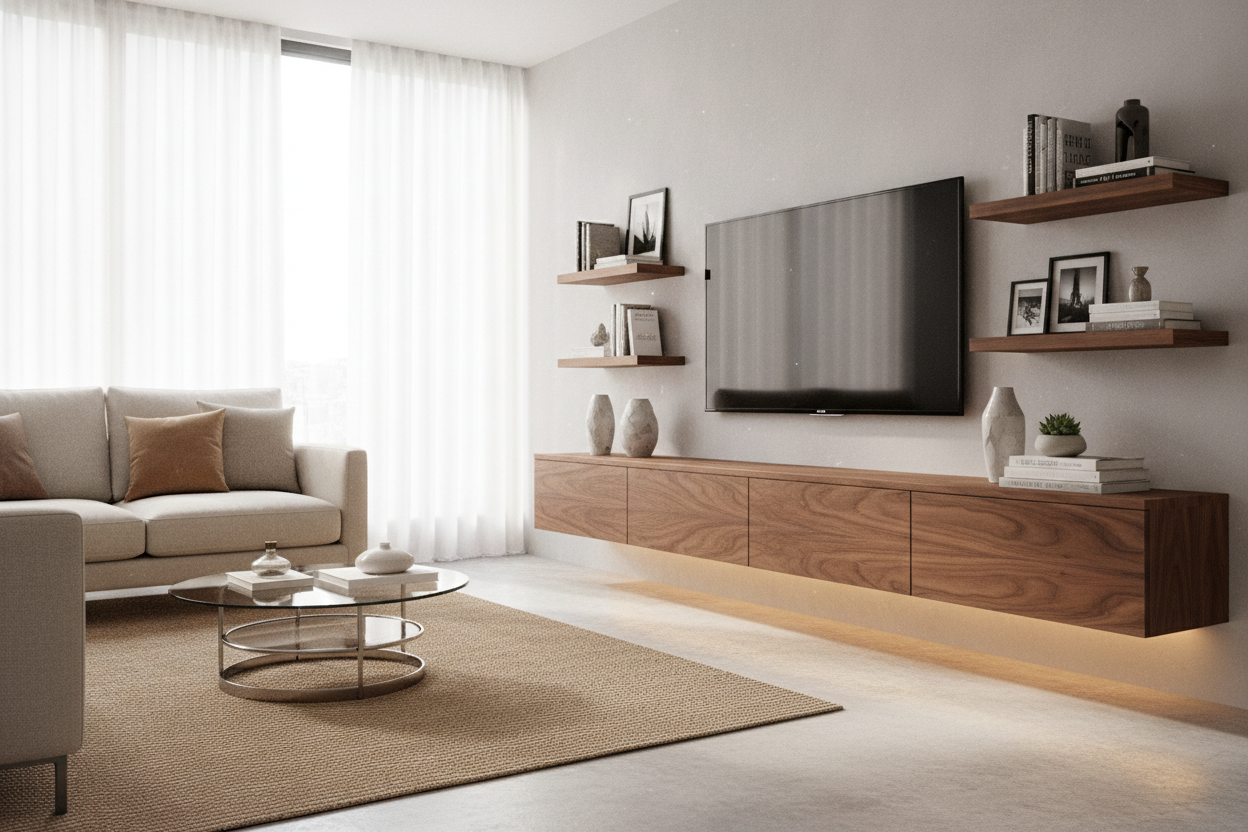
I spent three years in a 450-square-foot studio where every piece of furniture felt like a personal attack on my shins. I had this chunky, dark-stained media console from a big-box store that looked great in the showroom but turned my living area into a claustrophobic maze. It wasn't until I ripped that beast out and installed a floating wooden tv stand that the room finally breathed.
There is something about seeing the floor meet the baseboard that tricks your brain into thinking you have twice the square footage. It’s the difference between a room that feels cluttered and one that feels curated. If you’re tired of your living room looking like a storage unit for electronics, it is time to get your furniture off the ground.
- Maximizes Floor Space: Seeing the floor extend under the unit creates an immediate illusion of more square footage.
- Organic Warmth: Real wood grain adds texture that prevents a wall-mounted TV from looking like a cold, tech-heavy void.
- Easier Cleaning: You can actually run a vacuum or a Roomba under your media center without moving a 100-pound cabinet.
- Custom Height: Unlike floor units, you can mount these at the exact eye level that prevents 'TV-too-high' neck strain.
The 'Visible Floor' Rule of Tiny Living Rooms
Interior designers have a secret weapon called the 'visible floor' rule. The more floor your eye can see, the larger the room feels. When you shove a heavy, boxy console against a wall, you’re effectively cutting off two or three feet of your room's visual depth. A small floating tv stand fixes this by letting the eye travel all the way to the corner, making the wall feel further away than it actually is.
I’ve seen this work in narrow railroad apartments and tiny 'flex' bedrooms alike. It’s psychological magic. By lifting the weight off the floor, you remove the visual 'clutter' that heavy legs or solid bases create. It makes the entire layout feel airy, even if you’ve actually only gained a few inches of physical space. Plus, you finally have a spot to tuck away those floor cushions or a low-profile basket for throw blankets.
Stop Buying MDF: Why Material Matters Up High
If you are going to bolt something to your wall at eye level, please don't let it be cheap particle board with a wood-look sticker. When a piece of furniture is floating, its edges and underside are on full display. Cheap MDF peels at the corners, and that fake grain looks especially sad under the glow of a 4K screen. Investing in a wood floating tv cabinet made from solid oak, walnut, or high-quality veneers is what moves the needle from 'college dorm' to 'architectural digest.'
Real wood has an organic weight and warmth that grounds the room. When I transitioned from my old laminate unit to the solid TV stands I use now, the entire vibe of my apartment shifted. It felt permanent and intentional. Wood also ages gracefully; a few scratches on a solid wood floating tv shelves can be sanded or oiled away, whereas a scratch on cheap laminate is a permanent scar that screams 'budget buy.'
Proportions: Getting the Look Without Overpowering the Wall
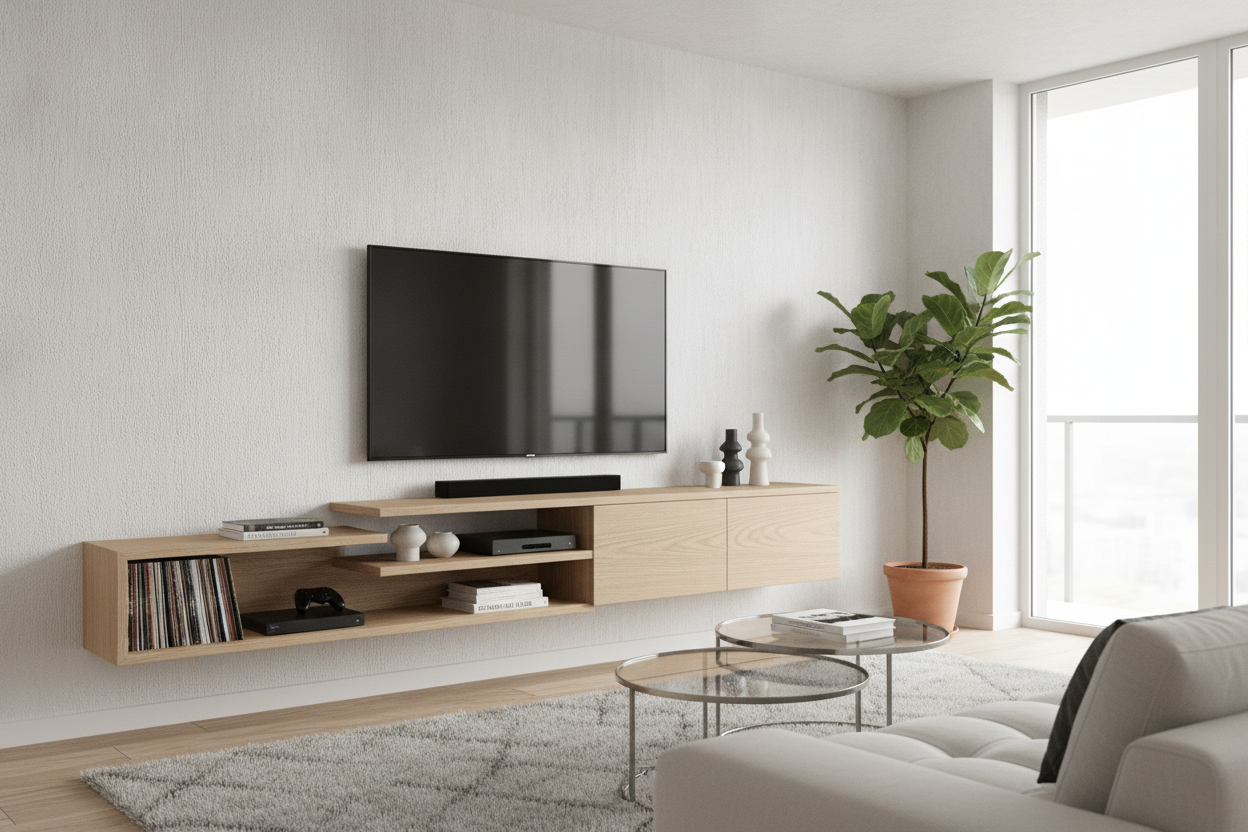
The biggest mistake people make is buying a unit that is too deep. You don't need a 20-inch deep cabinet for a modern television. A slim floating tv stand—ideally between 10 and 13 inches deep—is the sweet spot. It provides enough surface area for a soundbar or a few decorative objects without protruding so far into the room that you’re worried about bumping into it every time you walk by.
Length also matters. I always recommend going at least 10 to 12 inches wider than your TV on both sides. If the stand is the same width as the screen, the whole setup looks top-heavy and pinched. You want the stand to act as a visual anchor, stretching the horizontal line of the room to make the wall appear wider. If you go too small, it looks like a lonely box hanging in space; go wide, and it looks like a custom architectural feature.
What About the Cables?
Nothing kills the 'expensive' look of a wooden floating entertainment center faster than a waterfall of black cables dangling toward the outlet. If you can't go behind the drywall, use a paintable cable raceway. I spent twenty minutes painting mine the exact shade of 'Swiss Coffee' as my walls, and it practically disappeared. Most high-end floating units also come with pre-drilled cord management holes on the top and bottom—use them. Tuck your power strip inside the unit itself so only one cord ever has to exit the cabinet.
What If Your Landlord Hates Drill Bits?
I get it—security deposits are precious. Not everyone can drive four-inch lag bolts into the studs. If you’re in a rental with strict rules or have crumbling plaster walls that won't support a heavy floating entertainment center wood unit, you don't have to give up the aesthetic. There are hybrid options that offer the same sleek, elevated look without the structural commitment.
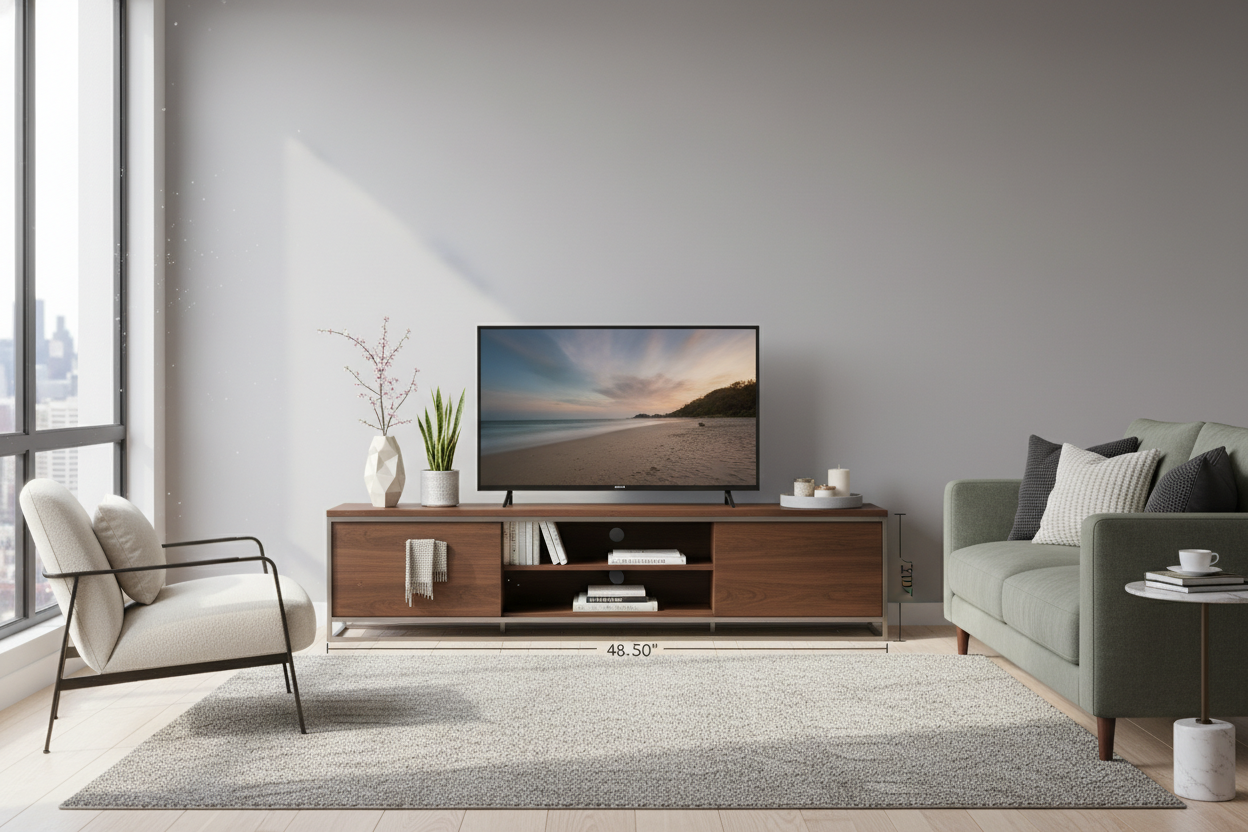
For my last rental, I faked a floating screen using a wood TV stand with mount that stood on very thin, recessed legs. It gave the illusion of being wall-mounted from across the room but was entirely self-supporting. It’s a great 'cheat code' for getting that minimalist, high-end look while keeping your landlord happy and your security deposit intact.
Personal Experience: The Stud Finder Lesson
The first time I tried to install a floating unit, I thought I could wing it with those plastic drywall anchors. Big mistake. About three weeks in, I heard a sickening 'crunch' at 2 AM. The unit hadn't fallen, but it was sagging at a 15-degree angle, pulling the top layer of drywall with it. I learned the hard way: you must hit at least two studs. If your studs don't line up with the mounting holes, screw a 1x4 cleat into the studs first, then mount the cabinet to the cleat. It adds a half-inch of depth but ensures your expensive TV doesn't end up on the floor.
FAQ
How high should I mount my floating TV stand?
Aim for the bottom of the unit to be about 20 to 24 inches off the floor. This keeps it low enough to feel like a piece of furniture rather than a shelf, but high enough to maintain that 'floating' airy aesthetic.
Can a floating stand hold a 75-inch TV?
The stand shouldn't hold the TV; the wall should. Always mount your TV to the studs using a dedicated wall mount, then hang the floating stand underneath it for your components and decor. This prevents the weight of the TV from stressing the cabinet's mounting points.
Are floating TV stands hard to install?
If you can find a stud and use a level, you can do it. Most modern units come with a French cleat system—you level and screw a wooden or metal strip to the wall, then the cabinet simply hooks onto it. It’s a two-person job for the lifting, but the mechanics are simple.

Laisser un commentaire
Ce site est protégé par hCaptcha, et la Politique de confidentialité et les Conditions de service de hCaptcha s’appliquent.