

Selecting the right workstation requires balancing aesthetic preferences with operational demands. In modern interior planning, office desk furniture does far more than support a computer monitor; it acts as an anchor for daily habits, visual calm, and spatial flow. When carefully chosen, a work surface complements room architecture while supporting sustained concentration and structured organization.
Evaluating Office Desk Furniture Within Spatial and Workflow Contexts
Before assessing finishes or drawer configurations, the primary task is understanding how an office space functions across an entire day. Workspaces are rarely static. A room might serve as a private study in the morning, a shared household hub in the afternoon, or an evening retreat for creative pursuits. Because physical boundaries vary dramatically between dedicated commercial rooms and multi-use residential quarters, selecting appropriate desks and home office furniture requires an honest appraisal of both square footage and personal tasks.
A common error in workspace design is treating a desk as an isolated surface rather than an active component of room circulation. When planning your layout, consider the paths you take to enter the room, access windows, open closet doors, and reach peripheral storage. Introducing an oversized desk into a narrow space disrupts pathways, making the environment feel congested. Conversely, choosing an undersized table for an expansive room with extensive equipment can lead to surface clutter, document spillage, and a visually unbalanced interior.
Dimensional Sizing Categories: Matching Footprints to Available Room Clearance
Desk dimensions naturally fall into three functional footprint categories, each tailored to specific room scales and equipment setups:
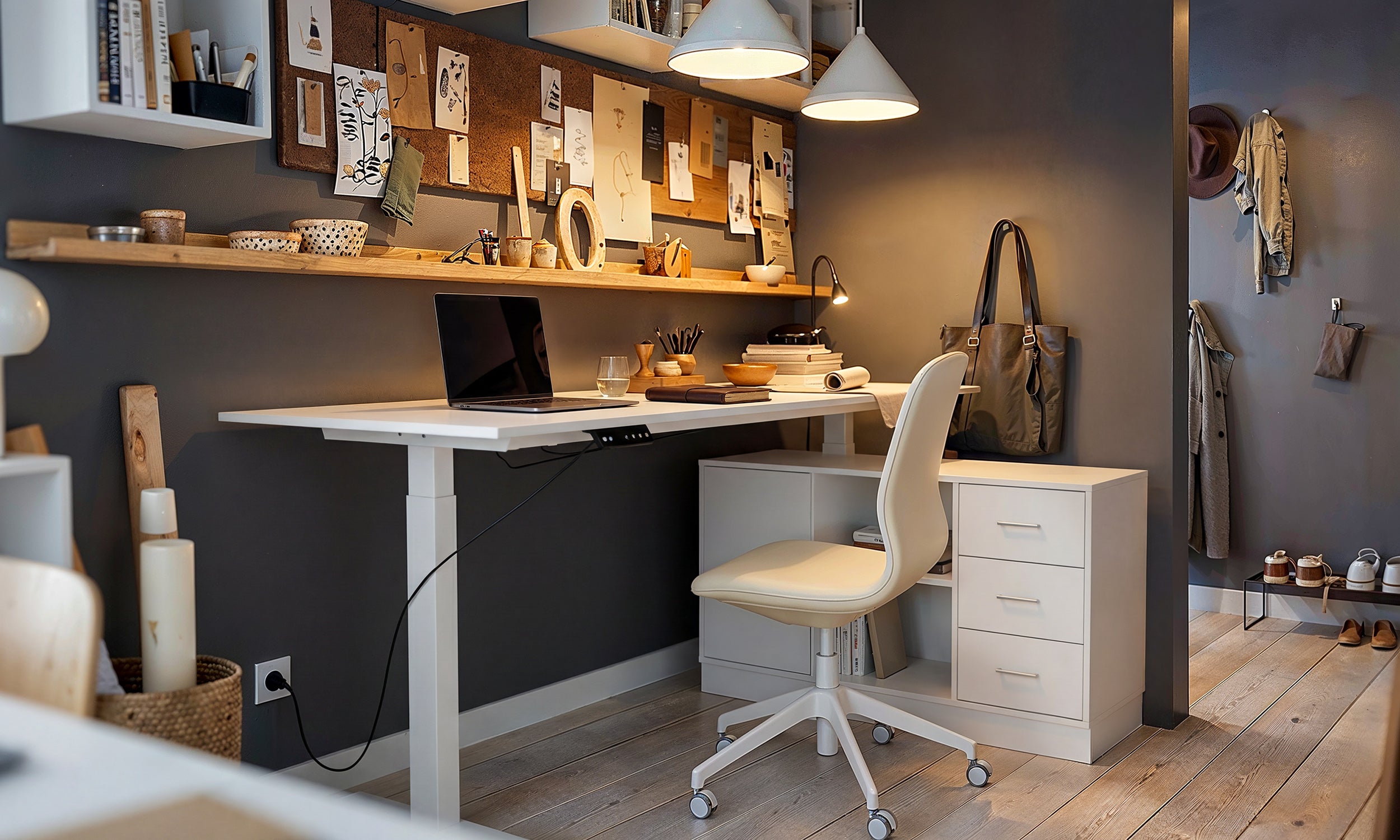
- Compact Work Zones: Designed for urban apartments, shared living areas, and recessed architectural alcoves, compact desks offer just enough depth for a laptop or single monitor setup. Their smaller profiles help preserve floor area while preventing small spaces from feeling visually heavy.
- Mid-Scale Standard Workstations: These balance generous writing space with room for dual displays, task lamps, and desktop accessories. They represent the baseline standard for dedicated home offices and private executive suites. For an in-depth look at standard surface dimensions, consult our detailed office desk guide.
- Expansive and Executive Surfaces: Geared toward multi-taskers, creative professionals handling physical blueprints, or managers who host in-person consultations, these configurations provide ample depth and width to keep distinct task zones organized simultaneously.
Beyond the surface dimensions, clearance around the workstation determines day-to-day comfort. Allow sufficient space behind the desk for chair movement, reclining, and standing up without contacting nearby walls or bookcases. In open rooms, maintaining clear walkways behind the seated position ensures that household traffic flows smoothly around your work area.
Structural Typologies: Standalone Desks vs. Comprehensive Office Desk Units
Workstations can also be categorized by their overall structural architecture, ranging from airy minimalist tables to fully consolidated workstations.
Standalone writing and computer desks feature four legs or open sled bases, creating an elevated, spacious aesthetic that allows light to pass underneath. This openness makes rooms appear larger, making standalone desks ideal for minimalist interiors or spaces where auxiliary storage already exists along perimeter walls.
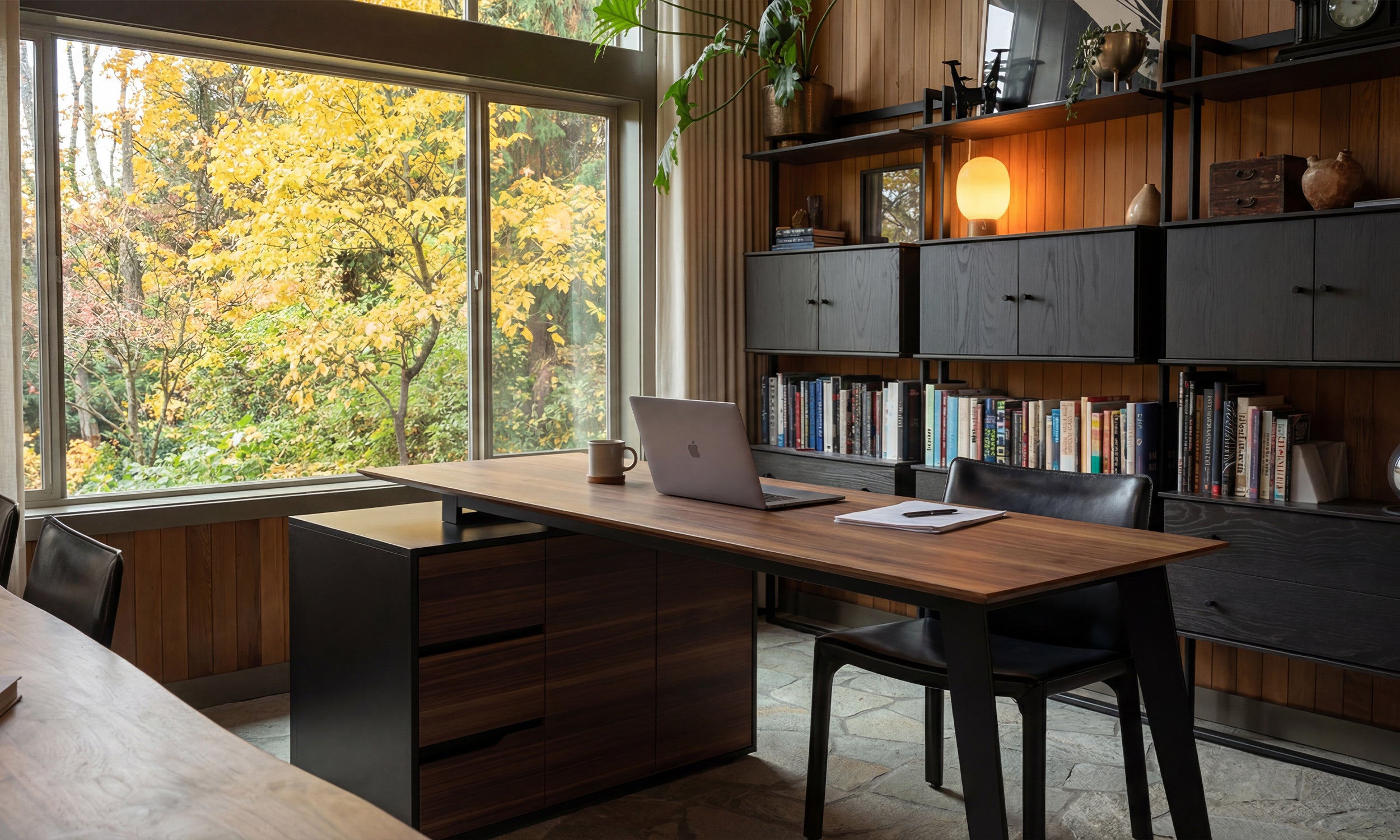
For rooms requiring maximum surface utility within a defined perimeter, corner configurations and consolidated office desk units provide exceptional organizational efficiency. Corner layouts transform underutilized wall intersections into productive zones, separating primary computer screens from manual writing areas. When considering an integrated layout, a versatile office desk product featuring connected shelving or a storage return can establish clear functional boundaries in shared family spaces.
Storage Architecture in Home Office Desk Furniture
Effective storage planning distinguishes functional workspaces from cluttered surfaces. When selecting home office desk furniture, analyze your items according to frequency of access. Items fall broadly into active storage (items needed throughout the day, such as pens, notebooks, and reference guides) and archival storage (tax files, historical documents, and extra cables).
Desks featuring built-in drawer pedestals keep active materials immediately accessible while shielding visual chaos from view. Deep lower drawers configured for hanging files eliminate the need for separate filing cabinets in compact rooms. For environments where floor space is limited, vertical storage options such as upper hutches and wall-mounted shelving make use of overhead space without expanding the desk's footprint. To evaluate whether overhead cabinets align with your workflow, review our discussion in the office units guide.
While integrated cabinetry provides generous storage capacity, it is essential to verify that the cabinetry leaves adequate legroom. A comfortable seated posture requires uninhibited lateral knee movement and sufficient under-desk depth so your legs can stretch naturally throughout the workday.
Material Composition, Surface Durability, and Room Cohesion
Workstation materials influence both the room's design tone and its long-term durability. High-density engineered wood topped with quality melamine or laminate delivers dependable resistance against everyday moisture, pen marks, and surface scuffs. These surfaces clean easily with a damp cloth, making them a practical choice for busy family homes and multi-use spaces.
Solid timber accents and wood veneers bring organic warmth, textural richness, and timeless character to an office. While natural wood surfaces may require periodic conditioning and mindful coaster use to prevent water rings, their tactile appeal creates an inviting and grounded atmosphere.
Metal frame understructures provide structural rigidity, keeping expansive desk surfaces level and stable during typing. Open steel leg assemblies also contribute to an architectural, industrial look that pairs well with modern shelving. For those seeking balanced storage and clean lines, a unified office desk product combines cohesive exterior paneling with solid structural support, harmonizing smoothly with surrounding cabinetry, flooring, and room finishes.
Assembly Logistics, Cable Management, and Practical Setup Planning
The final stage in establishing a functional workspace involves assembly, device arrangement, and room positioning. In my experience reviewing residential floor plans, a desk that looks balanced on paper can quickly feel awkward if window glare and power access are overlooked during installation.
Position your desk perpendicular to natural light sources whenever possible. Facing a window directly can create stark contrast and eye fatigue, while sitting with your back to an unshaded window often causes harsh reflections on monitor screens. Side-angled daylight provides balanced illumination without compromising screen legibility.
Power cords and device chargers can quickly disrupt an otherwise organized desk. Prioritize furniture with built-in grommets, wire troughs, or modesty panels that conceal drop cords. Bundling cables along frame legs using hook-and-loop straps keeps power pathways organized and off the floor, simplifying vacuuming and preserving the crisp, intentional look of your workspace.


Laisser un commentaire
Ce site est protégé par hCaptcha, et la Politique de confidentialité et les Conditions de service de hCaptcha s’appliquent.