
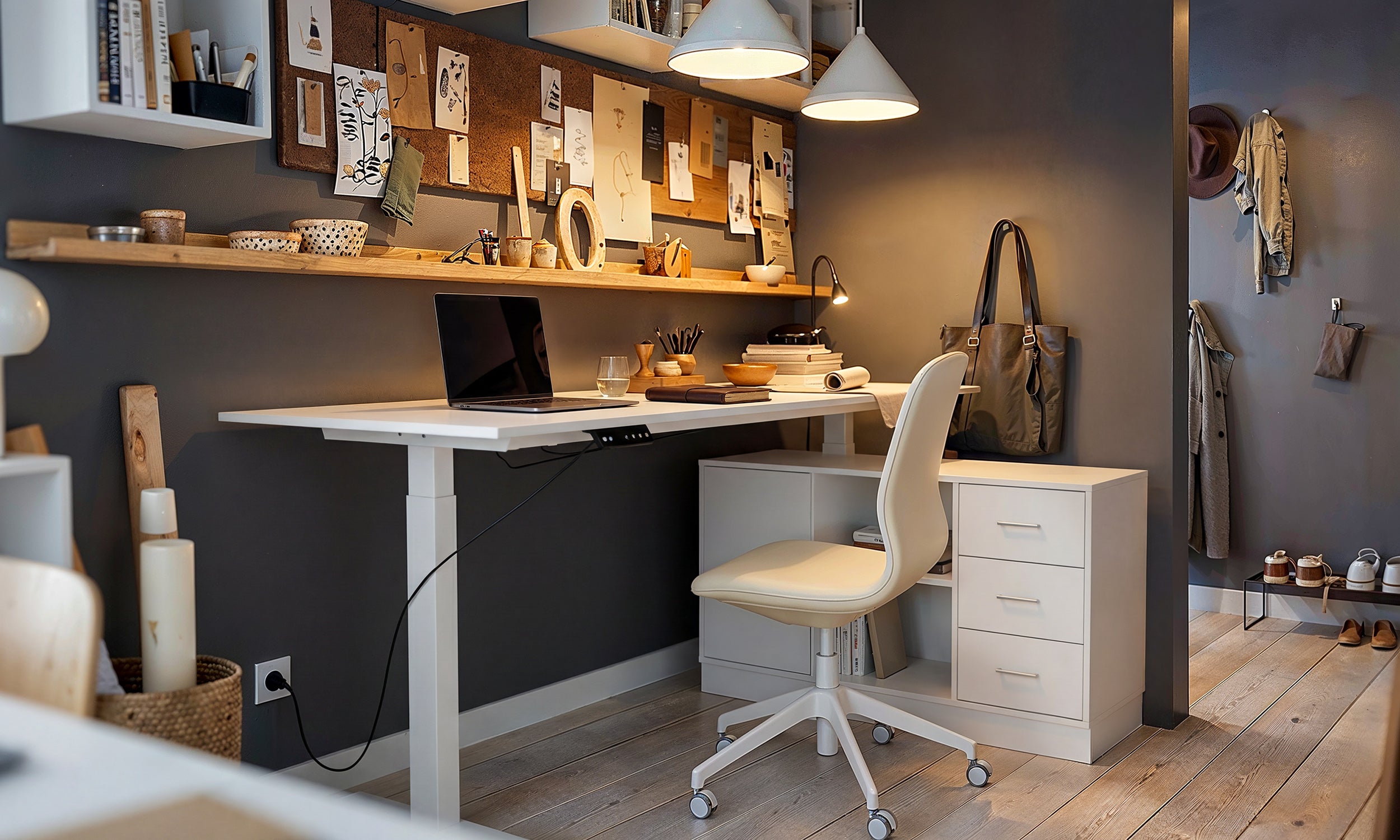


Introduction: Navigating the Workstation Seating Decision
Choosing an office chair requires evaluating how seating interacts with the broader work environment. Rather than viewing seating as an isolated purchase, careful workspace design approaches the chair as an active mechanical element within a room system. A well-selected chair coordinates with desk clearances, supports varied postures throughout the day, and harmonizes with nearby storage pieces, such as filing cabinets and credenzas.
Understanding the balance between spatial scale, mechanical adjustments, upholstery qualities, and base construction allows you to identify seating that supports long hours of focused work while maintaining visual balance in your room.
Proportional Fit and Sizing Categories
Office chairs generally fall into three structural tiers, each suited to distinct physical requirements and workspace footprints:
- Compact Task Seating: Designed with low-profile backrests and streamlined footprints, these chairs suit smaller alcoves, guest desks, and tight residential study spaces where visual bulk must be minimized.
- Mid-Back Functional Chairs: The standard for dedicated home workstations, offering a balanced backrest height that supports the thoracic region while remaining unobtrusive beneath desk height lines.
- Executive High-Back Chairs: Featuring extended vertical back structures and integrated neck rests, these chairs demand wider clear floor zones and complement large executive desks or freestanding central layouts.
Matching the chair scale to both user frame dimensions and desk proportions avoids overcrowding narrow walkways or leaving a substantial workstation feeling undersized.
Workstation Clearance: Coordinating Chairs with Desks and Storage
A frequent oversight in home office planning is neglecting the physical clearance between the chair and nearby furniture. Armrests that collide with desk aprons prevent the chair from tucking away neatly when not in use, which encroaches on room circulation paths.
Before deciding on a design, assess the clearance below your primary work surface. Take note of pencil drawers, keyboard trays, and lower crossbars that might block movement. To integrate desk setups effectively, exploring an office chair guide helps align seating heights with matching tables and drawer banks. Maintaining comfortable clearance behind your seating area also ensures you can push back from the desk, turn, and access nearby filing cabinets without obstruction.
Adjustment Architecture: Essential Mechanical Features
Mechanical adjustability allows a single chair to accommodate subtle posture shifts throughout the working day. Core mechanisms to evaluate include:
- Pneumatic Height Adjustment: Controls overall seat elevation so feet rest flat on the floor or footrest, keeping thighs parallel to the ground surface.
- Tilt-Tension and Recline Locking: Regulates the resistance required to lean back, allowing users to move between upright typing positions and relaxed reading postures with controlled resistance.
- Adjustable Armrests: Multidirectional arm supports—adjusting vertically, horizontally, or pivoting—allow forearms to rest without forcing shoulders into an elevated posture.
- Lumbar Contouring: Adjustable back pads or flexible curved framing adapt support to the natural inward curve of the lower back.
These elements provide structural versatility, letting you fine-tune the seating envelope to your personal comfort habits.
Upholstery and Material Profiles for Long-Term Durability
The materials covering the seat and backrest dictate thermal comfort, ease of cleaning, and long-term surface resilience:
- Breathable Mesh: Open-weave mesh promotes constant air circulation, keeping seating surfaces cool in warmer climates while presenting a lightweight, modern profile.
- Performance Fabrics: Woven textiles offer soft tactile comfort and diverse color palettes, though they require routine vacuuming and prompt spot treatment to manage spills.
- Bonded and Top-Grain Leathers: Provide classic executive presence and simple wipe-down maintenance, though they offer less passive ventilation during extended periods of sitting.
- High-Density Molded Foam: Serves as the core support layer beneath fabric or leather cushions, maintaining structural resilience over time rather than compressing flat.
Weighing room climate against maintenance preferences will guide you toward the material best matched to your daily routine.
Sourcing and Evaluation: Retail Channels and Brand Dynamics
Navigating where to buy an office chair involves understanding the differences between physical showrooms, big-box office supply retailers, and direct specialty distributors. In our view, reviewing physical display models remains the most reliable way to gauge mechanical stability and fabric hand-feel prior to purchasing.
When reviewing commercial options, referencing a chair office guide clarifies inventory availability across specialized manufacturers and general supply storefronts. Evaluating structural warranties, return terms, and replaceable component availability can further safeguard your investment over years of use.
Structural Assembly, Hardware Stability, and Floor Interface
The foundational base and caster wheels determine how stably the chair moves across different flooring materials:
- Five-Star Base Materials: Reinforced nylon bases deliver lightweight resilience for moderate residential use, whereas cast aluminum or polished steel bases provide increased rigidity and substantial anchoring for heavier frames.
- Caster Variations: Hard nylon wheels roll smoothly across low-pile carpets but can scuff sensitive hardwood or laminate floors. Soft polyurethane casters or stationary glide caps provide appropriate floor protection on bare surfaces.
- Hardware Upkeep: Periodic inspection and tightening of mounting bolts beneath the seat plate and armrest junctions helps eliminate frame creaks and lateral play.
Proper wheel selection and base construction ensure smooth motion across the workspace while protecting underlying floors.
Workspace Planning Checklist: Finalizing Your Office Chair Setup
Before confirming your seating choice, run through a structured spatial checklist to verify room harmony:
- Verify that armrests clear the underside of your desk apron with standard seating height settings.
- Ensure an unobstructed turning circle behind your desk to allow natural movement away from the workstation.
- Check that caster wheels match your room flooring to prevent surface marking or unnecessary rolling resistance.
- Review financial planning considerations using an office chair guide to determine whether dedicated home office purchases align with your business accounting structure.
Addressing these structural, mechanical, and spatial considerations ensures your office chair functions seamlessly within your everyday workspace.


Laisser un commentaire
Ce site est protégé par hCaptcha, et la Politique de confidentialité et les Conditions de service de hCaptcha s’appliquent.