


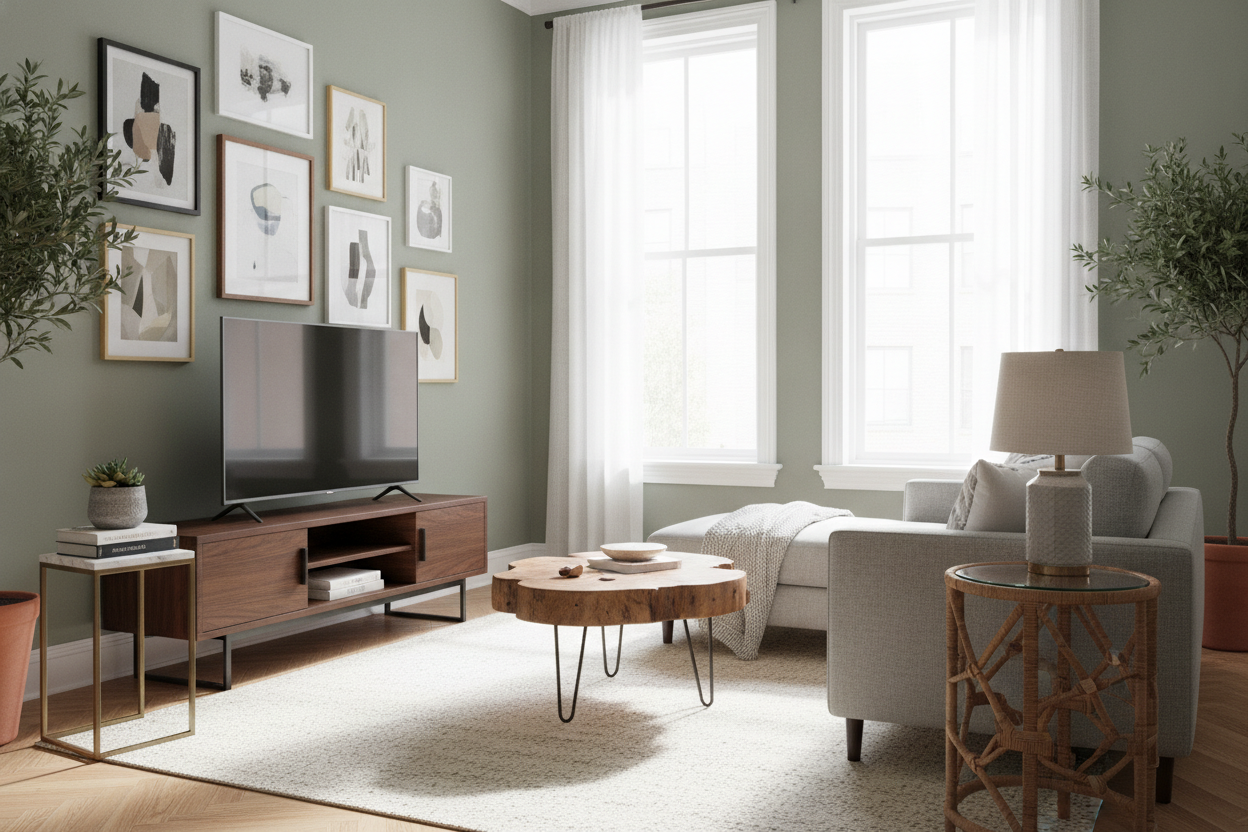
I once spent three hours at 1 AM scrolling through 50 different browser tabs of mid-century consoles, trying to find the exact shade of 'acorn' to match a coffee table I already owned. I thought I was being a diligent decorator. In reality, I was just making my living room look like a generic hotel lobby. I’ve assembled more flat-pack furniture than I care to admit, and the biggest lesson I’ve learned is that how to match coffee table with tv stand isn't about finding identical twins—it’s about finding cousins.
- Stop buying matching sets; they lack personality and depth.
- Focus on wood undertones (warm vs. cool) rather than exact wood species.
- Balance visual weight by pairing a heavy piece with a 'leggy' or glass piece.
- Use side tables to bridge the gap between different materials.
Confession: I Used to Buy Everything in Identical Sets
There was a time when I thought 'coordination' was a synonym for 'identical.' I’d walk into a big-box store, see a vignette with three matching tables and a TV stand, and think, 'Perfect, someone else did the work for me.' I bought the whole set. When it arrived, my living room felt sterile. It didn't feel like a home; it felt like a showroom where no one actually lived. Every piece of wood was the exact same shade of espresso, and it made the entire room feel flat and uninspired.
I realized that the most beautiful rooms—the ones you see in high-end design mags—don't have everything matching. They have pieces that look like they were collected over time. I had to stop matching your tv stand color to your coffee table to finally give my space some soul. Breaking that cycle was terrifying because I was afraid of things clashing, but once you learn the logic of mixing materials, you never go back to the catalog sets. The fear of 'clashing' is usually just a lack of confidence in contrast.
So, Does Your TV Stand Have to Match Your Coffee Table?
Does your tv stand have to match coffee table? Absolutely not. In fact, professional designers almost never do this. Matching creates a visual dead end where the eye doesn't have anything interesting to land on. Instead, you should aim to coordinate. Coordination means your pieces share a common design language—maybe they both have tapered legs, or they both feature organic shapes—but they aren't carbon copies of each other.
When people ask, 'does coffee table have to match tv stand?' I tell them to think of it like an outfit. You wouldn't wear a denim shirt with denim pants of the exact same wash (unless you're going for the full Canadian tuxedo). You mix a light wash with a dark wash. Your furniture is the same. You want a conversation between the pieces, not a monologue. How to coordinate coffee table and tv stand is about finding a thread of similarity, like a shared era or a similar level of formality, while letting the finishes vary.
My Foolproof Rules on How to Match Coffee Table With TV Stand
If you're staring at a blank living room and feeling paralyzed, I have a few 'rules' that I use whenever I'm helping a friend shop. These aren't rigid laws, but they are a solid foundation for how to match tv stand and coffee table without ending up with a mess. The goal is to make the room feel curated, not chaotic.
Rule 1: Contrast the Materials (Wood vs. Metal)
One of the easiest ways to handle how to pair coffee table with tv stand is to change the material entirely. If you have a chunky, solid wood media console, don't buy another chunky wood coffee table. It’s too much of the same texture. Instead, go for a coffee table with a metal frame and a glass top. This adds a bit of 'air' to the room. The glass allows you to see your rug, and the metal provides a sleek contrast to the warmth of the wood. This also solves the problem of trying to match wood grains, which is a losing battle anyway.
Rule 2: Keep the Undertones Friendly
If you do want two wood pieces, you have to look at the undertones. This is where most people trip up when figuring out should coffee table color match tv stand. Woods are either warm (red, orange, yellow undertones) or cool (grey, ash, blue undertones). You can mix walnut and teak because they both lean warm. However, if you put a yellowy oak coffee table next to a cool, grey-washed TV stand, it’s going to look like a mistake. Keep your 'warm' woods together and your 'cool' woods together, and the room will feel cohesive even if the species are different.
Rule 3: Let One Piece Be the 'Loud' One
Furniture has visual weight. A massive, floor-to-ceiling entertainment center is a 'heavy' piece. If you pair that with a heavy, trunk-style coffee table, the room will feel cramped and weighed down. My rule is that only one piece gets to be the star. If the TV stand is detailed or large, keep the center table minimalist. This balance is the secret to how to match coffee table with tv stand without the room feeling like it's closing in on you.
What About the Rest? Do Side Tables Have to Match?
Once you've sorted the main duo, the next question is always: do side tables have to match? Or even more specifically, do end tables have to match coffee table? My take: please, mix and match side tables. Having a matching set of three tables (one coffee, two ends) is the fastest way to make a room look dated. I love to use one side table that matches the TV stand's material and another that is something completely different—like a ceramic stool or a stone plinth.
Should side tables match each other? They don't have to. You can have a round metal table on one end of the sofa and a square wooden one on the other. As long as they are a similar height (within 2 inches of the sofa arm), they will look fine. Mix and match coffee tables and side tables to create layers. If your coffee table is wood, try a marble side table. This variety is what makes a room feel 'designed' rather than 'purchased.'
The One Time I Actually Recommend Buying the Set
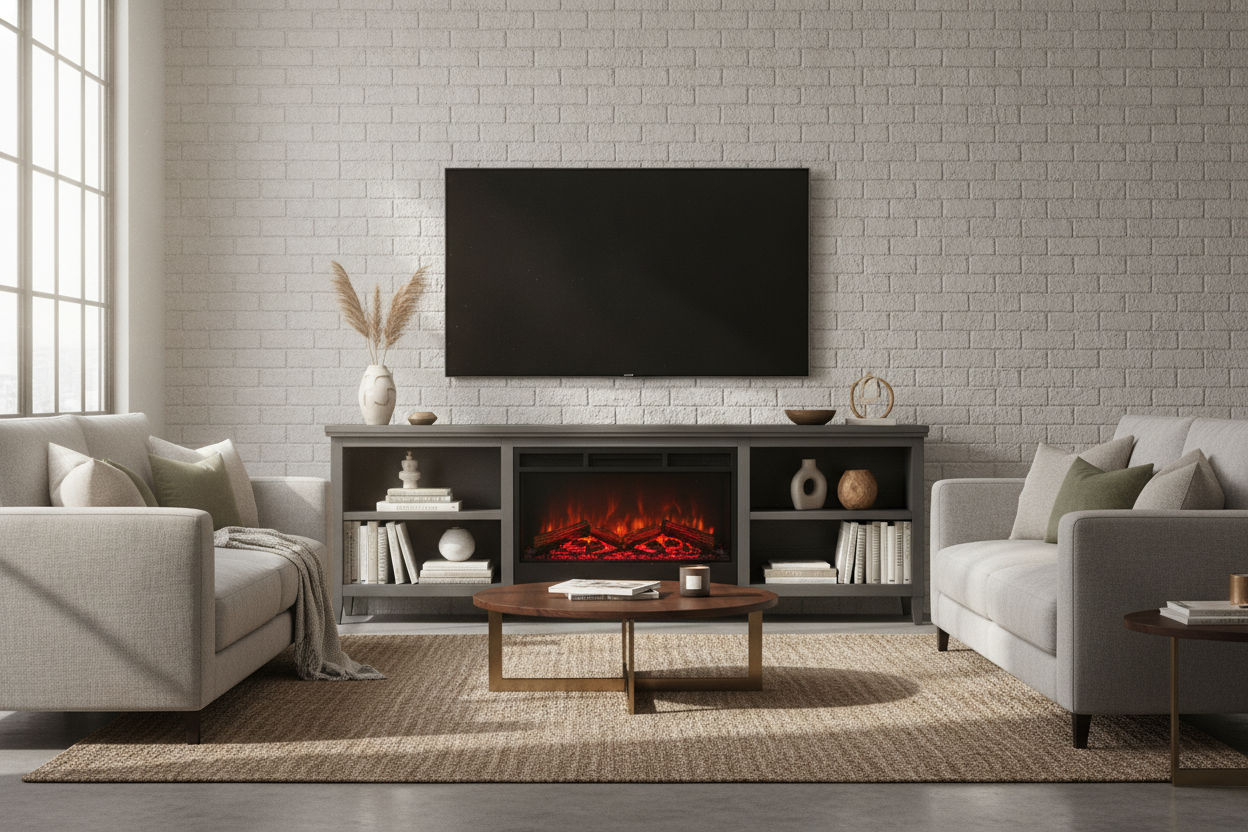
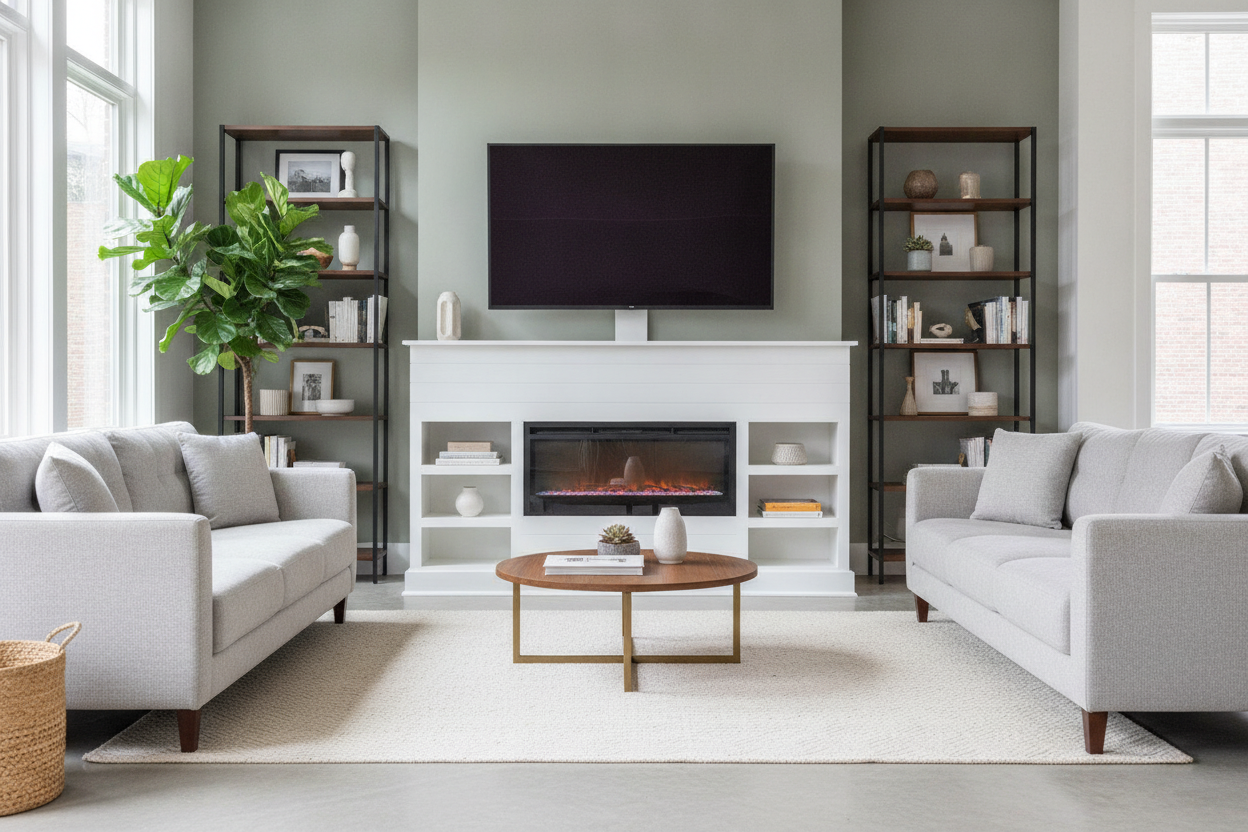
I know I’ve spent this whole article telling you to avoid sets, but there is one exception. If you are going for a very specific, ultra-modern, or minimalist look, making your coffee table and tv stand match can actually look incredibly sharp. I’m talking about those high-gloss, seamless spaces where the furniture is meant to blend into the architecture rather than stand out as individual pieces.
For example, a high gloss LED entertainment center has such a specific, futuristic vibe that trying to find a 'contrasting' wood table might just look messy. In that case, pairing it with a high gloss storage coffee table creates a continuous, sleek line that works. It’s a very 'Miami penthouse' or 'modern loft' aesthetic. If that’s your vibe, lean into it fully. Just know that once you go high-gloss, you're committed to that look for the whole room.
FAQ
Should my coffee table match my tv stand?
No. They should coordinate in style or undertone, but having them match perfectly often makes a room look flat and uninteresting. Focus on similar 'vibes' rather than identical finishes.
Should coffee table and sofa table match?
They don't have to. It's often better if they don't. Try to link them with a single element, like similar leg styles or metal finishes, but let the main surfaces differ to add texture.
Does your tv stand have to match coffee table if the room is small?
Actually, in small rooms, matching can make the space feel smaller by creating a 'block' of the same color. Mixing materials—like using a glass coffee table—can actually make a small room feel much more open.

Laisser un commentaire
Ce site est protégé par hCaptcha, et la Politique de confidentialité et les Conditions de service de hCaptcha s’appliquent.