


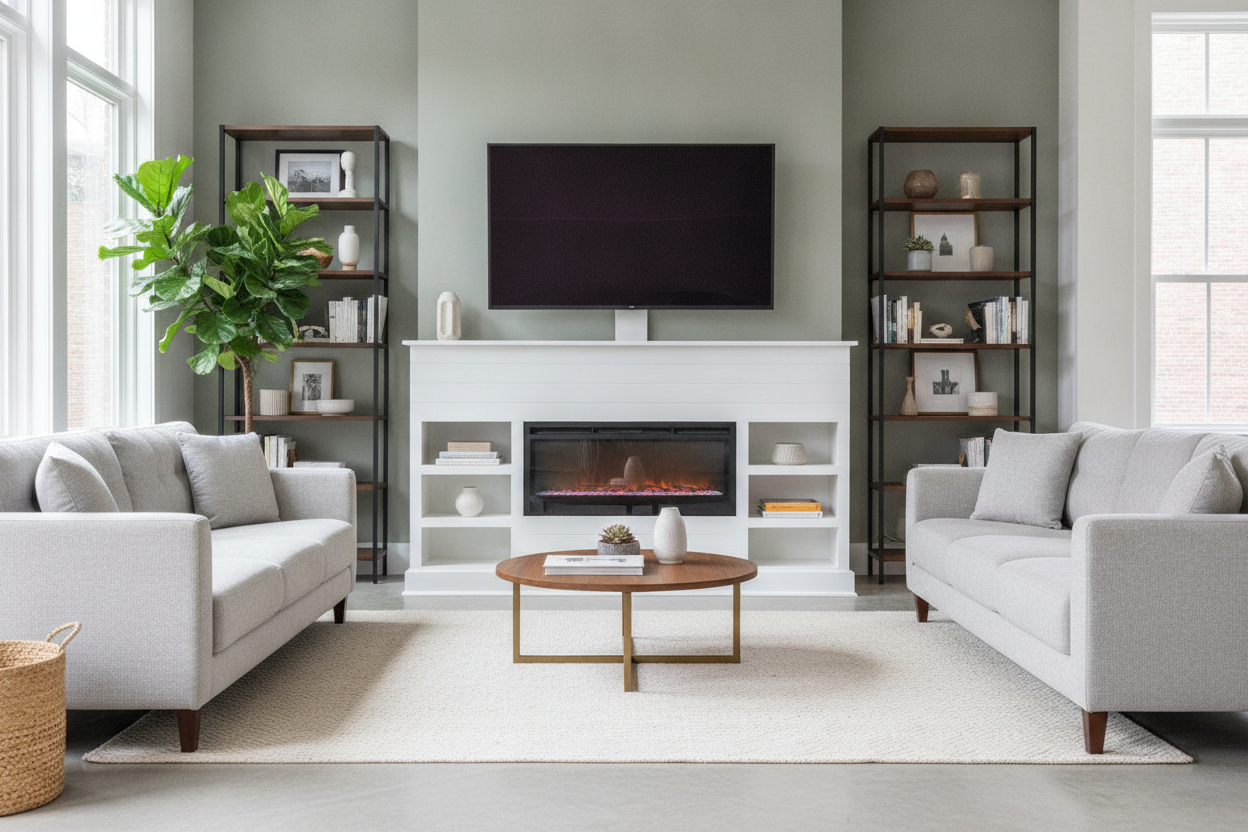
I spent three weeks staring at my living room wall, paralyzed by a design choice I didn't even make. My house came with one of those 1980s brick fireplaces that was clearly built by someone who hated furniture. It was off-center, soot-stained, and smelled like a wet campfire every time it rained. I didn't want to spend five grand on a demo, so I did the unthinkable: I bought a tv stand over fireplace setup to just... make the whole problem disappear.
- Seal the firebox with a chimney balloon or foam board to stop drafts before blocking it.
- Measure your hearth depth carefully; your console legs need to clear the brick or sit flush.
- Choose a stand at least 6-10 inches wider than the firebox to fully mask the 'black hole.'
- Opt for an electric insert model to keep the 'cozy' look without the actual mess.
The Elephant in the Room: My 1980s Brick Monstrosity
My fireplace wasn't just ugly; it was aggressive. It was a floor-to-ceiling sprawl of pitted, mismatched red brick that occupied the only wall long enough to accommodate a sofa and a TV. Because the hearth jutted out 18 inches into the room, I was forced to push my coffee table into the 'traffic zone.' It felt like living in a Tetris game where the pieces didn't fit.
The draft was the real kicker. Even with the damper closed, I could feel cold air pouring into the room. It wasn't a feature; it was a 40-square-foot hole in my wallet. I realized that if I couldn't use it, I might as well treat it like a regular wall. That’s when I started looking into an over fireplace tv stand as a permanent camouflage tactic.
Wait, Is It Legal to Just Cover a Fireplace?
The decor purists will tell you it's a sin to block a hearth. I tell those people they don't have to pay my heating bill. Safety-wise, as long as you aren't actually lighting a fire behind your wood furniture, you're fine. But you can't just shove a sideboard in front of it and call it a day. You have to prep the site like you're sealing a tomb.
I spent a Saturday scrubbing the firebox and vacuuming out decades of ash. I then installed a rigid foam chimney plug to stop the drafts and pests. Once it was clean and airtight, I felt much better about placing furniture there. Reading about a viral fireplace TV stand gave me the final push; seeing how others used these units to solve layout nightmares made my 'taboo' idea feel like a genius hack.
Why I Didn't Just Put a TV Stand on Top of Fireplace Mantels
I know what you're thinking: Why not just put the TV on the mantel? Because I value my neck. Most mantels sit at about 48 to 54 inches high. By the time you add a stand or a mount, you're looking at the ceiling. It's the fastest way to turn a movie marathon into a trip to the physical therapist.
You really should stop trying to put a tv stand on a fireplace mantel if you actually plan on watching the screen. The viewing angle is naturally better when the screen is at eye level while seated. Placing the stand directly on the floor in front of the hearth solves the height problem instantly.
How I Measured for the 'Cover-Up' Console
This is where the math gets annoying. Most hearths have a 'step' or a raised platform. You need to decide if your stand is going to sit on top of that hearth or straddle it. I measured my hearth's height—exactly 2 inches—and realized I needed a console with legs tall enough to clear that lip, or a solid-base unit that could sit firmly on the brick without wobbling.
I spent hours hunting through modern TV stands to find one with a width of at least 70 inches. Why? Because my firebox was 42 inches wide. If the stand is too narrow, you'll see the 'ghost' of the fireplace peeking out from the sides, which looks messy. You want the furniture to look like it belongs to the wall, not like you're hiding a secret door.
Faking the Glow (Because I Still Wanted the Cozy Vibe)
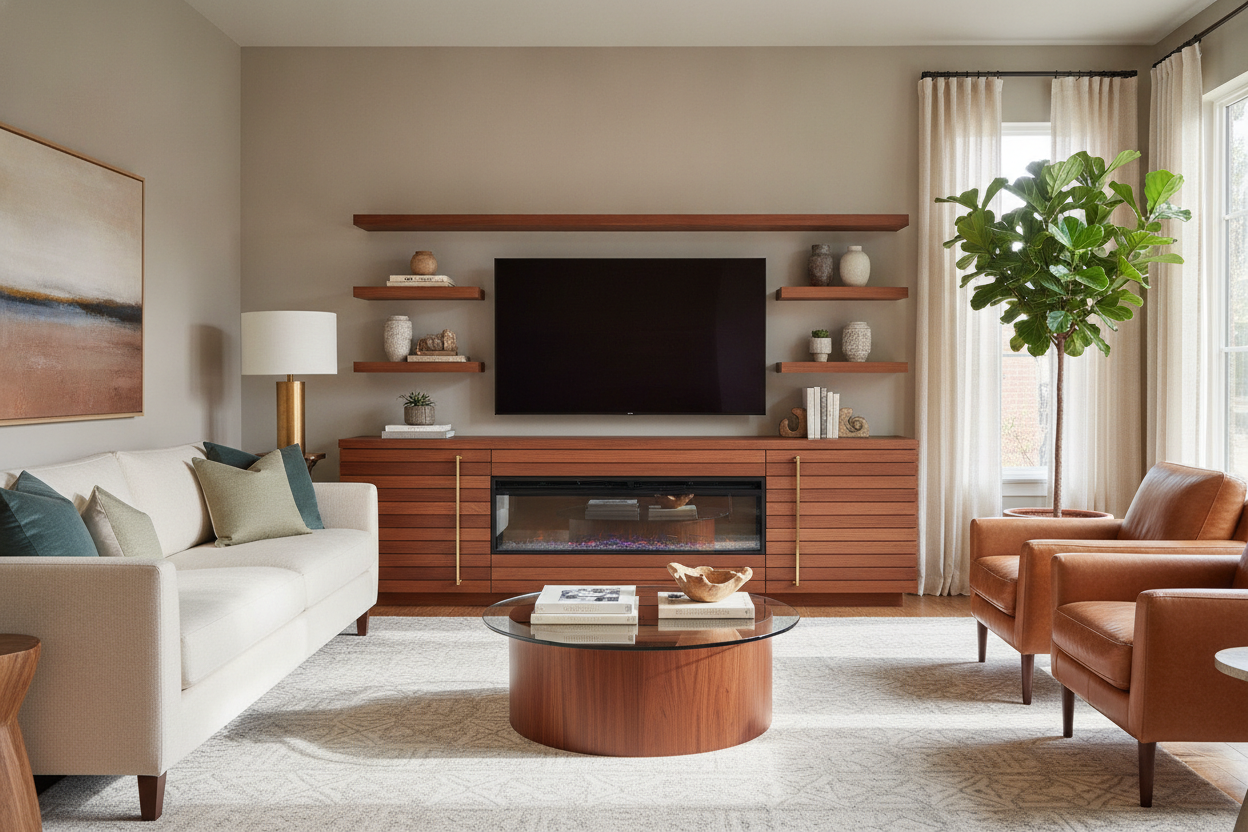
The irony of covering a real fireplace with a fake one isn't lost on me. But honestly? The electric version is better. I chose a white fireplace heater TV stand because it gave me that flickering light and supplemental heat without the soot or the 'old house' smell. It plugged right into the outlet I had nearby.
If your space is tighter, you might look at a smaller electronic fireplace with white TV stand. These compact units are great for masking smaller bedroom fireplaces or basement hearths that never got any love. The best part is the remote; I can have the 'fire' on in mid-July without sweating through my shirt.
3 Rules for Making This Weird Layout Actually Work
First, don't leave a gap between the stand and the wall. If the hearth prevents the stand from sitting flush, use a piece of matching wood or a decorative runner to bridge the gap. It prevents dust bunnies and lost remote controls from falling into the 'abyss' behind the console.
Second, use the 'rule of three' for styling. Since you've covered a major architectural feature, you need to create a new one. Flank the stand with tall plants or floor lamps to widen the visual footprint. Third, be honest about the cords. Since you can't run wires through the brick easily, invest in some high-quality cord channels that match your wall color.
FAQ
Can I still use my fireplace if I put a stand in front of it?
Absolutely not. This is a permanent or semi-permanent 'decommissioning' of the fireplace. You must ensure the gas is off or the wood-burning area is completely inactive before blocking it with furniture.
Will the heat from the electric stand damage the brick?
No. Electric fireplace inserts blow heat outward from the front. The back of the unit stays cool, so your brick (and your wall) are perfectly safe from heat damage.
What if my hearth is too high for a standard stand?
In that case, you might need to look for 'floating' media consoles that mount to the wall above the hearth, or use a TV stand on top of fireplace brick if the brick is level and stable enough to support the weight.

Laisser un commentaire
Ce site est protégé par hCaptcha, et la Politique de confidentialité et les Conditions de service de hCaptcha s’appliquent.