


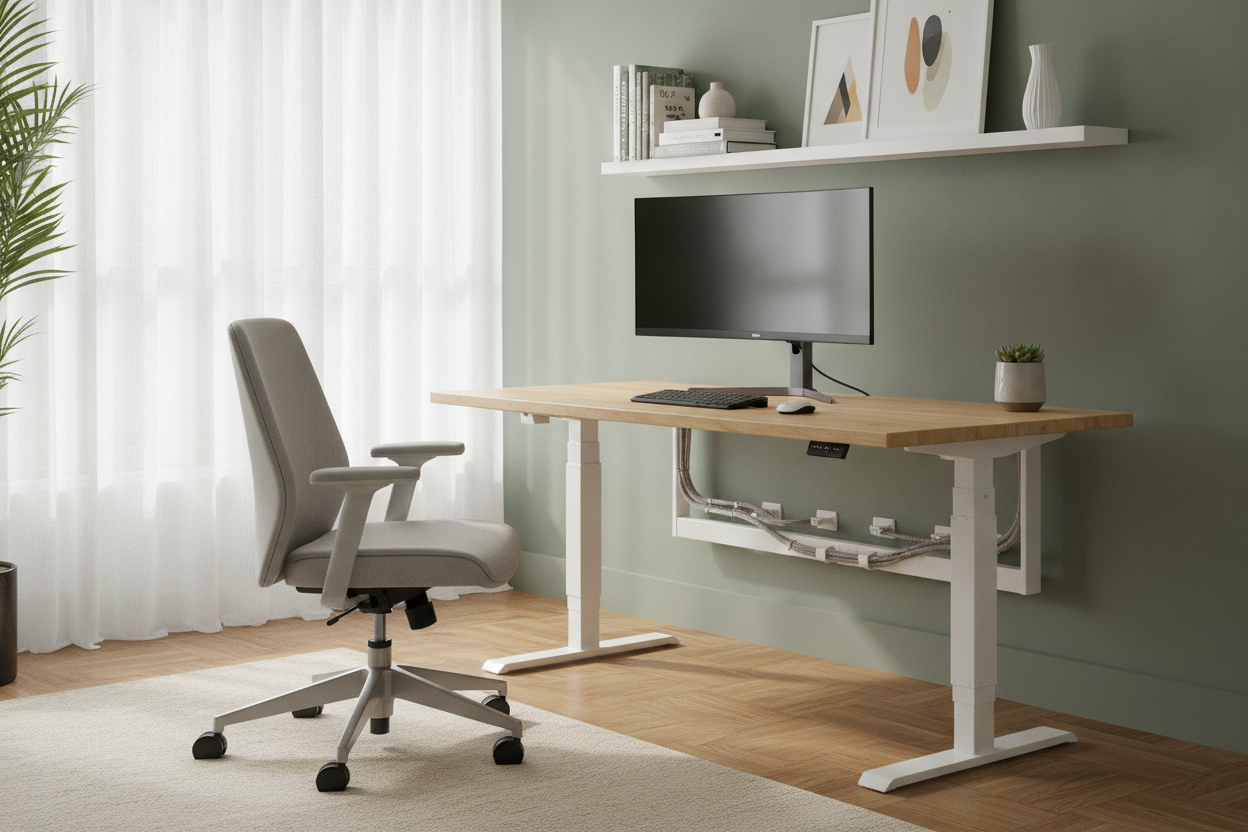
I spent three hours last Saturday on my hands and knees with a bag of Velcro ties and a surge protector, trying to hide the 'black spaghetti' under my workstation. My office looked like a server room had exploded. Every time I hit the button on my fancy electric desk, a hidden cable would snag, or the power brick would dangle like a sad, heavy pendulum. It was a constant battle between my desire for ergonomics and my need for a clean, Pinterest-worthy aesthetic.
I finally realized the problem wasn't my cable management skills; it was the motor itself. That's when I ditched the electronics for a manual adjustable desk frame. It sounds backward, but going low-tech was the smartest design move I’ve made in years. No more heavy power blocks, no more tethering my desk to a specific outlet, and finally, a workspace that looks like furniture rather than a piece of hospital equipment.
- Zero power cables: You only have to manage your computer cords, not the desk itself.
- Total placement freedom: Put your desk in the middle of the room without a trip hazard.
- Long-term durability: No motors to burn out or sensors to reset.
- Lighter weight: Easier to move during a deep clean or an apartment move.
The Cord Chaos That Finally Broke Me
Electric standing desks are marketed as the peak of productivity, but they’re often an aesthetic nightmare. You’ve got the thick power cable running to the wall, the bulky control box mounted underneath, and the 'snake' of wires that has to have enough slack to move up and down. I once tried using double-sided tape to hide a power brick, only to have it crash onto my toes in the middle of a Zoom call because the motor's vibration shook it loose.
I desperately missed the clean lines of a traditional writing computer desk. With a motorized setup, you’re tethered to an outlet. You can’t just tuck your desk into a sunlit corner if there isn't a plug within six feet. I found myself buying expensive cable trays and cord spines just to hide the hardware that came with the desk. It felt like I was paying extra to solve a problem the desk itself created.
Why a Manual Adjustable Desk Frame Was the Only Fix
Swapping to a manual height adjustable desk frame changed the math of my room entirely. Suddenly, the only wires I had to deal with were for my laptop and monitor. Since there's no motor, there's no 'brain' to fry during a power surge. It’s just cold, hard steel and a simple gear system. I don't have to worry about a control panel flickering out or the legs getting 'un-synced'—a common headache where one side of the desk rises faster than the other.
I’ve found that these things are tank-like in their simplicity. My current manual sit stand desk frame has survived three separate apartment moves without a single glitchy sensor. While my friends were recalibrating their 'E08' error codes on their motorized desks after a move, I just unfolded my legs and was ready to work in ten minutes. There's a peace of mind that comes with knowing your furniture doesn't have a motherboard that can fail.
The Ultimate Design Flex: The Floating Desk Layout
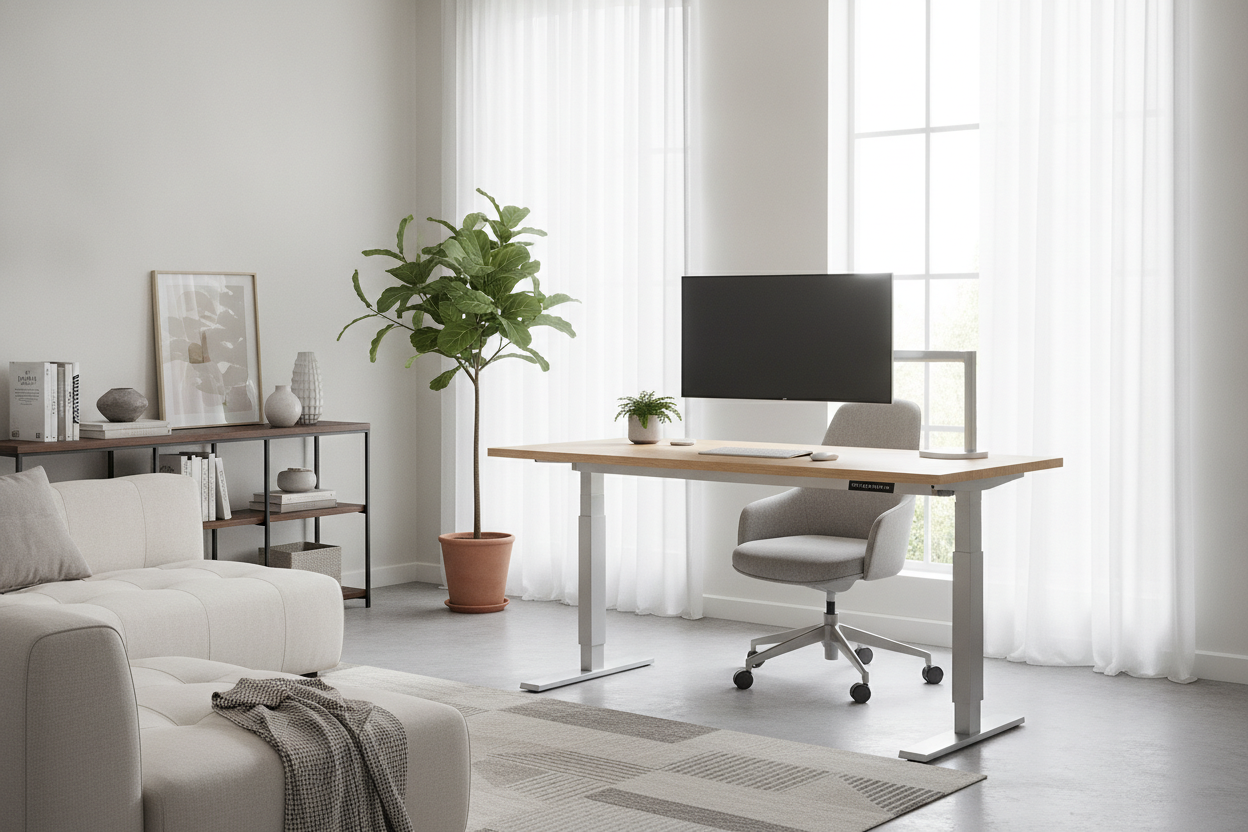
The biggest perk for the design-obsessed is the 'floating' layout. Interior designers love to pull furniture away from the walls to make a room feel bigger, but you can't do that with an electric desk unless you want a massive black cord running across your floor like a tripwire. Using manual standing desk legs means you can put your workspace literally anywhere—right in the center of the room, diagonally in a corner, or even facing a window in the middle of an open-concept loft.
I currently have a large height adjustable standing desk setup right in the center of my home office, facing the door. It feels powerful and open. Because I’m not tethered to the baseboard, I don’t have that 'cubicle pushed against the wall' vibe. If I want to rearrange the room on a whim to catch the afternoon light, I just pick it up and move it. No unplugging, no cable management overhaul, and zero cords touching the floor except for my laptop charger, which I can hide inside a small floor box.
But Is the Hand Crank Actually Annoying?
This is the question everyone asks: 'Don't your arms get tired?' Honestly, it takes about 15 to 20 seconds to go from sitting to standing. It’s a standing desk frame manual style, not a Victorian-era well pump. You aren't churning butter; you're turning a smooth, geared handle that usually folds away discreetly under the desktop when you're done. I've timed it, and it's often faster than the 'slow and steady' safety speed of many entry-level electric motors.
If you’re the type of person who changes height every 10 minutes, maybe you’ll get annoyed. But for most of us who switch twice a day, it’s actually worth the arm workout just to have a cleaner space. Plus, there’s something weirdly satisfying about the tactile click of the handle. It’s a physical transition from 'focus time' to 'standing meeting' that a button just doesn't provide. You feel more connected to your gear.
How to Pair Your Frame with the Perfect Top
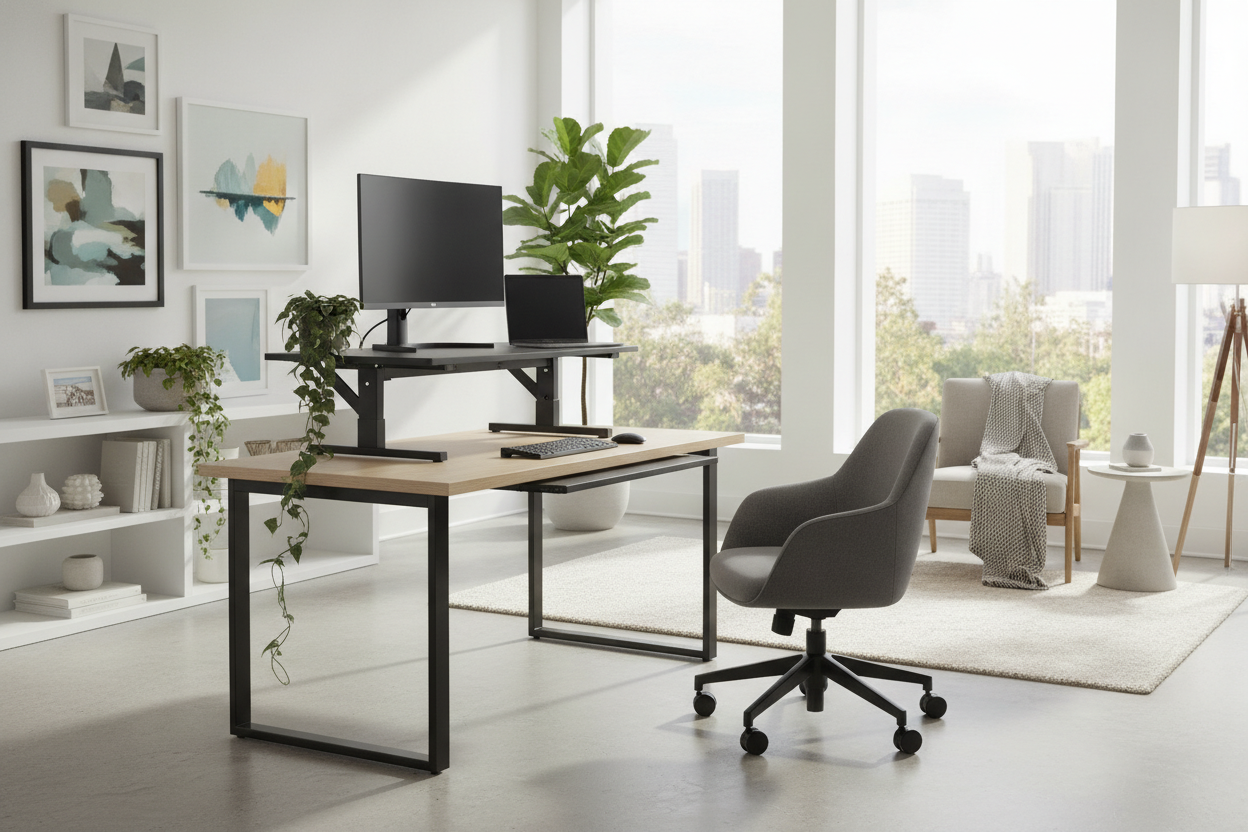
Don't settle for the cheap, hollow laminate tops that usually come bundled with office furniture. Since you're saving money by skipping the motor, spend that extra cash on a solid wood top. A 1.5-inch thick birch or walnut butcher block looks incredible on black or white manual legs. It makes the whole setup feel like a piece of high-end furniture rather than a piece of office surplus.
I personally went to a local hardware store and grabbed a 60-inch unfinished block. A little sanding and some Danish oil later, and I had a desk that looked like a custom piece. It feels substantial. When you’re cranking the desk up, a solid wood top doesn't rattle or flex like the honeycomb cardboard stuff does. It’s the difference between a desk that lasts two years and one that lasts twenty.
Can manual desks hold as much weight as electric ones?
Usually, yes. Most manual frames are rated for 150 to 200 lbs, which is plenty for a triple-monitor setup and a heavy PC. Just keep in mind that the more weight you add, the more tension you'll feel when cranking it up.
What happens if the crank handle breaks?
Most handles are removable or replaceable. Unlike a fried motor which requires a whole new leg assembly and a technician, a handle is a cheap part you can swap in seconds. I've never actually seen one break, though—they're usually solid steel.
Is assembly harder than an electric desk?
It’s actually easier. You aren't spending 45 minutes routing cables through tiny plastic clips or figuring out which 6-pin connector goes into which port. It's purely mechanical assembly, which is much more straightforward for the average DIYer.

Laisser un commentaire
Ce site est protégé par hCaptcha, et la Politique de confidentialité et les Conditions de service de hCaptcha s’appliquent.