


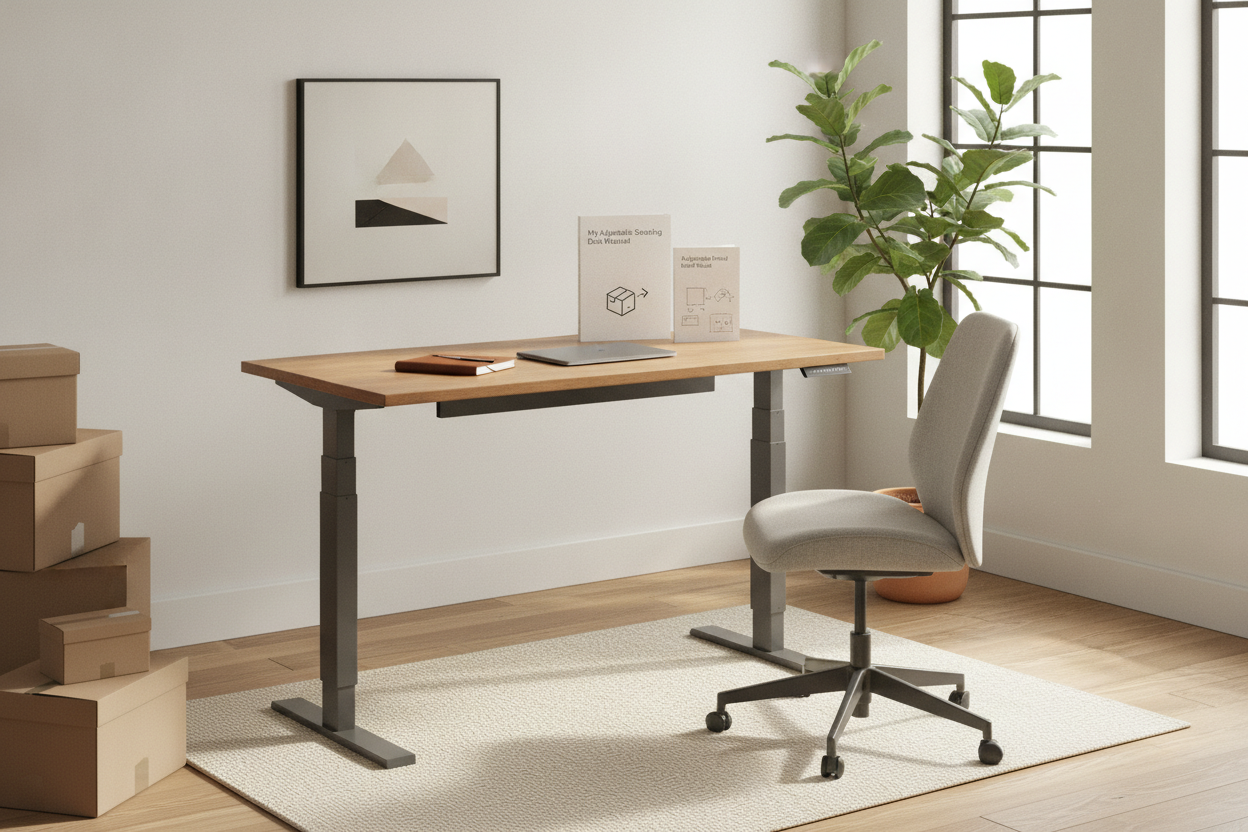
I have spent three separate Saturdays in the back of a U-Haul, wrestling with MDF boards and hex keys, watching my life get packed into cardboard boxes. Each move is a trial by fire for furniture. I have seen 'sturdy' bookshelves collapse under their own weight and seen 'premium' sofas lose their legs in the elevator. But through every apartment hunt and security deposit battle, my adjustable standing desk manual frame has remained the one piece of gear I never worry about.
Most people think they need a motorized beast to have a functional workspace. They want the presets and the smooth hum of a motor. But after watching my roommate’s $600 electric desk turn into a permanent coffee table because a single proprietary cable snapped during our last move, I am more convinced than ever that analog is the only way to go for the serial renter.
Quick Takeaways
- Zero electronics means zero error codes or motor burnouts.
- Significant weight savings make it much easier to carry up three flights of stairs.
- Manual frames are often narrower, fitting into weird apartment nooks where bulky electric legs won't.
- It is the ultimate 'buy it for life' office piece because there is nothing to short-circuit.
The Day the Motor Died (And I Swore Off Plugs)
Two years ago, I watched my roommate, Dave, stare in literal despair at his desk. We had just finished hauling his massive sit-stand setup into our new third-floor walk-up. He plugged it in, hit the 'up' button, and heard a sickening crunch. A small plastic clip inside the motor housing had cracked during the bumpy truck ride, and the desk was stuck at a jaunty 15-degree angle.
He spent three weeks waiting for a replacement part that never came because that specific model had been discontinued. Meanwhile, my manual desk was up and running in ten minutes. I didn't need to hunt for an outlet or worry about whether the voltage in this old building would fry a control board. I just unfolded the crank and got to work.
Why an Adjustable Standing Desk Manual Setup is Practically Indestructible
The beauty of a manual setup lies in its simplicity. It’s essentially a bicycle chain or a simple gear rod hidden inside a steel leg. There are no sensors to get misaligned and no 'E-08' error codes that require a factory reset. When you remove the heavy power bricks and the control box, you are left with a clean, streamlined frame.
This stripped-down design is why I love it. It doesn't look like a piece of heavy IT equipment. In fact, if you pair a manual frame with a nice wood top, it easily doubles as a minimalist writing computer desk that fits into a bedroom without making the space feel like a corporate cubicle. It’s furniture, not an appliance.
The Weight Difference is Shockingly Noticeable
If you have ever tried to move a dual-motor electric desk, you know they weigh a ton—literally. Those motors are dense, heavy, and usually bolted deep into the frame. My manual frame weighs about 30% less than the motorized equivalent. When you are the one carrying it up a narrow stairwell in a rainy Brooklyn afternoon, that 20-pound difference feels like a gift from the gods.
Does a Sit and Stand Desk Manual Crank Actually Annoy You?
I’ll be honest: it takes about 30 to 40 turns to go from sitting to standing. It’s not 'instant.' If you are the kind of person who wants to switch positions every fifteen minutes, you might find it tedious. But for most of us who stand for a two-hour block and then sit for a while, the 30 seconds of cranking is a non-issue. It’s a moment to stretch your arms and get your eyes off the screen.
I actually find the tactile feedback satisfying. You feel the gears catch, and you have total control over the height down to the millimeter. If you’re on the fence about the physical effort, check out this breakdown: Is a Manual Standing Desk Actually Worth the Arm Workout?
When You Should Actually Buy an Electric Desk Instead
I’m not a zealot. There are times when a sit and stand desk manual isn't the right call. If you have chronic wrist pain, arthritis, or limited mobility, cranking a handle is a bad idea. Similarly, if you own your home and don't plan on moving for a decade, the weight and fragility of a motor don't matter as much.
If you fall into that camp, don't buy a cheap motor. Go for something robust like a desk with memory preset controller. If you're going to commit to the plug, commit to a high-quality one that won't leave you stranded like Dave.
The Final Verdict: Predictability Wins Every Time
My home office is my sanctuary, and I’ve realized that tech-fatigue is real. I don't want my desk to need a software update or a specific power strip. I want it to work when the power is out and survive being tossed into the back of a van. My manual desk has survived three moves, two spills, and one very heavy monitor arm setup. It’s the most predictable thing in my house, and in a world of planned obsolescence, that is worth its weight in gold.
FAQ
How long does it take to crank from sitting to standing?
On average, it takes about 30 to 45 seconds of steady cranking. It’s not a workout, but it’s more effort than pushing a button.
Do manual desks wobble more than electric ones?
Actually, they often wobble less. Because they don't have heavy motors at the top of the legs, the center of gravity is lower. Just make sure you tighten the bolts once a year.
Can I use any desktop with a manual frame?
Usually, yes. Most manual frames are adjustable in width, so you can bolt on a custom wood top or a cheap laminate one from the hardware store without worrying about overloading a delicate motor.



Laisser un commentaire
Ce site est protégé par hCaptcha, et la Politique de confidentialité et les Conditions de service de hCaptcha s’appliquent.