


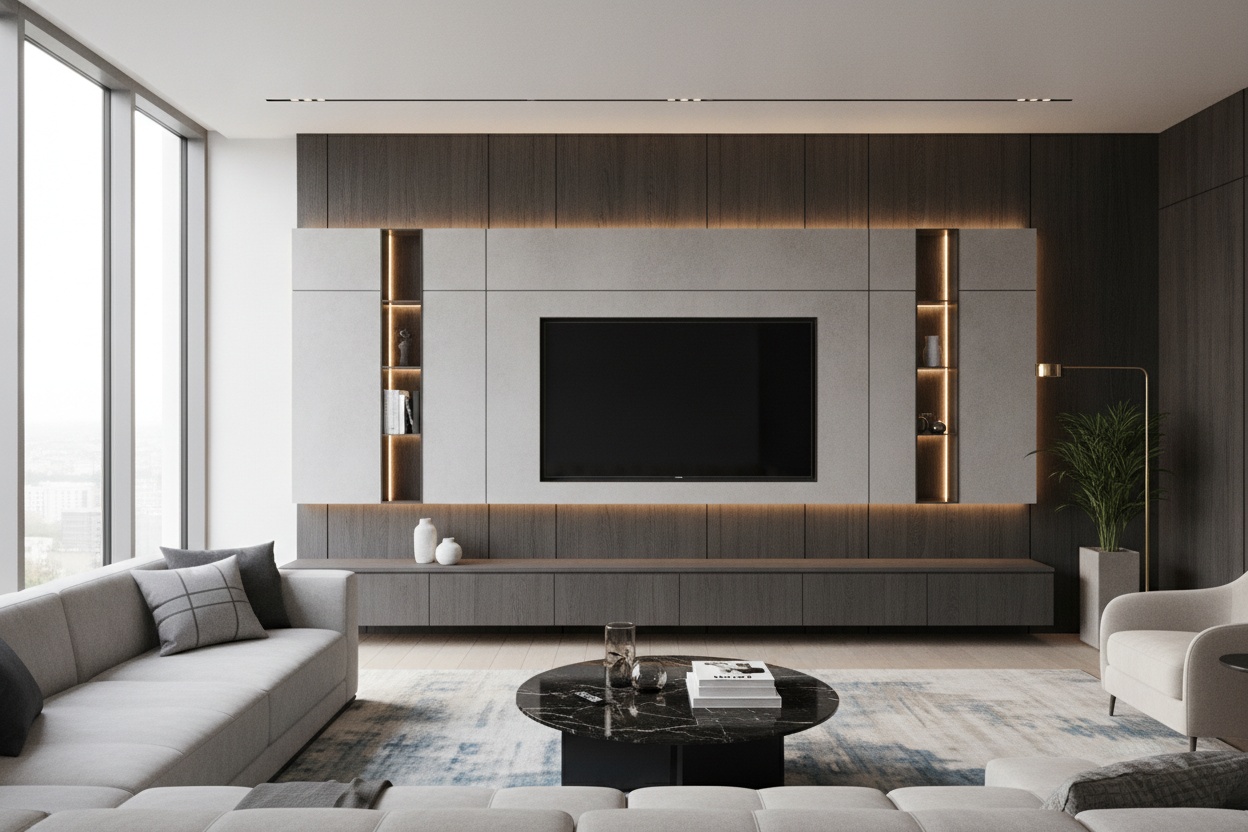
I remember the first time I tried to add 'ambiance' to my living room. I bought a cheap roll of LED strips, slapped them onto the back of my IKEA cabinet, and turned them on. The result? My apartment looked less like a chic lounge and more like a 19-year-old’s Twitch streaming setup. It was harsh, the diodes were visible, and the 'cool white' light made my skin look like I’d been living in a submarine.
We have all been there, scrolling through 50 tabs of furniture at midnight, trying to find a modern tv wall unit with led lights that actually looks like an adult lives there. The trick isn't the lights themselves; it's how you hide them and what color they actually are. If you do it right, your media center becomes a glowing architectural feature. If you do it wrong, you’re basically living in a Best Buy showroom.
Quick Takeaways
- Stick to warm color temperatures (2700K to 3000K) to avoid the 'dentist office' vibe.
- Ensure the light source is hidden; you want the glow, not the bulb.
- Balance hard tech with organic textures like wood, plants, and woven baskets.
- Matte finishes are your friend; high-gloss surfaces create distracting glare from the LEDs.
The 'Twitch Streamer' Dilemma (And Why It Happens)
The reason so many people are terrified of a living room tv wall unit with led lights is because they’ve seen the bad versions. You know the ones: bright, neon-blue light bleeding out from behind a glossy black plastic cabinet. It’s aggressive. It’s cold. And it usually happens because the unit uses cheap, high-Kelvin LEDs that mimic the harsh light of a hospital wing.
When you transition from sleek modern TV stands to full-scale wall units, the scale of the lighting increases. If that light is too blue or the diodes are exposed, it highlights every fingerprint on your screen and every speck of dust on the shelf. The 'dorm room' look is almost always a combination of poor light placement and finishes that are too reflective. You want the light to feel like it is part of the furniture's DNA, not an after-thought you stuck on with adhesive tape.
How to Make a Modern TV Wall Unit With LED Lights Look Expensive
If you want that 'custom cabinetry' look without spending five figures, you have to be obsessed with color temperature. Most cheap LED units default to 6000K, which is a sterile, bluish light. Look for units that offer 'Warm White' or specific 2700K settings. This mimics the soft, golden glow of a sunset or a high-end hotel lobby. It makes the wood grain pop and feels much more inviting when you're settling in for a movie.
Materials matter just as much as the bulbs. A freely arranged TV stand with LED works because it uses the wall as a canvas. When the light hits a matte-painted wall or a textured wood panel, it diffuses. It becomes a soft wash rather than a sharp beam. This is the difference between a piece of furniture that looks like a gadget and one that looks like a curated design choice.
Rule #1: Never Look Directly at the Bulb
This is the golden rule of architectural lighting: you should see the effect of the light, never the source. If you can see the individual 'dots' of the LED strip, the illusion is broken. High-end units use diffusers or recessed channels to bury the lights. The goal is to have the light wash against the wall behind the unit or graze the objects on your shelves. This creates depth and makes the whole unit feel like it’s floating, which is exactly the kind of drama you want in a modern living room.
Warming Up Your Living Room TV Wall Unit With LED Lights
A massive wall unit can feel a bit 'heavy' and tech-focused. To stop your living room from feeling like a server room, you need to break up those clean lines. I always suggest 'softening' the unit with organic elements. Throw a trailing Pothos plant on a high shelf so the leaves catch the glow. Stack some linen-bound coffee table books. The goal is to create a contrast between the sharp, modern light and the tactile, messy reality of a home.
For the ultimate evening setup, I love pairing these units with other light sources. If you have a living room wall unit with fireplace, the combination of the steady LED glow and the flickering orange light of the flames is unbeatable. It creates layers of light that make the room feel expensive and thoughtfully designed, rather than just 'bright.'
When You Should Actually Just Skip the Massive Wall Unit
I’ll be honest: a 100-inch glowing monolith is not for every room. If you are living in a narrow apartment where the sofa is only six feet from the wall, a massive illuminated unit is going to feel like it's screaming at you. It dominates the visual field and can actually make the room feel smaller because it draws so much attention to the boundary of the space.
In those cases, you are better off with a contemporary low TV stand. You can still add a small, subtle LED strip to the back of the TV itself for that bias lighting benefit (which helps with eye strain!), but you won't have a giant glowing wall taking over your life. Know your square footage before you commit to the 'wall of light' look.
The Time I Ruined My Living Room (Personal Experience)
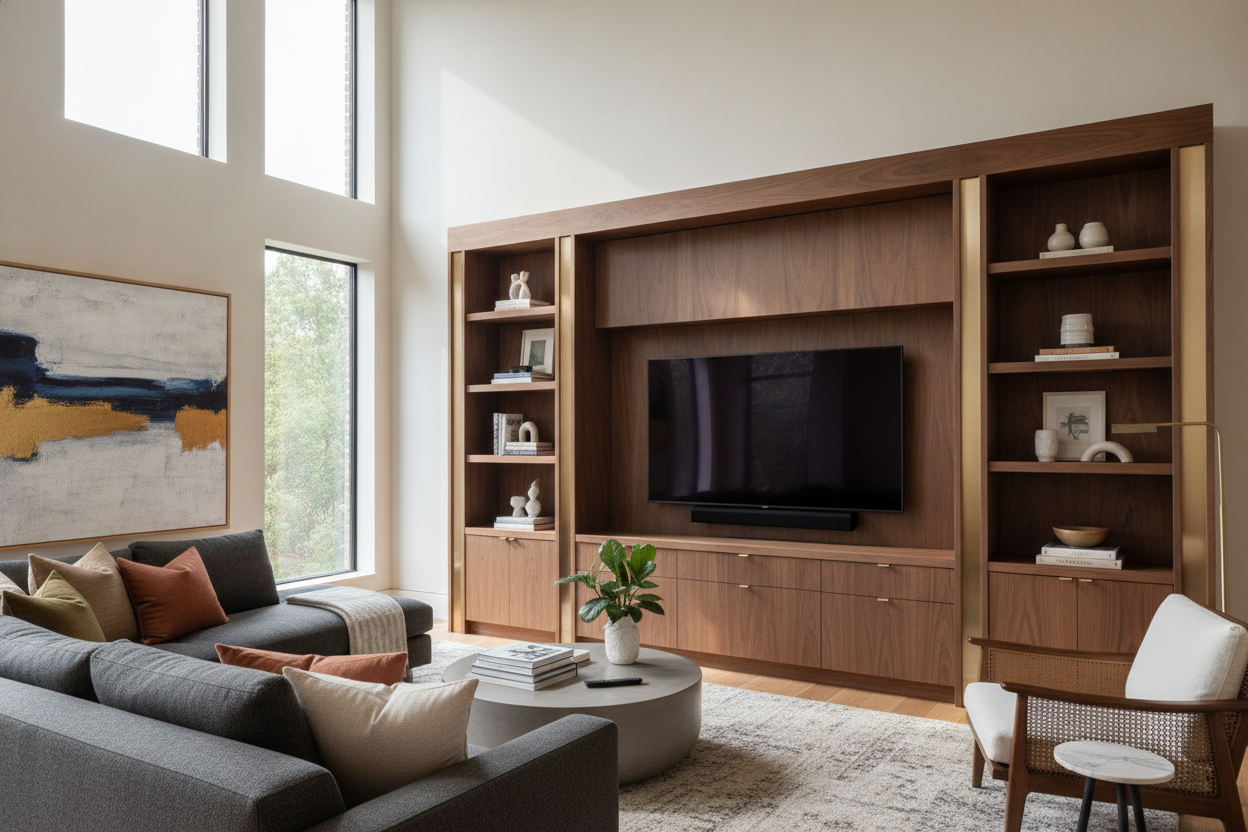
Two years ago, I bought a gorgeous walnut wall unit. It was perfect, except I decided to 'upgrade' the built-in lights with some smart RGB strips I found on sale. I thought it would be cool to have a purple glow for game nights. Within a week, I realized that purple light made my expensive rug look brown and my plants look dead. I eventually ripped them out and went back to a steady, dimmable 3000K warm white. The lesson? Just because you can turn your living room neon pink doesn't mean you should. Stick to the classics.
FAQ
Do LED lights on a TV stand cause glare?
Only if they are poorly placed. If the LEDs are behind the unit or the TV, they actually improve the viewing experience by reducing eye strain. If they are pointing toward the screen or reflecting off a glass cabinet door, you'll get glare. Stick to backlighting and you're golden.
Are these units hard to assemble?
I won't lie to you: wall units are a weekend project. You're dealing with cam locks, heavy MDF or wood panels, and wiring. Most units have pre-drilled holes for the wires, but you'll still spend a good hour just on 'cable management' to make sure you don't have a rat's nest of black cords hanging under your glowing shelf.
Can I leave the lights on all night?
LEDs pull very little power—usually just a few pennies a month—and they don't get hot like old incandescent bulbs. It's safe to leave them on as a nightlight, though I'd recommend a unit with a remote or a smart plug so they turn off automatically when you head to bed.

Laisser un commentaire
Ce site est protégé par hCaptcha, et la Politique de confidentialité et les Conditions de service de hCaptcha s’appliquent.