


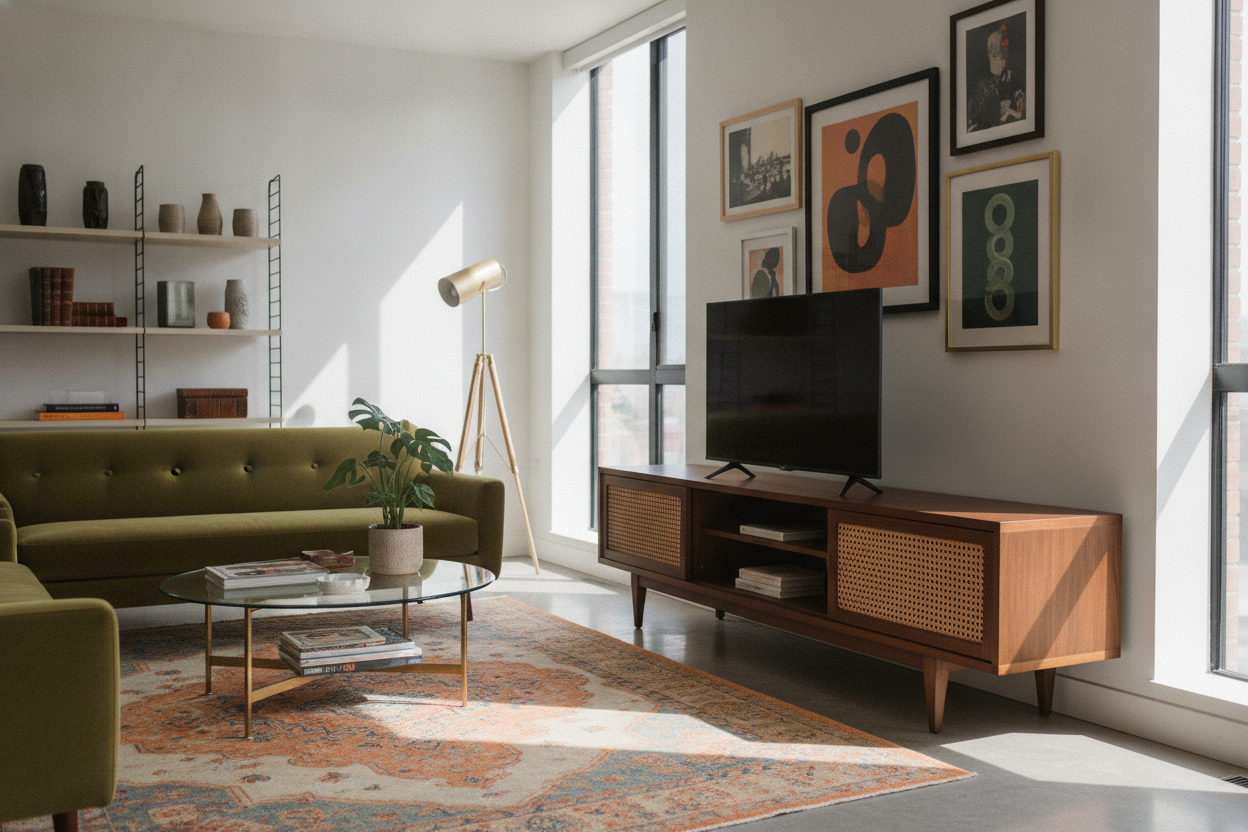
I remember the day I found it: a sleek, walnut 1964 vintage television console sitting in the back of a dusty thrift shop for fifty bucks. I dragged it home, spent three days oiling the wood, and proudly perched my 65-inch OLED on top. Within a week, I noticed the doors didn't close right. Within a month, the top surface was visibly bowing like a tired hammock.
We all want that mid-century aesthetic, but we forget that these pieces were never meant to support a five-foot-wide sheet of glass and metal. Antique television consoles were built for heavy, compact boxes that sat in the middle of the frame, not wide-set legs that put pressure on the weakest points of the furniture's span.
- Vintage pieces lack the center support needed for wide-screen TVs.
- Modern electronics generate more heat than old cabinets can vent.
- Modifying the back panel is usually necessary for cable management.
- Adding a hidden fifth leg is the best way to prevent permanent warping.
The Brutal Reality of Old-School Proportions
The average vintage entertainment console was designed during an era when a 25-inch screen was considered massive. Those old tube TVs were heavy, sure, but their weight was concentrated in a small, square footprint. The internal framing of an antique tv console usually reflects that, with most of the structural integrity focused on the outer edges or a specific central bay.
When you take a modern 65 or 75-inch screen and set it on top, the legs are often positioned right at the edge of the console's overhang. This creates a leverage effect that the original designers never planned for. You aren't just dealing with weight; you're dealing with a distribution nightmare that can snap 60-year-old dowel joints or cause the veneer to crack as the wood fibers stretch under the strain.
The Sag Factor: Why Your Antique Will Bow in the Middle
Physics is a cruel mistress. Most vintage tv consoles for sale feature long, elegant spans of wood supported only by four tapered 'stiletto' legs at the corners. Over time, gravity will win. If you see even a millimeter of daylight between your cabinet doors at the top, your console is already sagging.
My fix? The hidden fifth leg. I go to the hardware store, grab a heavy-duty adjustable furniture leg, and mount it dead-center underneath the piece. You want it slightly recessed so it’s invisible from a standing height. If you’re on a budget, a 2x4 cut to size and painted matte black works just as well. This takes the pressure off the horizontal span and transfers it directly to the floor, saving your antique television consoles from a slow, splintering death.
Drilling Holes for Cords (Without Ruining the Value)
If you’re staring at a vintage console tv cabinet and wondering how to fit a power strip, a PS5, and a router inside without a mess of wires, you’re going to have to drill. I know, it feels like sacrilege. But most of these pieces have a thin 1/8-inch plywood or Masonite backing that isn't structural.
Use a 2-inch hole saw bit on a standard drill for a clean circle. Position the holes directly behind where your components will sit. If you're worried about resale value, don't touch the solid wood frame—only drill through the removable back panel. If the piece is a true museum-quality heirloom, you can even unscrew the original back panel entirely and replace it with a new piece of stained plywood that you’ve pre-drilled.
Hiding Ugly Tech in a Beautiful Cabinet
The biggest struggle with a vintage tv stereo cabinet is the 'closed door' problem. Modern gear needs airflow, or it will bake itself to death. I’ve lost a router to a beautiful but air-tight walnut cabinet. If you’re running high-heat gear, you might need to swap the solid door inserts for something more breathable.
I’ve seen people replace wood panels with cane webbing or perforated metal, which looks incredible and lets the heat out. If you aren't handy with a saw, you might consider a wood TV cabinet with glass doors as a functional compromise. It keeps the dust off while allowing your remote's infrared signal to actually reach the cable box without you having to leave the doors swung open all night.
Red Flags to Watch for When Shopping
When you're scouring Marketplace for vintage tv consoles, look at the joinery. If the corners are held together by staples and glue rather than dovetails or solid screws, keep walking. Cheap 1970s particle board 'veneer' pieces are common, but they won't hold the weight of a modern TV; they’ll just crumble the moment they get damp or stressed.
Check for water rings on the top surface. While you can sand out a light ring, deep black stains usually mean the moisture has hit the core of the wood, compromising its strength. Also, give the piece a 'shove' test. If it wobbles side-to-side, the internal bracing is shot, and putting an expensive TV on it is essentially gambling with your electronics.
When to Wave the White Flag and Buy a Reproduction
I love a project, but sometimes the math doesn't add up. If you have an 85-inch screen, trying to balance it on a delicate 1950s sideboard is a recipe for a very expensive crash. Sometimes, the smart move is to buy something that looks old but is engineered for the 21st century.
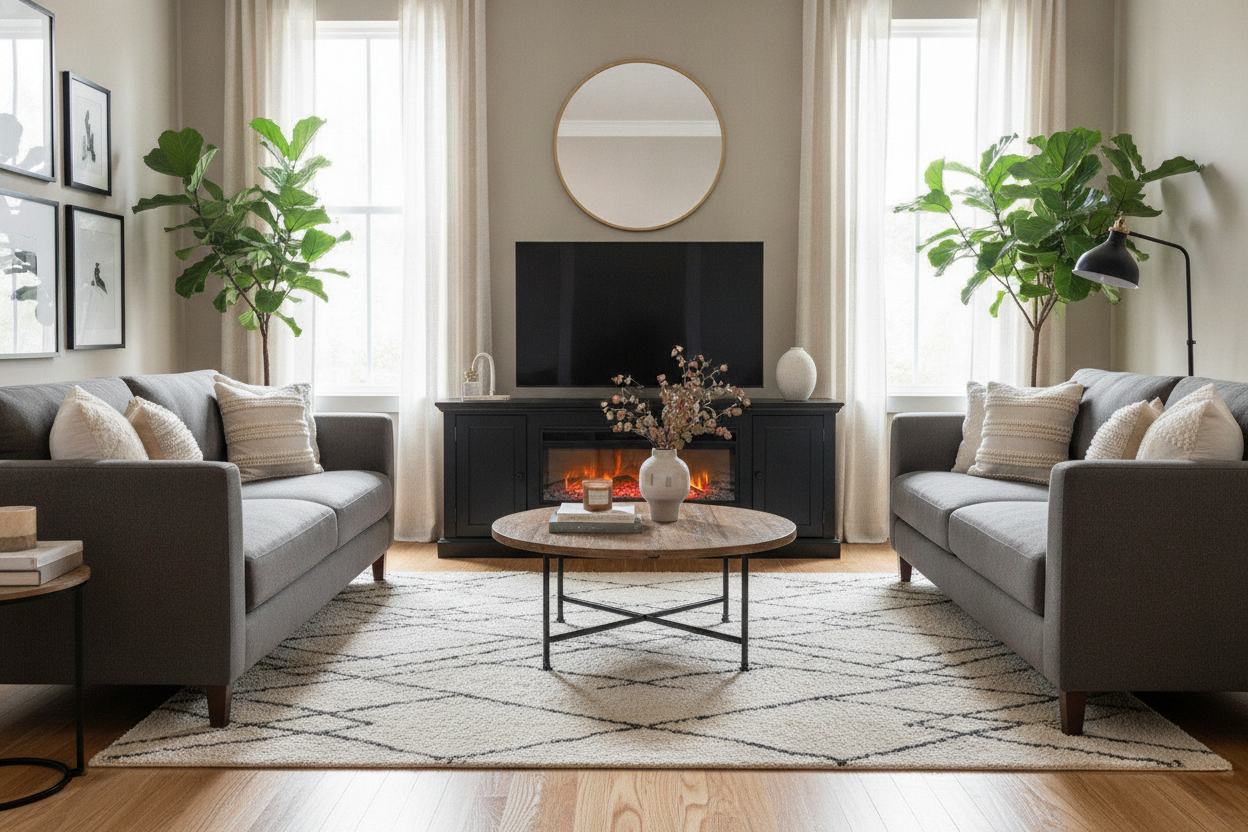
A modern TV console cabinet gives you the tapered legs and rich wood tones you crave, but with the internal steel supports and cable management ports already built in. If you have a massive living room, a large TV cabinet with spacious storage will anchor the room much better than a spindly vintage find ever could. Save the actual antiques for the record player or the bar setup, and give your TV a base that won't give up the ghost in the middle of a movie marathon.
FAQ
Will a vintage console hold a 75-inch TV?
Usually no, not without serious modification. Most vintage pieces are too narrow, meaning the TV will overhang the sides, and the weight will cause the top to bow significantly without a center support leg.
How do I stop my vintage cabinet from smelling musty?
Wipe the interior with a 1:1 mix of white vinegar and water, let it dry completely in the sun, and then place a few charcoal odor absorber bags inside for a week. Avoid heavy perfumes that just mask the scent.
Can I remove the old speakers from a console?
Yes, and you should! Removing the heavy, outdated speakers from a vintage stereo cabinet frees up massive amounts of storage space for modern receivers or gaming consoles. Just be careful not to cut any structural support beams in the process.


Laisser un commentaire
Ce site est protégé par hCaptcha, et la Politique de confidentialité et les Conditions de service de hCaptcha s’appliquent.