


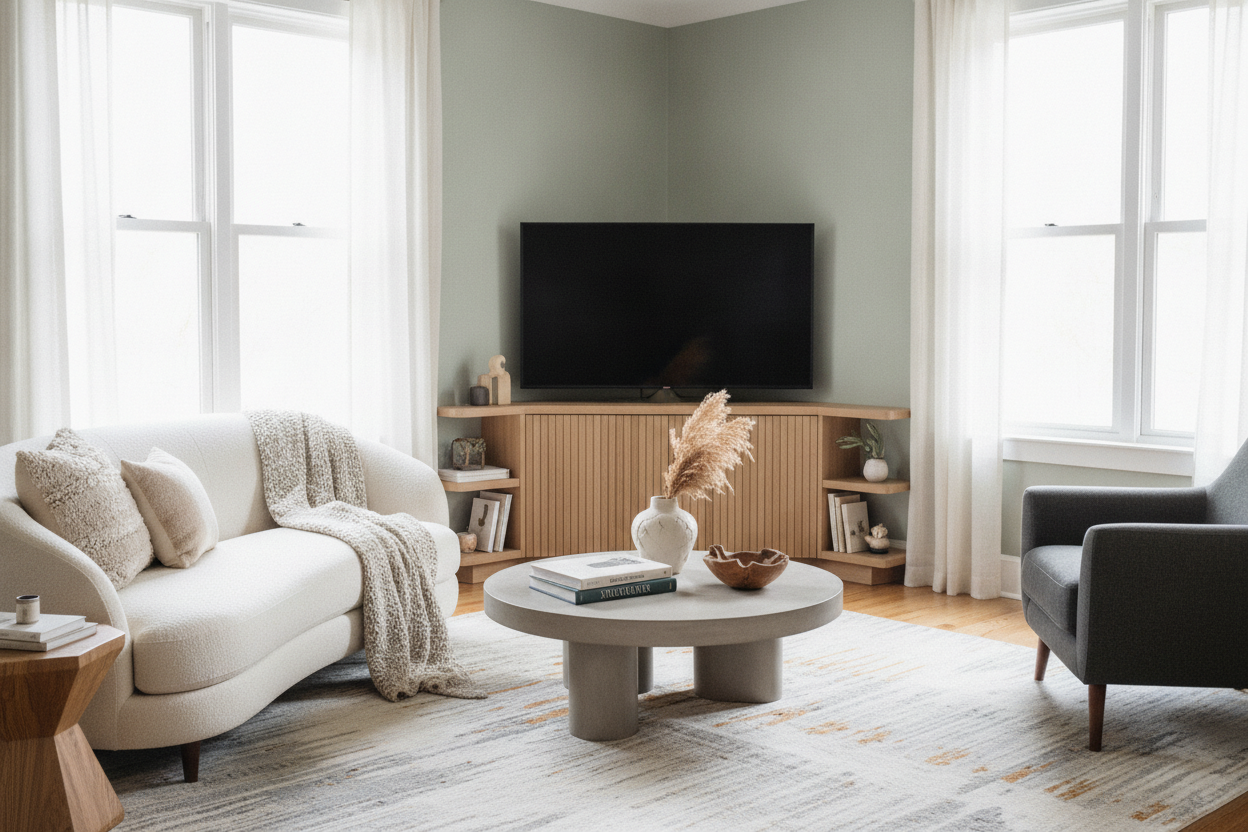
I once lived in a 450-square-foot walk-up where the only cable jack was exactly 14 inches from a window. My solution, like many of yours, was to shove a heavy rectangular dresser at a 45-degree angle. It created a literal 'no-man's land' behind the TV where my cat would disappear for hours to eat dust bunnies and lost remote batteries. Staring at that awkward gap every night was a reminder that I was fighting my room instead of living in it.
If you are tired of your media setup looking like a temporary dorm room arrangement, it is time to talk about the corner console tv. It is the most underrated piece of furniture for anyone dealing with a floor plan that doesn't have a massive, blank feature wall. Stop trying to make a straight line work in a 90-degree world.
Quick Takeaways
- Eliminate the 'dead triangle' of wasted space behind your television.
- Dedicated corner units provide deeper internal storage for bulky gaming consoles.
- Modern designs now support screens up to 65 or 75 inches without looking top-heavy.
- Angled furniture improves traffic flow in narrow or multi-functional rooms.
Stop Angling Your Rectangular TV Stand
Using standard tv tables corner setups—where you take a flat-wall credenza and just pivot it—is a total space killer. I finally stopped angling my console after I realized I was losing nearly four square feet of floor space to absolutely nothing. That is enough room for a decent floor lamp or a velvet armchair.
Beyond the wasted square footage, a rectangle in a corner creates a visual imbalance. The sharp corners of the furniture stick out into the room, creating a 'shin-bruiser' hazard every time you walk by. It looks accidental. Purpose-built corner television console furniture, on the other hand, looks like it was part of the architect's original plan.
The Geometry of a True Corner Console TV
A real angled tv stand is usually a pentagon or a clipped-corner triangle. It is designed to sit completely flush against both walls of the corner. This architectural alignment does something magical: it pulls the focal point of the room back, making the center of the floor feel much wider. When you compare these to standard TV stands, the footprint is significantly more efficient.
I have found that the best units use a 'clipped back' design. This allows the piece to slide deep into the corner while still leaving a small channel for heat to escape and cables to run. If you have ever felt the back of a running Xbox, you know that airflow isn't just a suggestion—it is a requirement for hardware longevity.
Can Corner Units Actually Hold Big Screens?
There is a persistent myth that corner setups are only for 32-inch screens in guest bedrooms. That is outdated thinking. You can absolutely find a corner large tv stand that handles a 65-inch OLED. The key is checking the weight capacity and the base width. I generally recommend a stand that is at least 5 to 10 inches wider than the TV's actual width to avoid that 'looming' look.
Before you buy, measure the distance between your TV's legs. Many modern TVs use wide-set feet rather than a center pedestal. If the stand is too narrow, those feet will hang off the edge. Is it actually big enough? Always check the 'top surface width' specifically, as the 'overall width' might include decorative trim that isn't usable for the TV's base.
Let's Talk About Wires and Clutter
One of the hidden perks of a corner storage tv stand is the sheer volume of the unit. Because the piece is deeper in the middle than a standard cabinet, you get a massive interior cavity. This is the perfect corner tv stand and storage combo for hiding messy routers, power strips, and those four different controllers you can never find.
I personally prefer a storage credenza with sliding glass doors. It allows your remote signals to pass through while keeping the dust off your electronics. Avoid the cheap 1.2 lb density particle board; look for high-grade MDF or solid wood veneers that won't sag under the weight of your tech stack over time.
Finding a Design That Doesn't Look Dated
For a long time, tv furniture corner options were stuck in the 1990s—lots of honey oak and chunky glass. Thankfully, that has changed. You can now find a unique corner tv stand with mid-century tapered legs or even a corner tv bookcase that uses the vertical space above the screen for plants and books. This helps the unit feel like a built-in part of the room.
If you want a look that won't feel old in two years, go for a modern minimalist TV stand with clean lines and hidden hardware. Soft-close hinges and integrated cable management ports are the 'luxury' features that actually make a difference in your daily sanity. Don't settle for a piece that looks like an afterthought just because your room has a tricky layout.
Frequently Asked Questions
Are corner TV stands out of style?
Only if they look like they were built in 1994. Modern versions with metal legs, slate finishes, or slatted wood doors are very much in style and are essential for urban apartment living where space is at a premium.
How do I hide cables in a corner stand?
Most dedicated corner units have pre-drilled holes in the back. Use Velcro ties to bundle your cables together before feeding them through the center hole. Since the stand sits flush to the wall, the wires are completely invisible from the side.
Can I put a fireplace in a corner TV stand?
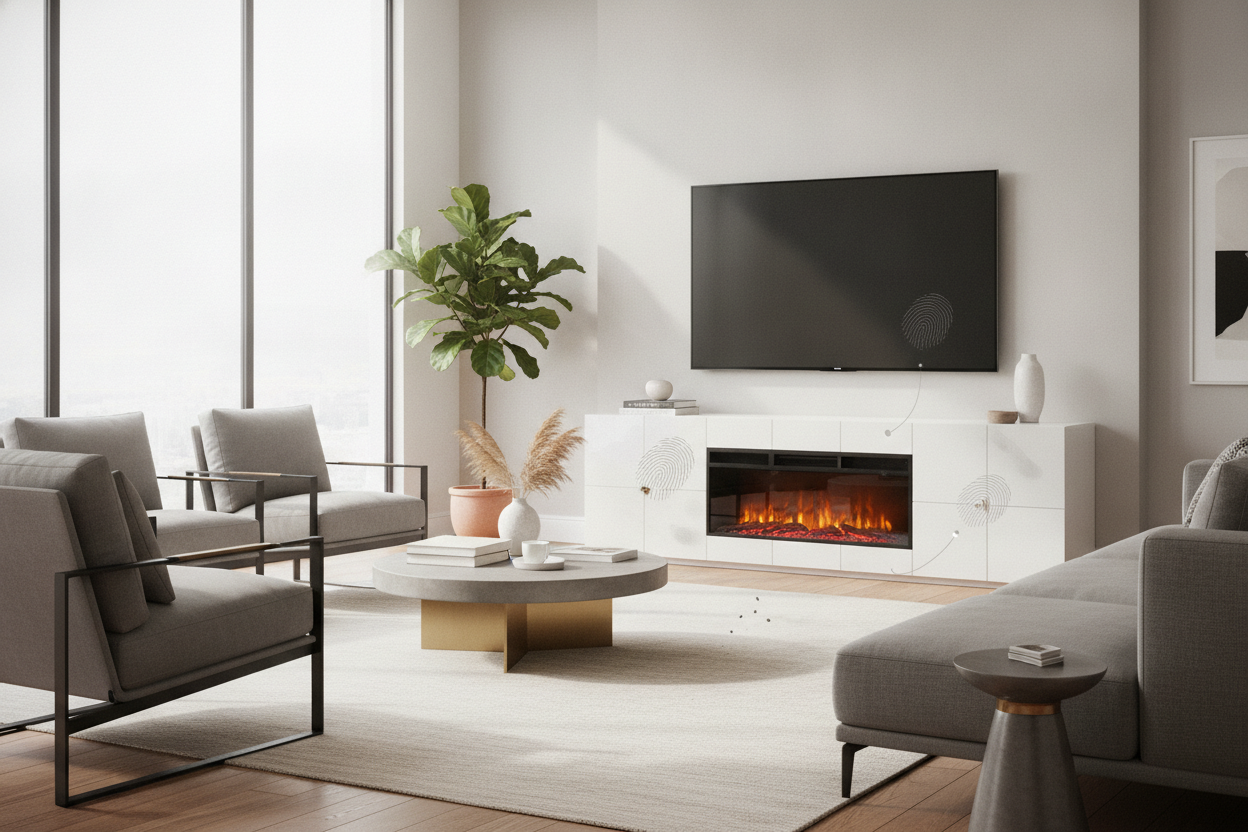
Yes, 'electric fireplace' corner units are popular, but make sure the heater vents out the front. If it vents out the back into a tight corner, you risk overheating the unit or damaging your drywall.

Laisser un commentaire
Ce site est protégé par hCaptcha, et la Politique de confidentialité et les Conditions de service de hCaptcha s’appliquent.