


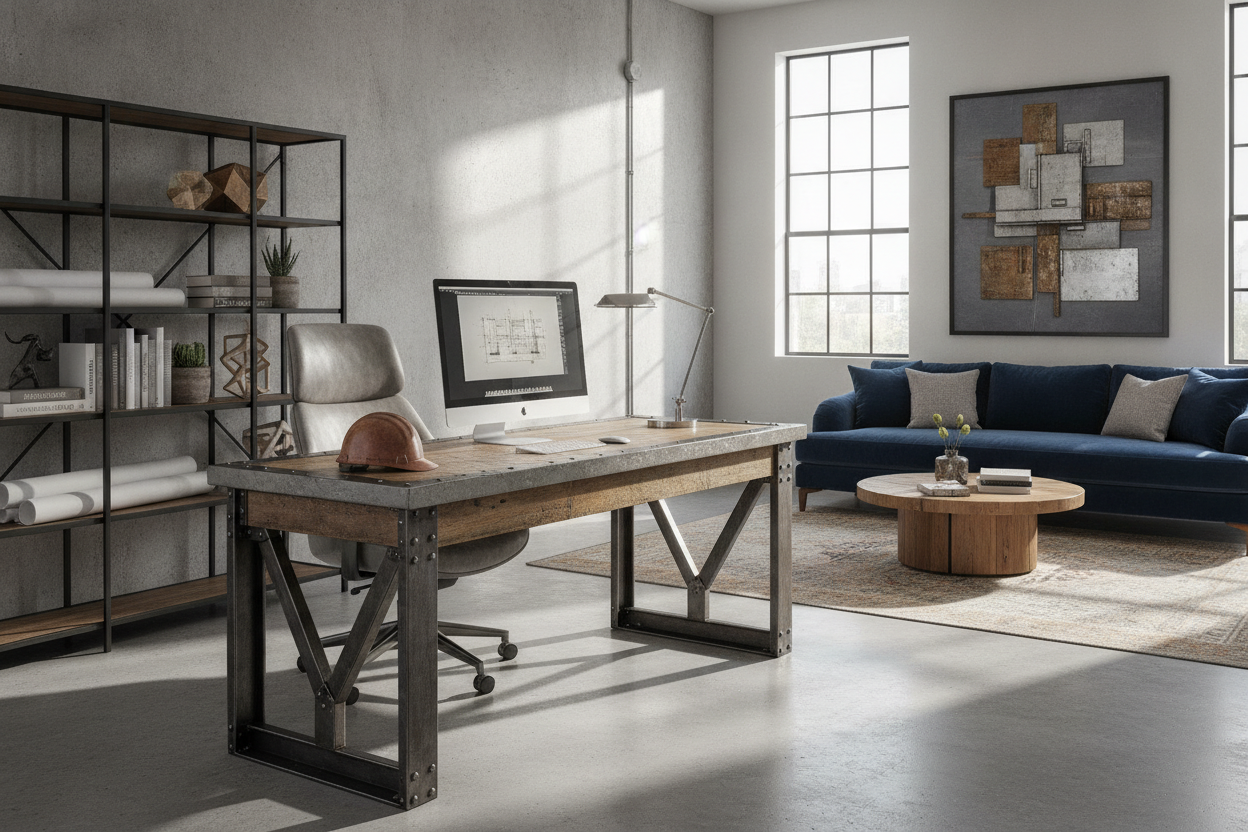
I was halfway through assembling a heavy cast-iron lamp prototype when I heard it: a sickening, splintering crack. My 'aesthetic' mid-century desk, the one I spent three weeks' salary on because it looked great in a filtered photo, was literally buckling under the pressure. It turns out that 1/2-inch particle board and tapered dowel legs aren't meant for people who actually make things. That afternoon, I cleared the wreckage and started looking for a construction desk that could handle my chaos.
- Weight capacities that actually support dual 32-inch monitors and heavy hardware.
- Steel-to-steel connections that eliminate the annoying 'monitor wobble' when you type.
- Impact-resistant surfaces that don't care if you drop a screwdriver or a heavy stapler.
- A modular, industrial look that provides a blank slate for any creative workflow.
The Day I Realized My 'Aesthetic' Desk Was Useless
We've all been sold the dream of the minimalist workspace. A thin slab of wood, a single laptop, and maybe a succulent. But for those of us who juggle hardware prototypes, fabric swatches, and multiple monitors, a standard writing computer desk is basically a glorified TV tray. I learned this the hard way when my expensive veneer table started bowing in the middle after just six months.
Standard home furniture is designed for the 'average' user, which usually means someone who does nothing more strenuous than clicking a mouse. When you start adding monitor arms, external GPUs, and stacks of reference books, you're asking for a structural failure. I realized I didn't need a piece of decor; I needed a piece of equipment.
What Exactly Makes a Construction Office Desk Different?
A construction office desk isn't just a table; it's a reinforced platform. The biggest difference is the gauge of the steel. While a big-box store desk uses thin aluminum or light steel, a job-site style workstation uses 14-gauge or 12-gauge steel frames. These are the same materials used in warehouse shelving, designed to take a hit and keep standing.
Then there's the top. You aren't getting thin laminate over compressed sawdust. Most rugged desks feature high-pressure laminate (HPL) or solid butcher block that's at least an inch thick. This density doesn't just provide strength; it absorbs vibration, making the whole experience of working feel more grounded and permanent.
Why Weight Capacity Is the Most Underrated Desk Metric
People look at 'weight capacity' and think, 'I don't weigh 300 pounds, so why does it matter?' It matters because capacity is a proxy for stability. If a desk is rated for 500 pounds, it won't move a millimeter when you're furiously typing or drafting a blueprint. If you're looking for movement, an ergonomic home office sit stand up desk is a great choice, provided the motor is actually rated for the heavy gear you plan to pile on top of it.
I currently have two monitor arms clamped to the back of my desk. On a cheap desk, that clamping force alone can crack the desktop. On a heavy-duty frame, the weight is distributed properly. You stop worrying about whether your setup is going to collapse and start focusing on the work in front of you.
The Storage Dilemma: Open Surface vs. Hidden Clutter
The one downside to a rugged construction-style frame is that they are often minimalist by necessity. You won't find many dainty drawers for your paperclips. If you're someone who needs everything tucked away, you might want to look at an office desk with drawers and shelves to supplement your main workspace. I personally prefer the 'open' look, but it does require discipline.
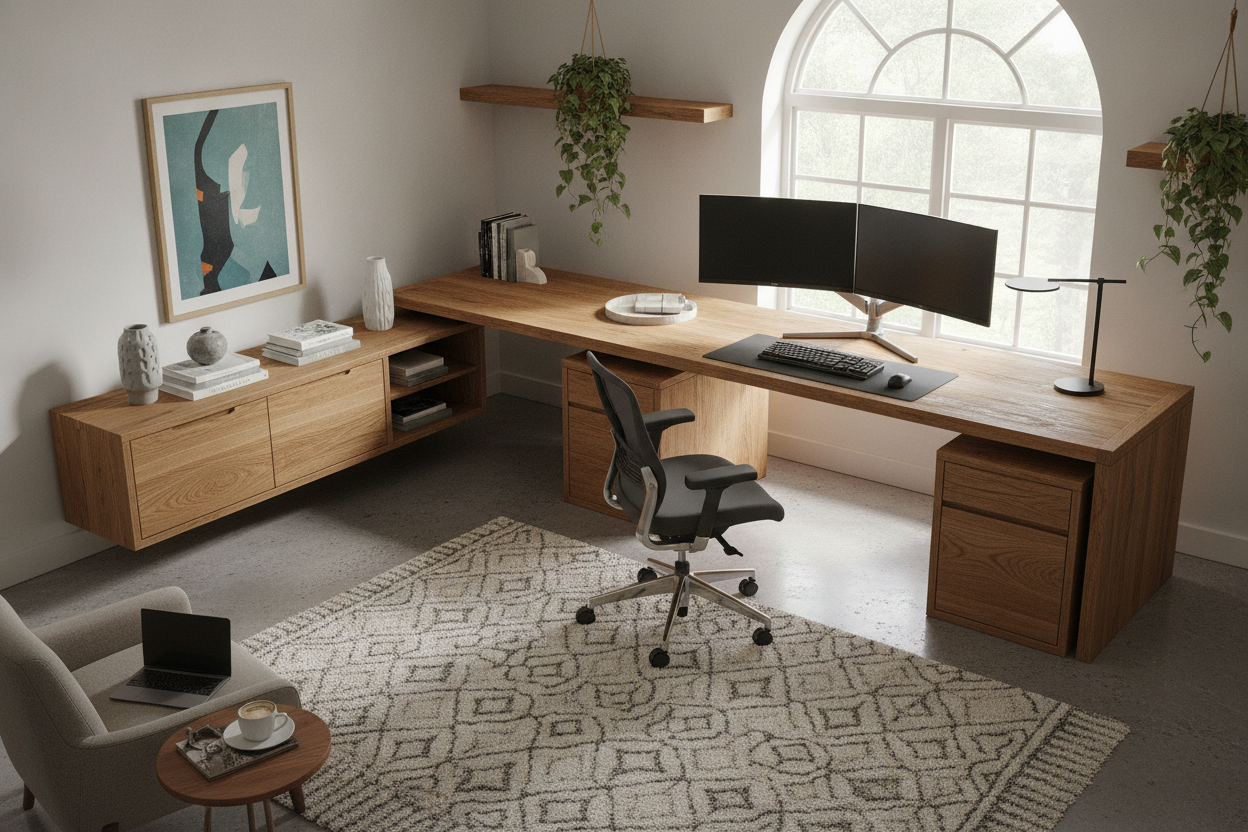
If you have a massive amount of gear but still want that industrial durability, a corner desk with large storage can bridge the gap. It gives you the expansive tabletop of a workshop bench while providing the organization of a traditional office. It's about finding that balance between a 'lab' feel and a 'library' feel.
How to Style an Industrial Beast in a Normal Room
You don't want your home office to feel like an unfinished basement or a construction trailer. To avoid the office desk and shelving layout mistake of making the room feel too 'cold,' you have to layer in textures. I put a thick, high-pile wool rug under my steel-framed desk to dampen the sound and soften the visual lines.
Lighting is also key. Swap the harsh overheads for a warm LED task lamp and some indirect lighting behind the monitors. When you pair a rugged, black steel frame with warm wood and soft textiles, the desk stops looking like a piece of job-site equipment and starts looking like a deliberate, high-end design choice. It’s the difference between 'I’m working in a garage' and 'I’m working in a studio.'
FAQ
Are construction desks hard to assemble?
Actually, they're often easier. Because they use heavy-duty bolts instead of tiny cams and wooden dowels, the parts actually fit together properly. Just make sure you have a real wrench or a socket set handy; the tiny tools they include won't cut it for these bolts.
Will a heavy desk damage my floors?
They can, simply because of the weight. Always use heavy-duty felt pads or rubber coasters under the feet. Don't slide it—get a friend to help you lift it into place. Once it's there, it isn't going anywhere.
Can I use a monitor arm on these?
Yes, and that is actually one of the best reasons to buy one. Most of these desks have a flat, solid edge that is perfect for C-clamps. You won't have to worry about the clamp crushing the desktop material like you would with hollow-core or particle board furniture.


Laisser un commentaire
Ce site est protégé par hCaptcha, et la Politique de confidentialité et les Conditions de service de hCaptcha s’appliquent.