



I spent three hours last night scrolling through interior design feeds, looking at ideas for tv console setups that felt like they belonged in a museum. You know the ones: a thin slab of oak, a single ceramic vase, and a TV that apparently runs on prayer because there isn't a single wire in sight. Then I looked at my own living room and saw a tangled nest of black cables that looked like a tech-based horror movie.
The truth is, most of those 'perfect' photos are staged with dead TVs that aren't even plugged in. If you actually live in your home, you have a router, a soundbar, and probably a gaming console that gathers dust like it's its job. We need to stop chasing the invisible-tech dream and start styling for reality.
Quick Takeaways
- Open shelving is a trap unless you own exactly zero electronics.
- Baskets are your best friend for hiding bulky routers and power strips.
- Scale matters—a tiny console under a massive TV makes the whole room look bottom-heavy.
- Slatted doors allow remote signals to pass through while hiding the mess.
The 'Floating Screen and One Vase' Fantasy
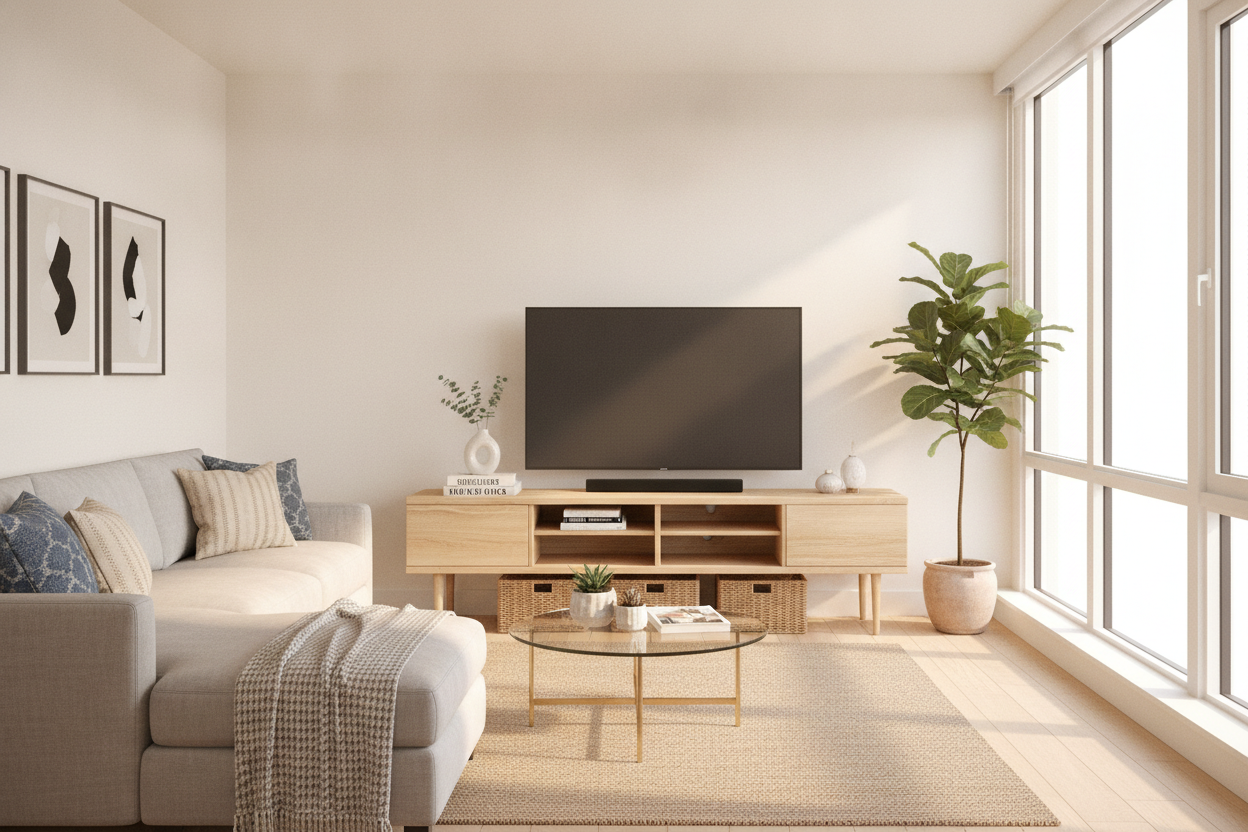
The most popular tv console idea right now is the 'ultra-minimalist' look. It’s usually a floating shelf or a very low-profile bench with nothing on it but a single branch in a vase. It looks stunning in a 1080p photo, but it’s a total lie for anyone who actually watches Netflix. Where is the Apple TV? Where is the subwoofer? Where is the power brick that’s the size of a literal brick?
Real-world ideas for media console styling have to account for the 'ugly' stuff. When you try to force a minimalist aesthetic onto a house full of gadgets, you end up with a cluttered mess that feels even more chaotic because it's failing to meet an impossible standard. Stop trying to hide the fact that you own a TV and start designing around the equipment you actually use every day.
Realistic Ideas for Media Console Survival
If you’re stuck with an open unit, you need a strategy that involves more than just 'tucking wires behind the leg.' I’ve found that high-quality woven baskets are the only way to survive. You can shove your router and your messy pile of HDMI cables into a basket, and as long as the weave is loose enough for airflow, your tech won't overheat.
Another trick is using 'anchor' items to distract the eye. A stack of oversized coffee table books can hide a small cable box, and a leaning piece of art can mask the outlet behind the console. However, be careful not to under-decorate. I see people making long TV console mistakes ruining your space by placing two tiny candles on an 80-inch surface. It makes the furniture look like a vast, empty wasteland. Group your items in 'islands' to create visual weight where you need it most.
When to Upgrade Your Living Room TV Console Design
Sometimes, no amount of baskets or clever book placement can fix a bad piece of furniture. If you’re constantly fighting with visible wires or your living room tv console design feels like a cluttered eyesore, it’s time to admit that open shelving was a mistake. I’ve been there—buying a trendy industrial pipe-and-wood unit only to realize it showed every single speck of dust and every tangled cord.
The tipping point is usually when your 'styling' starts to interfere with your actual life. If you have to move a vase every time you want to turn on the PlayStation, the design isn't working. Moving toward better living room cabinet ideas usually means embracing closed storage. Doors are the ultimate life hack for a clean home. If you're ready to stop apologizing for your cable mess, you should browse our favorite TV stands that actually offer the depth and cable management you need.
Modern TV Console Ideas That Actually Hide the Junk
The best modern tv console ideas aren't just about looks; they're about engineering. Look for units with slatted or 'louvred' doors. These are brilliant because they allow infrared signals from your remote to pass through the wood, meaning you can keep the doors shut while you flip through channels. It's the only way to get that clean look without sacrificing functionality.
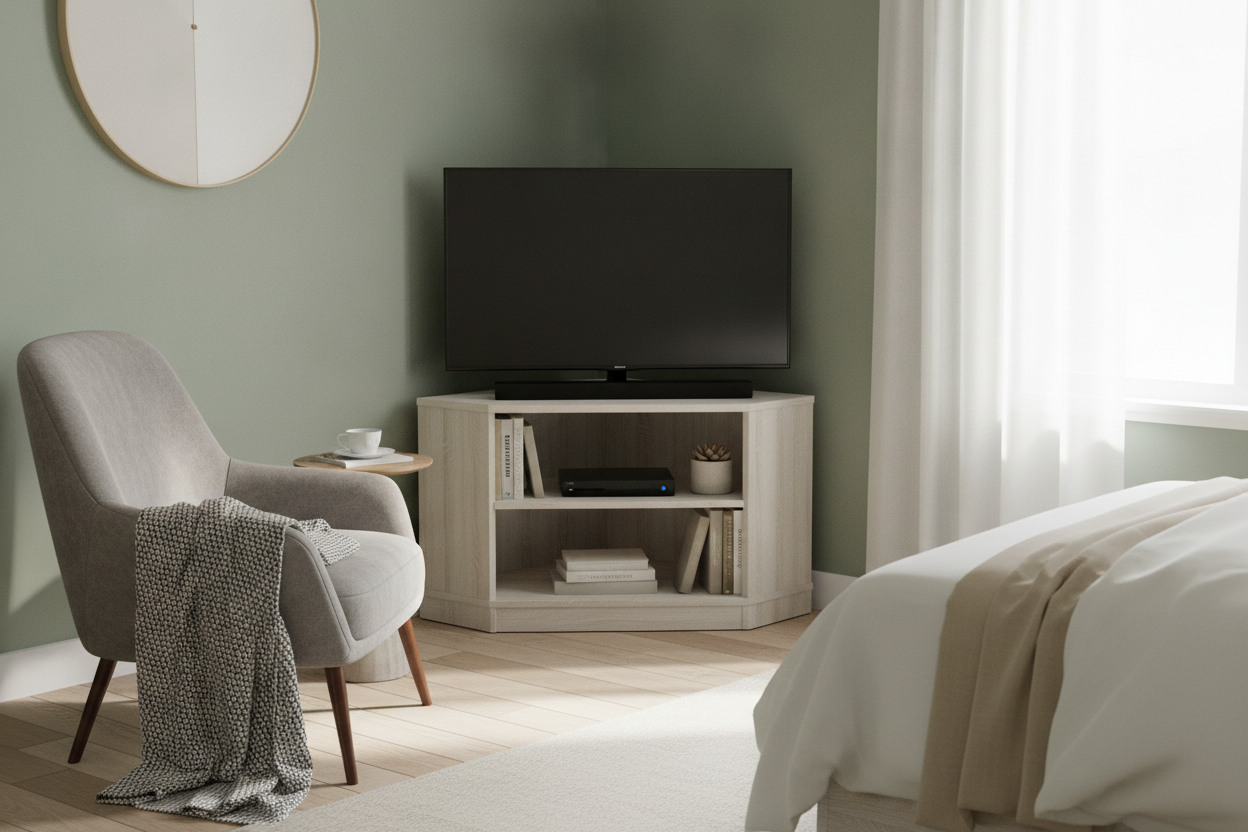
Flexibility is also key. I’m a huge fan of an adjustable modern TV console cabinet because it grows with your space. If you move to a bigger apartment or buy a larger TV, you can slide the sections out to create a wider base. This prevents that awkward 'overhang' where the TV is wider than the stand—a major design sin that makes even expensive rooms look cheap.
My Personal Console Disaster
A few years ago, I bought a gorgeous mid-century modern credenza that was technically a sideboard, not a media console. It had no holes in the back for wires. I thought, 'I'll just drill some myself.' I ended up splintering the veneer of a $900 piece of furniture because I used the wrong drill bit, and the unit was so shallow that my receiver stuck out two inches from the front. I had to leave the doors hanging open just to plug everything in. It was the opposite of 'aesthetic.' Now, I never buy a piece for tech unless it has dedicated cord channels and enough depth for real equipment.
FAQ
How high should my TV console be?
Your TV should be at eye level when you're sitting on the sofa. For most standard couches, that means your console should be between 22 and 28 inches tall. If you’re craning your neck up, it’s too high.
Can I put a router inside a wooden cabinet?
Yes, but make sure the cabinet isn't airtight. Wood won't block the signal much, but heat is the enemy of electronics. If the back of the console is closed, consider drilling a few extra ventilation holes.
How do I hide wires if my console is floating?
Use a cable raceway painted the exact same color as your wall. It’s a plastic strip that snaps over the wires. It’s not invisible, but it’s a thousand times better than a black cord dangling against a white wall.

Laisser un commentaire
Ce site est protégé par hCaptcha, et la Politique de confidentialité et les Conditions de service de hCaptcha s’appliquent.