


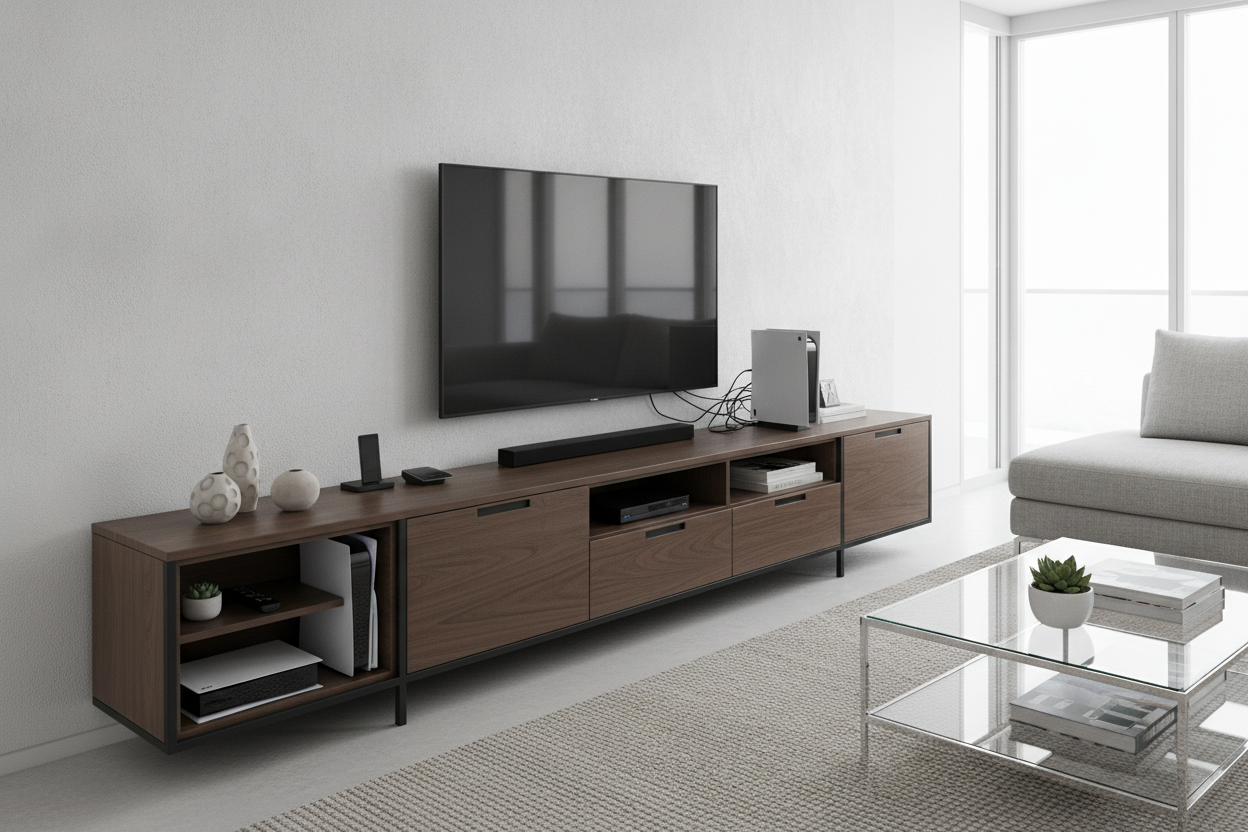
I spent three hours last Saturday on my hands and knees, wrestling a PS5 into a console that looked like it was made for a dollhouse. It is the same old story: the design of tv stand units in every high-end catalog assumes you own nothing but a single, paper-thin remote and maybe a decorative bowl of moss. If you actually own a gaming console or a router, most modern furniture is your worst enemy.
- Always check the internal depth—18 inches is the sweet spot.
- Prioritize slatted or mesh doors to prevent hardware meltdowns.
- If it does not have cable management holes, you will have to drill them yourself.
- Avoid solid back panels that trap heat like a greenhouse.
The Showroom Lie: Why Sleek Consoles Fail Real Homes
Most TV stands you see on Instagram are a total lie. They show a 65-inch screen floating above a walnut cabinet with zero wires in sight. It looks incredible in a render, but as soon as you add a router, a Switch dock, and a soundbar, that minimalist dream becomes a tangled nightmare of black plastic and blinking LEDs. The designers clearly prioritized the silhouette over the reality of 12-gauge power cables.
The disconnect is real. These pieces are often built with flimsy 1/2-inch MDF backings that have a single, pathetic hole for cords. You try to squeeze a surge protector through there and the whole panel starts to bow. We are buying furniture that looks like it belongs in a museum but functions like it was designed before the invention of the internet. It is frustrating to pay $800 for a cabinet that makes your living room look like a server closet gone wrong.
The Dimensions Problem: Why Your PS5 Won't Fit
The standard stand tv design has become dangerously shallow over the last few years. I have seen consoles that are barely 14 inches deep. A PS5 is 15.4 inches tall when standing, and if you lay it flat, it still needs room for the HDMI cable to bend without snapping. If your cabinet is too shallow, you are forced to leave the doors hanging open like a broken jaw just to keep the thing plugged in. It ruins the entire aesthetic you paid for.
It is not just gaming consoles, either. If you are an old-school audio nerd with a dedicated receiver, you are basically out of luck with 90% of modern furniture. These units are built for streaming sticks, not high-performance hardware. An Xbox Series X is essentially a chunky mini-fridge; putting it in a standard 12-inch high shelf is a recipe for disaster. You need vertical clearance and depth that most designers just aren't providing anymore.
The Ventilation Crisis Killing Your Electronics
Enclosing a high-powered gaming console in a solid wood box is basically building an oven. I have heard fans spin up to jet-engine levels because there is zero airflow inside these trendy mid-century boxes. Solid doors might look clean, but they are a death sentence for your hardware. If you can smell warm plastic when you open the cabinet, your furniture is failing you. Without a path for cool air to enter and hot air to escape, you are literally shortening the lifespan of your $500 electronics every time you play.
How to Hack Your Current Setup (Without Ruining It)
If you are stuck with a piece that isn't working, grab a hole saw. I once cut a three-inch hole in the back of a expensive sideboard just to let the heat out. It felt like sacrilege, but it saved my Xbox. You can also buy discrete USB-powered fans that mount to the back of your cabinet to pull hot air out. It is a $20 fix that saves you from a $500 replacement bill. Don't be afraid to modify your furniture to make it actually functional.
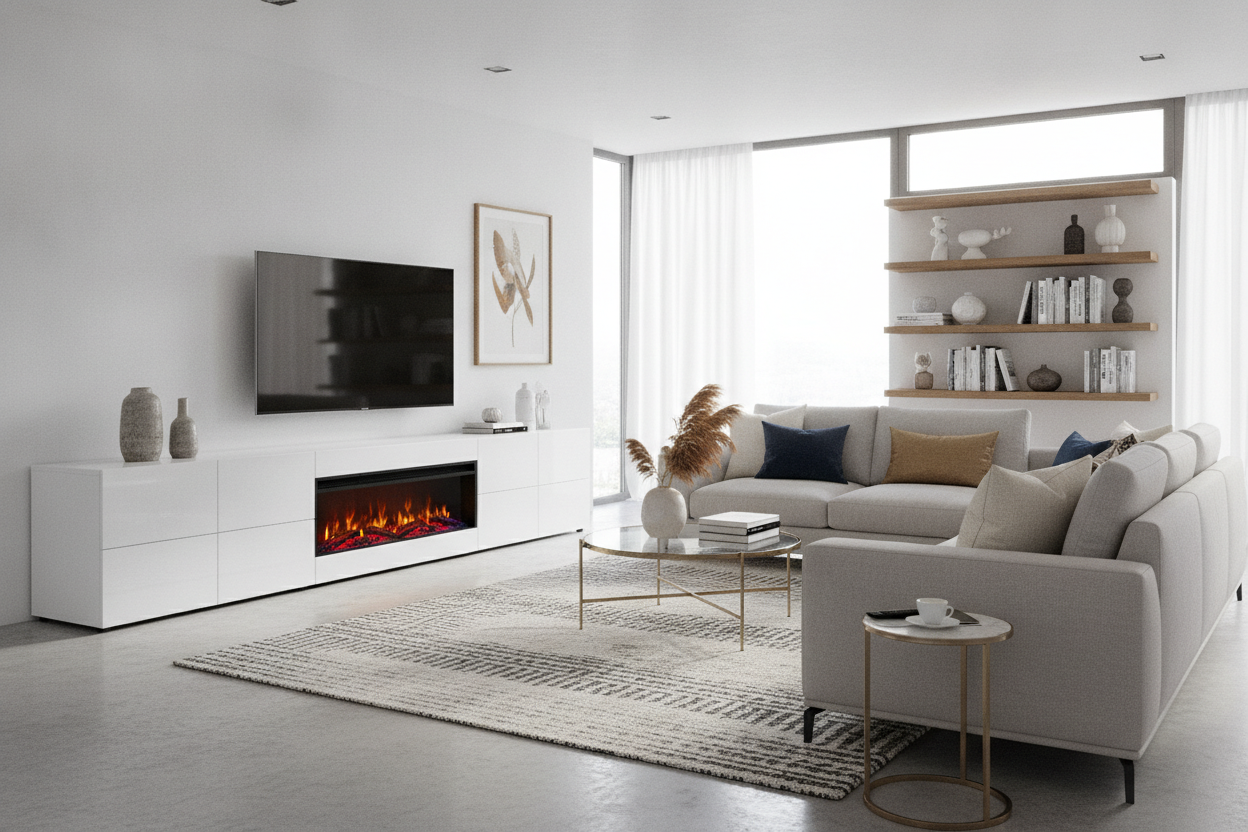
Sometimes you are forced into weird layouts, like placing a TV stand in front of fireplace mantels, which makes cable management even more of a headache. In those cases, removing the entire back panel of the stand is usually the smartest move. It doesn't just help with wires; it gives your gear room to breathe against the wall. Just make sure you use Velcro ties to keep the cable waterfall from looking like a disaster zone behind the legs.
What Actually Makes a Good Television Stand Design?
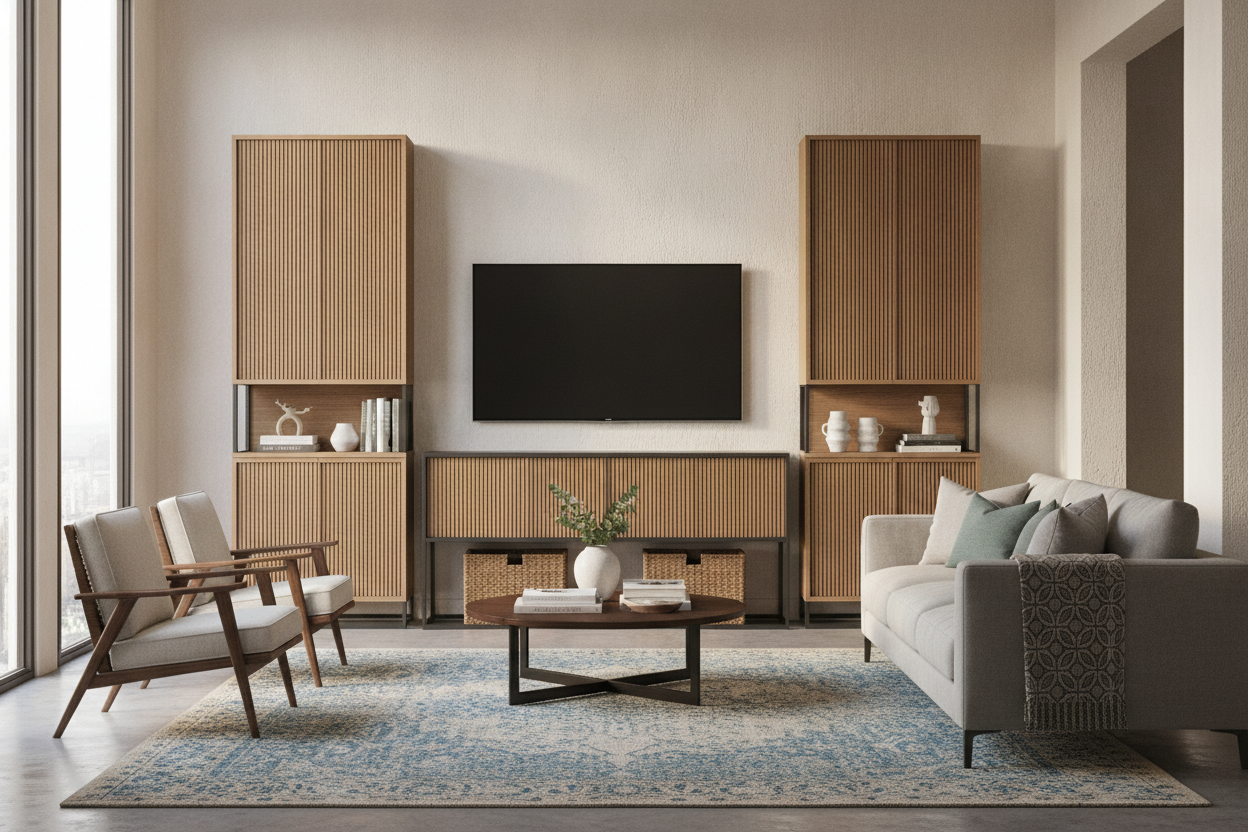
A functional television stand design needs depth—at least 18 inches. Look for slatted doors that allow IR signals and air to pass through. I recently saw a stylish black TV stand entertainment center that actually had adjustable shelves and pre-drilled cord ports, which is the bare minimum we should expect. If the shelves aren't adjustable, you're stuck with whatever height the factory decided was 'standard,' which is usually wrong.
Good television table design shouldn't prioritize aesthetics over the fact that electronics exist. You want 'cable gutters' along the back and internal cord pass-throughs between shelves so you don't have to snake wires outside the unit just to get from the top shelf to the bottom. Check for a recessed back panel too—this allows you to push the furniture flush against the wall even with plugs sticking out of the outlet.
When You Should Just Give Up and Go Custom
If you have a massive receiver or a niche setup, retail might never satisfy you. I have seen people give up and go for a custom TV stand design in wall just to hide the bulk. It is an extreme DIY project, but it beats having a console that is actually held up by a stack of books because it wouldn't fit inside the cabinet. Sometimes the only way to get the depth you need without taking up the whole room is to use the space inside the studs.
Personal Experience: The Melted Router
I once bought a beautiful mid-century 'media unit' that had no back holes at all. I was too precious about the wood to drill into it, so I ran everything out the front doors. My router ended up overheating so badly it warped the plastic casing and I lost internet for two days. I learned the hard way that a pretty cabinet isn't worth a fried home network. Now, I won't buy anything that doesn't have built-in ventilation or a back I can easily remove.
FAQ
How much space does a PS5 need?
Give it at least 4 inches of clearance on all sides. If it is in a closed cabinet, you absolutely need an active fan or a mesh front to prevent thermal throttling.
Should I remove the back panel of my TV stand?
If it is that flimsy cardboard stuff, rip it off. It improves airflow and makes cable management ten times easier. If it's solid wood, just use a hole saw to add venting.
Are glass doors okay for electronics?
Only if they are IR-friendly and you have ventilation in the back. Glass traps heat just as badly as wood, so you will still need to monitor the temperature during long gaming sessions.

Laisser un commentaire
Ce site est protégé par hCaptcha, et la Politique de confidentialité et les Conditions de service de hCaptcha s’appliquent.