


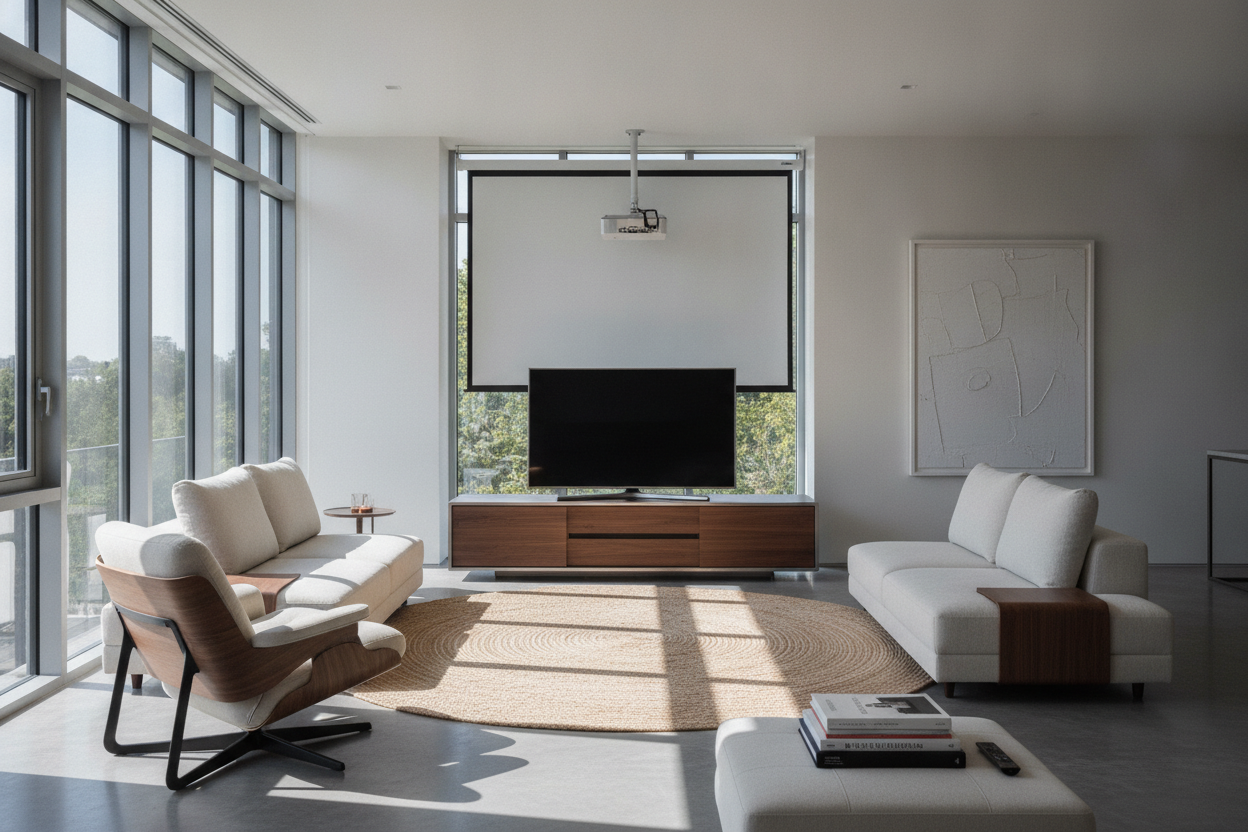
I spent three hours last night trying to hide a single neon-orange ethernet cable behind a console that cost more than my first car. It shouldn't be this hard. Most modern television stand designs you see on Pinterest are beautiful lies—they are staged with a single, perfectly centered vase and maybe one coffee table book, but zero actual electronics.
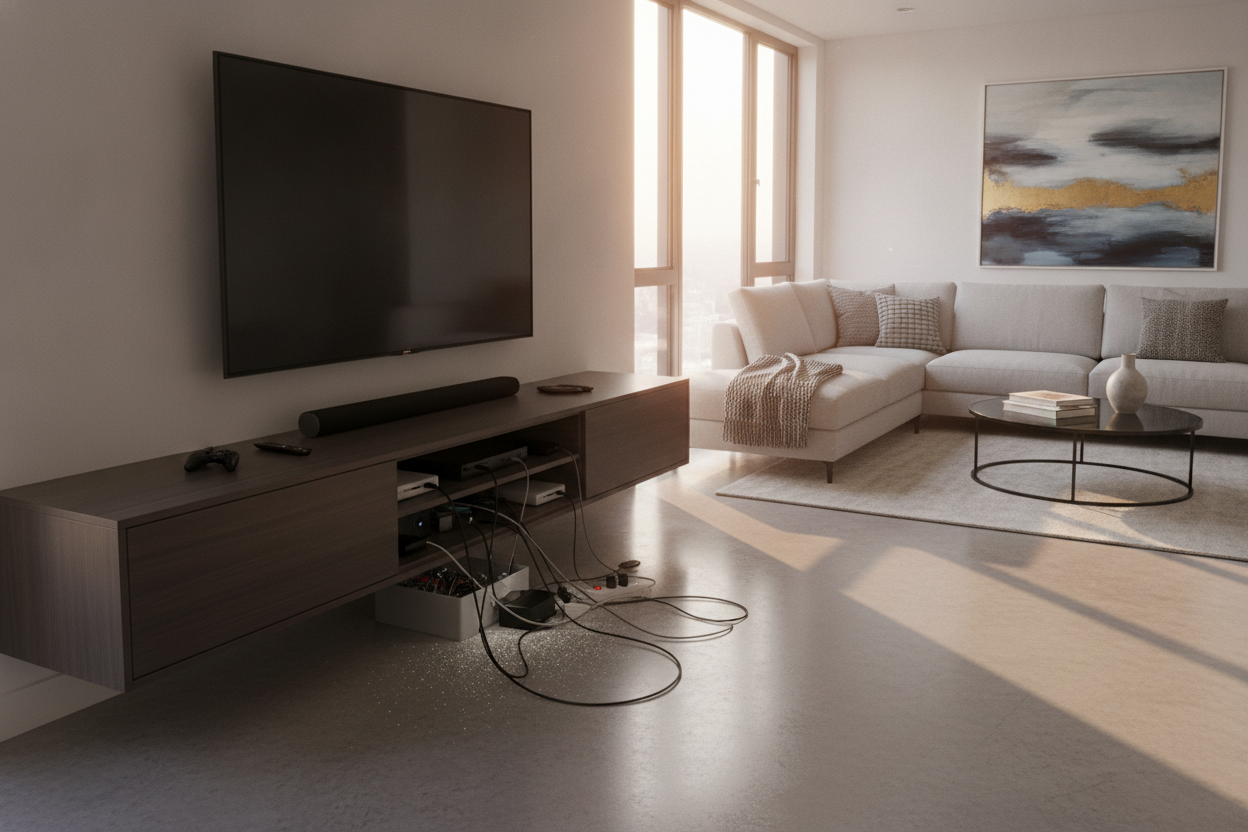
The moment you add a gaming console, a router, and a soundbar, that minimalist masterpiece turns into a chaotic nest of plastic and copper. I have tested dozens of these units, and I am here to tell you that most of them are designed by people who haven't owned a television since 2005.
Quick Takeaways
- Check the depth: Modern receivers need at least 16 inches of clearance, but many 'slim' stands only offer 12.
- Ventilation is non-negotiable: If your stand doesn't have a back cutout or breathable doors, your electronics will cook.
- Soundbar height: Ensure the stand height plus your TV stand legs leave room for your audio bar without clipping the screen.
- Material matters: Solid wood or high-grade plywood beats flimsy 1/2-inch particle board every time.
The Catalog Illusion (And Why Your Living Room Isn't a Render)
We've all fallen for the render. You see a photo of a floating white console that looks like it was carved from a single block of marble. It looks light, airy, and sophisticated. Then you get it home, and the reality of modern tv stand designs sets in. Once you plug in your gear, the stark, flat surfaces of a minimalist unit act as a spotlight for every speck of dust and every tangled wire.
This is often why your white console looks cheap even if you paid a premium for it. Without smart cable management or textured finishes, these pieces can’t handle the visual 'noise' of real life. A render doesn't show you the glowing blue light of a router or the dusty tangle of an HDMI cord. If a piece doesn't have a dedicated path for these eyesores, it's not a design—it's an obstacle.
Where Minimalist Consoles Completely Miss the Mark
The biggest offender in contemporary furniture is the lack of airflow. I once bought a gorgeous walnut unit with solid doors. Within forty minutes of playing a high-def game, my console sounded like a jet engine taking off. These cabinets are often air-tight boxes that trap heat, which is a death sentence for expensive tech. If you don't see pre-drilled holes or a slatted back, keep looking.
Then there are the 'decorative' drawers. I’ve seen 70-inch consoles with drawers so shallow you can't even fit a standard Blu-ray case vertically. They are essentially junk drawers for old batteries and manuals you'll never read. And don't get me started on glass doors. Unless you want to turn your messy wiring into a curated museum exhibit, stop buying clear glass. It frames the chaos rather than hiding it.
The Soundbar Dilemma
Soundbars have gotten bigger, but consoles have stayed the same height. If you buy a low-profile stand, you often find yourself in a 'clipping' nightmare. You place the soundbar on top, and suddenly it’s blocking the bottom two inches of your screen, including the subtitles. I’ve had to resort to propping my TV up on stacks of books just to clear a Sonos Arc. Always measure the distance between the top of your stand and the bottom of your TV's bezel before you commit to a purchase.
How to Find a Piece That Doesn't Hate Your Tech
Look for 'smart' features that aren't just buzzwords. You want 'IR-friendly' materials. This means the remote signal can pass through the door so you can keep the clutter hidden while the TV is on. This is where slatted doors hide your ugly tech beautifully. They allow for massive airflow and remote connectivity without forcing you to look at a blinking cable box all night.
Also, check for a 'drop-down' door instead of a standard swing door. Drop-downs are great for hiding consoles because they don't take up floor space when they're open. Look for units with a recessed back panel—this allows you to push the furniture flush against the wall even if you have a bunch of thick power strips plugged in behind it.
Consoles That Actually Get It Right
The best units on the market right now are the ones that lean into the tech rather than pretending it doesn't exist. Darker finishes are generally more forgiving. A stylish black entertainment center can act as a shadow box, making the black bezel of your TV and the dark plastic of your speakers disappear into the background. It creates a cohesive look rather than a high-contrast mess.
When you shop, don't just look at the width. Check the weight capacity. A 75-inch TV can weigh 80 pounds, and if your stand is made of thin 15mm MDF, it will sag in the middle within six months. Look for a center support leg. It’s the difference between a piece that lasts a decade and one that ends up on the curb. You can browse TV stands designed for real life that prioritize these structural details over flashy, flimsy trends.
Personal Experience: My $1,200 Mistake
Two years ago, I bought a high-end mid-century replica. It was beautiful—solid teak, tapered legs, the works. But the back was a solid piece of plywood with one tiny 2-inch hole. I had to take a hole saw to a thousand-dollar piece of furniture just so I could plug in my surround sound system. It felt like a crime. Since then, I never buy anything that doesn't have a fully 'open' or modular back panel. Aesthetics are great, but I’m not a carpenter, and I shouldn't have to be one just to watch a movie.
FAQ
Do I need a stand if my TV is wall-mounted?
Almost always, yes. Unless you've run your wires through the drywall to a remote closet, you still need a place for your cable box, gaming systems, and the inevitable 'hub' that runs your smart home. A console anchors the TV visually so it doesn't look like it's just floating aimlessly on a giant wall.
What is the best height for a TV stand?
For most people, the center of the TV should be at eye level when you're seated. This usually means a stand height of 20 to 24 inches. If you have a massive 85-inch screen, go even lower—around 15 to 18 inches—to avoid 'gallery neck.'
Can I put a router inside a wooden cabinet?
Yes, but your signal strength will drop by about 10-20%. If the cabinet has slatted doors or a mesh front, the impact is negligible. Just avoid putting a router inside a metal cabinet, which acts like a Faraday cage and kills your Wi-Fi instantly.

Laisser un commentaire
Ce site est protégé par hCaptcha, et la Politique de confidentialité et les Conditions de service de hCaptcha s’appliquent.