


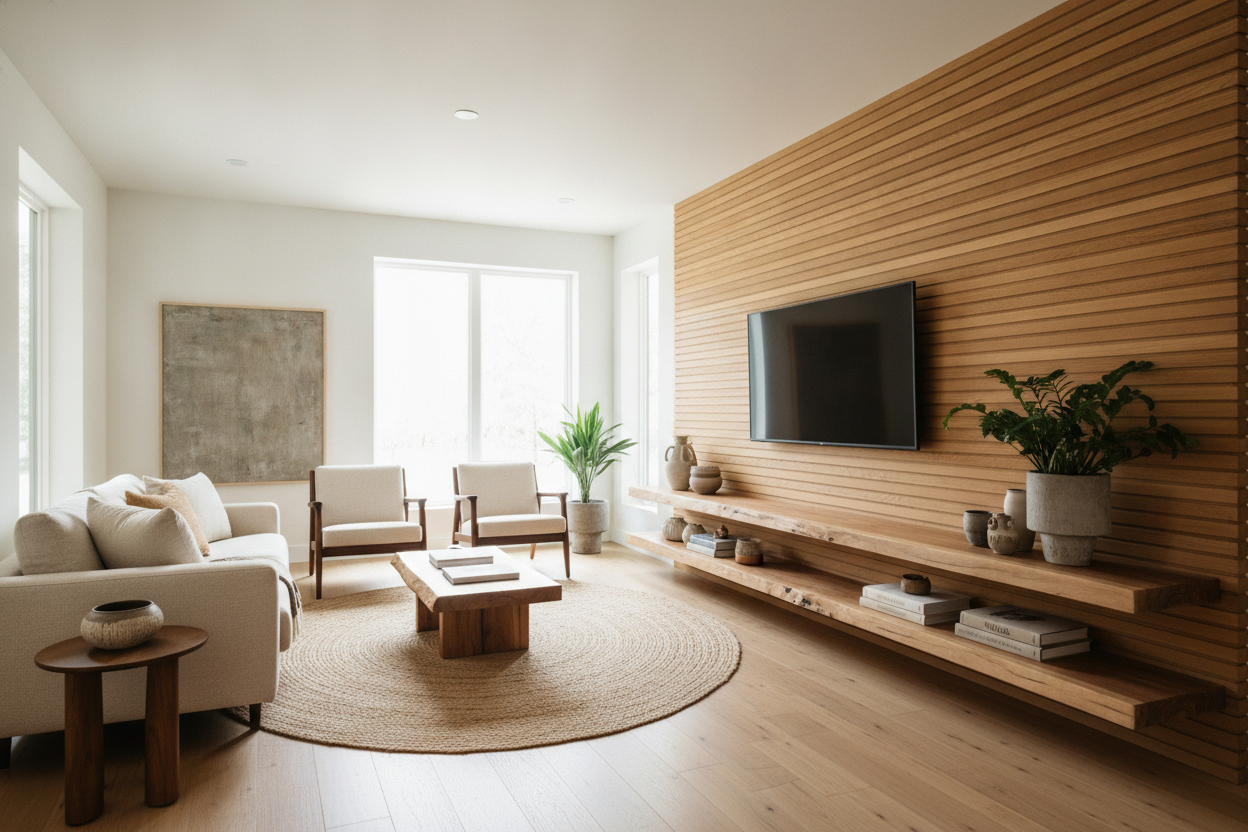
I spent three years staring at a 65-inch black rectangle floating above a glossy white console. It felt like my living room was permanently stuck in a 'tech support' aesthetic. The gloss reflected every pixel of the screen, and the whole setup felt cold and weirdly corporate.
Finally, I realized the problem wasn't the TV—it was the lack of texture. Swapping that sterile cabinet for wood shelves under tv setups completely changed the temperature of the room. It went from a Best Buy showroom to a place where I actually wanted to sit and read a book.
Quick Takeaways
- Wood adds organic texture to balance out cold, plastic electronics.
- Avoid 'matchy-matchy' wood tones; aim for a complementary contrast with your floors.
- Floating shelves make a room feel larger by keeping the floor visible.
- Deep shelves (at least 12 inches) are necessary if you have a soundbar or gaming console.
The 'Black Box' Effect Was Ruining My Living Room
We spend thousands on OLED screens and then park them on top of cheap, painted MDF. It creates this massive 'black box' effect where the electronics dominate the visual field. I realized my old setup was sucking the life out of my velvet sofa and vintage rugs. It was too sharp, too clean, and too boring.
While traditional TV stands serve a purpose, they often feel like heavy anchors that pull the eye down to a pile of cables. I wanted something that felt lighter but had more character. The shift to natural timber wasn't just about storage; it was about introducing a material that actually looks better with age, unlike a chipped laminate cabinet.
Why Wood Shelves Under TV Setups Are the Perfect Antidote
Design is all about contrast. If you have a giant piece of glass and plastic (your TV), you need something raw and imperfect to ground it. The grain of a solid piece of white oak or walnut provides a visual 'break' for the eyes. It’s the difference between a hospital room and a cabin in the woods.
I’ve seen people who mounted a chunky wood beam directly into the studs, and the effect is immediate. You stop seeing a 'home theater' and start seeing a curated wall. The thickness matters here, too. A flimsy 1-inch board looks like a mistake; you want something with enough heft—at least 2 inches thick—to hold its own against a 50-pound television.
Matching Your Timber: Don't Overthink the Tones
People get paralyzed trying to match their shelves to their hardwood floors. Don't do it. If you have light oak floors and you put light oak shelves right against them, it all bleeds together. You want a bit of a 'conversation' between the woods, not a monologue.
If you’re worried about the floor-to-shelf transition, a wood floating TV stand is a genius middle ground. It gives you that rich timber texture while hovering 8 to 10 inches off the floor. This creates a shadow line that separates the two wood species, making it much easier to mix a dark walnut shelf with a lighter ash floor without it looking like a DIY disaster.
Light Oak vs. Dark Walnut
Light oak is your best friend for Scandi-minimalism or that 'California Cool' vibe. It keeps the room feeling airy and bright. Dark walnut, on the other hand, is the king of Mid-Century Modern. It’s moody, sophisticated, and does a much better job of hiding the occasional dust bunny that escapes the Swiffer.
Styling the Ledge (Without Turning It Into a Router Graveyard)
The biggest mistake people make with a wooden ledge is treating it like a junk drawer. If you just pile up your Xbox, the router, and three remote controls, you’ve defeated the purpose. Use a few stoneware ceramics or a trailing Pothos plant to soften the edges of the TV. The green of the leaves against the wood grain is a classic combo for a reason.
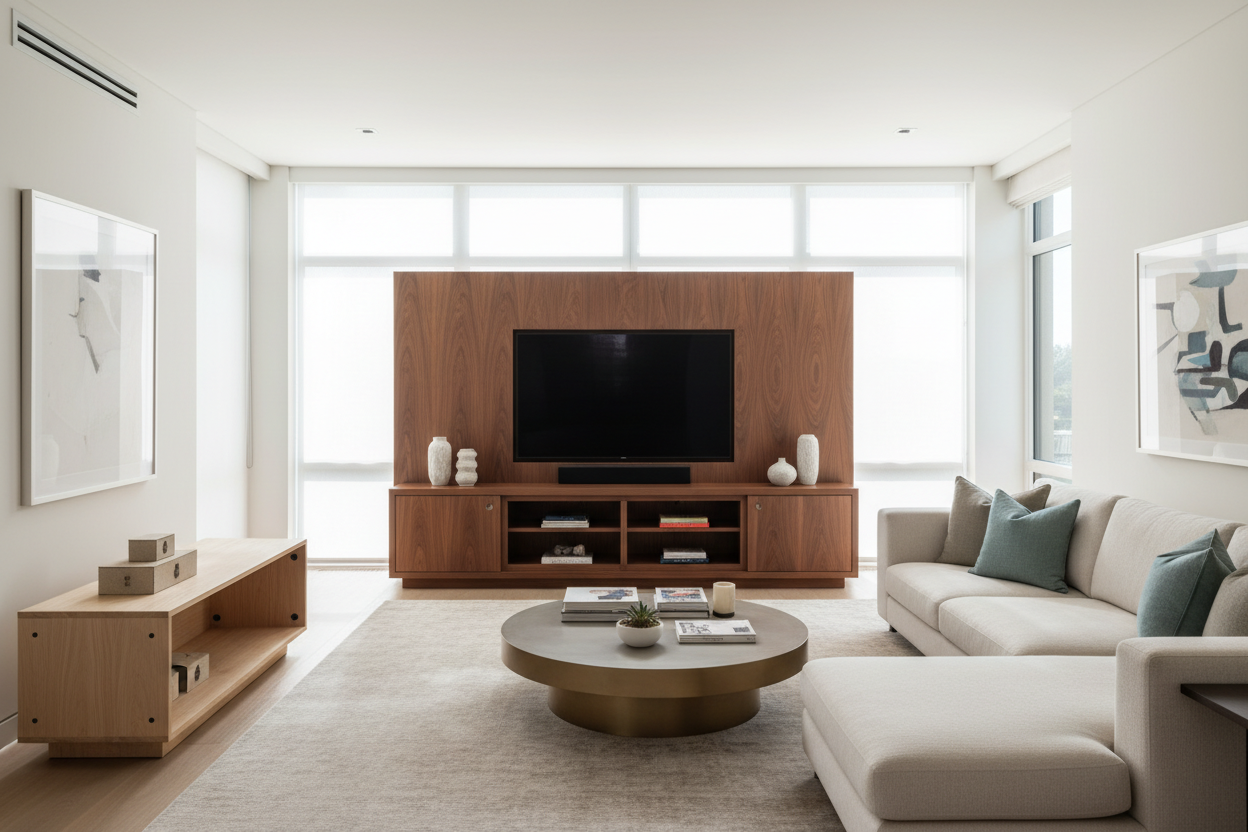
If you have a lot of gear—I’m talking a receiver, a record player, and four consoles—a single shelf might not cut it. In that case, you might need an entertainment center with overhead cabinets that uses natural wood finishes. It gives you the warmth you want but hides the 'tech' part of the equation behind closed doors.
Personal Experience: My Soundbar Fail
When I first installed my live-edge shelf, I bought an 8-inch deep board because it looked 'sleek.' Then I tried to put my Sonos Arc on it. The soundbar was 4.5 inches deep, and once I plugged in the HDMI cable at the back, it was literally hanging off the edge. I had to drill new holes and replace the whole thing with a 12-inch deep slab. Measure your largest component—then add 3 inches for cables. Trust me.
FAQ
How high should I mount wood shelves under the TV?
Ideally, leave about 6 to 10 inches of breathing room between the bottom of the TV and the top of the shelf. This gives you enough room for decor without making the TV feel like it's floating in space.
Can floating wood shelves hold a heavy TV?
I wouldn't risk it. Mount the TV to the wall studs with a proper bracket, and let the shelf handle the lighter stuff like speakers and decor. If you must put the TV on the shelf, ensure you're using heavy-duty steel brackets screwed directly into the studs.
How do I hide the cables?
You can run them through the wall if you're handy. If not, get a paintable cable raceway and match it to your wall color. It's not invisible, but it's a lot better than a 'spaghetti' mess of black wires hanging over your nice wood.

Laisser un commentaire
Ce site est protégé par hCaptcha, et la Politique de confidentialité et les Conditions de service de hCaptcha s’appliquent.