


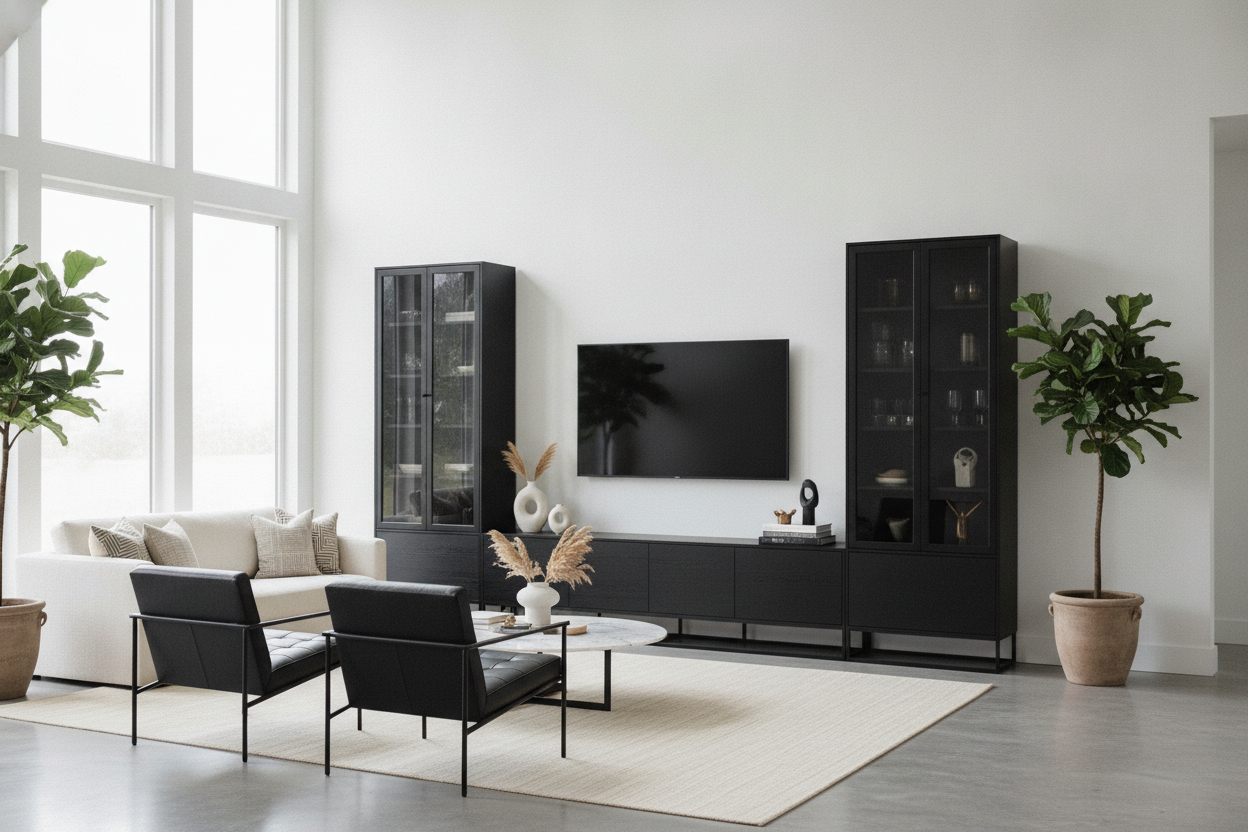
I spent weeks scrolling through curated home tours, convinced that white oak or walnut was the only way to keep my living room feeling 'airy.' Then I actually bought a 65-inch OLED. Suddenly, the $1,100 light wood stand I'd obsessed over looked like a tiny, frail pedestal for a giant, soul-sucking black rectangle. The contrast was jarring, like wearing a tuxedo jacket with gym shorts.
It took me three returns and a lot of heavy lifting to realize that black media consoles aren't just for bachelor pads or basement theaters. They are actually a sophisticated design trick for anyone who owns a modern television. When you stop trying to 'brighten' the area under your screen and start leaning into the darkness, the whole room finally starts to make sense.
Quick Takeaways
- Black units camouflage the 'giant black void' of a powered-off TV screen.
- Texture is mandatory—matte or fluted finishes prevent the piece from looking like cheap plastic.
- Dark furniture grounds a room, providing a visual anchor that light wood often lacks.
- Avoid high-gloss finishes unless you enjoy seeing every fingerprint and dust mote from across the room.
The Giant Black Void (Why Your Screen Looks So Awkward)
We’ve all seen it: a beautiful, sun-drenched room with pale walls and a light-colored console. But sitting right in the middle is a massive, 55-to-75-inch black screen. When the TV is off, it sticks out like a sore thumb. This visual imbalance happens because the screen has zero relationship with the furniture beneath it. It looks like a heavy object floating in space, making the room feel top-heavy and accidental.
I used to think adding more light furniture would fix the 'heaviness' of my tech. In reality, it just highlighted it. By placing a dark screen on a light surface, you’re creating a high-contrast focal point that screams 'I spend six hours a day watching Netflix.' It’s a design clash that no amount of pampas grass in a ceramic vase can fix.
The Camouflage Effect of Black Media Cabinets
The secret to a high-end living room isn't hiding the TV; it's making it disappear into the furniture. When you use black media cabinets, the boundary between the screen and the stand blurs. This creates a single, cohesive vertical unit that feels intentional rather than cluttered. It’s the ultimate camouflage for modern tech.
When I finally swapped my birch unit for a darker piece, I noticed something unexpected. I actually found that a black modern TV stand made my tiny living room look bigger because it provided a solid anchor point. Instead of my eyes jumping between the white wall, the black screen, and the light wood, they rested on one sophisticated 'zone.' It grounded the entire wall and made the ceiling feel higher by comparison.
Finding a Black Modern Media Console That Doesn't Look Heavy
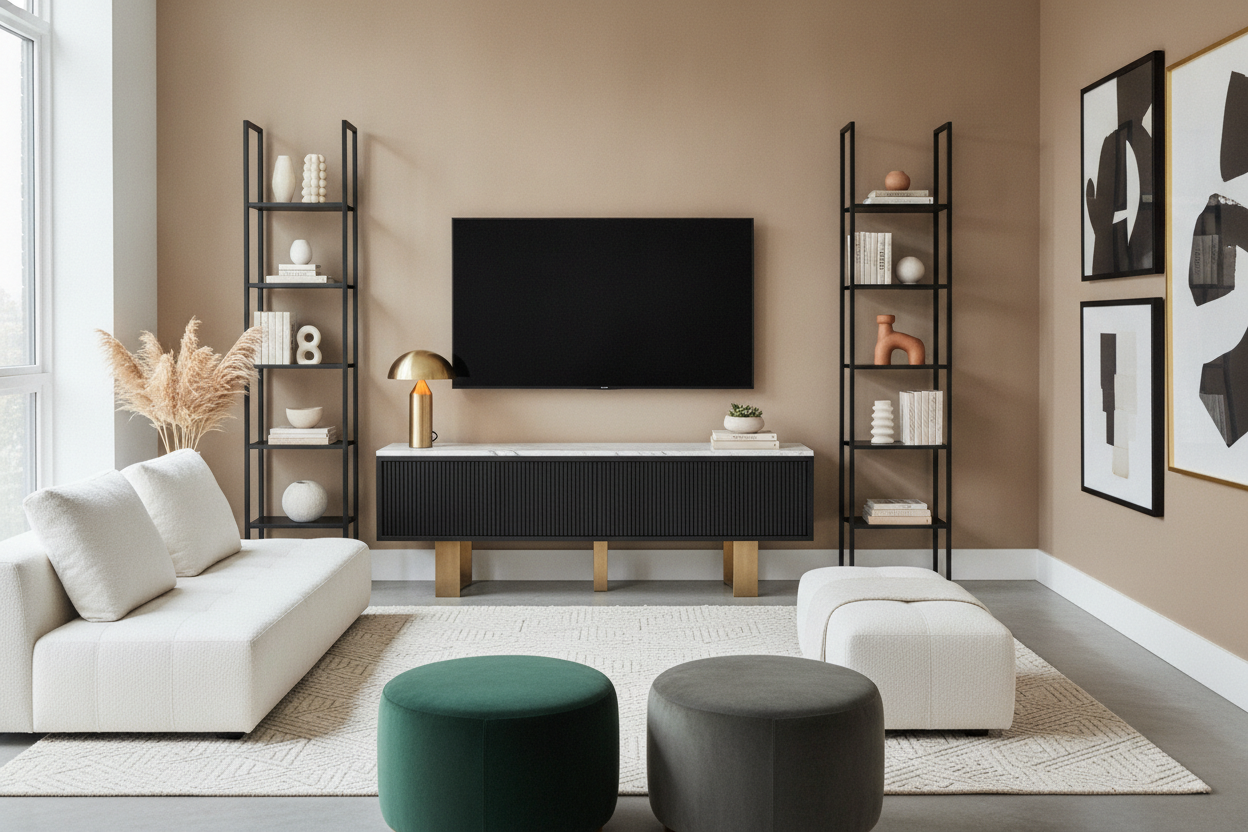
The fear of black furniture usually stems from those clunky, oversized entertainment centers from the 90s. To avoid that vibe, you need to prioritize texture and legs. A black modern media console with a slim profile and tapered legs feels surprisingly light. Look for details like fluted wood doors or a matte charcoal finish that allows the natural grain to peek through. This adds depth so the piece doesn't just look like a flat black box.
Also, don't be tempted by ultra-minimalism if you actually have gear to store. I've seen too many people realize their floating media shelves are too shallow for an actual AV receiver or a PlayStation 5. A floor-standing unit with a depth of at least 16 to 18 inches gives you the internal clearance you need for cables and ventilation while maintaining a sleek silhouette. If you're worried about it looking 'too big,' choose a model that sits a few inches off the floor so you can see the floorboards underneath.
How to Style the Setup So It Doesn't Feel Gloomy
Once you have the dark base, the fun part is layering. To keep the area from feeling like a black hole, use 'life' and 'light.' A trailing Pothos or Philodendron is the perfect move—the vibrant green leaves look incredible against a matte black backdrop. I also recommend adding a small lamp with a warm bulb (2700K) to one end of the console to provide a soft glow that breaks up the dark surface at night.
Stack a few colorful coffee table books next to the TV to introduce a bit of personality. The goal is to create a mix of heights and textures. Brass or gold hardware on the cabinet doors can also act like jewelry for the room, catching the light and making the piece feel expensive rather than utilitarian. It’s all about the balance between the dark anchor and the bright accents.
My Honest Experience
I’ll be real: my first attempt at this was a disaster because I bought a high-gloss black unit from a big-box retailer. It looked like a piano but felt like a magnet for every cat hair and fingerprint in a five-mile radius. I hated it. I eventually sold it and bought a matte, wood-grain unit with brass legs. It’s been three years, and I’m never going back to light wood for a media center. The way it makes my screen 'vanish' when I'm not using it is worth the extra thirty seconds of dusting once a week.
FAQ
Do black media consoles show more dust?
Yes. If you are a 'dust once a year' kind of person, black will humble you. However, a matte finish is much more forgiving than a gloss finish. Keep a microfiber cloth in one of the drawers for quick 10-second wipedowns.
Will a black console make my small room look smaller?
Actually, no. Dark furniture can 'recede' into the background, especially if you have other dark accents in the room. It creates a sense of depth that can actually make the walls feel further away.
What material is best for a black TV stand?
Solid wood with a black stain is the gold standard because you still see the organic texture. High-quality MDF with a matte veneer is a great budget-friendly second choice. Avoid plastic-heavy laminates that look shiny and cheap under LED lighting.

Laisser un commentaire
Ce site est protégé par hCaptcha, et la Politique de confidentialité et les Conditions de service de hCaptcha s’appliquent.