


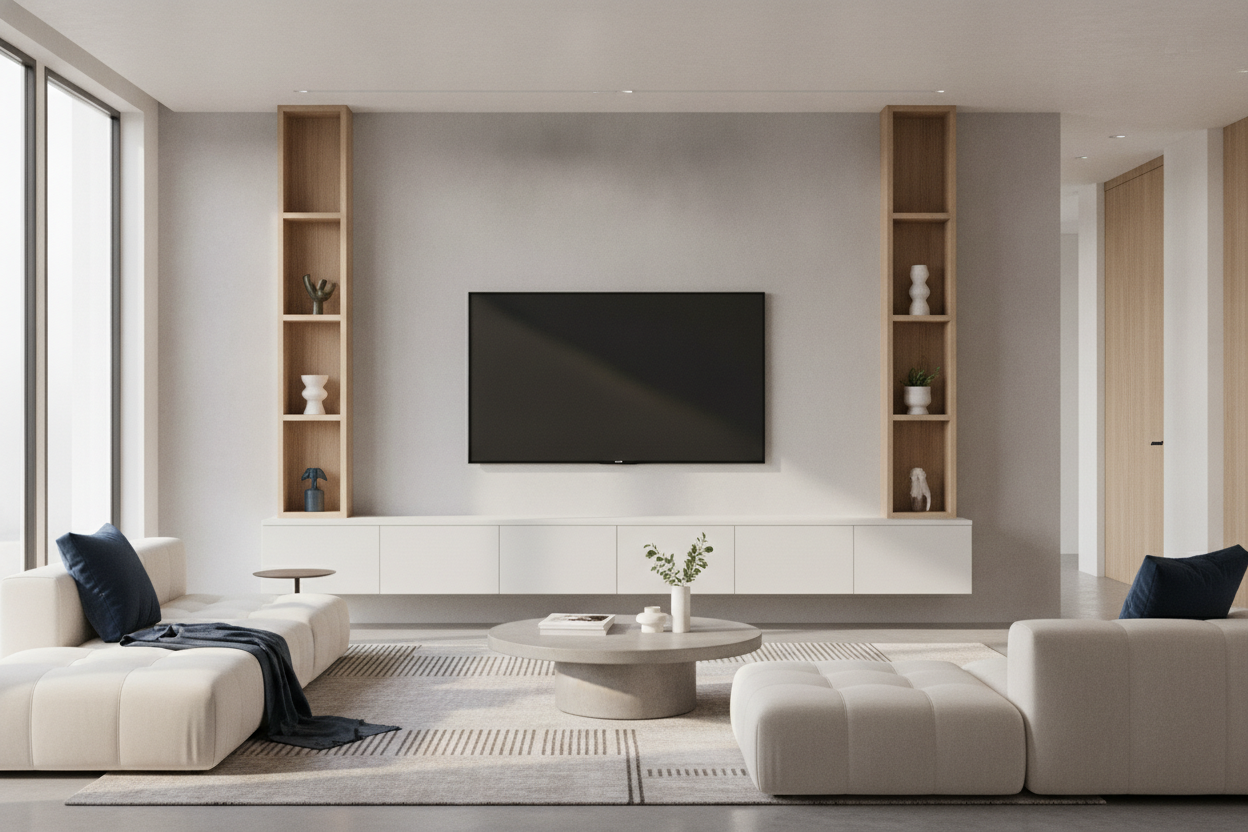
I used to believe the minimalist lie. I spent three weeks staring at Pinterest boards of single, reclaimed wood planks floating effortlessly beneath a television, convinced that was my aesthetic destiny. I bought the wood, I mounted it, and for exactly forty-five minutes, it looked incredible. Then I plugged in my soundbar, my gaming console, and my router.
Suddenly, my living room looked like a server room in the middle of a breakdown. Cables were everywhere. Dust bunnies started colonizing the space behind my Xbox within forty-eight hours. That’s when I realized that floating cabinets under tv setups are the only way for real people with real electronics to achieve that clean, modern look without losing their minds.
Quick Takeaways
- Closed doors hide the inevitable 'cable spaghetti' that comes with modern tech.
- Floating units keep the floor clear, making your room feel larger and your vacuuming easier.
- A back panel is a non-negotiable for hiding wall scuffs and messy wiring.
- Mixing solid cabinets with light shelves prevents the 'heavy box' look.
I Tried the Open Shelving Look (And I Hated It)
I really wanted the floating shelf tv console lifestyle to work. There is something so airy and intellectual about a single shelf holding nothing but a vintage camera and a small succulent. But the reality is that most of us actually use our TVs. We have Apple TVs, Nintendo Switches, and massive power bricks that look like industrial waste. When I tried a simple floating shelf for TV, I found myself spending every Saturday morning with a microfiber cloth, dusting the black glass of my components.
Open shelves are a stage, and unless you are a professional stager, your 'stage' will eventually be covered in mail, half-used candles, and tangled HDMI cords. Every time I sat down to watch a movie, I wasn't looking at the screen—I was looking at the messy pile of tech underneath it. It felt like I was living in a half-finished renovation. The pressure to keep every single item looking curated is exhausting. Unless you have the discipline of a monk, open shelving under a TV is just a recipe for visual clutter and constant maintenance.
Why Floating Cabinets Under TV Are the Ultimate Cheat Code
The transition to a closed unit was like a weight being lifted off my shoulders. When you choose a wall mounted media console with actual doors, you are essentially buying a 'hide my life' button. I can have three different remotes, a messy stack of controllers, and a router that looks like a robotic spider, and nobody has to know. I close the door, and the room is instantly 'clean.'
The real hero of this setup, though, is the floating tv stand with back panel. If you’ve ever tried to fish cables through a hole in the drywall, you know it’s a nightmare. A back panel creates a slim cavity where all those wires can live in secret. It also covers up the inevitable mess of holes you’ll drill while trying to find a stud. It turns a chaotic floating unit into a sleek, integrated piece of architecture. It’s the difference between a DIY project that looks like a DIY project and a custom-built entertainment center that looks like it cost three times what you actually paid.
You Still Get to Keep Your Floor Space
One of the biggest mistakes people make when they get tired of clutter is running back to a heavy, floor-standing credenza. Don't do it. When I replaced my bulky console with a wall-mounted cabinet, the room felt like it grew by five square feet. Even though the cabinet has doors and more storage, the fact that I can see the floor underneath it tricks the brain into thinking the room is more open.
Plus, there is the practical side: the robot vacuum. My Roomba used to get into a fistfight with the legs of my old media stand every single day. Now, it just glides right under the media console floating shelf without a hitch. There are no dark corners for dust to collect, and the whole room feels lighter. You get the storage capacity of a traditional dresser with the visual footprint of a much smaller piece of furniture.
How to Keep Closed Cabinets From Looking Like a Heavy Box
The only real danger with closed cabinets is that they can look a bit 'heavy' if you don't balance them out. If you hang a massive, solid white box on a white wall, it can look like a kitchen cabinet that lost its way. To avoid this, I always suggest an asymmetrical approach. I paired my main cabinet with a few smaller floating shelves for tv stand decor placed slightly higher and to the left. This draws the eye upward and breaks up the horizontal line.
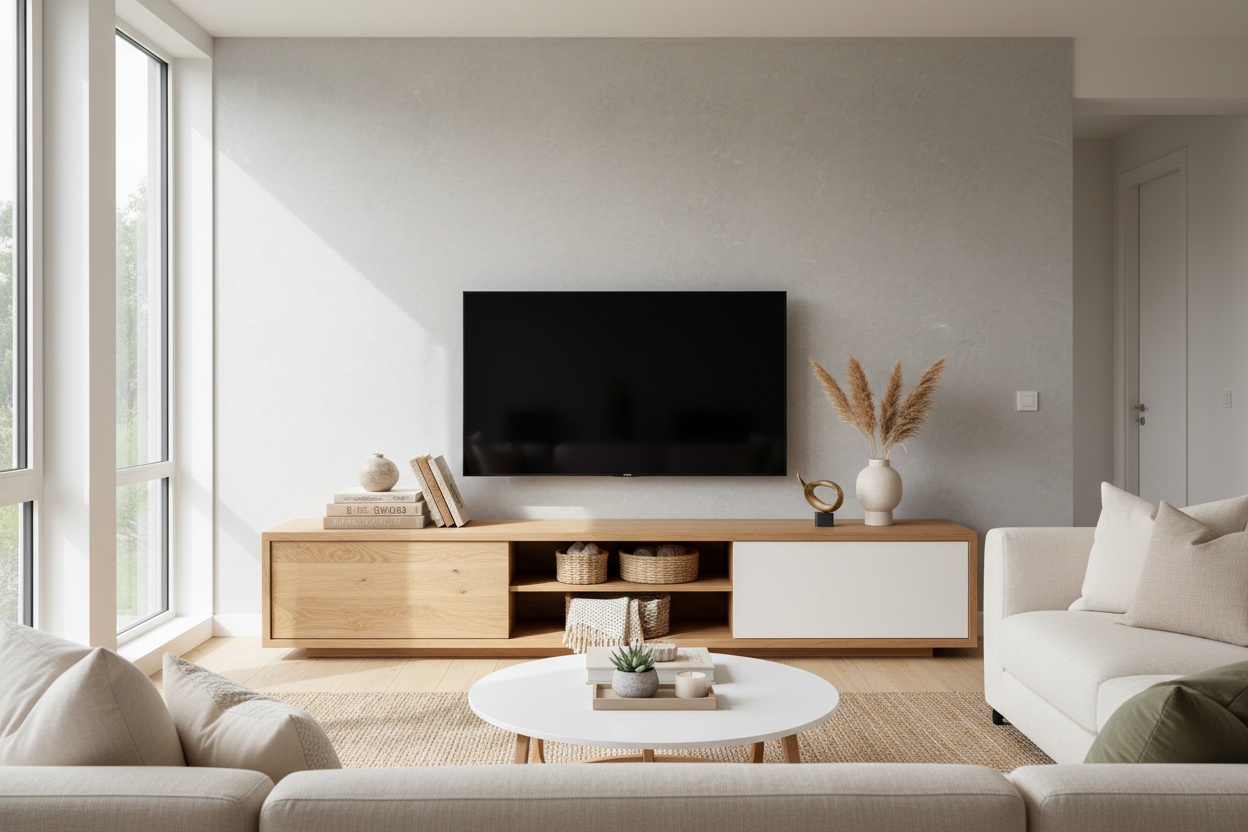
You should also look for texture. I always tell friends to browse different TV stands that feature slatted doors or fluted wood finishes. These textures catch the light and add depth, so the unit doesn't just look like a flat slab on the wall. When you combine the solid storage of the cabinet with a few open tv unit floating shelves for your 'pretty' things—like a nice vase or a few books—you get the best of both worlds. You hide the ugly stuff and highlight the good stuff.
The Final Verdict: Are Doors Worth It?
At the end of the day, your home should be a place where you can actually relax, not a place where you’re constantly performing for an imaginary camera. While a tv stand with floating shelves that are entirely open might look great in a magazine, it rarely survives the reality of a Tuesday night with a bag of chips and three different charging cables. Closed floating cabinets under tv setups are the realistic choice for people who want a beautiful home but don't want to spend their lives cable-managing a router. Get the doors. Hide the mess. Enjoy your movie.
FAQ
Can I mount these on drywall?
Technically yes, but please use a stud finder. You’re hanging a heavy cabinet plus the weight of your gear. If you can't hit at least two studs, use high-quality toggle bolts rated for at least 100 pounds. Don't risk your OLED on a 50-cent plastic anchor.
How high should I hang a floating unit?
The sweet spot is usually 8 to 12 inches off the floor. You want it high enough to look like it's floating, but low enough that your TV stays at eye level when you're sitting on the sofa. If you have to tilt your head back, it's too high.
Will my electronics overheat inside a closed cabinet?
Most media-specific cabinets have ventilation cutouts. If yours doesn't, it’s easy to drill a few 2-inch holes in the back or bottom. Just make sure there’s at least an inch of clearance around your console for airflow.

Laisser un commentaire
Ce site est protégé par hCaptcha, et la Politique de confidentialité et les Conditions de service de hCaptcha s’appliquent.