


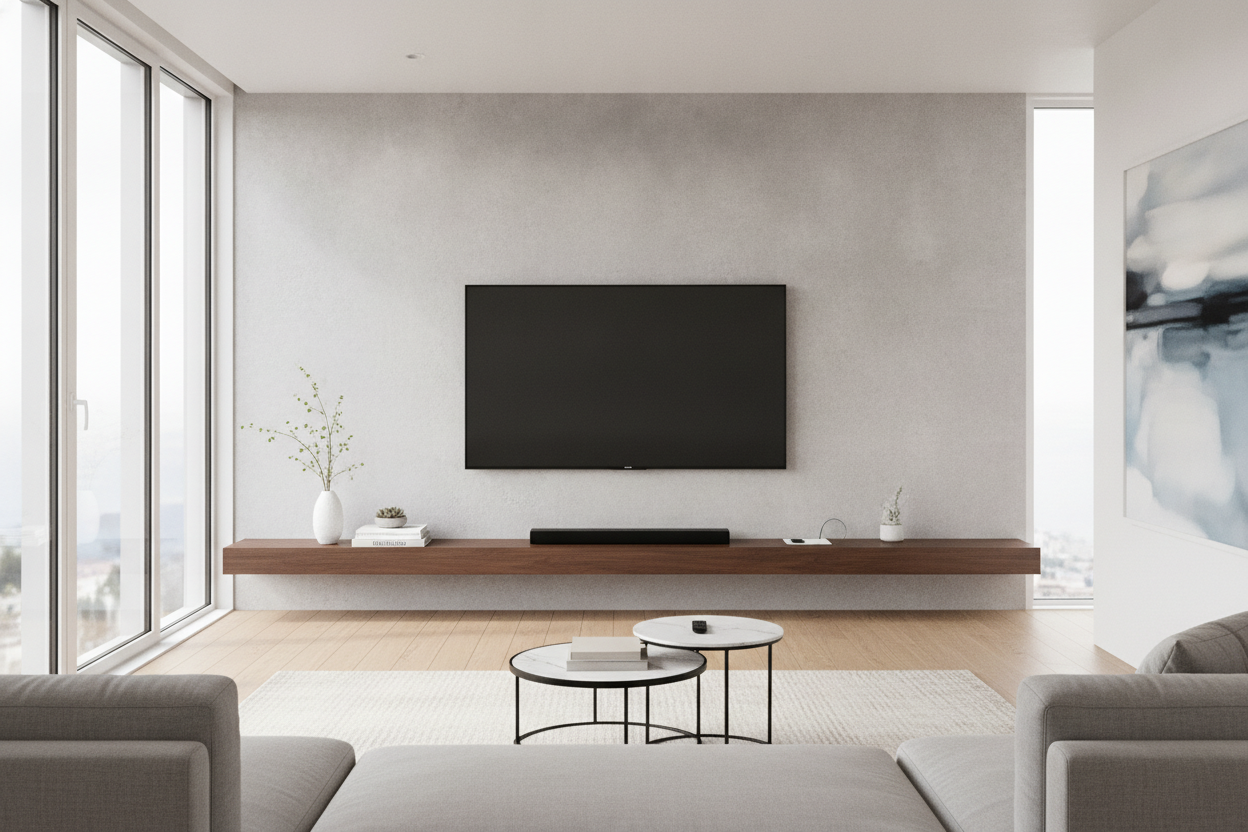
I used to live in a 600-square-foot apartment where every piece of furniture felt like a personal attack on my walking space. The worst offender was a massive, 70-inch solid oak credenza I bought because I thought adults needed a place to hide their router and three old HDMI cables. It looked great in the catalog, but in my living room, it felt like I was sharing the floor with a parked SUV.
Finally, I got tired of stubbing my toe and seeing dust bunnies colonize the dark void underneath it. I swapped that beast for a single floating shelf for tv and the room immediately felt like it could breathe again. It turns out, when you stop treating your floor like a storage unit, you actually enjoy sitting in your home.
Quick Takeaways
- A floating setup instantly makes small rooms look 20-30% larger by exposing more floor.
- Cables are the enemy; plan your wire management before you drill a single hole.
- Weight limits are real — if you want a floating shelf for tv to sit on, you must hit the studs.
- Solid wood beats MDF every time for long-term durability and 'sag-proofing.'
Why I Finally Broke Up With My Bulky Media Cabinet
Traditional media consoles are basically just expensive boxes for air. Unless you have a massive collection of physical 4K Blu-rays or a vintage record player that needs a home, most of that cabinet space goes unused. When I cleared mine out, I realized 80% of what was inside was trash: old manuals, batteries that had leaked, and a Nintendo Wii remote from 2008.
The biggest shift is visual. When your furniture touches the ground, it creates a hard boundary for your eyes. Lifting that storage off the floor tricks your brain into thinking the room is bigger than it is. I often get asked, does a tv shelf floating on the wall actually save space? Physically, it might only save a few inches of depth, but mentally, the lack of a heavy base makes a cramped studio feel like a curated gallery. It’s the difference between a room that feels 'stuffed' and one that feels 'designed.'
The Floating Shelf for Mounted TV Setup vs. Resting It On Top
There are two ways to play this game. The most common is the floating shelf for mounted tv approach. This is where your screen is bolted to the wall with a separate bracket, and you have an under tv shelf floating about 6 to 10 inches below it. This is purely for aesthetics and light storage—think a remote, a soundbar, or a single candle. Because the shelf isn't carrying the 50-pound weight of the TV, you have more flexibility with mounting.
The second, more hardcore option is buying a heavy-duty floating shelf for tv to sit on directly. This is risky if you’re a DIY novice. Most TVs have a center-heavy base that requires a shelf at least 12 to 14 inches deep. Standard decorative shelves are usually only 8 or 10 inches deep. If you go this route, you aren't just looking for a 'shelf'—you are looking for a wall-mounted mantle. It needs to be secured with heavy-duty steel brackets that go directly into at least two, preferably three, wall studs. If you try to use drywall anchors for this, you’re going to be buying a new TV by Tuesday.
Where Do the Ugly Cords Go? (The Real Talk)
The dream of the floating tv wall shelf often dies when people realize they have five black wires dangling like limp spaghetti against their white walls. If you aren't ready to deal with the cords, don't buy the shelf. You have three real options: hide them behind the drywall (which requires a kit and a bit of bravery), use a paintable cord raceway that sticks to the wall, or buy a shelf with a built-in cable management notch.
If you have a PS5, an Xbox, a cable box, and a router, a single floating tv mount shelf might not be enough. You’ll end up with a mountain of plastic boxes that look messy. In that case, I usually suggest looking into adjustable shelf storage or a floating 'media box' that has a flip-down door. Minimalist living is only fun if you actually have the discipline to keep it minimal. If you’re a tech hoarder, a solid cabinet with doors is your best friend, not your enemy.
How to Warm Up Wall Mounted TV Floating Shelves
One danger of the tv wall mount floating shelf is that it can look a bit 'hotel-ish' if you aren't careful. Too much black glass and white gloss makes your living room feel like a waiting room. The secret is texture. The relationship between a floating shelf and tv should feel intentional, not just functional. I always tell people to skip the cheap laminate and go for natural materials.
I personally found that my living room felt sterile until I hung a walnut floating tv shelf. The grain of the wood breaks up the giant black rectangle of the screen. To style wall mounted tv floating shelves, follow the 'rule of three.' Put a small stack of books on one side, a trailing plant (like a pothos) on the other to hide the edge of the shelf, and leave the middle clear for your soundbar or remotes. It keeps the focus on the screen while making the wall look like part of your home decor rather than an electronics aisle.
My Personal Lesson: The Level is Your Best Friend
The first time I installed a 10-inch deep shelf, I used a cheap plastic level and 'eyeballed' the rest. Big mistake. Because floating shelves have no legs to ground them, even a 1-degree tilt is incredibly obvious once you put a flat TV above it. I spent three days looking at my TV and feeling like the room was melting to the left. Buy a long, 24-inch metal level. Check it three times. Then check it again after you tighten the bolts. Also, don't trust drywall anchors for anything heavier than a picture frame. If you can't find a stud, use toggle bolts, but even then, keep the weight light.
FAQ
How high should I mount my floating shelf?
Generally, the shelf should sit 4 to 6 inches below the bottom of your TV. The TV itself should be at eye level when you are sitting on your sofa—usually about 42 inches from the floor to the center of the screen.
Can a floating shelf hold a gaming console?
Yes, but check the depth. A PS5 or Xbox Series X is quite deep and heavy. You’ll need a shelf that is at least 12 inches deep and rated for at least 30 pounds to be safe.
What material is best for a TV shelf?
Solid wood (oak, walnut, or maple) is best because it won't bow over time. MDF is cheaper but can sag in the middle if you put anything heavier than a remote on it for a long period.



Laisser un commentaire
Ce site est protégé par hCaptcha, et la Politique de confidentialité et les Conditions de service de hCaptcha s’appliquent.