


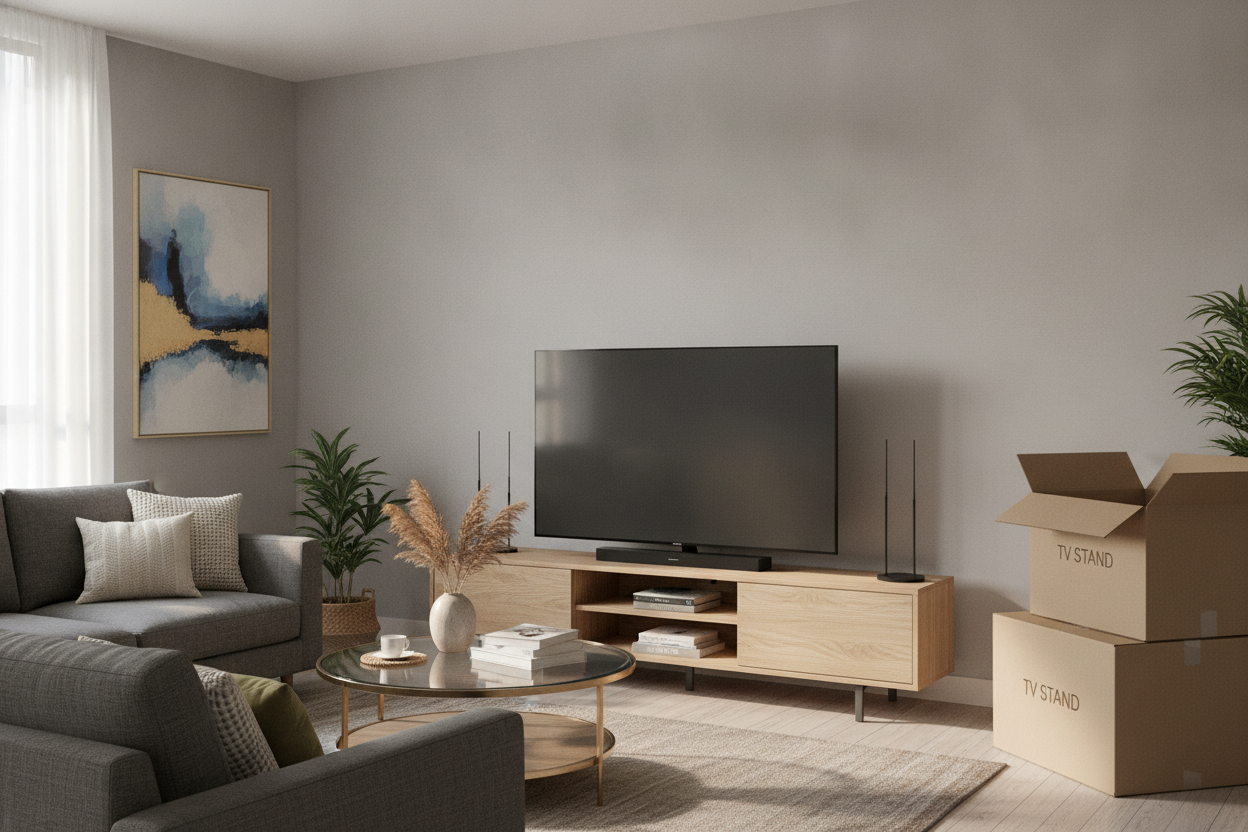
I spent three hours last Tuesday with a metal tape measure and a growing sense of despair. My apartment has this weird architectural alcove—exactly 46.5 inches wide—that feels like it was designed by someone who hates furniture. Trying to find 46 inch tv stands that don't look like they were stolen from a freshman's dorm room is a special kind of hell.
Quick Takeaways
- Standard furniture sizes usually jump from 40 to 48 inches, leaving 46-inch spaces in no-man's-land.
- A '46 inch TV' refers to the diagonal screen, while a '46 inch stand' is the actual furniture width.
- Avoid 'hollow core' MDF; it sags under the weight of even modern, lighter TVs.
- Leave at least an inch of clearance on each side of an alcove for a 'built-in' look that doesn't scratch your walls.
The Awkward 'In-Between' Size Dilemma
The furniture industry loves round numbers. They manufacture by the thousands in 36, 48, and 60-inch increments. When you have a space that specifically demands a 46 inch wide tv stand, you are essentially hunting for a unicorn. Most 'standard' consoles will either be way too small, leaving awkward gaps for dust bunnies, or a quarter-inch too wide to actually fit the gap.
I spent weeks measuring and re-measuring, hoping my walls would magically expand. They didn't. I actually considered the 'close enough' approach and almost swapped my bulky console for a tv stand that was 47 inches, thinking I could shave down the baseboards. Don't do that. It’s a recipe for a security deposit nightmare and a lopsided TV.
The Dorm Furniture Trap (And How to Avoid It)
Most of what you'll find in the 46 in tv stand category is, frankly, garbage. It’s that crumbly particleboard with a plastic 'espresso' sticker that peels off if you look at it too hard. If the assembly instructions are just three steps and the box weighs less than the TV you're putting on it, keep walking. You want something with actual structural integrity.
Look for quality TV stands that use powder-coated steel frames or solid mango wood. I once bought a $110 'deal' that started sagging in the middle within four months because the center support was a joke. Now, I look for kiln-dried hardwoods or at least high-grade birch plywood. If you can't stand on it (not that you should), it probably shouldn't hold your $800 OLED.
Wait, Do You Need a 46 Inch Stand or a Stand for a 46 Inch TV?
This is where everyone gets tripped up. A 46-inch TV is measured diagonally, meaning the actual physical width of the screen is roughly 40 inches. If you buy a tv stand 46 inches wide, your TV will fit with room to spare. However, if you search for a tv stand for 46 inch tv, you might end up with a tiny 40-inch unit that makes your setup look top-heavy and precarious.
The goal is the 'Golden Ratio' of media setups: your stand should be at least 2-4 inches wider than your TV screen on both sides. This creates a visual anchor. A 46 tv stand is actually the sweet spot for a 40-inch to 43-inch screen. It gives you enough room for a soundbar without looking like the TV is about to tip over.
The Hidden TV Alternative for Stubborn Spaces
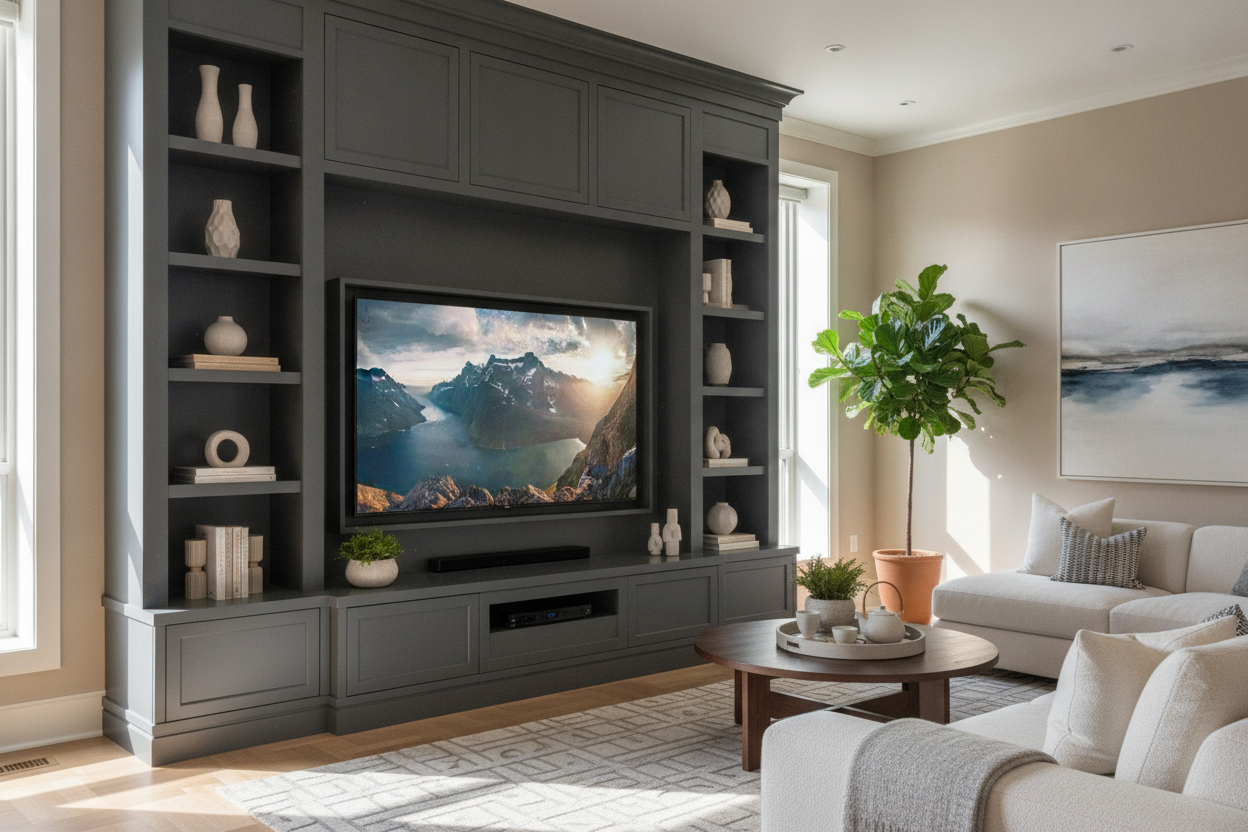
If you've scoured the internet and still can't find a 46" tv stand that fits your aesthetic, it's time to think outside the box—or inside a cabinet. In tight, narrow living rooms, a traditional console can sometimes feel like a barricade. I've started leaning toward more integrated tech solutions that don't scream 'I live in a media room.'
An electric vertical lift TV cabinet is a brilliant workaround for those impossible alcoves. Instead of trying to find a piece of wood that fits the width perfectly, you use a motorized system that hides the TV entirely when you're not watching. It’s cleaner, it protects the screen from dust, and it solves the 'black hole' problem of a giant screen dominating a small room.
My Final Verdict on Narrow Living Room Layouts
After years of cramming furniture into tight rentals, I’ve learned the hard way: never go wall-to-wall. If your alcove is 46 inches, buy a 44-inch stand. That one inch of breathing room on either side is the difference between a room that feels 'designed' and a room that feels 'stuffed.'
Don't settle for the first cheap 46 inch tv stand you see on a big-box site. Check the weight capacity, verify the material is actually wood (not 'wood-like' paper), and make sure the cord management doesn't require you to drill your own holes. Your sanity—and your living room—will thank you.
FAQ
Is a 46 inch stand too small for a 55 inch TV?
Technically, no, as long as the TV's feet are closer together than 46 inches. However, it will look terrible. The TV will overhang the sides, making the whole room feel cluttered and unstable.
What is the best height for a 46 inch TV stand?
Aim for the center of your TV to be at eye level when you're sitting on your sofa. Usually, this means a stand height between 22 and 26 inches.
Can I use a 46-inch console table as a TV stand?
Only if it's rated for the weight. Many console tables are 'entryway' furniture and aren't deep enough or strong enough to hold a TV securely without wobbling.

Laisser un commentaire
Ce site est protégé par hCaptcha, et la Politique de confidentialité et les Conditions de service de hCaptcha s’appliquent.