

Understanding L-Shaped Desk Frame Architecture and Weight Distribution
Designing an efficient corner workspace requires an understanding of how an L-shaped desk frame supports asymmetric physical loads. Unlike standard rectangular workstations, an L-shaped setup creates two distinct zones: a primary work wing and a secondary return wing. This format introduces multi-directional leverage points that require well-balanced structural support.
Tri-Leg vs. Dual-Beam Corner Support Dynamics
Most corner desk assemblies utilize a three-column architecture. In this design, two outer legs support the far ends of each wing, while a specialized corner desk leg secures the inner apex where the two surface segments meet. This triangular leg distribution neutralizes lateral sway and ensures that the central intersection does not sag under the weight of monitor arms or computing hardware. Alternative configurations rely on cantilevered dual-beam systems, which remove the inner post to maximize legroom while maintaining rigid under-frame crossbracing.
Torsional Rigidity and Deflection Control Across Asymmetric Wings
When you position heavy monitors, desktop towers, and desktop accessories across uneven wing lengths, the frame experiences torsional stress. Without robust cross-members or reinforced top brackets, longer wings can experience slight surface deflection. Selecting a heavy-gauge steel l shaped frame ensures that both wings remain level and rigid, preventing seam separation where the desktop panels join.
Dimensional Sizing Tiers and Corner Geometry Planning
Workspace proportions dictate the comfort and operational utility of your desk. Evaluating room dimensions and walking paths helps you choose the right balance between expansive surface area and open floor space.
Compact Corner Formats for Space-Constrained Rooms
In apartments and multipurpose guest rooms, a compact layout provides dedicated multi-monitor space without overcrowding the room. Choosing a dedicated shaped corner desk product delivers a balanced surface area that tucks neatly into a corner while preserving comfortable clearance around nearby entryways and closets.
Extended Large-Span Wings for Multi-Display and Executive Setups
For high-demand workstations hosting multiple ultrawide displays, audio interfaces, and physical reference materials, an extended frame provides the necessary depth and span. Balancing these expansive wings against other room furnishings—such as coordinating perimeter storage or consulting a couch sofa guide for hybrid living spaces—keeps the overall floor plan functional and inviting.
Return Wing Reversibility and Spatial Traffic Flow
A major design factor is determining whether the return wing extends to your left or right. Reversible l shaped desk legs allow you to reconfigure the orientation if your office arrangement changes. Planning your return side around room entryways, natural window light, and existing wall outlets prevents awkward movement patterns across the room.
Frame Mechanics: Fixed Structural Bases vs. Standing Desk Systems
Choosing between a static frame and an adjustable height base depends on your ergonomic preferences and daily working habits.
Manual Crank and Motorized L-Shaped Standing Desk Frames
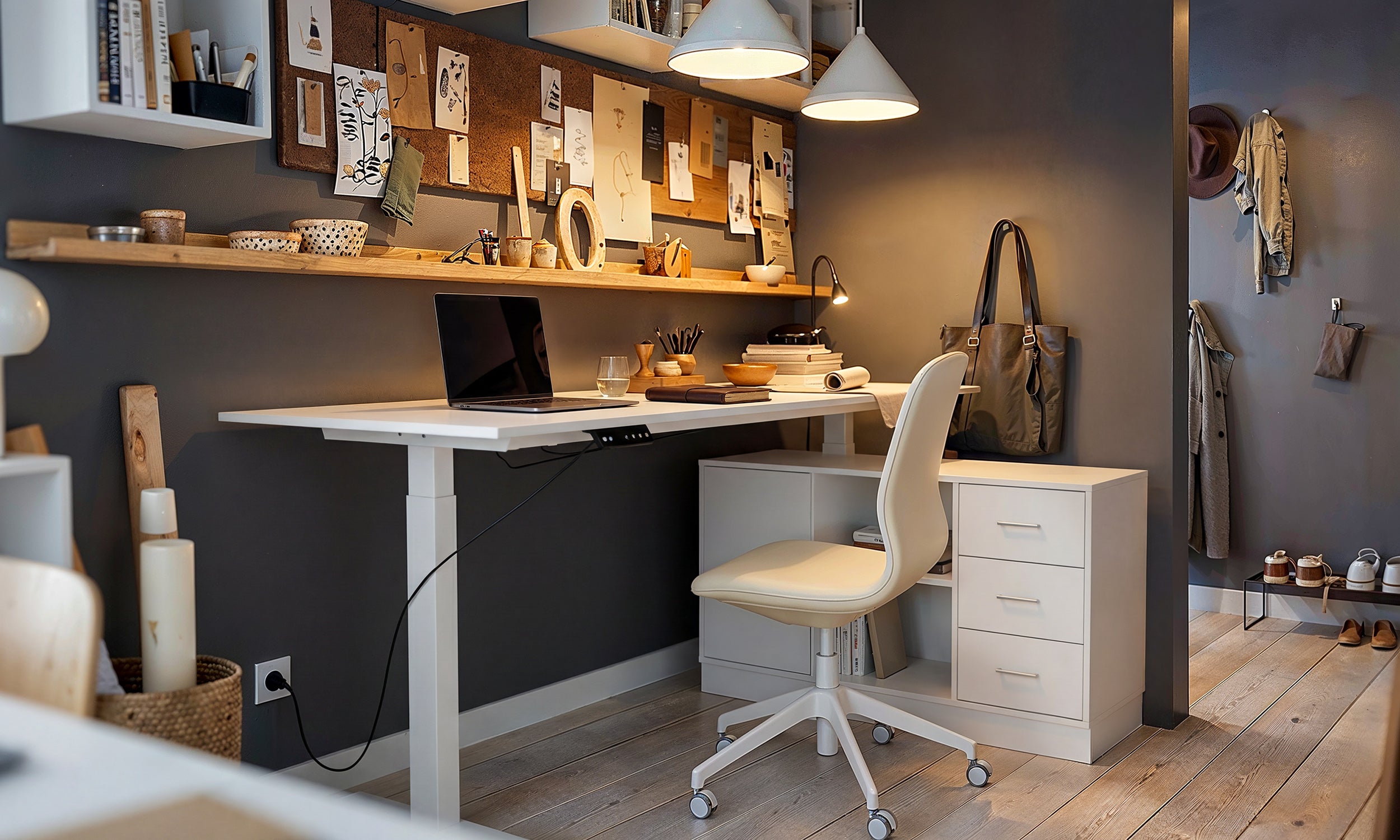
An l-shaped standing desk frame typically incorporates synchronized multi-motor lift columns beneath each support point. These systems allow smooth height transitions across large, heavy surfaces without tilting the desktop. For deeper aesthetic insights on balancing motor housings, control boxes, and overall workstation visuals, reviewing a dedicated standing desk guide offers practical interior styling strategies.
Static Heavy-Duty Corner Desk Legs and Under-Frame Clearance
Static l shaped table legs provide exceptional stability with fewer mechanical parts. Fixed frames generally offer generous under-desk clearance, leaving ample vertical space for knee movement, footrests, and modular storage units beneath both wings.
Desktop Material Pairing, Fastening, and Structural Reinforcement
The structural longevity of your corner workstation depends heavily on how the tabletop interfaces with the underlying metal frame.
Solid Hardwood vs. Engineered Composite Tops
Solid hardwood boards bring natural warmth and rigidity, though they require slotted mounting points to accommodate seasonal wood movement. Engineered composite boards provide uniform density and dimensional stability, making them reliable options for pre-drilled L-shaped frame mounting patterns.
Mending Plates, Joint Alignment, and Under-Desk Crossbeams
Connecting two desktop halves requires careful alignment along the joint seam. Heavy-duty flat mending plates paired with under-frame longitudinal beams pull the meeting edges tight, eliminating vertical lips and keeping the work surface perfectly flush.
Integrating Storage, Cable Management, and Room Layouts
An organized corner desk relies on thoughtful integration of peripheral storage and cable pathways.
Under-Wing Mobile Pedestals and Perimeter Credenzas
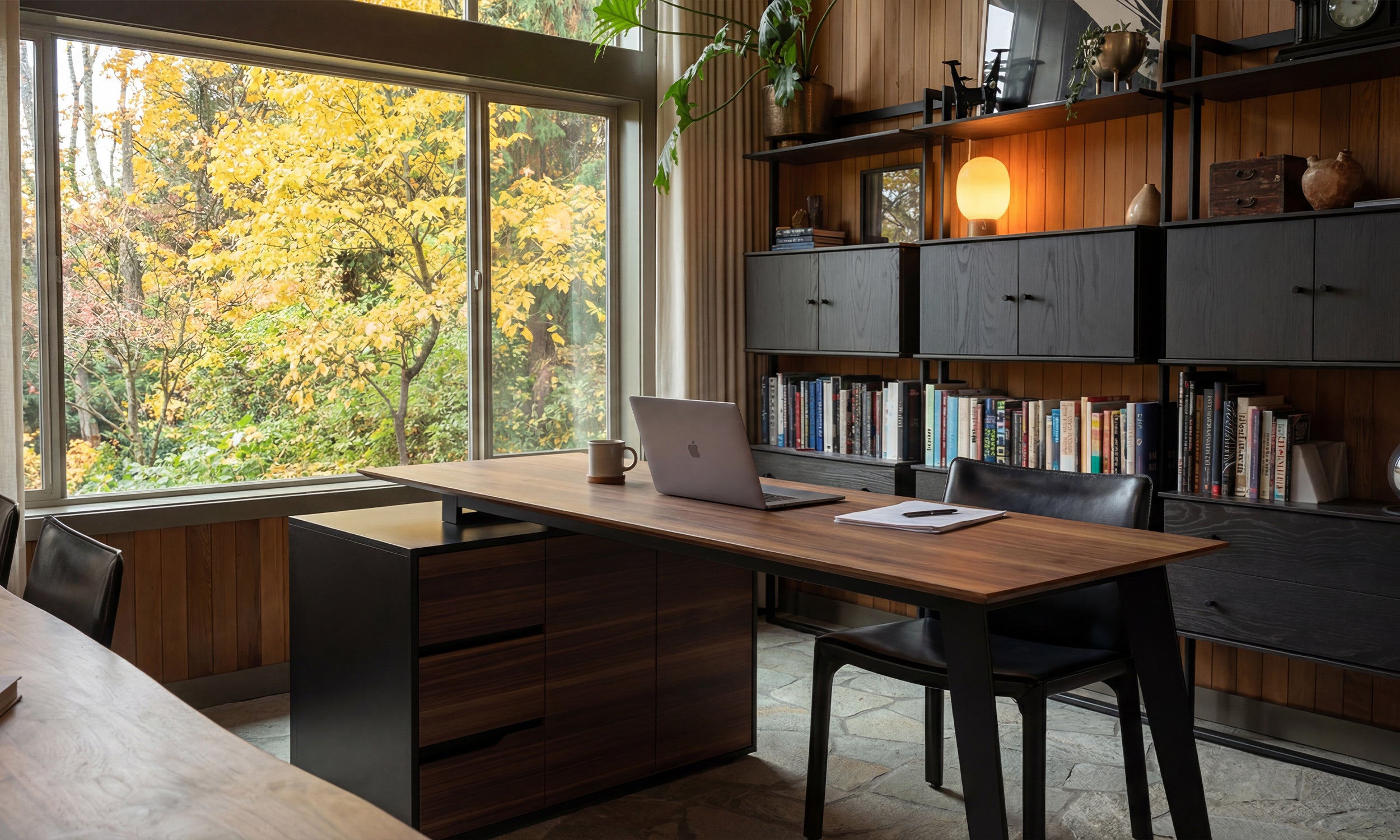
Because the return wing is often used for secondary tasks, it serves as a natural location for organizational storage. Integrating an adjacent shaped corner desk product or sliding a rolling file pedestal beneath the outer wing keeps essential paperwork and office supplies within arm's reach without cluttering primary work zones.
Continuous Cable Spine Routing and Power Distribution
Managing cords across an extended corner setup requires organized pathways. Installing dual horizontal cable trays beneath both frame wings allows power strips, power bricks, and monitor cables to run cleanly along the underside of the desk, keeping the open legroom free of tangles.
Decision Matrix: Selecting the Ideal L-Shaped Desk Frame Configuration
Use the following framework to assess your space and functional requirements before finalizing your desk frame choice.
Frame Selection Framework by Room Scale and Workload
- Compact Study or Bedroom Corner: Opt for a symmetrical, compact frame that maximizes tight corner angles while maintaining easy room navigation.
- Dedicated Multi-Display Workstation: Select an asymmetrical frame with an extended main wing and reinforced center support to handle monitor arms and heavy accessories.
- Ergonomic Sit-Stand Workspace: Choose a synchronized three-leg motorized standing desk frame with integrated anti-collision sensing and dual under-desk cable trays.
Step-by-Step Installation and Alignment Checklist
- Measure the floor area, checking baseboard clearances and door swing radiuses.
- Assemble the primary and return frame rails upside down on a soft, protective surface.
- Align desktop segments using structural mending plates before securing them to the main frame brackets.
- Fasten the corner desk legs, ensuring all bolts are hand-tightened before final cross-corner torque leveling.
- Attach horizontal wire management trays and position power distribution units near wall outlets.
- Turn the desk upright with assistance, adjust the leveling glides, and verify horizontal alignment across both wings with a spirit level.


Laisser un commentaire
Ce site est protégé par hCaptcha, et la Politique de confidentialité et les Conditions de service de hCaptcha s’appliquent.