
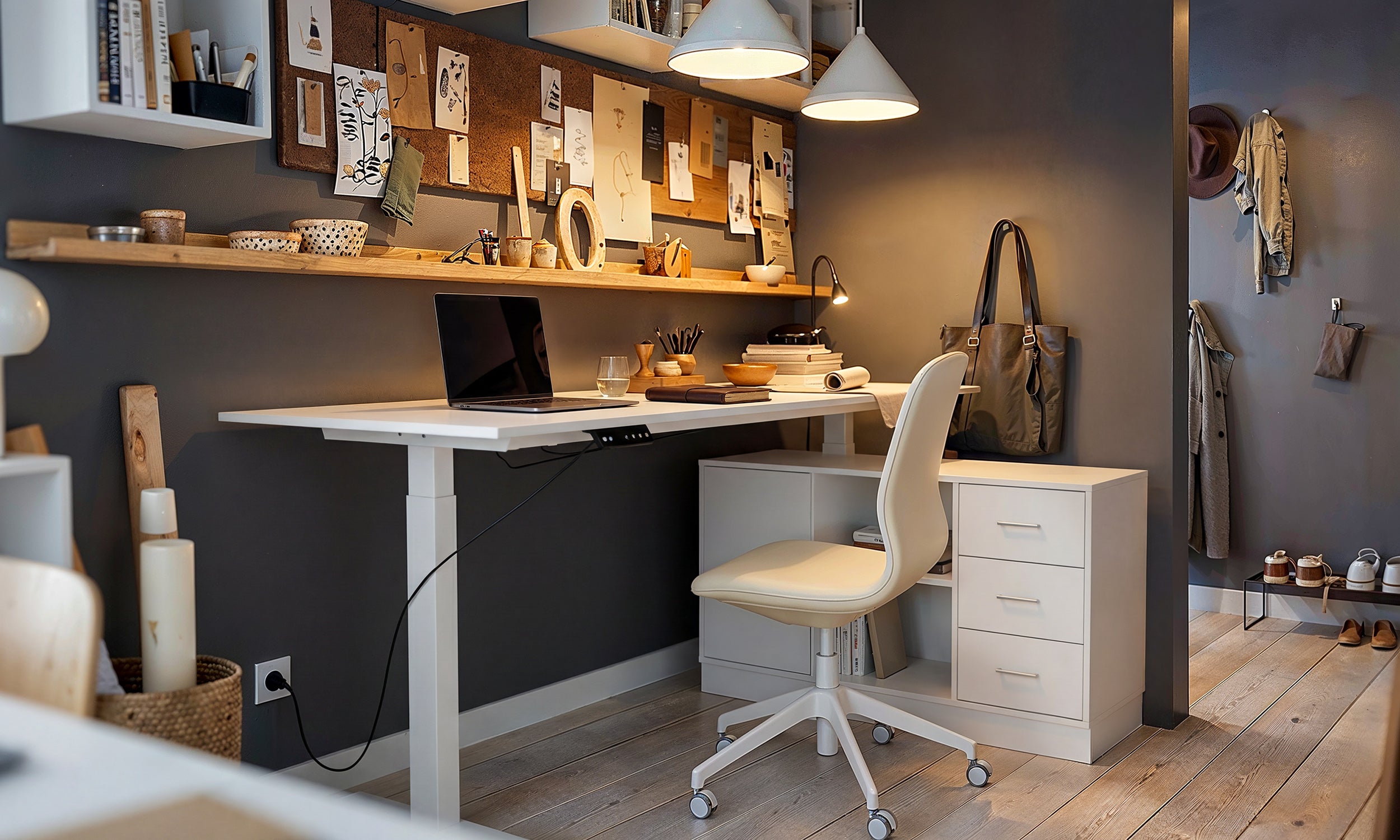
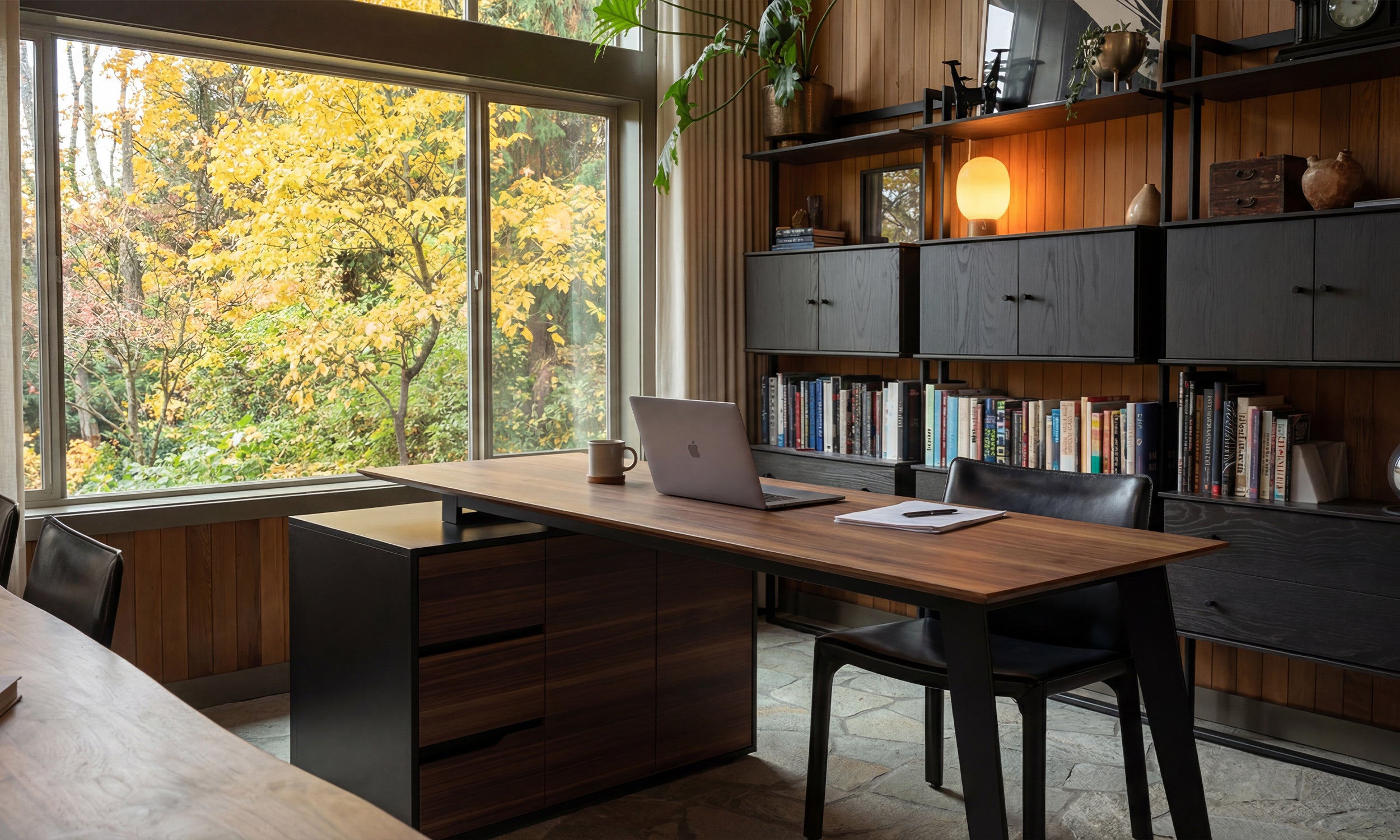

Designing a high-contrast workspace demands an intentional balance of light reflectance and grounding lines. A black and white ikea desk configuration provides a versatile foundation for modern home offices, offering the architectural purity of monochrome design without feeling sterile. By combining contrasting components—such as matte dark underframes with pristine pale surfaces or deep charcoal desktops supported by crisp white drawer units—you can direct visual flow and establish spatial depth across both compact studies and open-concept floor plans.
Architectural Foundations of the Monochrome Workstation
High-contrast interior planning hinges on the deliberate distribution of visual weight. Dark hues absorb light and anchor a room, while white surfaces reflect ambient light to create an impression of expansiveness. When styling an ikea black and white desk, deciding which plane carries the deeper tone dictates how the workstation interacts with adjacent walls and flooring.
A workspace built on a two-tone foundation prevents the starkness that can occur with purely all-white arrangements, while steering clear of the light-absorbing heaviness of an all-dark room. For those transitioning from monochromatic dark schemes, exploring a foundational black desk styling guide highlights how dark accents can add deliberate structure to everyday work zones.
Configuring the Black and White Desk Silhouette: Component Mixology
Modular furniture systems allow you to mix and match individual surfaces, trestles, support legs, and drawer units to achieve a customized silhouette. The relationship between your desktop and its support base establishes the dominant visual dynamic of the room.
Top-Light, Base-Dark Composition
Pairing a white tabletop with black metal trestles, angled hairpin legs, or dark steel uprights generates an airy, floating effect. This configuration works particularly well in smaller rooms where preserving visual floor space is crucial. The dark supports sketch crisp geometric lines against light baseboards and floors, while the bright worktop provides an open, reflective canvas for screens, notebooks, and task lighting.
Top-Dark, Frame-Light Composition
Conversely, placing a black or dark ash tabletop over white support pedestals or legs anchors the work zone as a commanding architectural focal point. This configuration suits open-plan living areas where you want the desk surface to clearly define the boundary of the home office. The white lower supports visually merge with pale walls, making the dark top appear as a structured horizontal plane suspended in the room.
Dimensional Footprints and Spatial Scale Categories
Selecting the proper proportions ensures that a high-contrast desk neither overwhelms a room nor looks lost within it. Workspace layouts generally align with three primary spatial categories:
- Compact Nook Footprints: Designed for shallow alcoves or secondary bedroom corners. Utilizing a white desktop with slim black hairpin or tubular legs keeps sightlines clear and prevents the furniture from crowding tight pathways.
- Standard Dedicated Study Footprints: Ideal for enclosed home offices. A standard mid-sized rectangular top paired with one storage pedestal and two contrasting legs provides ample balance between open legroom and accessible organization.
- Corner and Multi-Monitor Workstations: Suited for professional workstations requiring expansive desktop real estate. Adopting structured white corner workstation principles allows dual-tone setups to wrap neatly along walls without dominating ambient lighting. If you prefer a unified unit with integrated cabinetry, a modern minimalist white corner desk with built-in storage offers a streamlined base that pairs seamlessly with contrasting black desk accessories and task lighting.
Integrated Storage Pairing: Pedestals, Credenzas, and Hutches
Achieving visual harmony across a dual-tone office requires deliberate coordination of surrounding storage elements. Placing high-contrast storage units adjacent to or underneath your work surface keeps office accessories organized while reinforcing your chosen monochrome palette.
Under-desk drawer pedestals can either match the tabletop to extend its plane or match the legs to maintain vertical symmetry. When incorporating vertical wall storage above your worktop, applying proven black desk hutch pairing techniques ensures upper cabinets do not cast intrusive shadows over your main writing surface.
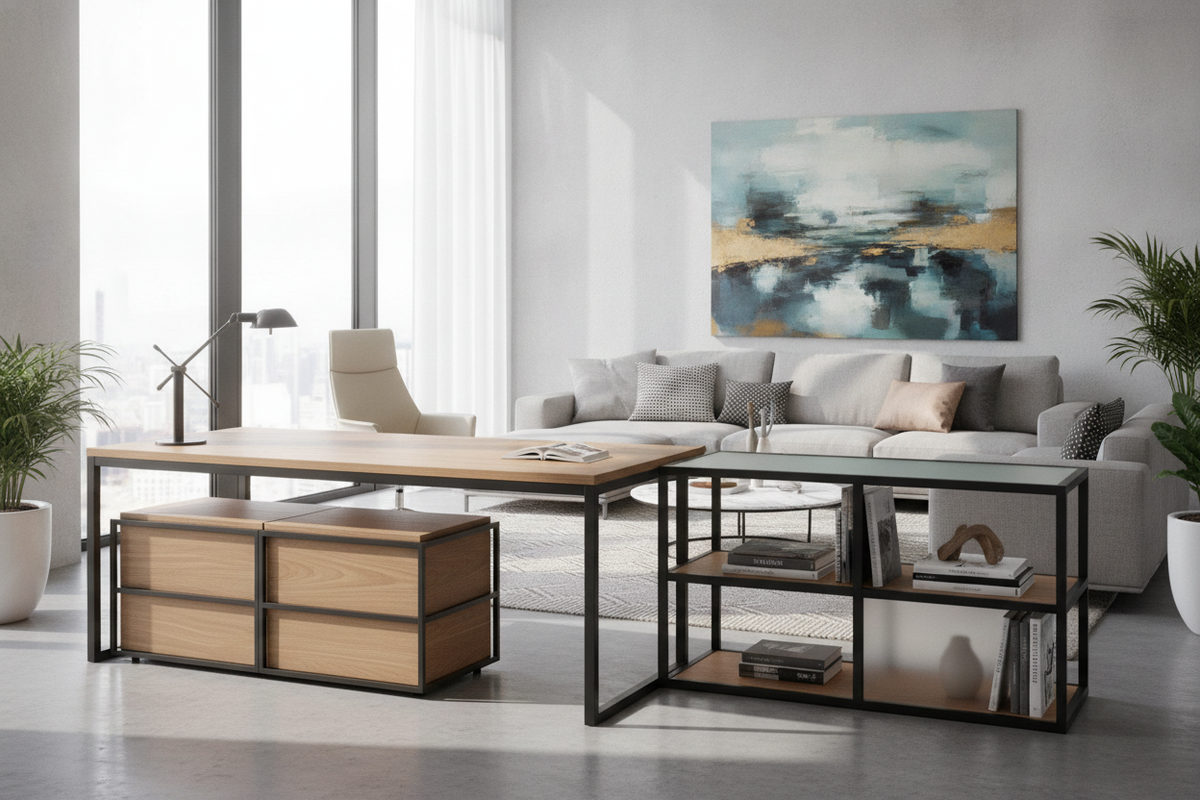
For wider offices that require credenzas or low storage alongside the main desk, incorporating a complementary piece like a modern black and white storage credenza provides closed storage for files, printers, and peripheral devices while maintaining a unified dual-tone theme throughout the room.
Materiality and Maintenance: Matte Finishes, Veneers, and Powder Coating
Monochrome surfaces interact distinctly with daily use and ambient light. Managing a two-tone workspace involves understanding the tactile and maintenance characteristics of each finish:
- Matte and Powder-Coated Metal: Black textured legs and steel supports resist everyday scuffs and reduce harsh glare from overhead lamps, providing an industrial edge to clean Scandinavian lines.
- Smooth Laminates: White laminate work surfaces offer practical stain resistance against graphite and ink marks, while brightening the immediate task area.
- Satin Veneers: Dark wood-grain veneers introduce organic texture, softening the starkness of solid black panels while helping mask minor dust between regular cleanings.
Lighting Dynamics and Contrast Management in Dual-Tone Offices
High-contrast workspaces require balanced illumination to avoid eye strain caused by stark transitions between dark surfaces and bright task areas. When arranging lighting around a dual-tone setup, consider the following layout tips:
- Diffused Ambient Lighting: Use lamps with textured fabric or frosted glass shades to cast soft, even illumination across both light and dark desk zones.
- Targeted Task Lamps: Position an adjustable matte black or brushed metal desk lamp directly above the active work area to keep illumination focused downward, reducing reflections on glossy white surfaces.
- Perimeter Accent Lighting: Adding subtle backlighting behind monitors or along the rear edge of the desk softens the high contrast between a dark desk surface and light perimeter walls.
Frequently Asked Questions About Black and White Desk Setups
Can I mix different leg styles on a dual-tone desk?
Yes. A balanced approach involves using a solid storage drawer unit on one side (such as a white pedestal) and two open black steel legs or a trestle on the other. This maintains ergonomic stability while offering an asymmetrical, contemporary look.
How do I manage cables on a high-contrast desk?
Route dark computer cords along the black structural legs or under-frame cable trays so they blend into the dark elements of the desk rather than standing out against white panels.
What color desk accessories pair best with monochrome furniture?
Warm wood accents, brushed brass hardware, or natural greenery introduce subtle warmth to a black and white palette without disrupting its clean, architectural clarity.


Laisser un commentaire
Ce site est protégé par hCaptcha, et la Politique de confidentialité et les Conditions de service de hCaptcha s’appliquent.