


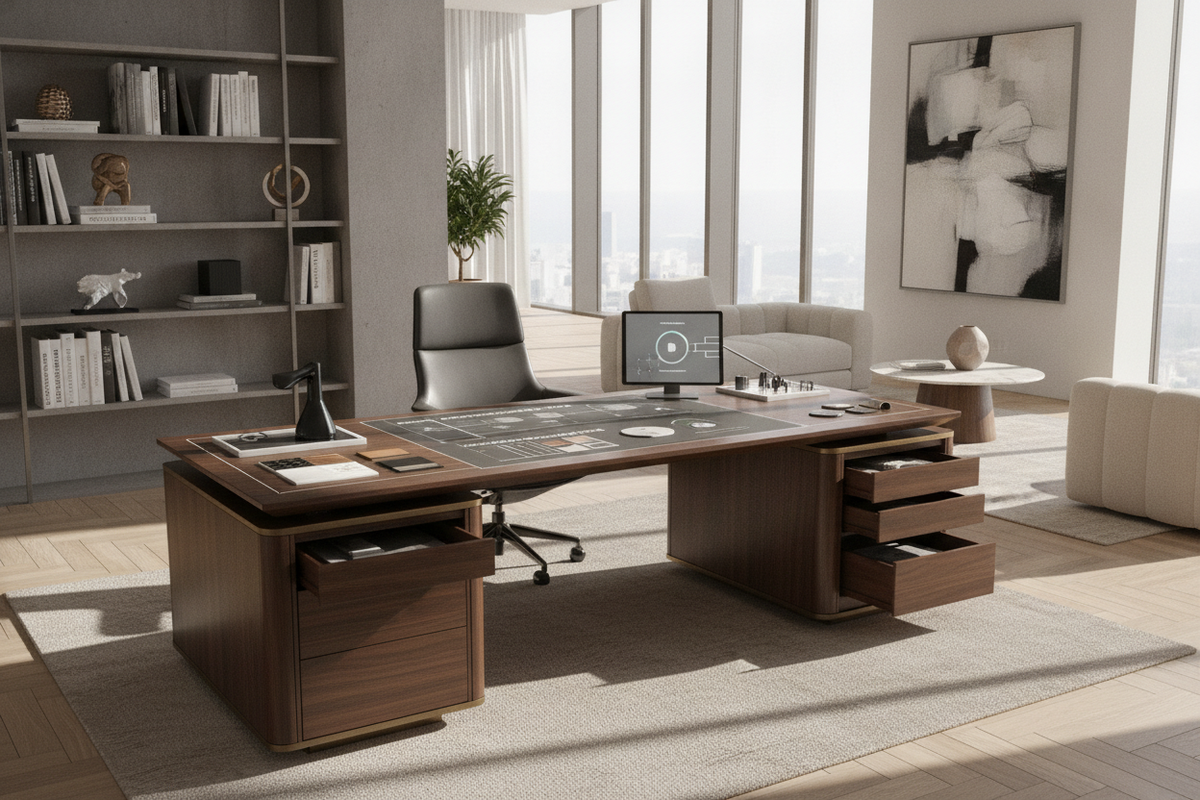
Defining the Executive Desk: Archetypes and Distinctions
An executive desk represents the foundational anchor of a formal home office or corporate suite. Unlike minimalist writing tables or open-frame workstations found in a broader writing computer desk collection, an executive desk is defined by its substantial visual mass, integrated storage architecture, and enclosed construction. The hallmark of the archetype is the presence of a full or three-quarter modesty panel, which conceals wiring and legs from the front-facing perspective, creating an intentional, polished barrier suitable for greeting clients, holding meetings, or anchoring a private sanctuary.
Historically, the executive profile denoted status through heavy, solid timber carvings and double-pedestal banks. In contemporary environments, the form has evolved to balance traditional authority with streamlined efficiency. Modern iterations feature floating desktop planes, integrated power channels, modular credenza attachments, and lighter profiles without sacrificing the expansive worksurface and enclosed utility that distinguish the category from lightweight task tables.
Dimensional Categories and Spatial Clearance Planning
Selecting an executive desk requires rigorous spatial planning. Because executive models feature solid casework and deep profiles, an undersized room can quickly feel overcrowded, while an oversized room can diminish a compact desk's presence.
Compact and Standard Footprints for Dedicated Home Offices
For dedicated home studies or secondary rooms converted into workspaces, single-pedestal executive desks and compact double-pedestal designs offer balanced utility. These models preserve the prominent front apron and file storage capacity while minimizing overall depth. When selecting a unit such as a modern office computer product, homeowners can maintain room for circulation paths, occasional armchairs, and perimeter shelving without compromising on surface area for primary monitors and document staging.
Expansive Command Suites for Large Professional Rooms
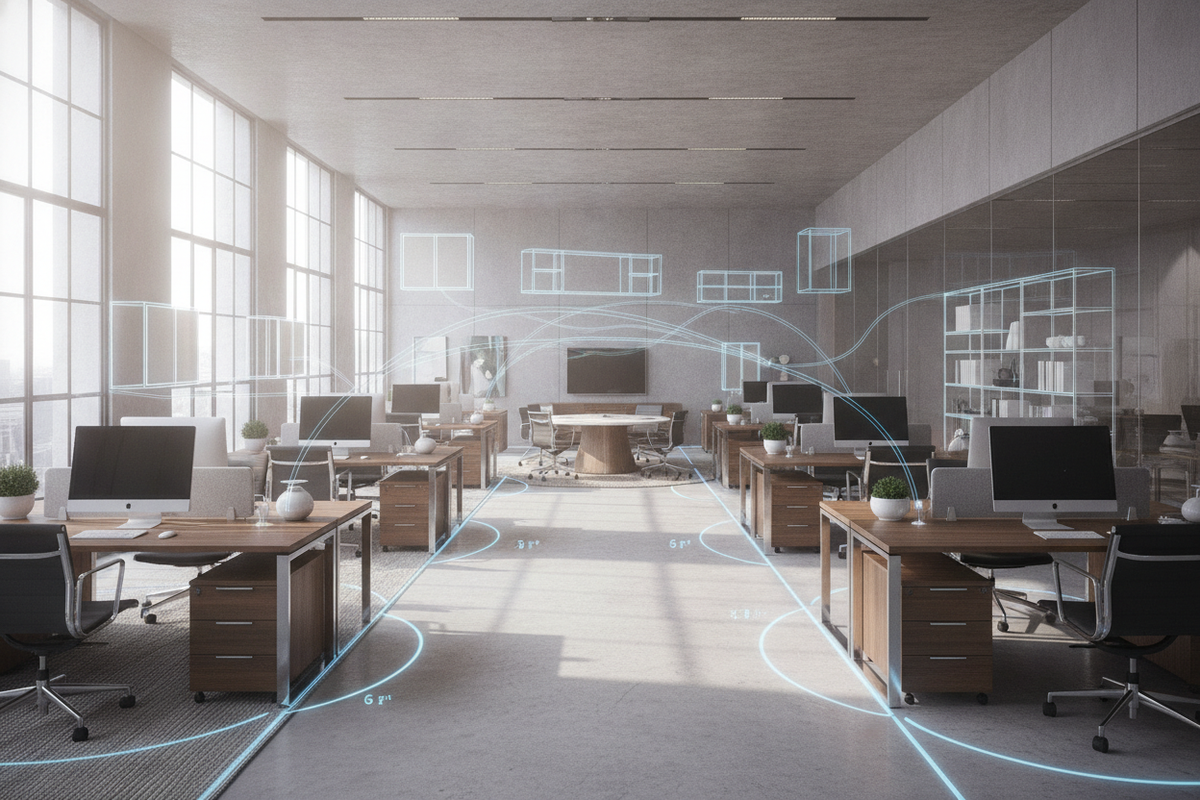
In spacious private offices, an extra-wide double-pedestal desk, an L-shaped executive suite, or a U-shaped configuration anchors the interior layout. These configurations create distinct functional zones: a primary computer workstation, an analog signing or review station, and secondary staging for printers or reference binders. When specifying expansive furniture, planning perimeter clearance is essential. Ensuring comfortable movement around the entire desk envelope allows the piece to function as an intentional centerpiece rather than an obstruction.
Storage Architecture: Pedestals, Drawers, and Concealed Compartments
The primary operational advantage of an executive desk lies in its internal storage infrastructure. Organizing daily workflow begins with evaluating the pedestal layout, drawer slide mechanisms, and utility compartments. A comprehensive executive desk computer guide highlights how compartmentalizing equipment preserves usable work surfaces while protecting critical electronics.
- Filing Pedestals: Full-extension bottom drawers equipped with adjustable rails accommodate letter and legal hanging folders, keeping active records within arm's reach while maintaining clean desktop lines.
- Utility and Box Drawers: Shallow upper drawers provide organized staging for writing instruments, charging accessories, notepads, and personal essentials, often complemented by removable organizer trays.
- Central Keyboard and Laptop Trays: Many executive designs incorporate a drop-front center drawer that functions as a concealed keyboard tray or a pull-out docking surface for slim laptops.
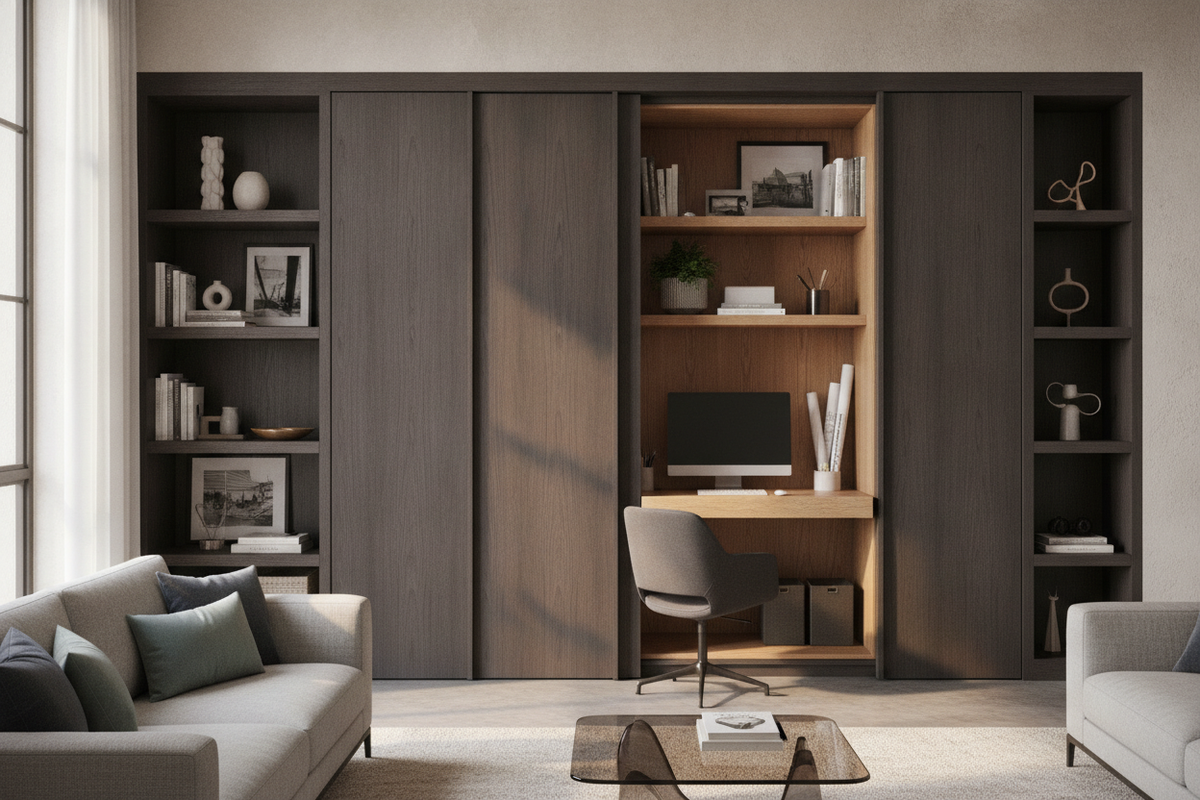
- Concealed CPU and Tech Bays: Specialized executive desks feature ventilated side cabinets with rear access grommets to house desktop computer towers, uninterruptible power supplies, and external hard drives away from view.
Material Craft, Finishes, and Aesthetic Alignment
Visual character in an executive office is largely dictated by material composition and finish palette. Interior schemes can range from traditional wood grains to crisp, architectural modernism. Reviewing a style modern office guide can offer creative inspiration for elevating clean lines and neutral surfaces into an upscale professional environment.
- Rich Warm Woods: Walnut, espresso oak, and mahogany finishes offer a timeless corporate presence, pairing naturally with leather seating, brass accents, and rich wall palettes.
- Clean Minimalist Whites and Grays: Modern lacquered or durable laminate surfaces create an open, luminous atmosphere that reflects natural ambient light and complements contemporary urban architecture.
- Mixed-Material Hybrid Designs: Desks combining engineered wood tops with powder-coated steel framework deliver an industrial-modern hybrid look, offering structural rigidity with a lighter visual footprint.
Room Layout Strategies: Commanding Views vs. Wall Configurations
Where and how you position an executive desk establishes the visual tone and functional flow of the entire room. Unlike basic study tables that sit flush against walls, executive desks are frequently engineered to be viewed from all 360 degrees.
The classic command position places the desk facing the primary entry door, with the user seated with their back against a solid wall or a complementary storage credenza. This placement reinforces visual authority and creates a welcoming atmosphere for visiting collaborators or family members. Pairing the command desk with back-wall utility pieces, such as a coordinated credenza or a modern extra long product repurposed as low-profile file and media storage, completes a balanced executive suite.
In smaller square-footage settings, positioning an executive desk in a corner L-configuration or along an accent wall can maximize floor clearance while still presenting a finished modesty panel toward the center of the room.
Assembly Logistics, Structural Stability, and Maintenance
Because executive desks incorporate substantial casework, careful assembly and long-term care are crucial for maintaining structural integrity and surface beauty:
- Sub-Assembly Sequencing: Build individual pedestals first, ensuring square corners before securing modesty panels, central crossbars, and the primary desktop surface.
- Leveling and Floor Alignment: Utilize adjustable floor glides on the base of each pedestal to eliminate wobble caused by uneven hardwood or plush carpeting.
- Cable Routing Strategy: Run all monitor power cables, docking lines, and device chargers through desktop grommets and modesty panel passthroughs before anchoring the desk into its final resting position.
- Surface Preservation: Use non-abrasive microfiber cloths for regular dusting, apply dedicated wood or laminate cleaners as appropriate, and protect high-traffic contact zones with an oversized desk pad.

Laisser un commentaire
Ce site est protégé par hCaptcha, et la Politique de confidentialité et les Conditions de service de hCaptcha s’appliquent.