
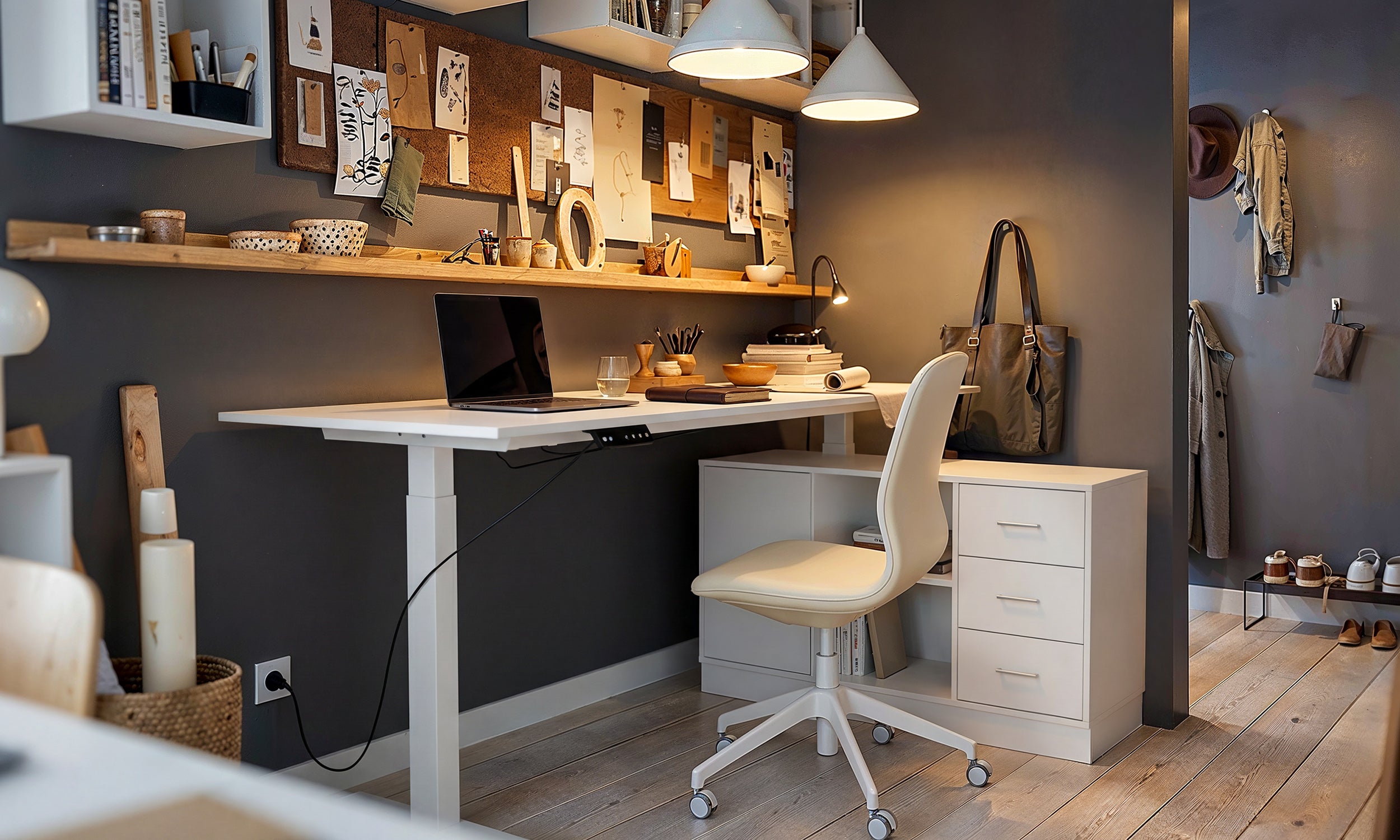
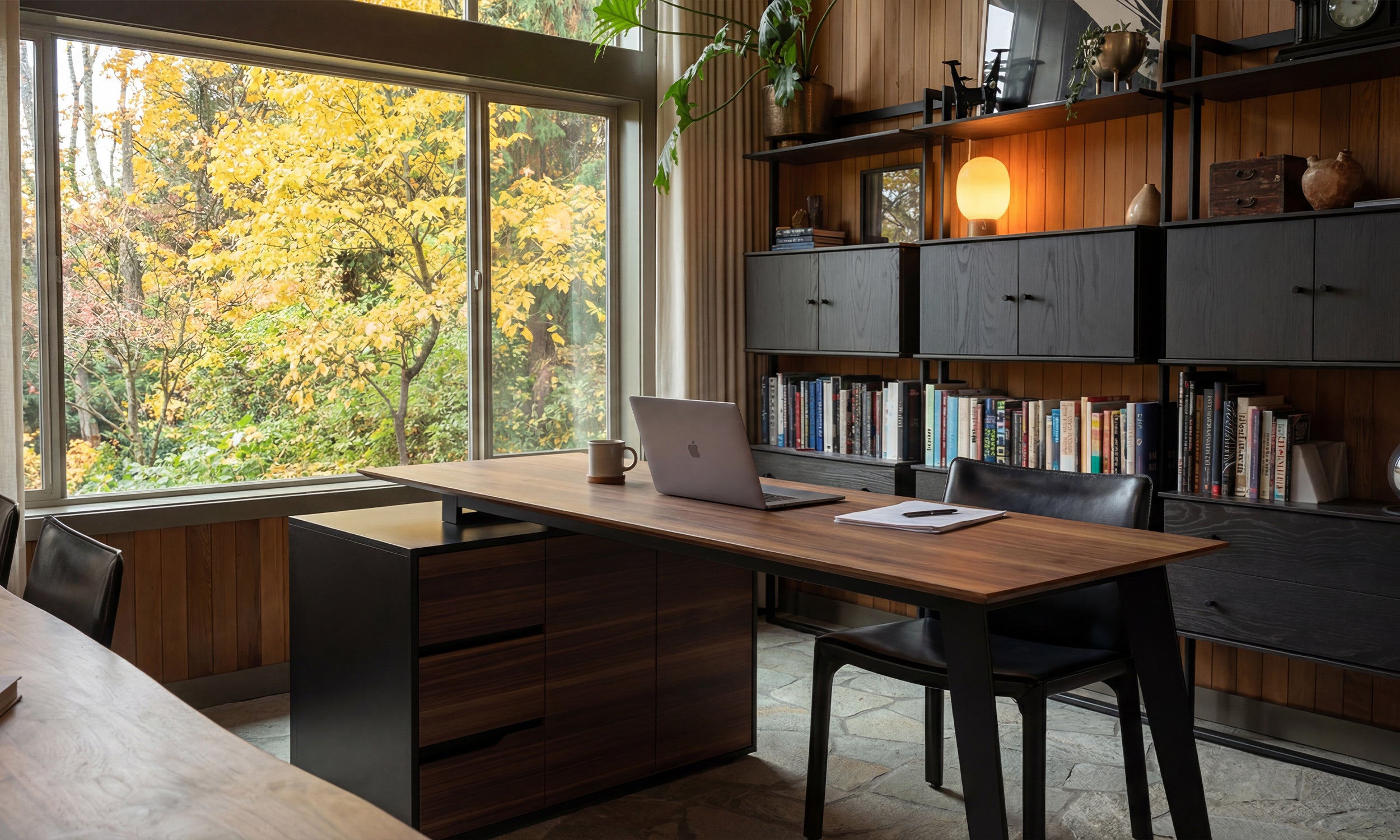

Compact living environments, hybrid workspaces, and multi-purpose guest rooms often demand functional surfaces without the visual bulk or footprint of traditional furniture. A chair with built in desk provides a self-contained, micro-scale workstation that merges seating support with an articulating writing or computing tablet. Understanding the mechanical frameworks, clearance envelopes, and surrounding organizational strategies ensures that these hybrid pieces enhance daily productivity without compromising room flow.
Architectural Overview: The Mechanics of a Chair with Built-In Desk
An integrated chair and desk unit relies on a cantilevered or frame-mounted arm that extends a rigid work surface directly into the user's primary reach zone. Unlike detached furniture arrangements, the structural stability of the desk tablet is tethered directly to the chair base or chassis.
Tablet-Arm Swing vs. Folding Lap Trays
The core distinction among integrated seating designs lies in the articulating hinge mechanism:
- Rotational Swing Arms: These mechanisms feature a horizontal pivot knuckle attached to the side frame. The tablet swings outward horizontally to allow easy entry and exit, then swings inward to rest over the lap. This design offers smooth operation and dependable support for notebooks and lightweight digital devices.
- Flip-Up Vertical Hinges: Often paired with classroom-style or nesting chairs, these mechanisms pivot upward vertically before rotating down to the side. They require minimal side clearance, making them well-suited for linear rows or tight alcoves.
- Articulating Swivel Consoles: These multi-jointed arms offer independent tilt, rotation, and distance adjustments, allowing users to tailor the tablet angle for typing or reading.
Office Chair with Built-In Desk: Swivel and Caster Mobility
An office chair with built in desk typically integrates a five-star caster base and pneumatic height adjustment with a tablet surface. This mobility allows users to glide smoothly between collaborative zones, charging stations, and perimeter shelving. When planning a space around mobile hybrid chairs, consider hard-surface caster wheels for low-pile carpets or smooth hard floors to preserve effortless transit.
Spatial Footprint Tiers: Sizing and Clearance Envelopes
Integrating hybrid seating requires evaluating not just the stationary footprint of the chair, but the full functional clearance envelope, which includes the swing arc of the tablet and user ingress.
Compact Breakout Units for Micro-Zones
For small study nooks, secondary bedrooms, or hallway alcoves, compact tablet-arm chairs with fixed legs or nesting frames provide a lean footprint. These units are engineered for rapid deployment during focused task windows, such as reviewing documents or attending virtual meetings, and can be stowed along room perimeters when not in use.
Full-Task Rolling Lounge and Work Units
More substantial hybrid models feature deep upholstered lounge seating paired with oversized, reinforced tablet surfaces. These substantial pieces provide generous elbow support and broad lap clearance, making them comfortable for extended reading or laptop use. Because upholstered arms and deep cushions expand the overall volume, ensure adequate clearance behind and around the unit so walkways remain unobstructed.
Material Profiles and Structural Stability Criteria
Because the writing surface acts as a cantilevered lever, the materials used in the chassis and hinge assemblies directly influence long-term stability and tactile comfort.
Frame Rigidity and Counterbalance Geometry
A stable hybrid chair balances user weight against the forward leverage of the tablet. High-grade tubular steel frames, heavy cast aluminum bases, and reinforced bracket mounts prevent wobbling during typing. Weighted or wide-stance sled bases help distribute downward wrist pressure evenly across the floor footprint.
Surface Durability and Cleanability
Writing tablets encounter concentrated wear from laptop heat, pens, and daily contact. High-pressure laminates, solid core composites, and molded polymers offer resilience against scratches, moisture, and cleaning agents. Chairs featuring removable or wipeable performance upholstery help maintain a clean presentation in shared or multi-use home zones.
Integrated Workstation vs. Dedicated Desk Pairings: A Comparative Decision Framework
Choosing between a dedicated furniture set and an all-in-one chair depends on task complexity, equipment needs, and spatial allowances. Compare the spatial efficiency of built-in tablet chairs against traditional coordinated furniture by consulting our office desk chair guide.
- Opt for an Integrated Chair-Desk When: Room dimensions are restricted, work sessions focus primarily on tablets or single laptops, and the space must quickly convert back to an open lounge or living area.
- Opt for a Dedicated Desk Pairing When: Multi-monitor displays, desktop towers, extensive desktop filing, or full-day ergonomic adjustments are essential to your workflow. For spaces requiring permanent architectural integration rather than mobile units, explore our built desk office guide.
Perimeter Storage and Room Integration Strategies
Because a chair with built in desk minimizes horizontal surface storage, pairing the seating area with vertical and perimeter storage keeps the workspace uncluttered and functional.
Managing Cable Routing and Device Power
Self-contained seating requires thoughtful power access. Position mobile or stationary hybrid chairs near wall outlets, or use discrete floor cable covers to route power cords safely without creating trip hazards. Compact power banks stored in a nearby organizer can also provide cordless top-ups for laptops and phones during study sessions.
Pairing with Credenzas and Storage Cabinets
To support an integrated chair setup, flank the seating area with matching vertical cabinetry, lateral bookcases, or rolling utility carts. When greater surface span and enclosed filing space are required, consider an office desk product featuring integrated multi-door storage to house reference books, tech accessories, and office supplies out of view.
By assessing hinge mechanisms, floor clearances, and complementary perimeter storage, you can successfully implement an integrated chair-desk solution that delivers functional productivity within a compact interior footprint.


Laisser un commentaire
Ce site est protégé par hCaptcha, et la Politique de confidentialité et les Conditions de service de hCaptcha s’appliquent.