
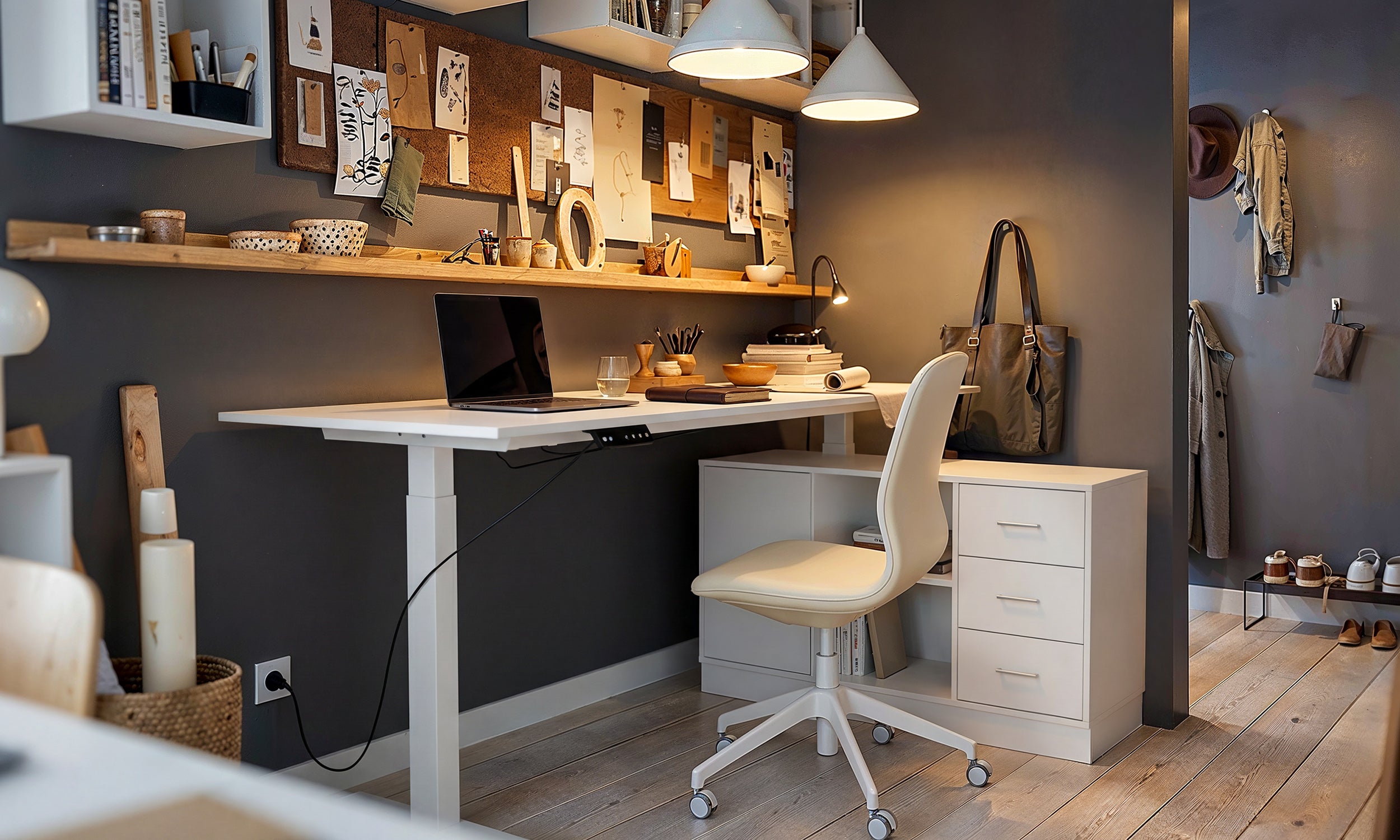
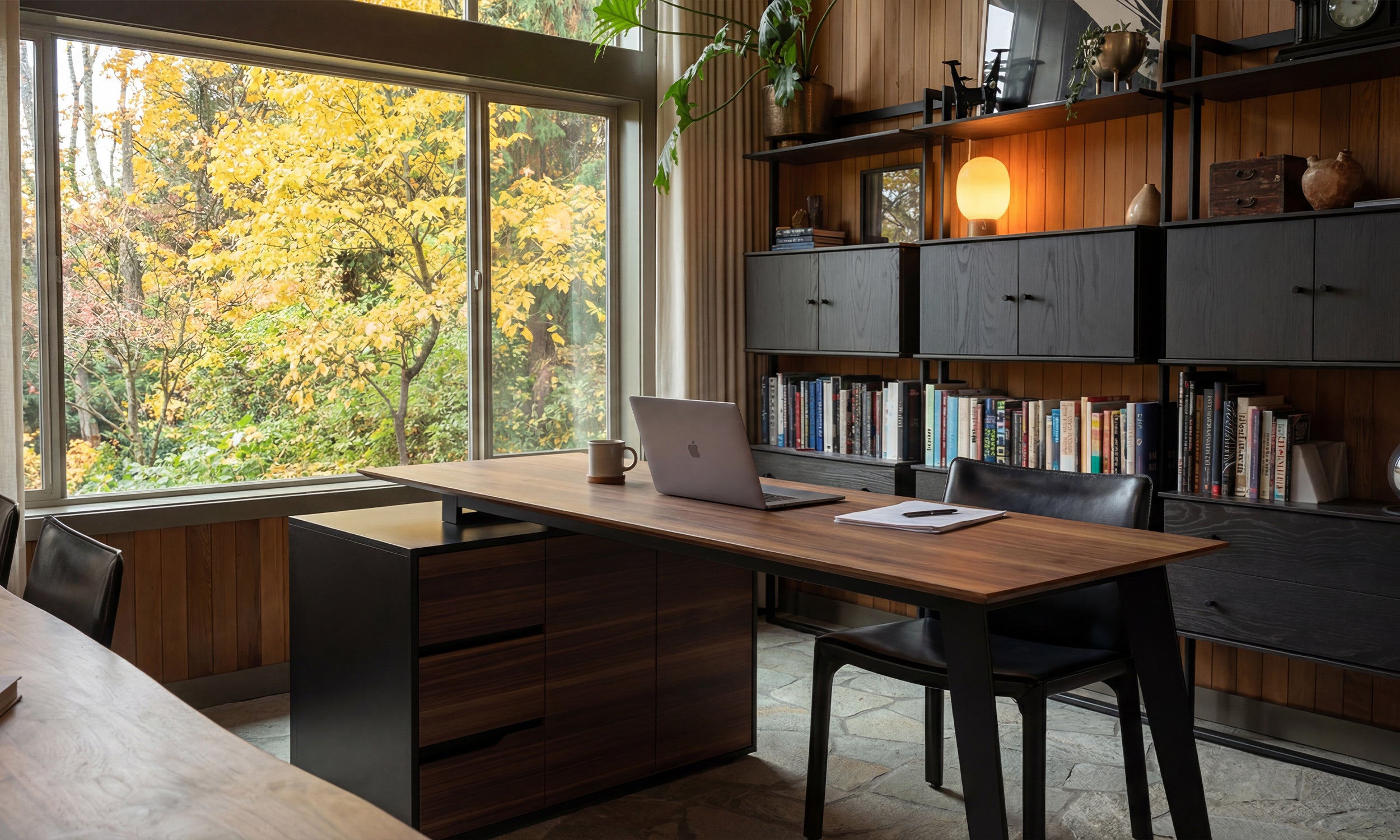

Standard task seating has dominated workstation layouts for decades, yet dynamic working styles have brought alternative chairs for office spaces into everyday home and professional environments. While a conventional executive chair relies on fixed backrests, armrests, and head supports to stabilize the body, non-traditional seating encourages active engagement, postural variety, and adaptable work positions throughout the day.
Choosing an alternative office chair requires looking beyond novelty to examine structural ergonomics, workspace geometry, and daily functionality. Integrating dynamic seating into an office environment changes how a user interacts with work surfaces, storage pedestals, and room circulation paths. Understanding the mechanics of each design category helps create a balanced, adaptable workstation.
Understanding Alternative Office Seating: Why Move Beyond the Traditional Swivel Chair?
Traditional desk seating supports passive rest, allowing the user to lean back against a contoured frame. While comfortable, static positioning over extended working blocks can lead to slump postures or reduced core involvement. In contrast, alternative office seating utilizes active seating mechanics that encourage subtle continuous movement, pelvic tilting, or distributed weight bearing across multiple contact points.
By removing rigid backrests or introducing curved base plates, these chairs prompt the body to maintain an upright, self-supported spine. Rather than locking the user into a single static angle, alternatives to desk chairs accommodate regular shifts in posture—from open hip angles to cross-legged focus modes. Selecting the right setup depends on typical daily task durations, desk surface height, and the level of stability required for specific work activities.
Core Categories of Non-Traditional Desk Chairs
Modern workspaces accommodate several distinct categories of desk chair alternatives, each engineered around specific anatomical and spatial principles:
- Kneeling Chairs: Featuring a forward-slanted seat pan paired with padded shin rests, kneeling frames divide physical support between the buttocks and lower legs. This forward tilt opens the hip angle, encouraging natural spinal curvature without a standard backrest.
- Active Wobble and Saddle Stools: Saddle seats promote an equestrian-style straddle posture with an open pelvis, while wobble stools incorporate convex or pivoting bases that allow micro-adjustments in every direction.
- Multi-Position and Cross-Legged Chairs: Designed with layered platforms or swiveling leg supports, these wide-base chairs permit sitting cross-legged, kneeling, or perching on a single frame.
- Leaning Perches: Minimalist vertical supports built with angled upright columns, perches provide semi-standing rest ideal for adjustable sit-to-stand desks.
Kneeling Chairs vs. Active Wobble Stools: Daily Ergonomic Comparison
When choosing between a structured kneeling chair and a free-pivoting active stool, consider task demands and physical mobility. Kneeling chairs provide a stationary, stable foundation well-suited for sustained keyboard input, handwriting, and detailed digital drafting. However, their extended frame requires careful maneuvering when entering or exiting the workstation.
Active wobble stools offer swift, omnidirectional mobility and quick mounting, making them practical for collaborative meetings, phone calls, and brainstorming sessions. Because wobble stools require continuous core engagement, many professionals alternate between active perching and stable seating throughout the workday.
Workstation Geometry: Pairing Alternative Seating with Desks and Clearances
Integrating non traditional desk chairs into an existing layout requires close attention to spatial clearances. Because unconventional seats alter the user's pelvic height and leg positioning, standard desk heights may need fine-tuning.
Kneeling chairs, for example, position the shins forward and down, requiring open knee wells without low crossbars or center support beams. Users pairing active seating with a curated computer desk collection should confirm that under-desk openings provide adequate vertical and horizontal clearance for the legs and frame.
Similarly, saddle stools and standing perches raise the seated hip level higher than standard task chairs. Using these high-perch models alongside a dedicated office computer desk product ensures adequate desktop surface area while keeping monitor lines and input devices at comfortable, natural reach envelopes.
Integrating Non-Traditional Seating with Home Office Storage and Furniture
A functional home office balances dynamic seating with organized room architecture. Because many unconventional desk chairs lack conventional folding arms or low profiles, planning their storage footprint prevents room clutter.
For compact spaces or multi-purpose rooms, compact stools can be rolled completely beneath the worktop when not in use. In concealed work zones, referencing a computer desk office guide helps users measure interior cabinet depth to ensure non-traditional seating fits neatly behind closed doors at the end of the day.
For expansive layouts, an L-shaped or modular office computer desk product creates defined operational zones: one side dedicated to traditional writing or typing, and the adjacent return arranged for active perching and dynamic ideation.
Materials, Frame Mechanics, and Maintenance Checklist
The longevity and comfort of alternative seating for adults depend directly on structural materials, upholstery density, and mechanical joints:
- Frame Construction: Solid bentwood sled bases offer natural flex and aesthetic warmth, whereas powder-coated steel and heavy-gauge aluminum provide rigid stability for dynamic pivot mechanisms.
- Cushioning and Foam Density: Because kneeling seats and saddle stools concentrate contact across localized pressure zones, high-density molded foam is essential to prevent bottoming out over time.
- Upholstery Breathability: Breathable woven fabrics, supple top-grain leather, or durable vinyl allow for easy maintenance while managing heat buildup during long focus blocks.
- Floor Protection: Wobble bases and sled runners should feature non-marking rubberized pads or soft polyurethane casters to protect hardwood, tile, and low-pile rugs.
When curating a polished interior on a budget, reviewing an office computer desk guide provides practical pointers on harmonizing modern active seating materials with surrounding laminate, wood veneer, and metal office accents.
How to Transition to an Alternative Desk Chair: A Practical Phasing Strategy
Transitioning from a standard task seat to an unconventional office chair involves a gradual adaptation period as core stabilizing muscles adjust to new postural demands:
- Phase In Usage Gradually: Begin by using the alternative chair for short intervals each morning and afternoon, returning to a conventional seat or standing setup as physical fatigue sets in.
- Realign Peripheral Hardware: Adjust external monitor arms, laptop stands, and keyboard trays to align with your modified eye level and forearm height on the new seat.
- Maintain Clear Reach Zones: Organize frequently accessed desktop storage, file trays, and charging hubs within comfortable reach to avoid overextending while balanced on active bases.
By thoughtfully matching structural seating formats to desk dimensions and daily workflows, alternative office seating creates an engaging, flexible, and well-organized workspace tailored to modern productivity.


Laisser un commentaire
Ce site est protégé par hCaptcha, et la Politique de confidentialité et les Conditions de service de hCaptcha s’appliquent.