


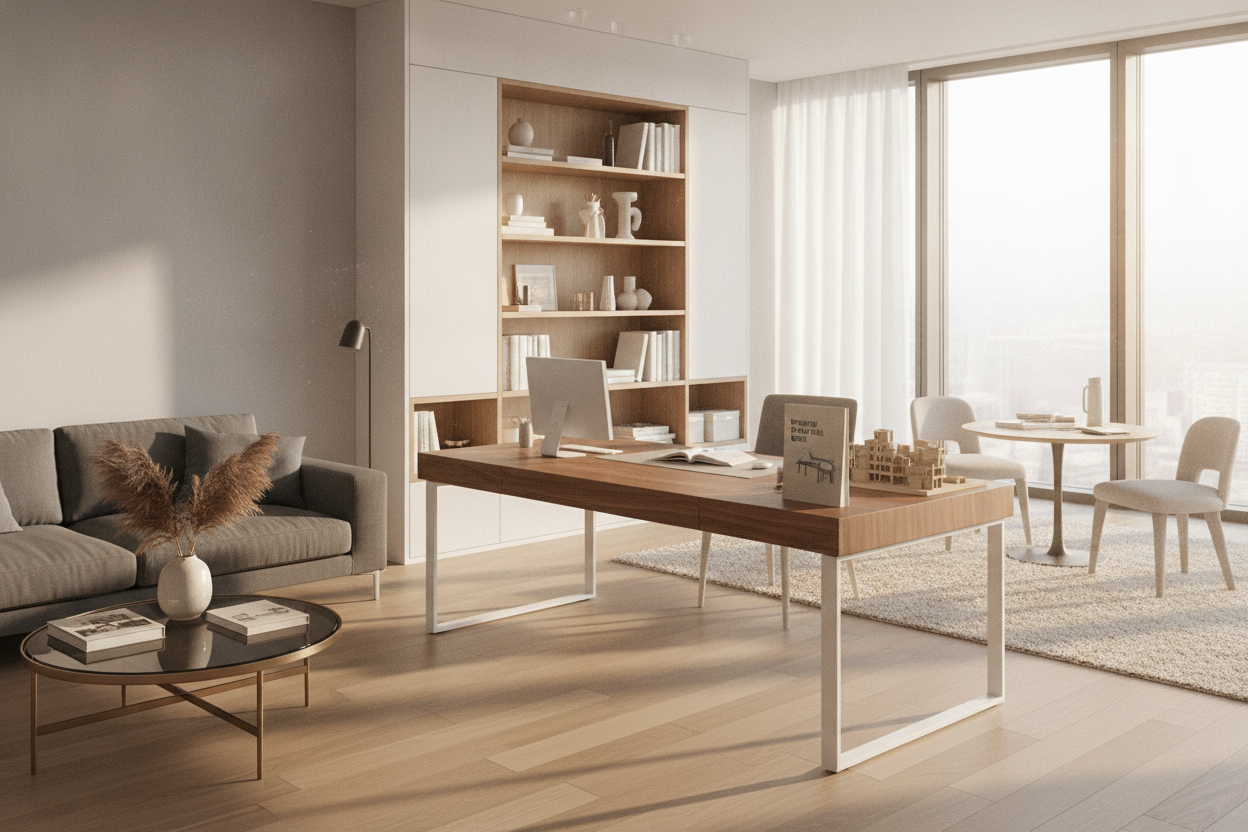
Understanding the 72-Inch Desk Footprint and Spatial Requirements
Choosing a large workstation is one of the most impactful decisions you can make when configuring a dedicated study or executive office. A desk spanning six feet provides substantial surface area, allowing you to anchor a room while creating dedicated zones for screens, reference materials, and writing. However, accommodating such a broad piece of furniture requires careful spatial planning to preserve natural traffic paths and maintain an open atmosphere.
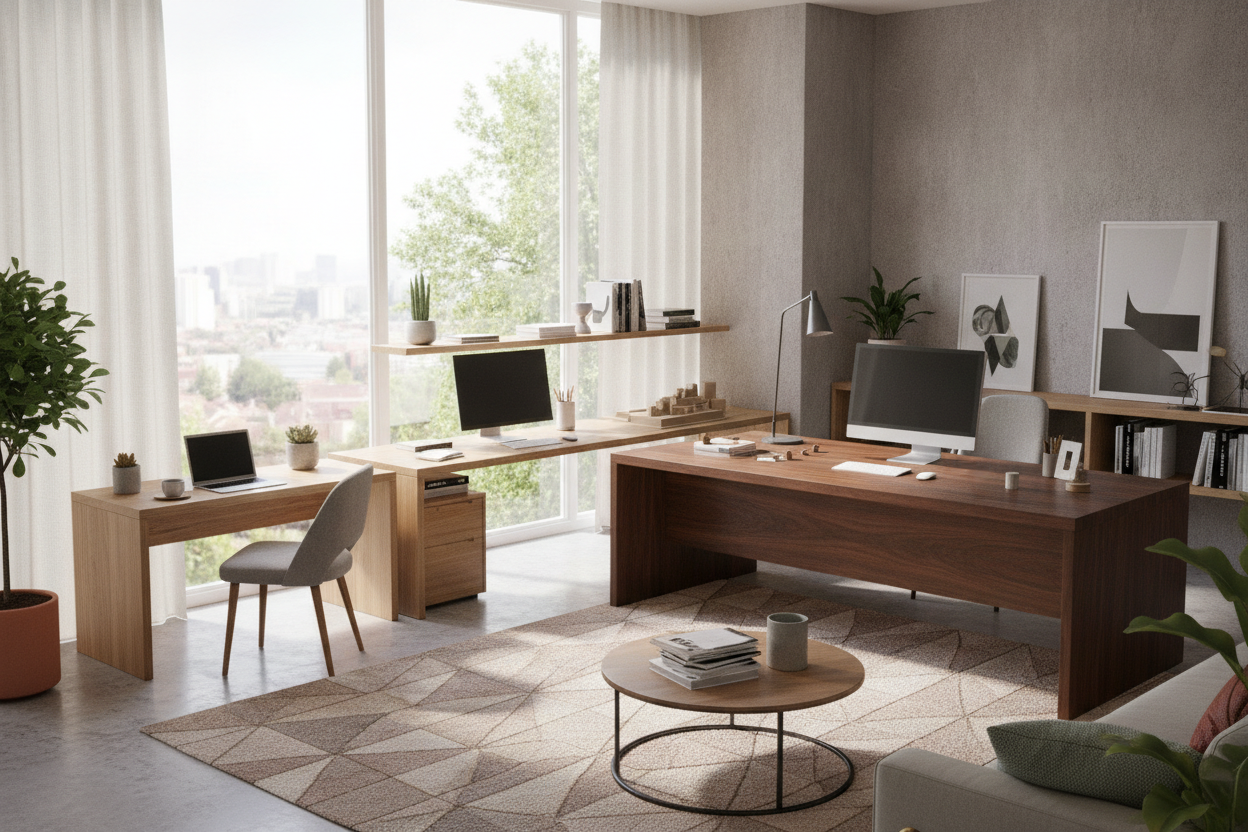
When planning your room layout, consider the perimeter clearance around the workstation. Beyond the desk itself, you need ample space behind the primary seating zone to push back an office chair comfortably and maneuver freely. In dedicated office rooms, positioning a 72-inch wide desk centrally facing the doorway creates a commanding executive presence. In multipurpose spaces or shared guest studies, placing the desk along a primary wall often preserves open floor area while keeping cable routes discreet and close to wall outlets.
Visual proportion is equally critical. A wide desk placed in a very compact room can overwhelm the space, whereas a large room might leave smaller desks feeling undersized. Evaluating the balance between the desk, nearby architectural elements, and adjacent windows ensures the workstation feels like an intentional architectural centerpiece rather than an oversized obstruction.
Surface Zoning Strategies for a 6-Foot Desktop
The principal advantage of 72 inch desks is the freedom to establish multi-zone workflows without introducing surface clutter. Instead of stacking paperwork against monitor stands or sliding your keyboard over notes, a wide layout lets you segregate tasks by functional category.
- Primary Computing Zone: Position your central monitor setup, keyboard, and mouse directly aligned with your natural line of sight and posture. A wide desktop comfortably supports dual-display configurations, ultrawide curved monitors, or a desktop screen flanked by a docked laptop.
- Analog and Reading Zone: Dedicate one side of the desktop entirely to active reading, paperwork, sketching, or signing documents. Keeping this area clear of electronics creates a dedicated station for focused tasks that do not require screen time.
- Hardware and Organization Zone: Utilize the opposite edge of the desk for peripheral hardware, desktop organizers, task lighting, or charging docks. Because the 72-inch span provides ample width, these items stay accessible without encroaching on your active arm reach.
By dividing the surface into dedicated zones, you prevent the gradual buildup of clutter that often happens when a single compact surface is forced to serve multiple roles throughout the workday.
Storage Configurations: Drawers, Hutches, and Open Table Desks
Selecting the right framework depends on balancing your storage demands against the need for open legroom. A 72 inch desk with storage offers multiple architectural configurations, each serving distinct functional priorities.
Dual-pedestal setups feature built-in drawer banks on both the left and right sides. A 72 inch computer desk with drawers provides abundant concealed capacity for office supplies, stationery, and filing folders, keeping the primary desktop completely clear. If you are comparing these generous dual-pedestal layouts to more compact single-drawer alternatives, reviewing our wide desk drawers guide illustrates how different scale choices impact available knee space and organizational capacity.
For rooms where floor space is precious but vertical clearance is abundant, a 72 inch desk with hutch adds substantial overhead shelving and enclosed upper cabinetry. This configuration works especially well for reference libraries, display accents, and keeping daily books within arm's reach. Conversely, minimalist table-style desks replace heavy pedestals with open leg frames or trestle supports. While table desks offer lighter visual weight and expansive legroom, they often pair best with freestanding credenzas or rolling drawer units found within a comprehensive office storage collection.
Material and Finish Aesthetics: White, Black, and Wood Tones
Because a six-foot workstation commands significant visual attention, the color and finish dictate the overall mood of your office interior.
Crisp White Finishes
A 72 inch white desk reflects natural ambient light, helping maintain an airy, expansive feel even in medium-sized study rooms. White desks blend seamlessly into contemporary, Scandinavian, or minimalist decor schemes. If you appreciate clean, modern lines, contrasting this linear profile with a distinct configuration like a white office computer product provides helpful context on how different workstation silhouettes distribute visual weight across a room.
Dramatic Black and Charcoal
A 72 inch black desk delivers bold, modern contrast and pairs exceptionally well with industrial accents, metallic hardware, and darker wall palettes. Dark finishes provide a grounded, structured appearance that anchors bright or sunlit rooms, making monitor setups and desktop accessories stand out cleanly against the surface.
Classic Wood Grains and Warm Tones
A 72 inch wood desk brings natural warmth, texture, and organic balance to formal studies and home libraries. Natural wood finishes soften the technological look of multiple screens, audio equipment, and task lighting. Exploring how dark and warm wood finishes interact across home furnishings, as discussed in our white solid wood guide, can assist in choosing wood tones that complement existing baseboards, flooring, and accent tables.
Coordinating Adjacent Storage and Ergonomic Seating
A spacious desk performs best when integrated into an organized workspace ecosystem. Surrounding your primary desk with complementary storage pieces ensures that large archival files, reference binders, and project supplies do not migrate onto your main work surface.
Lateral file cabinets, low credenzas, and open bookcases positioned behind or perpendicular to the desk establish an efficient work triangle. In multifunctional spaces—such as a combined study and guest suite—pairing your workstation with a large-capacity wardrobe or tall cabinet like a white wide drawers product allows you to stow away linens, office overflow, and media equipment behind clean, unified door panels.
Seating choice is equally crucial. With a 72-inch wide desk, you will naturally move across different zones of the work surface throughout the day. An ergonomic task chair with smooth casters, adjustable armrests, and supportive lumbar alignment allows fluid lateral transitions between your typing station and your analog writing area.
A Step-by-Step Decision Framework for Choosing Your 72-Inch Desk
Before selecting a 72-inch desk, use this practical framework to confirm that the model fits your room, hardware, and routine:
- Measure Room Clearance: Verify that the room provides adequate clearance for chair travel and doorway entry points without crowding adjacent furniture.
- Map Your Technology Load: Count your monitors, laptop stands, desktop towers, and peripherals to determine whether you need built-in grommets, cable management troughs, or deep table depths.
- Determine Storage Balance: Decide whether your workflow benefits more from built-in pedestals with drawers or an open-frame table paired with independent storage cabinets.
- Harmonize Colors and Materials: Select a finish—whether crisp white, matte black, or warm natural wood—that aligns with your ambient lighting and existing room palette.
- Plan Cable Pathways: Ensure the intended location offers convenient access to wall outlets so power strips and communication cables remain cleanly routed.
Taking time to evaluate these dimensions and layout factors ensures your 72-inch desk serves as a durable, comfortable, and productive foundation for years of focused work.


Laisser un commentaire
Ce site est protégé par hCaptcha, et la Politique de confidentialité et les Conditions de service de hCaptcha s’appliquent.