


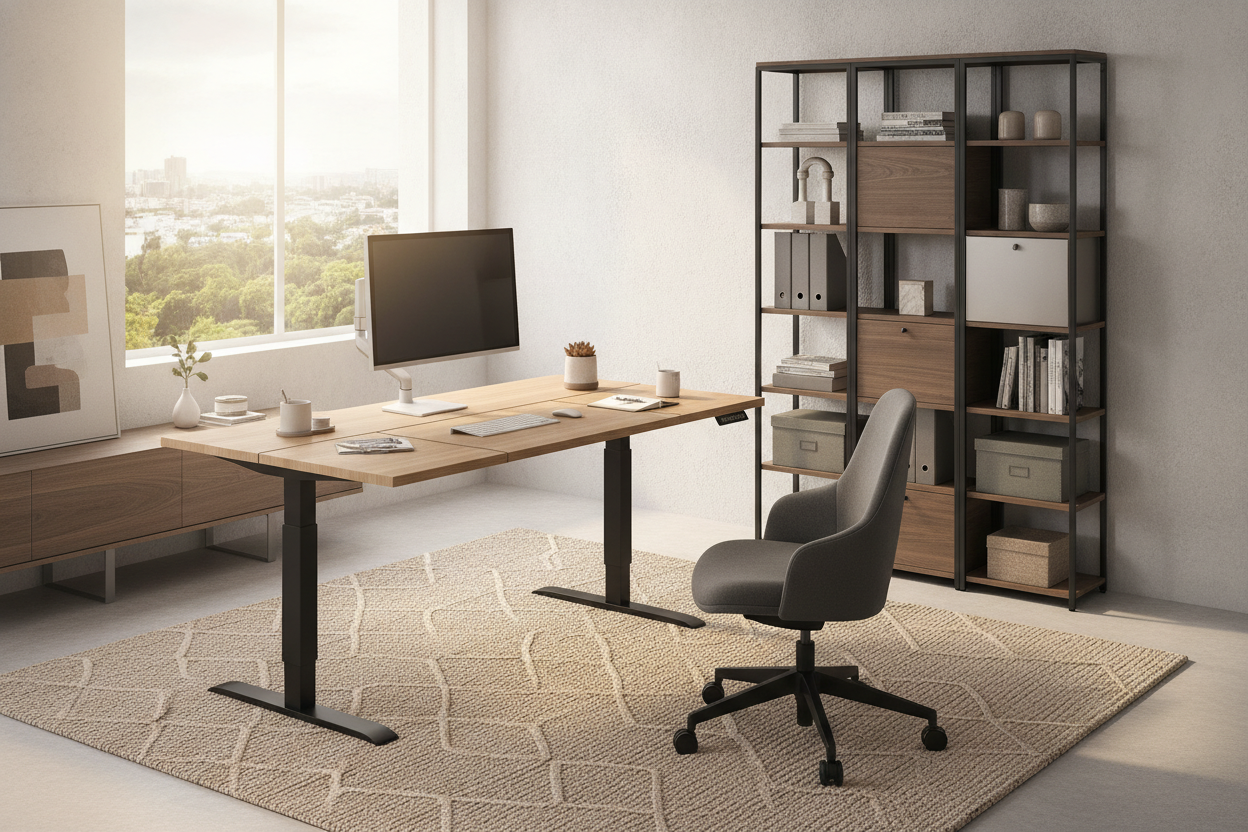
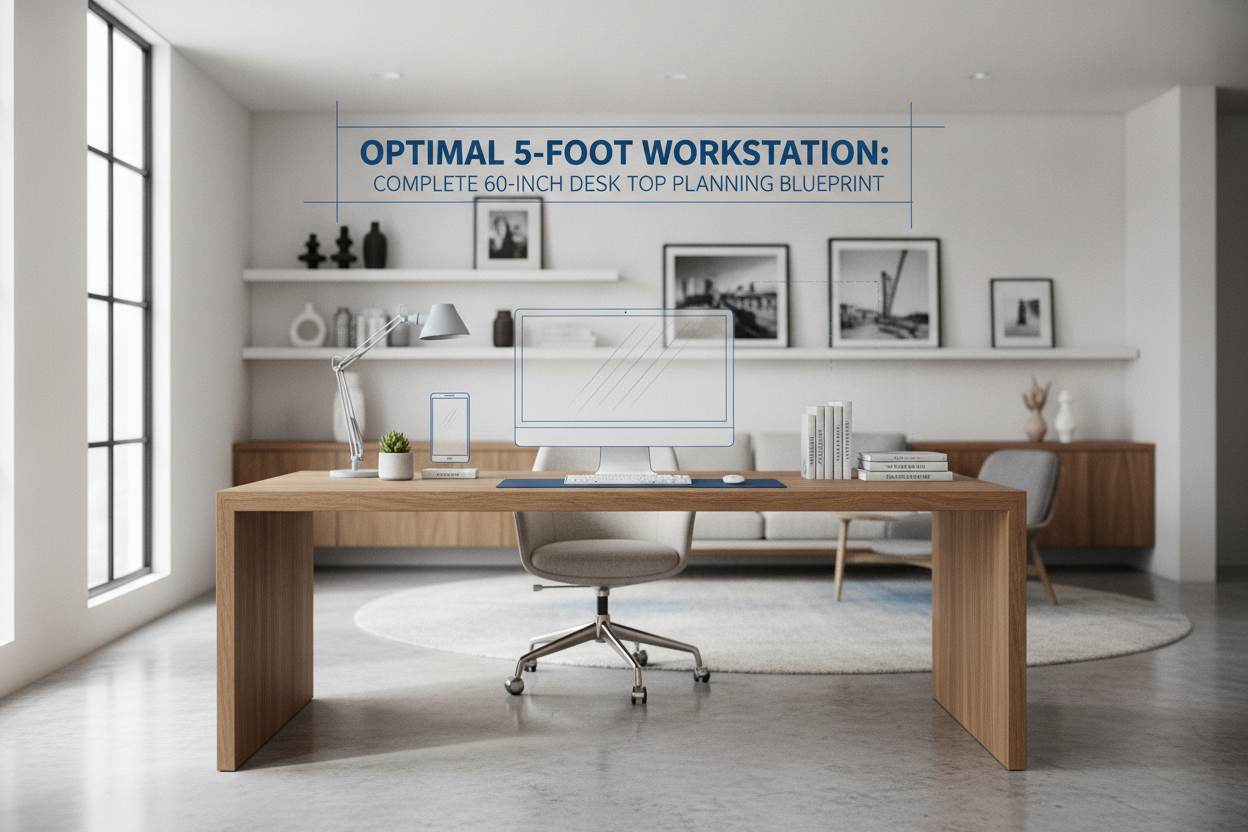
A 60 adjustable height desk occupies a practical sweet spot in home office planning. At five feet wide, it bridges the gap between compact writing desks and oversized executive workstations. This dimension provides sufficient surface area for multiple displays, audio gear, and analog writing tasks without overwhelming residential room layouts. Making the most of this versatile footprint requires deliberate surface zoning, understanding frame mechanics, and planning vertical clearances alongside adjacent storage.
The 60-Inch Sweet Spot: Why a 5-Foot Adjustable Height Desk Balances Scale and Flow
Choosing the right desk dimension often comes down to balancing display capacity with room traffic. While compact desks can feel crowded once dual monitors and peripheral accessories are introduced, extremely broad alternatives require expansive wall spans that may crowd doors or nearby closet access. When evaluating room scale against larger options, reviewing an expansive height adjustable desk product highlights how wider frames demand greater open floor area for comfortable walkway circulation.
The standard five-foot span of a 60" adjustable height desk accommodates expansive tech setups while preserving balanced proportions in standard bedrooms, shared dens, and dedicated home studios. It allows ample knee clearance below the worktop and generous space on top for document trays, ambient lighting, and essential input devices without forcing hardware to the absolute edge.
Surface Zoning Strategies for a 60" Adjustable Height Desk
An organized desktop remains efficient throughout the workday only if each accessory has a defined location. Because sit-to-stand desks move regularly, loose items that shift during elevation can create visual clutter and disrupt daily focus. Structuring your 60-inch surface into three functional zones ensures balance and comfort:
- Primary Focus Zone (Center): Position your main screen or dual-monitor cluster directly ahead, paired with an aligned keyboard and mouse. Centering heavy hardware keeps the center of gravity stable across the frame lifting columns.
- Secondary Digital Zone (Left or Right): Reserve one side for auxiliary tech, such as a docked laptop, tablet mount, or charging station. This keeps secondary screens within comfortable peripheral view without encroaching on primary mouse travel.
- Analog and Reference Zone (Opposite Flank): Dedicate the remaining wing to analog notebooks, planning pads, or desktop lighting. This spatial separation allows you to pivot smoothly between typing and handwritten note-taking.
For versatile rooms where professional work overlaps with personal creative projects, exploring a multi-use desk adjustable height product illustrates how dynamic worktops can be zoned to serve distinct everyday functions seamlessly.
Base Dynamics and Frame Geometry Across a 5-Foot Span
Across a five-foot span, structural stability is paramount. As an adjustable desk reaches standing heights, small amounts of lateral play can become noticeable if the base frame lacks adequate engineering. Key structural elements to evaluate include:
- Foot Depth and Leg Orientation: Extended floor feet distribute downward force evenly, resisting front-to-back tilt when leaning lightly against the desktop during active discussions.
- Crossbar and Telescoping Rail Support: A robust underframe spanning the underside of the top prevents center sagging over time, ensuring the five-foot surface remains rigid under heavy monitor arms.
- Balanced Load Placement: Distributing peripheral gear evenly across both lifting columns reduces motor strain and promotes smooth, synchronized travel.
Vertical Clearance and Dynamic Cable Management Planning
Operating an active height-adjustable desk requires attentive clearance planning above, behind, and underneath the work surface. Before finalizing desk placement, inspect the surrounding wall space for potential obstructions such as window sills, electrical switch plates, wall art, and baseboard radiators. To prevent layout bottlenecks between moving desks and nearby accent furniture, review our adjustable guide for spatial tips that protect surrounding pieces.
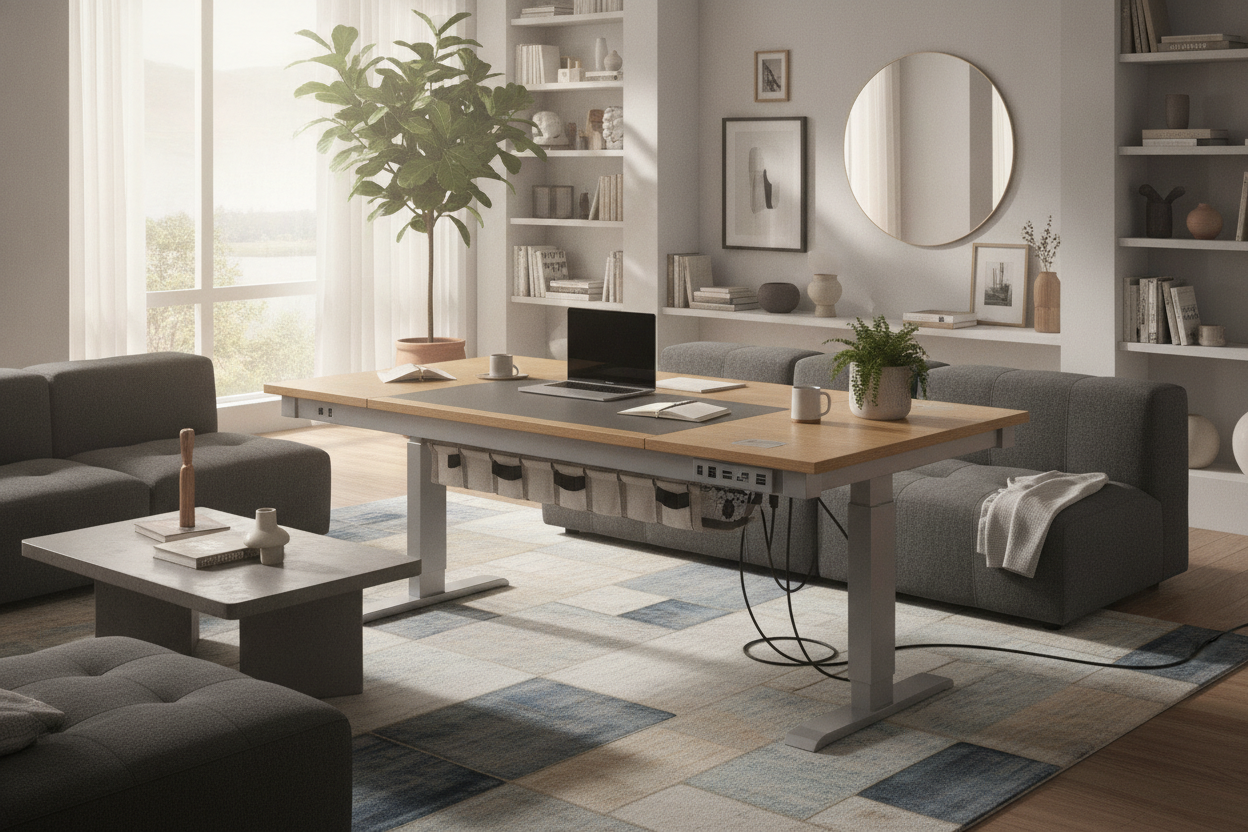
Dynamic cable management is equally essential. Because the distance between your desktop gear and wall outlets changes continuously, power cords must accommodate the full range of movement without tension. Installing an under-desk cable tray alongside a flexible vertical cable spine keeps cords neatly bundled, preventing accidental snags or disconnections as the desk rises.
Integrating Storage Around an Active 60-Inch Workstation
Because sit-to-stand desks generally feature open leg designs rather than built-in pedestal drawers, pairing your workspace with coordinated perimeter cabinetry maintains an organized environment. Storage choices should complement the desk without impeding its vertical motion:
- Mobile Under-Desk Pedestals: Low-profile file cabinets on casters can roll beneath the desktop when configured in seated positions, provided their height remains below the desk's lowest descent setting.
- Adjacent Credenzas and Sideboards: Positioning low storage units beside the desk creates an extended L-shaped workflow for printers and paper trays while keeping the dynamic desk surface clear.
- Vertical Bookcases: Pairing the workspace with an adjustable collection of shelving towers provides ample capacity for books, reference binders, and decorative accents along peripheral walls.
Selection Checklist: Choosing Your 60 Adjustable Height Desk
Before making your final workstation choice, confirm that your planned layout meets these foundational criteria:
- Spatial Footprint: Ensure the five-foot desktop leaves clear perimeter walkways when both seated and standing.
- Weight Distribution: Plan monitor arm mounts and secondary hardware to sit balanced over the support legs.
- Clearance Path: Verify that the full elevation range clears wall hangings, window ledges, and adjacent cabinetry.
- Cable Slack: Route main power supply leads with sufficient slack to reach maximum standing height safely.
- Complementary Storage: Arrange nearby shelving and filing units to maintain quick access to daily materials without interfering with motorized movement.
A thoughtfully planned 60 adjustable height desk provides the ideal framework for a modern, active workspace. By organizing your surface zones, verifying structural stability, and coordinating supporting storage, you create an efficient environment tailored to healthy, productive daily routines.

Laisser un commentaire
Ce site est protégé par hCaptcha, et la Politique de confidentialité et les Conditions de service de hCaptcha s’appliquent.