



Finding a workstation that accommodates modern technology without overwhelming a compact room requires careful planning. A 35 inch desk occupies an intentional middle ground in home office furniture: it offers noticeably more working surface than ultra-narrow writing nooks while maintaining a compact footprint that slides neatly into modest living quarters, bedroom corners, and apartment alcoves.
Understanding the 35-Inch Desk Profile: Width vs. Height Clarification
When browsing furniture catalog listings, reviewing product specifications prevents accidental sizing mismatches. In most cases, a 35 inch width desk designates the horizontal left-to-right span of the tabletop, often described interchangeably as a 35-inch length desk or 35 inch long desk. This span fits standard doorways and niche wall cutouts.
However, shoppers should verify whether a dimension listing indicates width or vertical elevation. A 35 inch height desk or 35 inch tall desk represents a counter-height or elevated platform rather than a standard seated desk height. If your goal is standard seated ergonomics, ensure the product represents a 35 in wide desk rather than a 35 inch high desk designed for drafting stools or standing perches.
Configuration Types: Choosing the Right 35-Inch Desk Style
Different functional goals dictate which architectural style suits your daily routine. Exploring a curated writing computer desk collection provides clarity on the diverse structural layouts available within this compact footprint:
- Minimalist Writing Desks: A classic 35 inch writing desk prioritizes an open frame beneath the tabletop. This streamlined 35 writing desk design maximizes vertical leg clearance and reduces visual bulk.
- Dedicated Computer Workstations: A 35 inch computer desk or 35-inch wide computer desk often introduces structural enhancements such as rear cable grommets, keyboard sliders, or elevated monitor ledges. A dedicated computer desk 35 inches wide suits users with external displays.
- Standing and Sit-Stand Variations: A 35 inch standing desk or standing desk 35 inch wide gives active professionals the ability to work upright without occupying the larger floor space required by executive standing platforms.
- Compact Everyday Desks: A small desk 35 inches wide provides a multi-purpose surface that serves as a study station by day and a vanity or utility table by evening.
Storage Architecture: Balancing Drawers and Knee Clearance
Integrating storage into a compact 35 desk requires careful spatial trade-offs. On a 35" desk, under-desk space is limited, making the placement of drawers critical for daily comfort.
A 35 inch desk with drawers generally follows one of two designs:
- Slim Central Lap Drawers: A shallow drawer spanning the middle of a 35 inch wide desk with drawers keeps pens, notebooks, and small electronics out of sight. However, deep drawer aprons can restrict vertical thigh space when using armchairs or high seating positions.
- Single Pedestal Side Storage: Placing a small drawer column on one side allows vertical organization, but it narrows the remaining knee well. If you are comparing narrow footprints, our small wide desk guide provides further perspective on balancing built-in drawers with open legroom.
Desktop Zoning and Equipment Placement on a 35-Inch Surface
Managing equipment on a computer desk 35 inches across requires intentional surface zoning to prevent clutter. Dividing the tabletop into primary and secondary reach zones keeps essentials accessible while maintaining clean aesthetics.
In the primary zone—the direct center of the tabletop—position your central device, such as a laptop or compact external monitor. The width easily accommodates a standard laptop paired with a standalone mouse and slim keyboard pad. Secondary zones along the back edge and corners provide dedicated spots for a focused task lamp, a phone stand, or a small coaster. Utilizing clamp-on monitor arms or desk risers elevates screens off the desk surface, freeing up the central deck for physical writing and paper handling.
Room Integration Blueprints: Alcoves, Bedrooms, and Shared Spaces
Because a 35 wide desk fits neatly along short perimeter walls, it integrates seamlessly into varied home environments:
- Architectural Niches and Alcoves: Recessed closet conversions and structural alcoves frequently measure just over three feet wide, making this size ideal for flush, built-in styling.
- Bedroom Workstations: A light-toned 35 inch white desk creates a calm, unobtrusive presence in a bedroom corner, blending softly with surrounding walls and bedding. For additional tips on using light finishes to enhance compact areas, see our small white drawers guide.
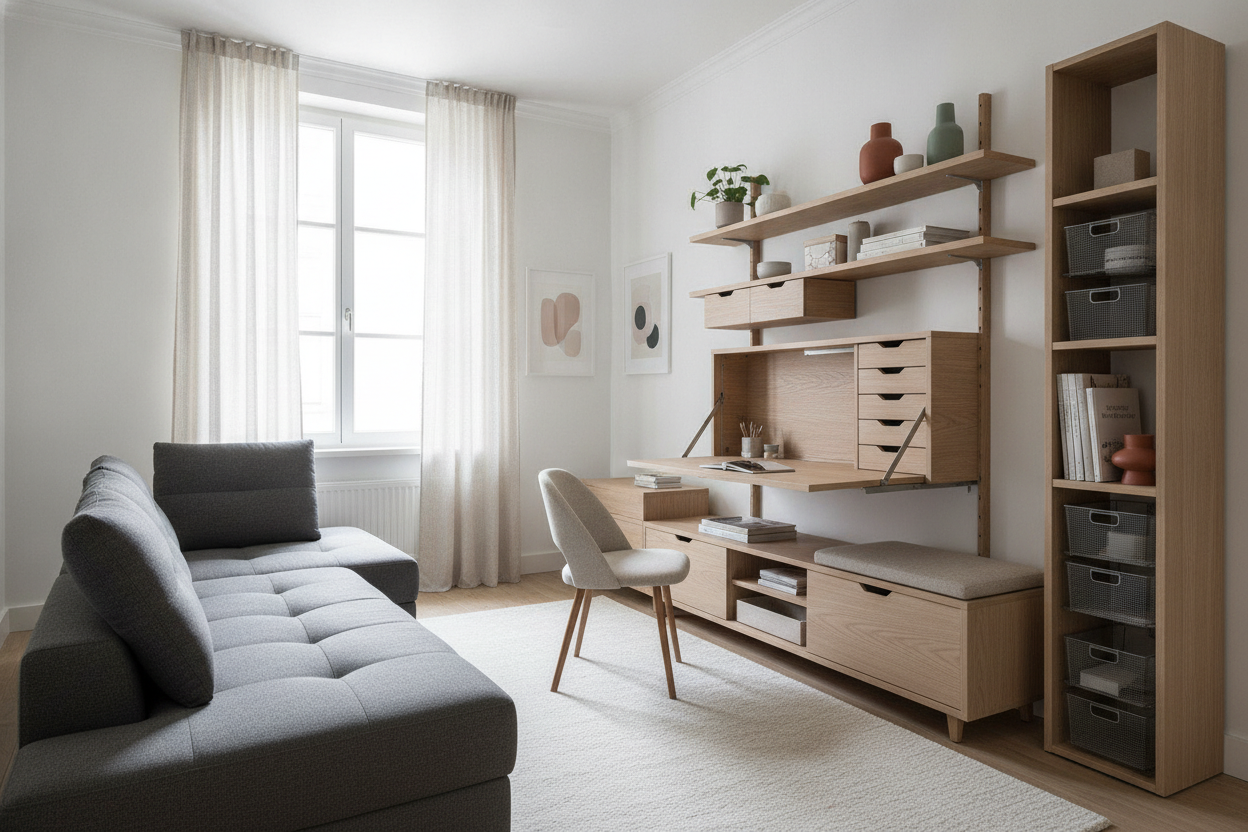
- Living Room Pocket Offices: When positioned beside a sofa or accent cabinet, a compact white desk 35 inches wide delineates a functional workstation without disrupting conversational living room layouts.
Materials, Finishes, and Visual Weight for Compact Workspaces
The visual density of your furniture influences how spacious a room feels. Compact desks constructed with open steel frames and slim tabletops maintain open sightlines across the floor. In contrast, solid panel sides provide a grounded, traditional appearance that hides under-desk cables from view.
Color palette plays an equally vital role. Crisp white finishes, light oak veneers, and natural birch tops reflect ambient room lighting, creating an open atmosphere in smaller studies. For those considering minimalist styling cues across larger matching pieces, examining a white computer desk product highlights how clean lines and monochromatic finishes brighten home office settings.
Assembly, Stability, and Cable Management Considerations
Ensuring longevity and daily comfort from your compact desk involves practical structural checks during setup:
- Frame Rigidity: Compact frames benefit from integrated back crossbars or reinforced corner brackets to eliminate side-to-side wobble during typing sessions.
- Adjustable Leveling Feet: Uneven flooring or transitions between area rugs and hardwood can cause instability. Screw-in leveling glides allow you to balance the frame cleanly.
- Tidy Cable Pathways: Because compact desks expose more open air beneath the top, organizing power bricks and cords using adhesive clips, under-mount trays, or spine sleeves preserves a streamlined look.
By assessing dimensional needs, legroom requirements, and storage configurations, a 35-inch workstation can deliver the full productivity of a complete home office within an efficient footprint.

Laisser un commentaire
Ce site est protégé par hCaptcha, et la Politique de confidentialité et les Conditions de service de hCaptcha s’appliquent.