


Understanding Task Chairs in Modern Workspaces
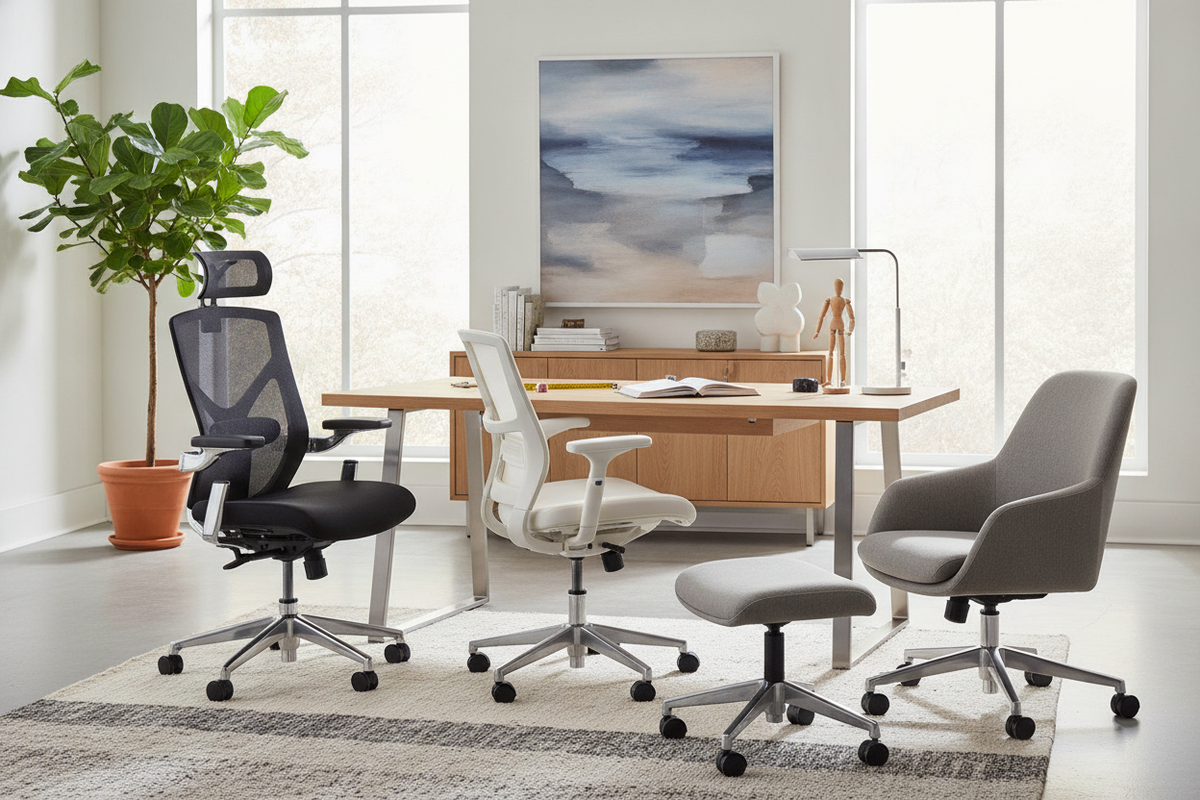
In modern work environments, task chairs serve as the functional core of daily productivity. Unlike oversized executive thrones designed primarily for commanding visual presence or accent chairs meant for occasional lounging, office task seating focuses squarely on purposeful utility, mobility, and adaptability. A dedicated sitting office chair accommodates focused keyboard input, active screen interaction, and natural postural changes throughout the working day without overwhelming the surrounding room footprint.
At its foundation, a well-designed task chair brings together several key components: a supportive seat pan, a contoured backrest, a smooth swivel cylinder, and a stable five-star wheeled base. When these elements operate in harmony, the chair allows users to transition between writing, typing, and referencing documents while preserving clear sightlines and easy access across the workstation surface.
Dimensional Fit and Spatial Clearance Categories
Selecting the right task desk chair begins with assessing how physical scale interacts with existing office furniture and room architecture. Overlooking dimensional clearances often leads to bumped armrests, restricted leg space, or cramped floor paths.
Seat Pan Dimensions and Knee Clearances
Seat pan sizing should provide balanced support beneath the thighs without pressing into the back of the knees. A seat pan that extends too far forward can force the user to perch on the front edge, losing contact with the backrest. Conversely, a seat pan that is overly shallow may leave the thighs without sufficient contact area. Editorial room planning favors seat pans with waterfall front edges, which slope gently downward to ease contact pressure behind the lower legs.
Under-Desk Clearance and Armrest Heights
A frequent spatial bottleneck in home and corporate settings occurs where armrests meet the desk edge. Before finalizing any task chair office selection, measure the distance from the floor to the lowest underside obstruction of the desk, including drop-down keyboard shelves, aprons, or integrated pencil drawers. For comprehensive planning on surface dimensions, consult our detailed office desk guide.
Adjustable or flip-up armrests offer valuable versatility here. When typing, armrests can sit level with the worksurface to support forearm posture; when work concludes, they can be lowered or folded up so the entire chair tucks neatly beneath the desktop, preserving walkway space in compact rooms.
Base Diameter and Rolling Perimeter
The standard five-star caster base creates a circular floor footprint that requires dedicated clearance. Beyond the static diameter of the base itself, planners should account for an active rolling perimeter behind the desk. Adequate clearance allows users to slide back comfortably to stand up or retrieve items without scraping baseboards, catching area rugs, or colliding with adjacent storage credenzas.
Core Mechanical Features and Adjustment Frameworks
Mechanical adjustability distinguishes standard office chairs task chairs from static dining or accent seating. Investing in versatile adjustment mechanisms ensures that the chair can adapt to different user preferences or shared multi-user workstations.
Pneumatic Height and Swivel Dynamics
The pneumatic gas lift cylinder is the primary mechanical interface of any sitting office chair. Smooth vertical adjustment allows individuals to align their elbows comfortably with table surfaces, avoiding raised shoulders or awkward wrist angles. Paired with a fluid 360-degree swivel, height responsiveness enables seamless transitions between dual-monitor setups, side storage cabinets, and face-to-face conversations without twisting the torso.
Tilt Tension and Lumbar Support
Recline mechanisms govern how the backrest responds to movement. Basic center-tilt designs recline the seat and backrest together, whereas synchro-tilt mechanisms recline the backrest at a greater ratio than the seat pan. This differential movement helps keep feet planted while opening the hip angle during contemplative reading or phone calls. Meanwhile, targeted lumbar support—whether built as a contoured backrest curve or an adjustable sliding pad—helps maintain the gentle inward curve of the lower spine during long stretches at the desk.
Material Selection: Breathability, Texture, and Frame Durability
Upholstery and frame materials dictate not only how office furniture task chair options feel during daily use, but also how long they endure everyday wear and cleaning routines.
Upholstery Choices: Mesh, Fabric, and Faux Leather
- Breathable Mesh: Tensioned mesh backrests promote passive airflow, keeping the user cool in warmer climates or naturally sunlit home offices. High-grade mesh also conforms gently to back contours without adding visual bulk to smaller rooms.
- Woven Fabric: Padded fabric seats offer a familiar tactile softness and come in a broad spectrum of woven textures and colors, making them easy to integrate into warm, residential aesthetics.
- Faux Leather: High-performance polyurethane and synthetic leathers bring a refined, tailored aesthetic that wipes clean easily with a damp cloth, making them popular in shared executive suites or busy studio environments.
Frame Materials and Caster Types
Task chair frames typically employ molded nylon composite, polished aluminum, or powder-coated steel. Nylon frames provide lightweight mobility and flexibility, whereas metallic bases lend grounded weight and an elevated, modern shine. Caster wheel selection is equally critical: hard dual-wheel nylon casters glide smoothly across low-pile commercial carpet, while soft polyurethane-coated casters protect hardwood, laminate, or tile floors from surface scuffs.
Pairing Office Task Seating with Distinct Workstation Layouts
A task chair should never be evaluated in isolation. How the chair interacts with specific desk styles determines overall day-to-day workflow harmony.
Integrated Desk and Storage Credenzas
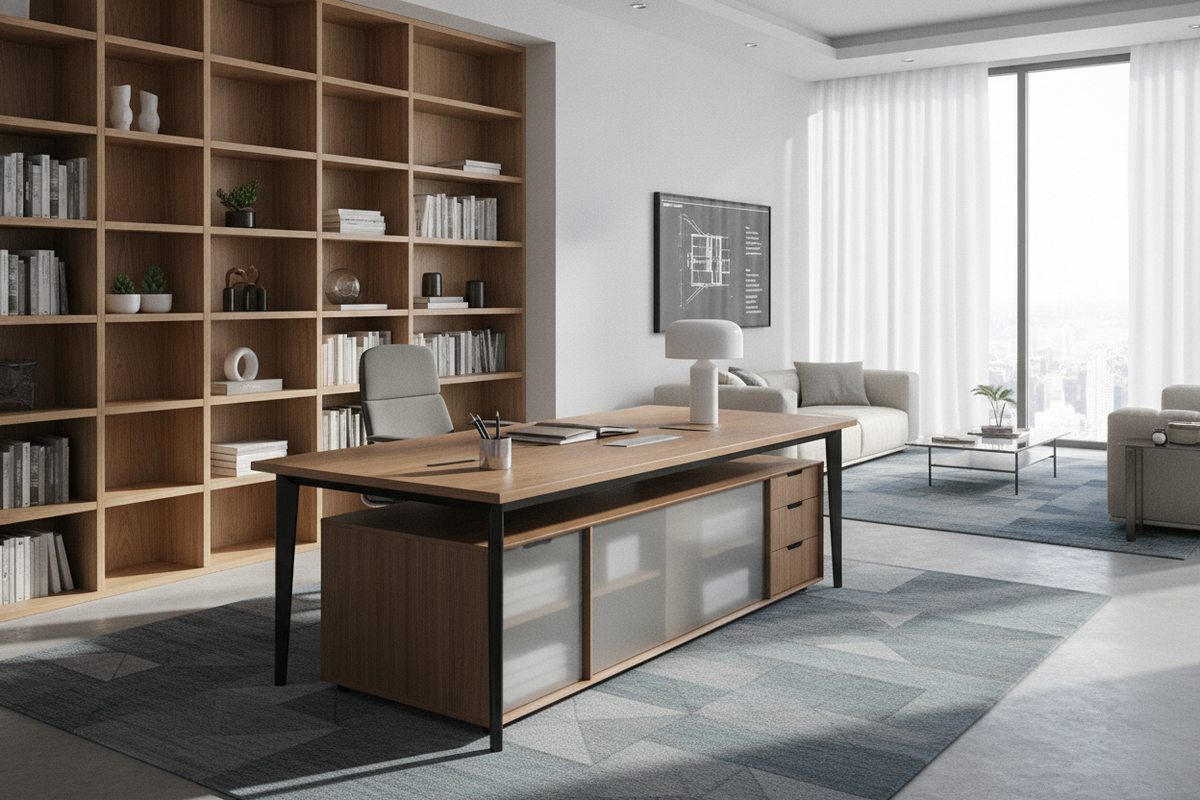
Workstations paired with integrated cabinetry demand precise lateral clearances. When working alongside an office desk product featuring deep side drawers, ensure that the chair base does not obstruct opening cabinet doors or strike drawer hardware when swiveling toward side storage.
L-Shaped and Corner Computer Desks
Corner workstations maximize room footprints by spreading tasks across two connected surfaces. In these layouts, an agile task desk chair with responsive casters is essential. Pairing mobile seating with a dedicated office desk product allows the user to transition smoothly between a primary keyboard setup and a secondary paperwork return without rising from the seat.
Reception and Executive Workstations
In client-facing reception counters or executive environments, task seating must project visual composure from both sides of the desk. When outfitting a prominent desk office product, choose a chair with clean backrest detailing and discreet adjustment levers. Keeping cable bundles neatly routed inside modesty panels ensures that chair wheels move without tangling in computer or counter lighting cords.
Workspace Aesthetics and Interior Styling Harmony
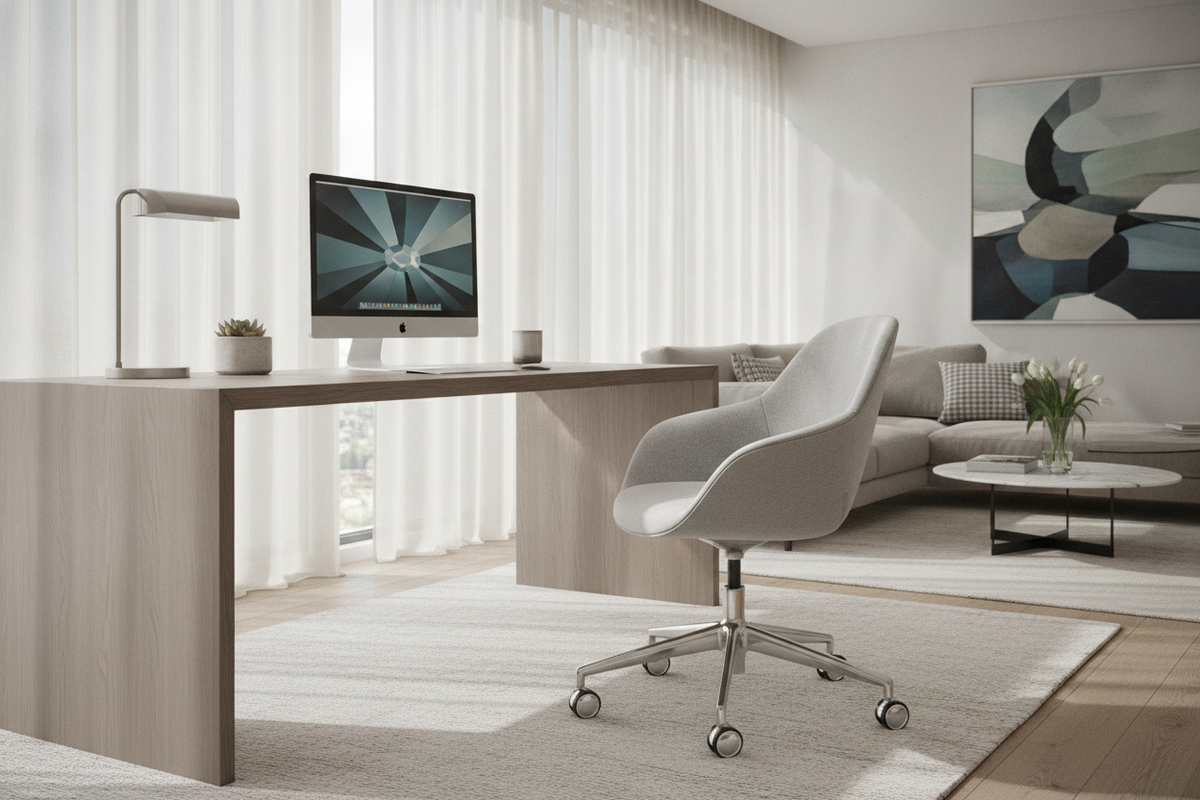
Functional task chairs need not compromise the decorative cohesion of a thoughtfully curated home office. Modern furniture styling favors understated silhouettes with crisp, architectural lines that blend into transitional and contemporary spaces. Choosing neutral upholstery shades such as slate gray, off-white, soft taupe, or matte black allows the chair to serve as a quiet foundation rather than an overpowering visual anchor.
Complement the clean lines of your seating by coordinating surrounding desk organizers, ambient lighting, and art. For additional inspiration on blending practical equipment with elevated design, explore our guide on office desk guide decor styling.
Assembly, Hardware Care, and Maintenance Checklist
Proper assembly and routine hardware upkeep preserve the smooth movement and structural integrity of task chairs over years of regular use:
- Assembly Sequence: Firmly seat the casters into the five-star base, insert the pneumatic cylinder into the central hub, attach the armrests and tilt mechanism to the seat pan underside, and finally join the backrest and mechanism together.
- Periodic Fastener Inspection: Check armrest and base plate bolts every few months, gently retightening any screws that may have loosened from regular swiveling and shifting.
- Caster Axle Cleaning: Clear dust, lint, and pet hair from wheel axles periodically to ensure casters roll freely rather than dragging across floor surfaces.
- Upholstery Maintenance: Vacuum fabric and mesh surfaces with a soft brush attachment; wipe down faux leather finishes with a mild damp cloth, avoiding harsh chemical cleaners.

Laisser un commentaire
Ce site est protégé par hCaptcha, et la Politique de confidentialité et les Conditions de service de hCaptcha s’appliquent.