


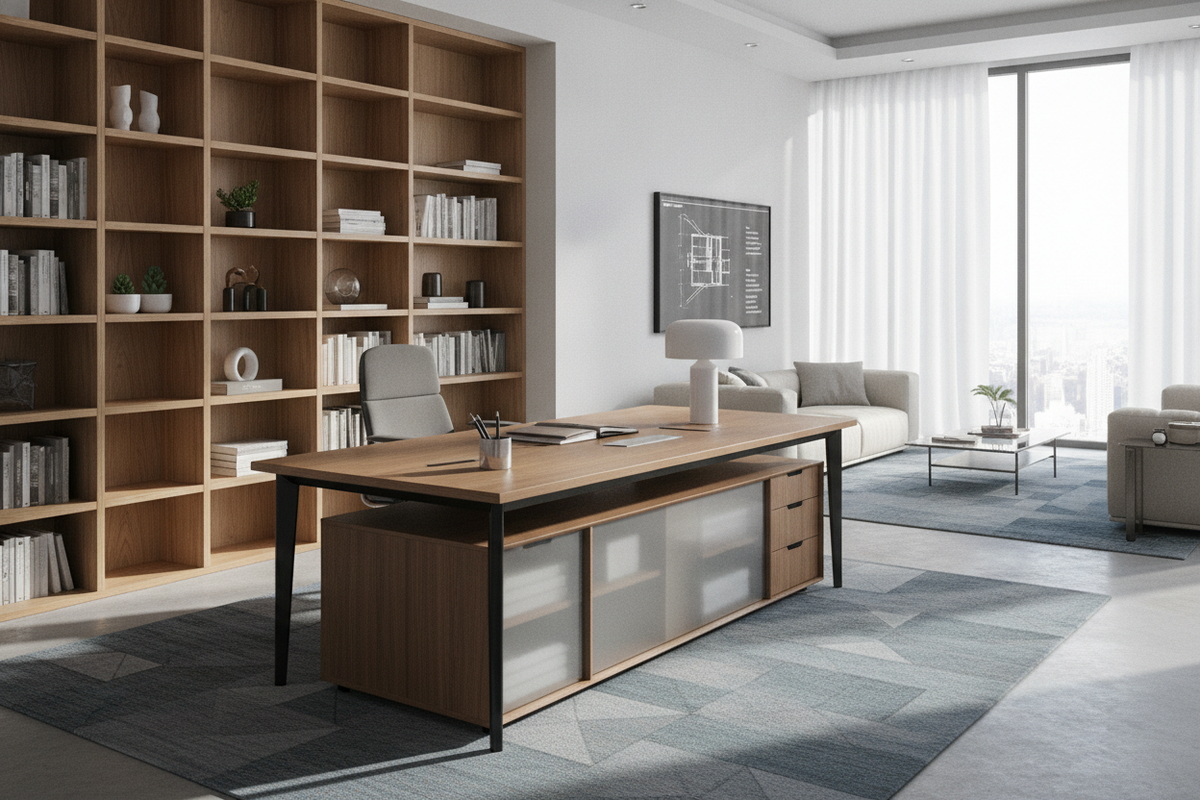
Evaluating Modern Office Table Furniture: Aesthetics Meets Daily Function
Modern office table furniture bridges the gap between architectural elegance and everyday utility. In a contemporary work setting, clean lines and visual lightness define the aesthetic. Floating tabletops, slender geometric frames, and neutral surfaces bring an uncluttered presence into a room, making even busy workspaces feel organized. However, a table that looks stunning as an empty display piece must still support the physical weight of monitors, laptop docks, desk lamps, and everyday documents without losing its tailored look.
Achieving harmony between sleek styling and everyday practicality requires deliberate planning. When setting up a contemporary work area, you can reference this comprehensive modern office desk guide to see how refined accessories and balanced lighting create a cohesive aesthetic. The primary objective is to select modern office desk designs that preserve open space while granting you the surface area and structural stability required to complete focus-driven tasks comfortably.
Scale and Footprint Planning: Matching Table Proportions to Room Size
Choosing the correct table size is fundamental to maintaining a functional home or corporate office. A surface that is too small leaves devices overcrowded, while a desk that is overly broad can dominate a room and disrupt normal foot traffic. Categorizing furniture footprints by their intended spatial role makes it easier to match dimensions to your floor plan.
Compact Modern Desks for Multi-Use Spaces
In shared rooms, open-plan living areas, or quiet reading alcoves, compact writing tables offer a dedicated working zone without visually overpowering the surroundings. These smaller silhouettes prioritize airy frames and shallow tabletop depths, ensuring that everyday traffic lanes remain clear. When positioning a compact desk against a wall or between architectural features, open-frame metal or timber legs help maintain visual flow across the floor, making compact rooms feel more expansive.
Standard and Corner Contemporary Workstations for Dedicated Offices
Dedicated home offices and private workrooms allow for broader desktop footprints. A contemporary office workstation designed with an extended perimeter or an L-shaped return provides distinct operational zones. One section can house display monitors and input devices, while the secondary surface remains open for paperwork, sketching, or review tasks.
For those managing multiple screens or mixed computer and administrative work, selecting an L-shaped configuration such as this modern office desk product utilizes corner space efficiently while providing generous lower legroom and broad upper utility.
Storage Architecture: Keeping Minimalist Lines Free of Visual Clutter
A primary challenge with modern office desk furniture is managing daily desk accessories without creating unsightly clutter. Because contemporary tables favor slim aprons and open legs over bulky, traditional pedestals, finding the right home for everyday supplies requires intentional storage architecture. For further ideas on styling and balancing contemporary surfaces with decorative pieces, consult this contemporary desk office guide.
Built-In Drawers vs. Coordinated Storage Units
Deciding between integrated drawers and detached storage units comes down to personal workflow and spatial versatility. In our editorial view, separating the primary table surface from independent filing elements often creates the cleanest, most adaptable work environment.
- Built-In Storage: Tables with integrated shallow drawers or fixed pedestals keep stationery, chargers, and small devices close at hand. However, fixed pedestals can restrict chair movement and limit leg repositioning during long work sessions.
- Coordinated Storage Units: Pairing a clean, open table with a freestanding credenza or mobile pedestal maintains open floor space beneath the desktop. A comprehensive system like this office desk product unites a streamlined work plane with substantial enclosed storage, keeping files and tech boxes neatly concealed behind closed cabinet fronts.
Cable Routing and Peripherals Management
Nothing disrupts the clean silhouette of contemporary furniture faster than tangled power cables and adapter bricks. To preserve an uncluttered aesthetic, evaluate how your table accommodates wiring. Desks with integrated cable channels, underside wire baskets, or modesty panels provide natural concealment for extension blocks. Running wiring along the interior edges of table legs using adhesive clips preserves clean sightlines while keeping your work surface ready for daily tasks.
Material Palettes and Frame Durability
The materials you select define both the visual warmth of your workspace and its long-term durability. Modern design frequently combines organic textures with industrial elements to create understated visual contrast:
- Engineered Surfaces and Melamine: High-pressure laminates and engineered wood offer reliable resistance against daily pen impressions, moisture rings, and light scuffs. These surfaces allow for consistent neutral finishes such as warm oak, crisp white, or soft gray.
- Powder-Coated Steel Bases: Metal framing provides high structural rigidity with minimal physical mass. Thin steel legs can carry substantial hardware weights without requiring thick wooden side panels, preserving an airy, modern look.
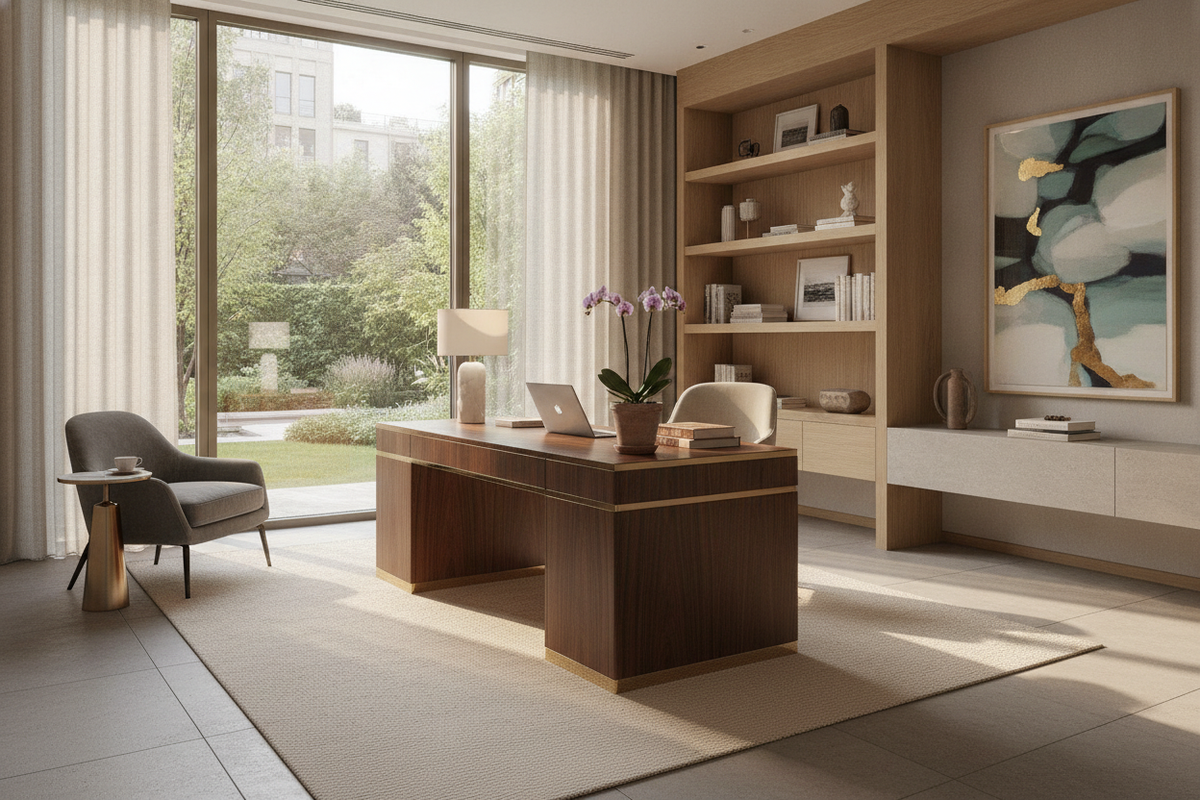
- Architectural Accents and Integrated Lighting: Larger contemporary desks often feature composite finishes, fluted paneling, or integrated accent channels. For executive layouts or dedicated greeting suites, an expansive piece such as this modern desk office product demonstrates how architectural panels and soft downlighting create an impressive focal point.
Assembly, Placement, and Room Circulation Considerations
Before purchasing modern office table furniture, map out the surrounding room clearances to maintain effortless movement. Workstations require generous clearance behind the desk to allow office chairs to slide backward and swivel without bumping into walls or storage units. Similarly, preserve open walkways between the desk edge and nearby doorways, closet entries, or bookshelves.
When assembling your furniture, assemble the frame on a soft rug or drop cloth to protect matte painted surfaces and smooth laminate veneers. Ensure that all leveling glides on the base of the table are adjusted flush to the floor, as uneven surfaces can introduce frame wobble during typing. By carefully evaluating table scale, cable management, and storage placement, you can establish an inspiring contemporary workspace that effortlessly supports daily productivity.

Laisser un commentaire
Ce site est protégé par hCaptcha, et la Politique de confidentialité et les Conditions de service de hCaptcha s’appliquent.