


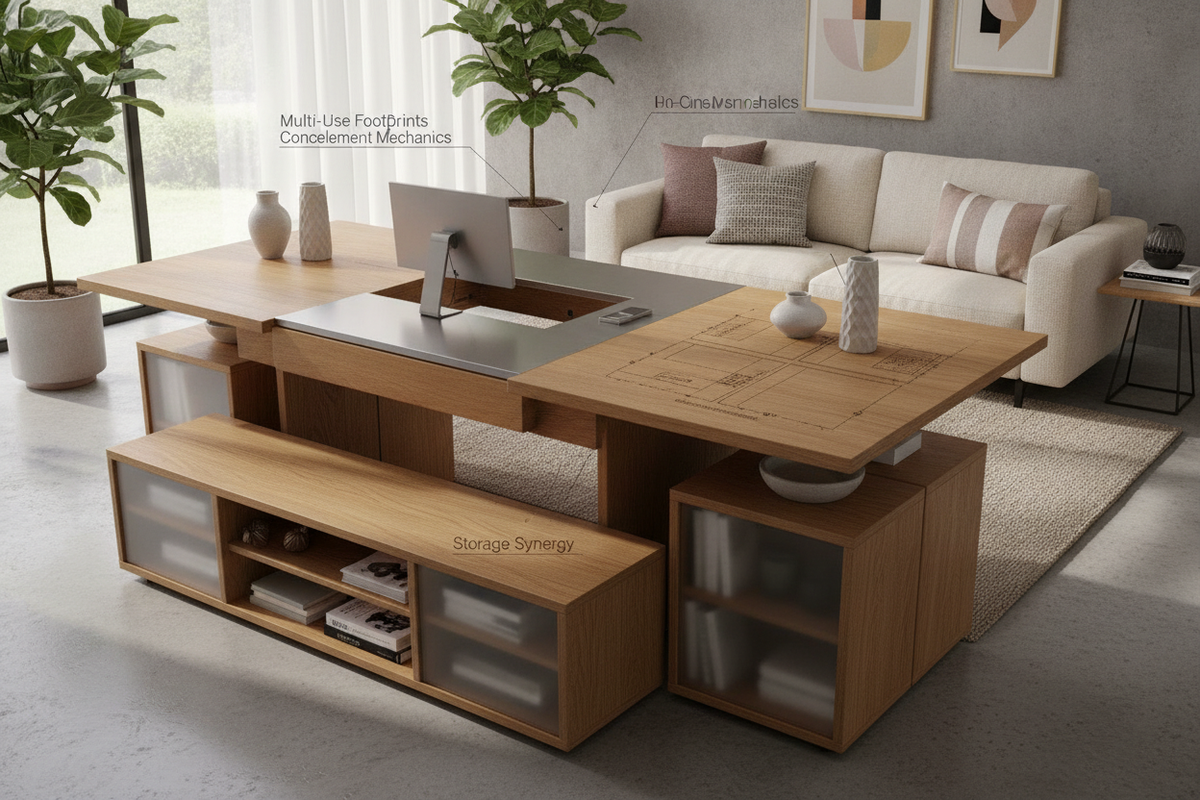
The Dual-Function Paradigm: Balancing Dining Warmth and Workstation Utility
Modern residential architecture increasingly embraces fluid, open layouts where single-purpose furniture can clutter valuable square footage. Integrating a table desk combination into a home enables a room to transition smoothly between a productive home office during daytime hours and a hospitable dining or gathering space in the evening. Creating a harmonious balance between professional utility and domestic hospitality requires intentional design choices that address surface proportions, visual clutter, and ergonomics.
Spatial Efficiency in Open-Concept and Studio Living
In compact apartments, lofts, and multi-functional great rooms, dedicating separate zones to a standalone executive desk and a traditional dining suite often leads to congested traffic lanes. A hybrid desk table combination consolidates floor plans without sacrificing functional workspace. Similar to strategies explored in our guide to concealed home office solutions, unifying dual activities into a single focal point allows surrounding floor areas to remain clear, airy, and adaptable.
Psychological Transition: Shifting from Professional Focus to Entertaining
A primary challenge of working where you dine is the psychological difficulty of disconnecting from work tasks at the end of the day. A successful desk and table combo design relies on rapid reset protocols. When laptops, monitors, peripheral cables, and paperwork can be completely cleared or hidden within minutes, the environment shifts immediately from an active professional hub to a relaxing dining ambiance.
Dimensional Tiers and Footprint Planning for Hybrid Work-Dining Surfaces
Selecting the right dimensions for a dual-purpose table ensures comfortable posture during intensive work sessions while accommodating place settings and elbow room during shared meals.
Compact Studio Footprints: Streamlined Dual-Zone Layouts
For intimate studio apartments or dedicated study nooks, compact rectangular or rounded tables provide sufficient surface area for a single laptop setup alongside ambient lighting. When paired with versatile perimeter storage, these compact formats serve as comfortable breakfast tables or two-person dinner settings without overwhelming small spaces.
Mid-Scale Proportions: Balanced Multi-Seater Worksurfaces
Mid-sized tables represent the most flexible category for dual-purpose living. These designs provide ample width for a full workstation—including secondary displays, notebooks, and reference materials—while seating four people comfortably for family meals. For dedicated corner configurations that balance substantial worksurface area with extensive cabinetry, exploring an L-shaped home office computer desk can help define spatial boundaries in open rooms.
Expansive Gathering Desks: Large-Scale Communal Architecture
In spacious lofts or open-plan homes, large communal tables serve as collaborative team desks by day and grand dining tables by night. These expansive surfaces offer generous depth, allowing two people to work opposite one another with dedicated task lighting and hardware before converting into an eight-seater banquet surface.
Structural Form Factors: Extension Leaves, Drop Leaves, and Concealment Geometry
Mechanical flexibility allows a table desk combo to adapt to varying daily demands without requiring permanent floor space adjustments.
Extension Leaves and Expanding Frameworks
Butterfly leaves, slide-out extensions, and drop-leaf mechanisms allow a streamlined personal workstation to expand quickly when guests arrive. Telescoping runners and hidden under-table hinges ensure that moving components stay secure under heavy typing or dining use while maintaining a level surface across all joined sections.
Concealed Wells and Hidden Tech Bays
Advanced hybrid tables incorporate central recessed troughs, hinged access lids, or underside mounting plates. These structural recesses allow power strips, docking hubs, and charging bricks to remain anchored beneath the tabletop, completely out of sight during dinner service while keeping power immediately accessible during work hours.
Material Dynamics: Blending Tactile Hospitality with Workstation Durability
The materials chosen for an office desk dining table must withstand both commercial desk wear and typical dining hazards, such as hot dishware, condensation, and food spills.
Hardwoods vs. Engineered Composites and Performance Laminates
Solid hardwoods bring warmth, natural grain, and authentic residential character to dining areas, aging gracefully over time. Conversely, high-pressure laminates and high-density engineered wood composites offer exceptional resistance to daily pen pressure, mouse friction, and moisture rings. Blending solid timber framing with resilient laminate or treated veneer tops often delivers an optimal balance of structural elegance and practical longevity.
Finish Resilience: Heat, Moisture, and Micro-Scratch Resistance
A dual-purpose surface requires a protective topcoat. Matte polyurethane, conversion varnishes, and ceramic coatings guard the surface against warm coffee mugs, oily food contact, and laptop heat exhaust. Opting for low-sheen, textured, or matte finishes also minimizes visible fingerprints and reduces harsh glare from overhead task lighting during screen-intensive work.
Cable Routing, Power Distribution, and Rapid Clearing Protocols
Cable management represents the definitive line between a dedicated workstation and an inviting dining environment.
Under-Bevel Channels and Detachable Magnetic Power Blocks
Running power cords loosely across a tabletop disrupts dining presentation. Installing discreet under-bevel cable raceways, magnetic wire organizers along table legs, and recessed sub-surface grommets keeps wiring completely concealed. Quick-release magnetic charging docks allow power bricks to be detached and stowed away in seconds without unplugging base cords from perimeter wall outlets.
End-of-Day Transition: Five-Minute Workstation Teardown
Establishing an efficient evening clearing routine helps maintain work-life balance. Utilizing felt desk mats, laptop stands that fold flat, and portable desk organizers allows all work equipment to be swept into adjacent storage in one fluid motion, leaving the tabletop spotless for evening entertaining.
Perimeter Storage Synergy: Clearing the Worksurface for Social Dining
A table and desk combo functions effectively only when supported by nearby auxiliary storage that absorbs work essentials when dining begins.
Sideboard and Credenza Pairing for Peripheral Tech Storage
Positioning a dining credenza, buffet, or credenza-style desk adjacent to the main table provides hidden compartments for monitors, printers, files, and charging docks. For integrated workspace setups that combine concealed shelving with deep storage, incorporating a multi-door office storage cabinet keeps everyday work essentials fully accessible during the day yet hidden away behind clean cabinet doors at dinner.
Vertical Storage and Mobile Utility Units
Mobile pedestals on casters and wall-mounted shelving take full advantage of vertical space around the table. Reviewing above-desk organization strategies provides practical methods for keeping reference materials, books, and tech accessories accessible without cluttering your shared surface.
Decision Framework: Selecting the Optimal Table Desk Combination for Your Space
When selecting your ideal hybrid furniture piece, evaluate your room through four core architectural criteria:
- Daily Seating vs. Working Needs: Determine whether the surface primarily supports single-user laptop work or needs to accommodate dual monitors alongside daily family dining.
- Cable Concealment Pathways: Verify that the table leg geometry or floor outlet placement allows power cords to reach wall sockets cleanly without creating tripping hazards.
- Surface Finish Durability: Prioritize heat-, scratch-, and moisture-resistant topcoats that handle hot dinnerware and constant desktop peripherals with equal resilience.
- Storage Proximity: Ensure dedicated credenzas, sideboards, or mobile storage units sit within arm's reach to facilitate a rapid five-minute teardown at the end of each workday.

Laisser un commentaire
Ce site est protégé par hCaptcha, et la Politique de confidentialité et les Conditions de service de hCaptcha s’appliquent.