


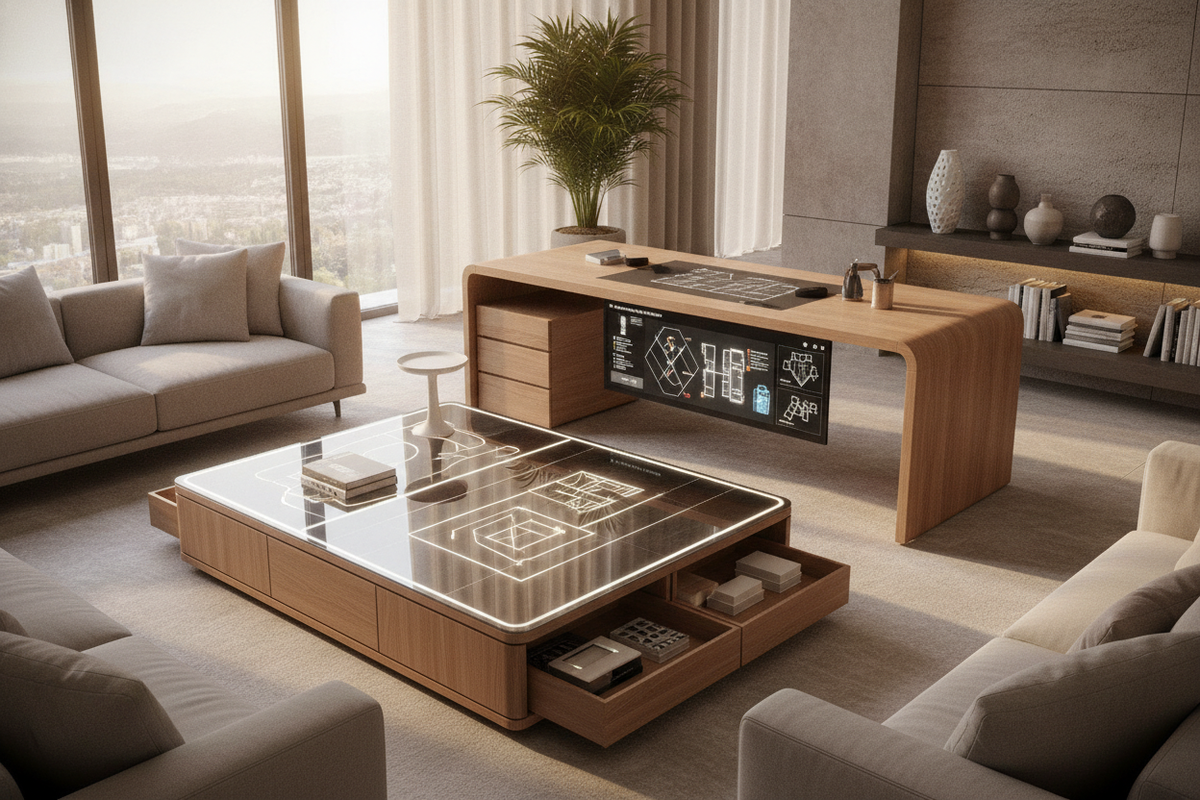
Choosing between a dedicated workstation and a shared surface often blurs the line between a traditional table and desk. While both provide elevated horizontal work surfaces, their underlying engineering, spatial clearance profiles, and storage capabilities serve distinct behavioral needs. Understanding these structural nuances enables homeowners and remote workers to make informed layout decisions, whether establishing a dedicated study, furnishing a flexible living area, or repurposing a favorite dining piece.
Anatomical Distinctions: Understanding the Structural Differences Between a Table and Desk
The primary divergence between a conventional table and a purpose-built desk lies in ergonomic focus and chassis engineering. Desks prioritize individual user alignment, task lighting, cable routing, and localized storage, whereas general tables emphasize shared perimeter seating and open under-table clearance.
Worksurface Depth and Reach Zones vs. Dining Span Geometry
Workstations are proportioned around primary and secondary reaching zones. A dedicated desk balances depth so screens sit at a comfortable viewing distance while keeping peripherals within natural forearm reach. In contrast, dining and communal tables often feature broader spans meant for cross-table conversation and shared platters, which can leave solitary desk workers with excessive, unreachable surface depth.
Leg Aprons, Knee Clearances, and Ergonomic Seating Postures
Structural aprons—the vertical wood or metal framework beneath a tabletop—frequently create ergonomic complications when utilizing a table for desk applications. Traditional dining tables feature drop-down perimeter aprons that may collide with adjustable chair armrests or restrict vertical thigh clearance. Ergonomic office desks minimize or recess under-top bracing to accommodate diverse seating heights and active posture changes.
Load Distribution and Under-Frame Reinforcement Mechanics
Desks are engineered to support concentrated loads along rear edges where monitor arms, desktop towers, and heavy equipment clamp into place. Standard tables, conversely, distribute weight evenly across corner posts or central pedestals. Clamping heavy monitor mounts to an unreinforced table edge can risk structural flexing if the core material lacks adequate stiffener rails or perimeter reinforcement.
Using a Table for Desk Work: Advantages, Trade-offs, and Conversion Strategies
Repurposing a communal piece as a hybrid table & desk solution offers expansive, unencumbered space, yet it requires thoughtful adjustments to maintain productivity.
Expansive Surface Freedom vs. Dedicated Task Organization
An open table surface eliminates visual clutter and provides unrestricted room for drafting, physical reviewing, and multi-device workflows. However, the absence of built-in utility trays and pencil drawers means loose items can quickly scatter without structured desktop organizers.
Wire Management and Power Access Solutions for Free-Floating Tables
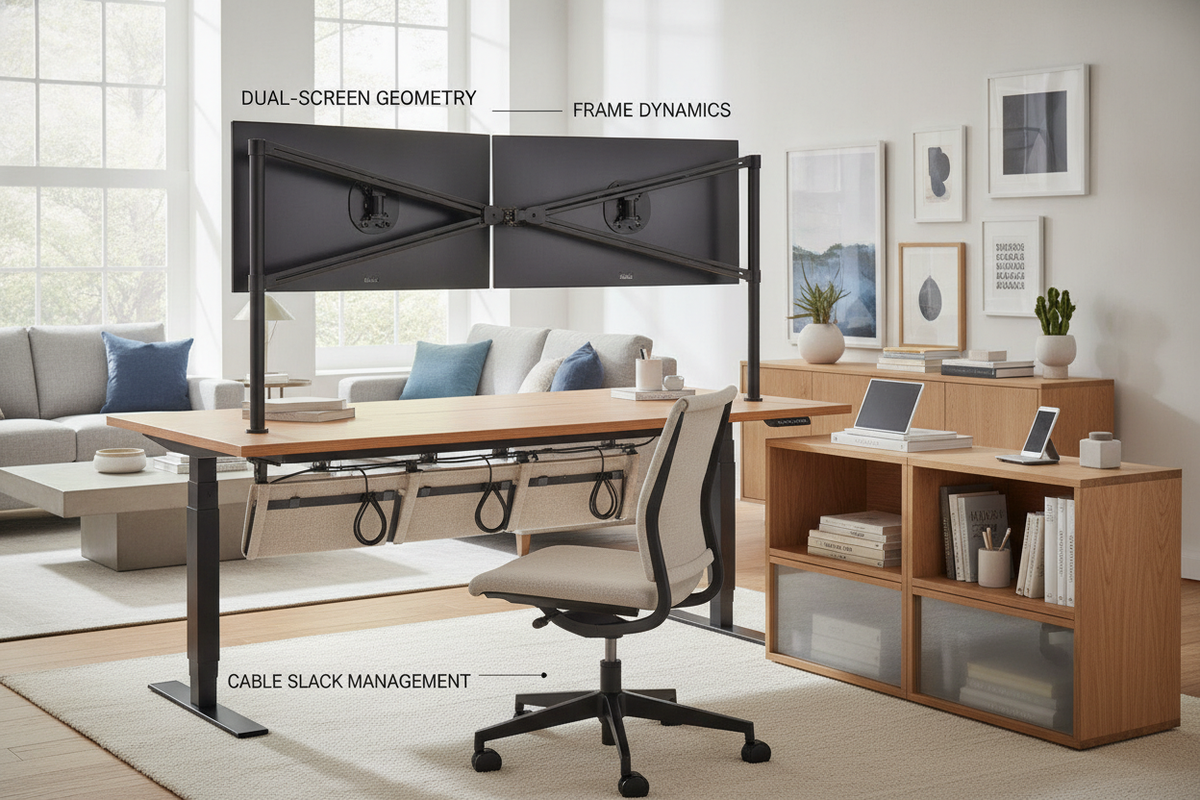
Standard tables rarely feature grommet holes, channels, or power bays. When situating a work surface in the center of a room, cords can quickly become hazardous and visually chaotic. Integrating surface-mounted power blocks, adhesive spine conduits along interior legs, and under-mounted wire baskets preserves clean sightlines while delivering reliable device charging.
Surface Protection and Tactile Comfort for Extended Computing
Dual-purpose furniture surfaces must endure both daily office wear and standard household use. Adding full-sized desk pads or felt desk blotters protects delicate wood veneers from warm laptop bases and optical mouse friction while softening hard contact edges under the forearms during long typing sessions.
Dimensional Tiers and Spatial Placement for Multi-Functional Rooms
Spatial planning determines whether a single furniture item can fluidly transition between collaborative gatherings and intensive computer work.
Compact Corner and Alcove Hybrid Configurations
In smaller floor plans, nesting a compact writing desk or small bistro table within a recessed wall or window alcove maximizes underutilized square footage. These micro-footprints keep daily work contained without dominating primary living walkways.
Mid-Sized Dual-Duty Work and Dining Layouts
Four-to-six-seat rectangular tables frequently serve as dual-duty solutions in urban apartments. Positioning the piece perpendicular to a wall allows one side to support task lighting and peripherals while leaving the opposite side open for dining and general entertaining.
Expansive Communal Work Tables for Shared Open Plans
Open-concept studios benefit from large, monolithic work tables that comfortably accommodate multiple users. These shared layouts encourage collaborative work, provided power infrastructure is routed discreetly through floor boxes or streamlined cord covers.
Material Dynamics and Finish Durability for Dual-Purpose Surfaces
Material choices directly influence the longevity, tactile feel, and maintenance needs of hybrid furniture pieces.
Solid Hardwoods vs. Engineered Composites for Heavy Daily Wear
Solid hardwoods bring warmth, substantial mass, and refinishing longevity, making them resilient anchor pieces. High-density engineered composite boards paired with resilient edging offer exceptional stability against temperature fluctuations and resist warping across wide, unsupported spans.
Matte Laminates and Anti-Glare Finishes for Task Lighting
High-gloss surfaces reflect overhead lighting and task lamps, creating visual fatigue during extended screen work. Opting for matte, textured, or satin finishes mitigates glare and hides everyday fingerprint smudges.
Metal Frameworks, T-Leg Bases, and Perimeter Stiffeners
Welded steel or extruded aluminum under-frames provide superior lateral stability compared to loose fastener assemblies. T-leg and cantilevered leg profiles eliminate corner obstructions, granting greater freedom for chair movement and under-desk accessory placement.
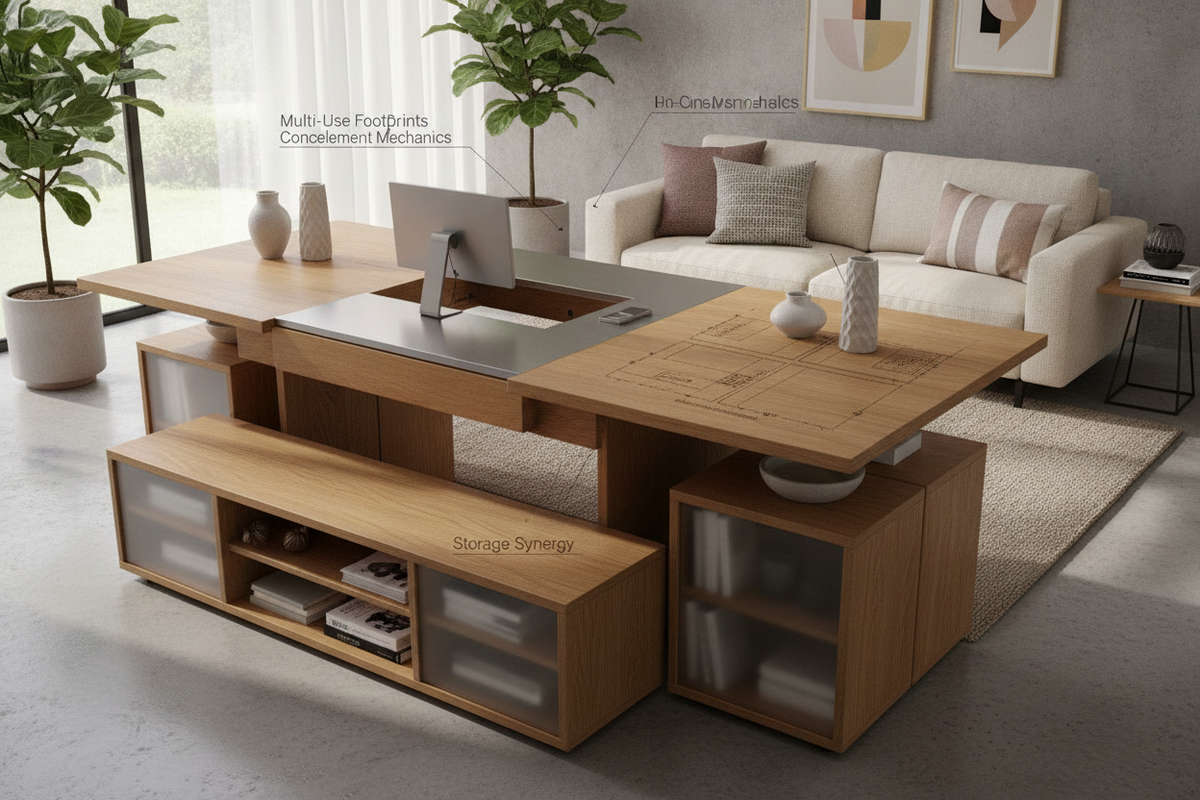
Perimeter Storage Synergy: Augmenting Open Tables with Modular Cabinetry
To keep a hybrid table clear of administrative clutter, pairing the primary surface with surrounding modular storage units creates an efficient, organized workspace.
Under-Desk Rolling Pedestals and Mobile File Organization
Mobile pedestals with locking casters slide seamlessly beneath open table frames during the workday and tuck away into closets or room corners when converting the space back to a dining or social configuration.
Sideboard and Credenza Integration for Concealed Peripherals
Positioning a low credenza, buffet, or sideboard along the perimeter wall offers discreet housing for printers, document archives, and power bricks. This keeps bulky electronics accessible without compromising the airy feel of the central table.
Vertical Wall Shelving and Floating Storage Alignment
Utilizing vertical wall space above or adjacent to the workstation diverts books, reference materials, and display decor away from the desktop, preserving an unobstructed primary working plane.
Decision Matrix: Selecting the Ideal Table & Desk Solution for Your Lifestyle
Finding the right balance between a dedicated workstation and a flexible table hinges on daily usage patterns, room dimensions, and organizational habits.
Assessing Daily Transition Frequency and Task Complexity
If your daily workflow demands multiple stationary monitors, ergonomic peripherals, and extensive paperwork, a dedicated office desk remains the most functional choice. However, if your setup relies primarily on a compact laptop and requires multi-user versatility, a hybrid table and desk layout provides the ultimate spatial adaptability.
Structural Assembly, Leveling Stability, and Longevity Checklist
- Verify that under-top clearances accommodate your preferred task chair and armrest heights.
- Examine frame joinery for diagonal corner gussets or rigid crossbeams that prevent lateral wobble.
- Select durable, low-glare surface coatings suited for continuous device contact.
- Incorporate adjustable leveling glides to stabilize the surface on uneven flooring.
- Plan wire containment paths before finalizing room placement.

Laisser un commentaire
Ce site est protégé par hCaptcha, et la Politique de confidentialité et les Conditions de service de hCaptcha s’appliquent.