


I remember unboxing my first high-end receiver—a massive, 40-pound Denon beast that promised the world. I tried to slide it into a trendy mid-century console I’d spent three weeks picking out. The legs groaned, the back panel of the console hit the receiver’s volume knob before it was even halfway in, and I ended up spending my Saturday afternoon with a jigsaw, hacking a jagged hole in the back of a $600 piece of furniture. It was a disaster.
We have all been there, staring at 47 browser tabs of media stands at 1 AM, hoping one of them will magically fit a full A/V rack. The truth is, most living room furniture is designed for a soundbar and a deck of cards, not a serious cinema setup. If you want a setup that doesn't look like a science project gone wrong, you need to stop looking at 'stands' and start looking at cabinets for home theater.
Quick Takeaways
- Standard consoles are usually 14-16 inches deep; you need at least 18-20 inches for cables and airflow.
- Heat is the silent killer of amplifiers; dedicated cabinets offer active or passive ventilation.
- Weight capacity matters—a real receiver and power amp can easily exceed 60 pounds.
- Cable management isn't just about 'hiding' wires; it's about having the physical space to route them without sharp bends.
Why Your Regular TV Stand Is Failing You
Most modern furniture is built for the 'minimalist' era, which assumes your only tech is a thin OLED and a remote. But a real home cinema cabinet has to deal with physical depth. A standard receiver is about 17 inches wide and often 16 inches deep. Once you plug in those heavy-duty HDMI cables and banana plugs for your speakers, you’ve added another 3 inches of 'depth' that the spec sheet doesn't tell you about. If your cabinet is only 15 inches deep, that receiver is going to hang off the edge like a cliffhanger.
Then there is the weight. I’ve seen cheap particle-board stands bow in the middle after just six months of holding a heavy amp. It’s not just an eyesore; it’s a safety hazard. Real theater cabinets use kiln-dried hardwoods or reinforced steel frames. If you can’t sit on the cabinet yourself without it creaking, it has no business holding your gear. I look for pieces rated for at least 150 pounds on the top surface and 50 pounds per internal shelf. Anything less is just asking for a sagging shelf and a jammed door.
The Ventilation Rule (Stop Cooking Your Amps)
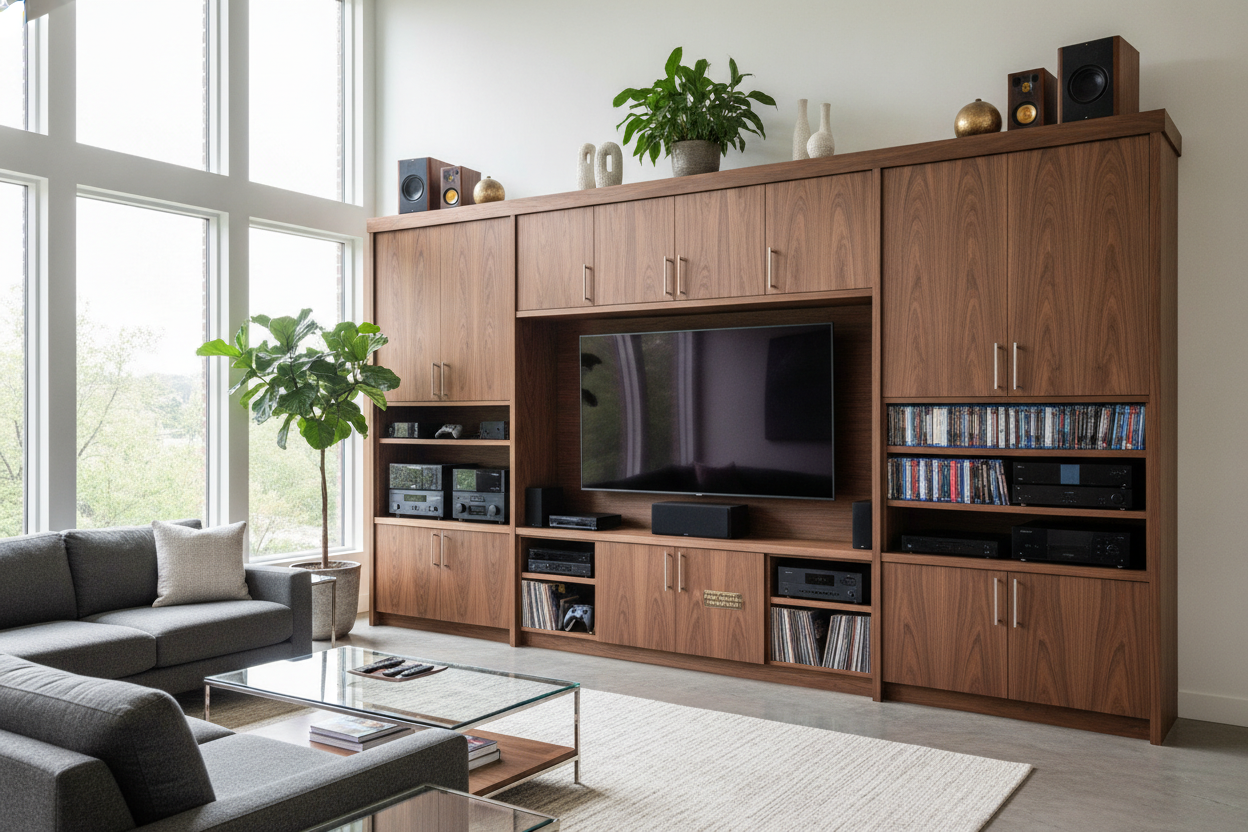
Heat is the enemy of electronics. Every time I see a high-end Marantz or Onkyo stuffed into a tight, unventilated drawer, I cringe. These units generate an incredible amount of heat, and if that air has nowhere to go, the internal components will bake until they fail. A proper home theater cabinet isn't just a box; it’s a cooling system. You want to see slotted backs, mesh doors, or at least two inches of clearance on all sides of the equipment.
I personally swear by active cooling. Some of the best theater room cabinet designs now include mounting points for quiet 120mm fans. If you aren't ready to DIY a fan kit, at least look for a movie theater cabinet with a 'chimney' effect—where cool air is pulled in through the bottom and hot air escapes through a vented top or back. If the back of your cabinet is a solid sheet of thin plywood with one tiny hole for wires, your gear is essentially in an oven.
Where Does the Giant Center Channel Go?
The center channel is the most annoying speaker to place. It’s usually too tall to sit in front of the TV without blocking the screen, and too wide to fit in a standard shelf. A dedicated home theater speaker cabinet solves this by providing a wide, open-architecture shelf right at ear level. I’ve tried the 'put it on the floor' method, and trust me, it makes every movie sound like the actors are talking to your shins.
The best theater cabinets feature an extra-wide top cubby specifically for these speakers. Some even use acoustically transparent fabric on the doors, so you can hide the speaker entirely without muffling the sound. It’s the difference between a room that looks like a cluttered Best Buy aisle and a room that looks like a professionally designed cinema. If you’re building a theater, don't make the speaker an afterthought.
My Favorite Home Theater Cabinet Ideas
If you want to hide the tech but keep the control, look for a black cabinet with glass doors. People think glass blocks signals, but IR remotes can actually pass through most clear or smoked glass just fine. It keeps the dust off your gear while letting you see the display. I love floating theater cabinets for a modern look, but make sure you’re hitting at least three studs in the wall—that gear is heavy, and a 'floating' cabinet that hits the floor is just a broken cabinet.
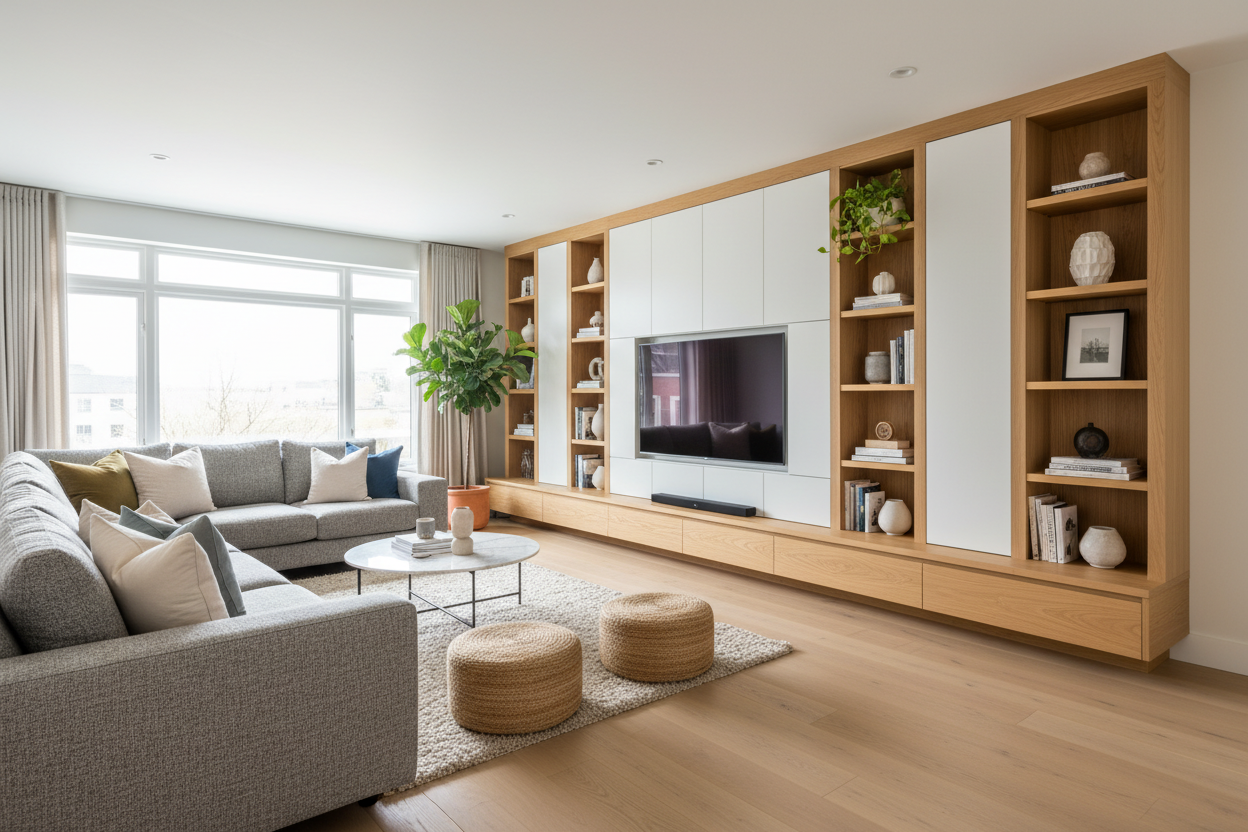
For a more integrated look, consider a full-wall movie theater cabinet. This isn't just a stand; it's a built-in system that frames the screen. It gives you room for subwoofers (which should never be inside a cabinet unless it’s specifically designed for it) and provides enough storage for a massive physical media collection. If you’re still rocking 4K Blu-rays like I am, you know that space is non-negotiable.
Repurposing Unlikely Furniture for Heavy Tech
Sometimes, the best 'media' furniture isn't labeled as media furniture at all. I have found that a heavy-duty home storage cabinet often has the depth and structural integrity that flimsy TV stands lack. These pieces are designed for heavy linens or kitchen appliances, meaning they can handle a vintage McIntosh amp without breaking a sweat. You just have to be willing to take a hole saw to the back panel for cable routing.
Even a sturdy, traditional dining room cabinet with hutch can be a brilliant hack for a theater setup. The base units are typically deep enough for A/V gear, and the hutch can be modified to hold a screen or surround speakers. I once saw a gorgeous mahogany sideboard retrofitted with silent fans and felt-lined shelves; it looked like a million bucks and performed better than most dedicated 'tech' furniture. Just check the internal shelf depth before you buy—dining furniture can sometimes be surprisingly shallow.
The Cable Management Reality Check
Finally, let’s talk about the rat’s nest. A real home theatre cabinet is worth every penny just for the cable management features. Look for 'false backs' or 'wire channels' that let you run cables horizontally between components without them spilling out the back. When I moved from a basic stand to a dedicated cabinet, my 'cable setup time' dropped from three hours of zip-tying to twenty minutes of just laying wires in the tracks.
It’s not just about aesthetics. When cables are jammed together, you get signal interference and heat buildup. A cabinet with dedicated routing keeps power cables away from signal cables, which can actually reduce that annoying hum in your speakers. It’s the final touch that separates a 'TV room' from a true home cinema experience.
FAQ
How much depth do I really need?
Aim for at least 18 inches of internal depth. Most receivers are 15-16 inches, and you need that extra 2-3 inches for the cable connectors and airflow. If you have a high-end external amp, you might even need 22 inches.
Can I put my subwoofer inside a cabinet?
Generally, no. Subwoofers vibrate, and putting one inside a wooden cabinet will cause rattles and 'boomy' sound. Unless the cabinet has a dedicated, floor-coupled cutout specifically for a sub, keep it on the floor next to the cabinet.
Will my remote work through solid wood doors?
No, standard IR remotes need line-of-sight. You’ll either need glass doors, mesh doors, or an IR repeater kit (a tiny 'eye' that sits outside the cabinet and wires to your gear inside).


Laisser un commentaire
Ce site est protégé par hCaptcha, et la Politique de confidentialité et les Conditions de service de hCaptcha s’appliquent.