


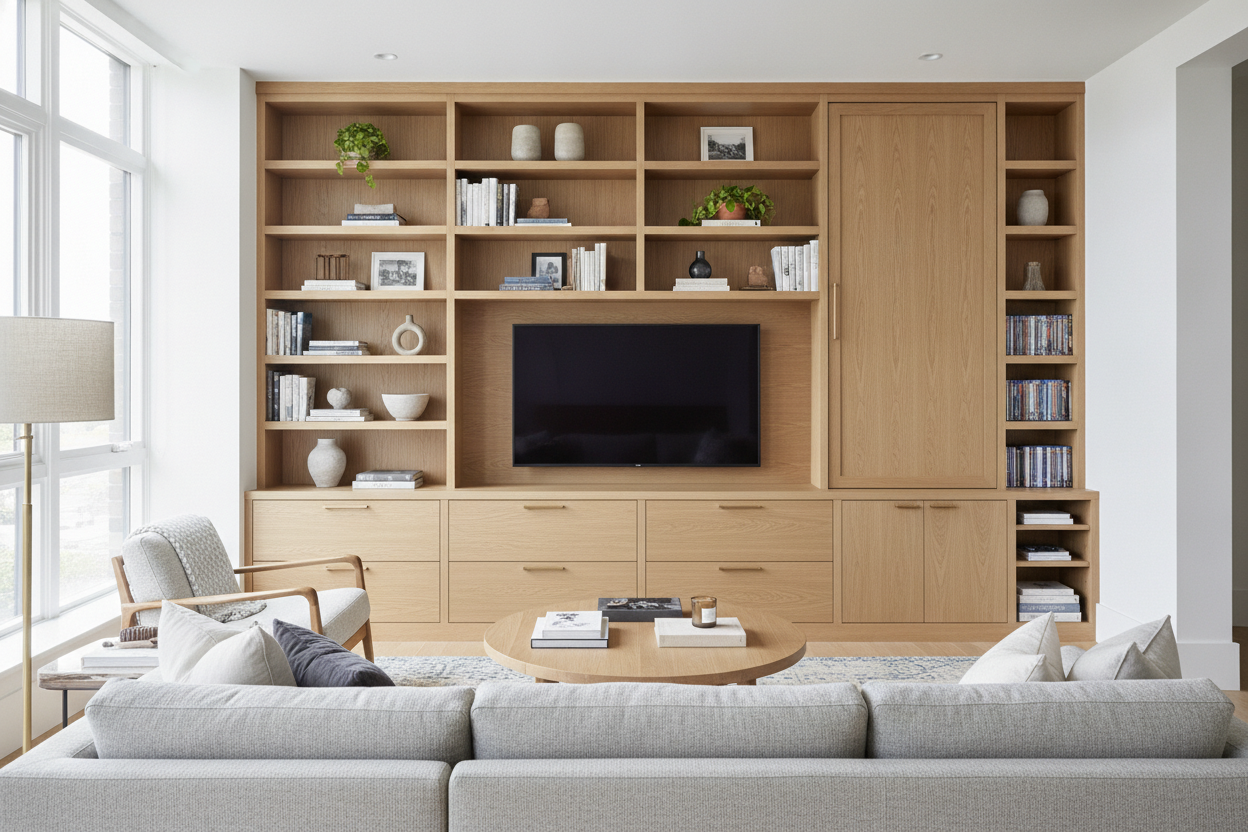
I spent years trying to live the 'airy' life. I bought a media stand so thin it practically vibrated when the cat walked past it. I thought it made my 12x15 living room look bigger. In reality, it just made every stray charging cable and dust bunny visible from the kitchen. I finally gave up and bought a real tv storage unit, and I’m never going back.
- Solid doors hide the 'tech nest' of cables and routers.
- Visual weight anchors a room better than spindly legs.
- Drawers are the only way to manage a collection of remotes.
- Open shelving is a full-time job in dusting and styling.
The 'Floating Console' Delusion
There is a specific lie we tell ourselves when browsing Pinterest: that we only own three beautiful coffee table books and a single, sculptural remote. The reality is much uglier. When I tried the minimalist look, my living room became a graveyard for things that didn't have a home. My 65-inch screen looked like it was hovering over a pile of chaos.
I realized open TV shelf storage was a mistake because it offered zero forgiveness for real life. If you have a gaming console, a soundbar, or even just a dog who likes to leave toys under the furniture, a 'floating' look is a nightmare. You end up seeing the wall behind the unit, which is usually just a mess of tangled black cords. It’s not minimalist; it’s just unfinished.
Why a Proper TV Storage Unit Is Actually More Minimalist
It sounds counterintuitive, but a larger piece of furniture actually makes a room look cleaner. Interior experts call it 'visual quiet.' When you have a solid, grounding piece like a black TV stand entertainment center, your eye has one place to land. It stops the 'clutter creep' where baskets and bins start colonizing the floor around a too-small stand.
A substantial cabinet swallows everything—the router, the extra controllers, the board games you only play once a year. By hiding those twenty small items inside one large, beautiful box, you reduce the 'visual noise' of the room. If you look at what designers actually think, they often suggest one large anchor piece to ground a wall rather than multiple small, floating items that make a space feel flighty and disorganized. My living room finally felt 'done' once I stopped trying to make the furniture disappear.
Drawers, Doors, and Hiding the Ugly Stuff
When shopping for your next unit, prioritize closed storage. You want deep drawers that can handle the height of a controller or a stack of Blu-rays (if you're still holding onto physical media like I am). Solid doors are your best friend. They allow you to be messy on the inside while looking like a sophisticated adult on the outside.
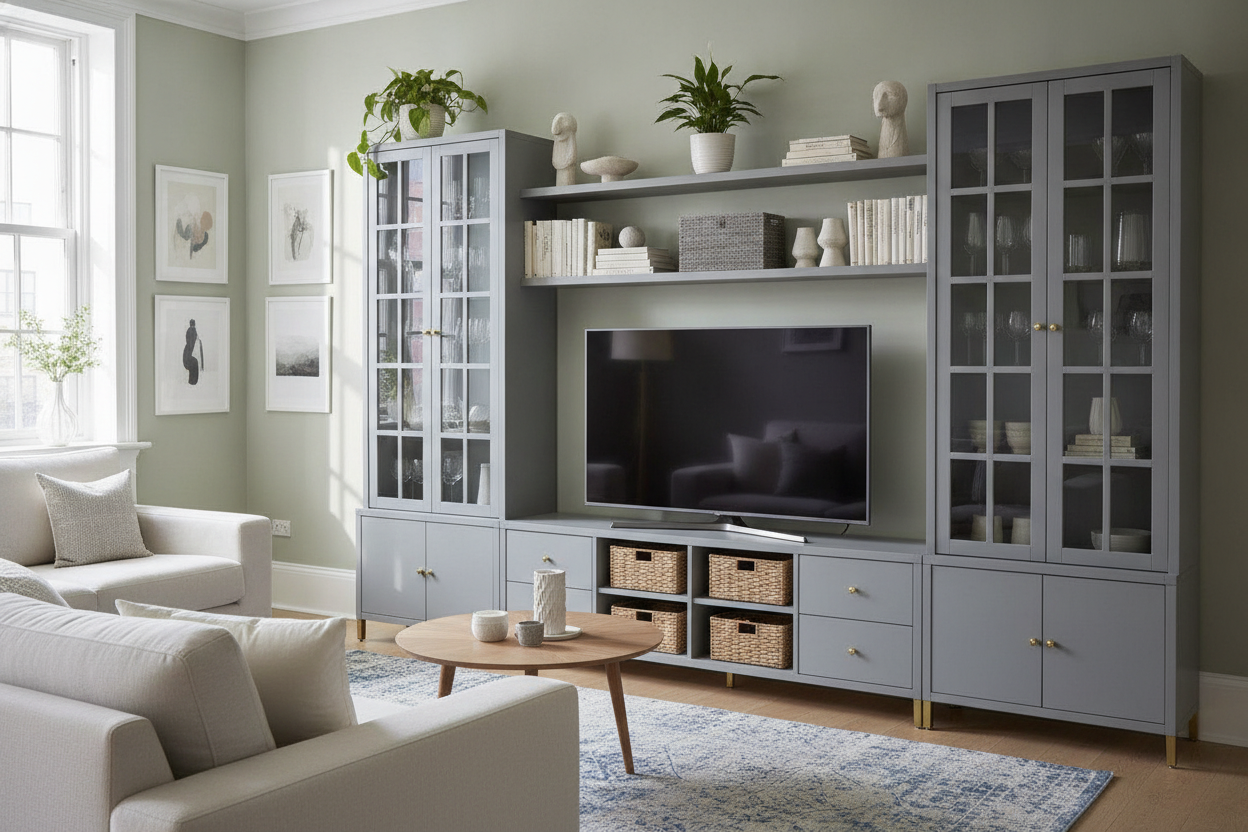
If you aren't ready for a total blackout look, a credenza with sliding glass doors can offer a middle ground. It provides that enclosed protection while letting you display a few curated items. Just make sure the glass is tinted or fluted so the messy cables for your soundbar aren't the star of the show. I learned the hard way that clear glass is just a window into your own failure to cable-manage.
The Problem With a Basic TV Shelving Unit
A standard tv shelving unit is a trap. You think you'll put cute plants and ceramics on those shelves, but you'll actually put the router there. Then you'll realize the router has four blinking lights and three yellow cables that look terrible against your white walls. Open shelves require aggressive styling and daily dusting. If you must go the shelf route, get adjustable shelf storage so you can at least tuck the ugly tech into a tight corner and leave the larger sections for things that actually look good.
How I Styled My Heavy-Duty Cabinet So It Doesn't Look Like 1995
The biggest fear people have with a substantial tv storage unit is that it will look like a '90s wall unit. You know the ones—massive, honey-oak monstrosities that ate the whole room. To keep it modern, use asymmetry. Don't put two identical lamps on either side of the TV. Instead, put a tall, structural plant on one side and a low tray of candles or a small piece of art on the other.
Keep the top surface relatively clear. The whole point of buying a unit with storage was to get things *off* the surfaces. Let the wood grain or the finish of the cabinet speak for itself. By leaving some 'negative space,' the furniture feels intentional and high-end, not like a bulky necessity. I also added a simple LED strip behind the unit to give it a soft glow at night, which makes the 'heavy' furniture feel like it's floating just a little bit, without the mess of a real floating stand.
Does a big unit make a small room look smaller?
Usually the opposite. One large, clean-lined piece looks more organized than five small pieces of furniture scattered around. It creates a focal point instead of clutter.
Should I wall-mount the TV above the unit?
Yes. It frees up the top surface for decor and keeps the screen at a better ergonomic height. Just make sure the unit is wide enough to 'frame' the TV properly—it should be at least 6-10 inches wider than the screen on both sides.
Are drawers better than cabinets?
Drawers are superior for small items like remotes and chargers because you can see everything from above. Cabinets are better for larger electronics that need airflow, like receivers or gaming consoles.

Laisser un commentaire
Ce site est protégé par hCaptcha, et la Politique de confidentialité et les Conditions de service de hCaptcha s’appliquent.