


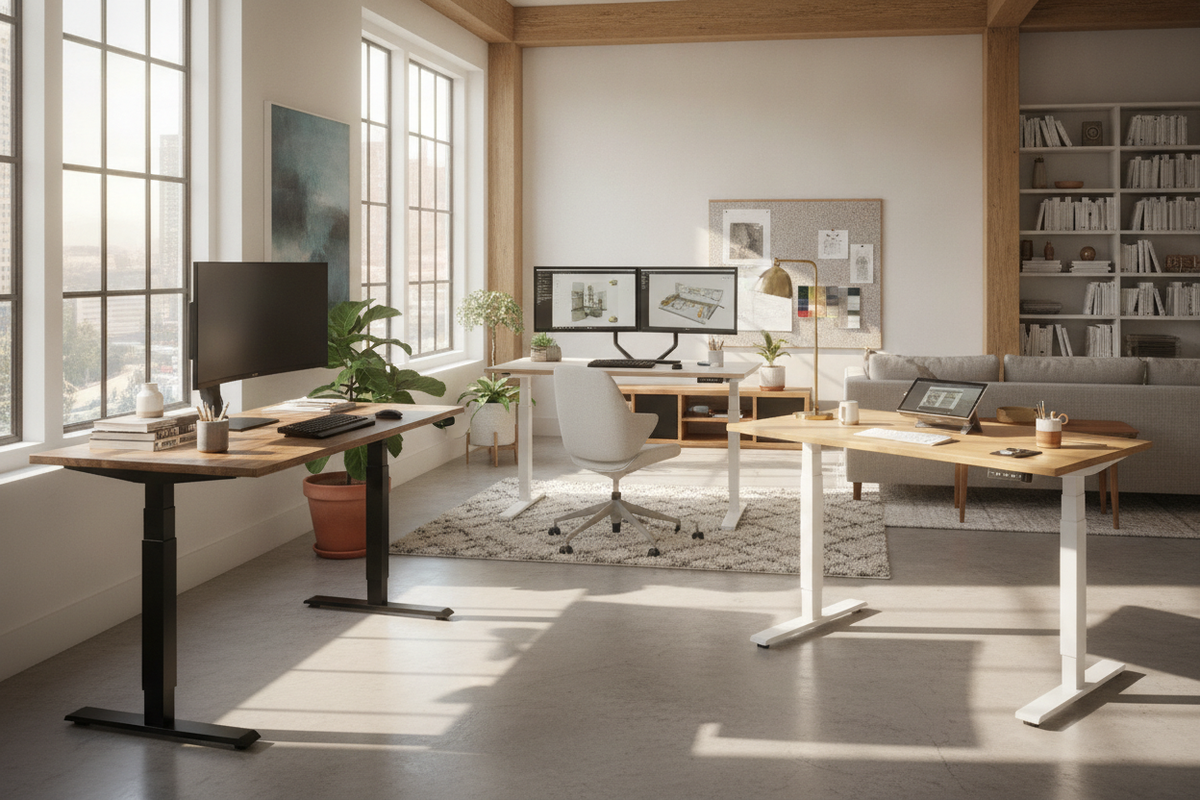
Height-adjustable workstations have reshaped modern work environments, bringing fluidity and movement to daily routines. While early ergonomic setups often felt clinical or overly utilitarian, today's interior design approaches prioritize blending mechanical versatility with refined residential styling. Designing an elevated workspace requires considering not only how a desk performs when rising and lowering, but how its materials, surrounding accents, and adjacent furnishings interact across varying sightlines.
By exploring purposeful versatile standing desk collections alongside curated accessories, it becomes possible to design an office environment that feels welcoming, architecturally balanced, and tailored to modern living.
Foundational Standing Desk Design Ideas: Balancing Movement with Interior Style
A well-considered workstation begins with intentional material selection and balanced proportions. When evaluating standing desk design ideas, looking past standard office aesthetics allows you to anchor the workspace in the broader character of your home.
Selecting Desktop Finishes and Frame Profiles
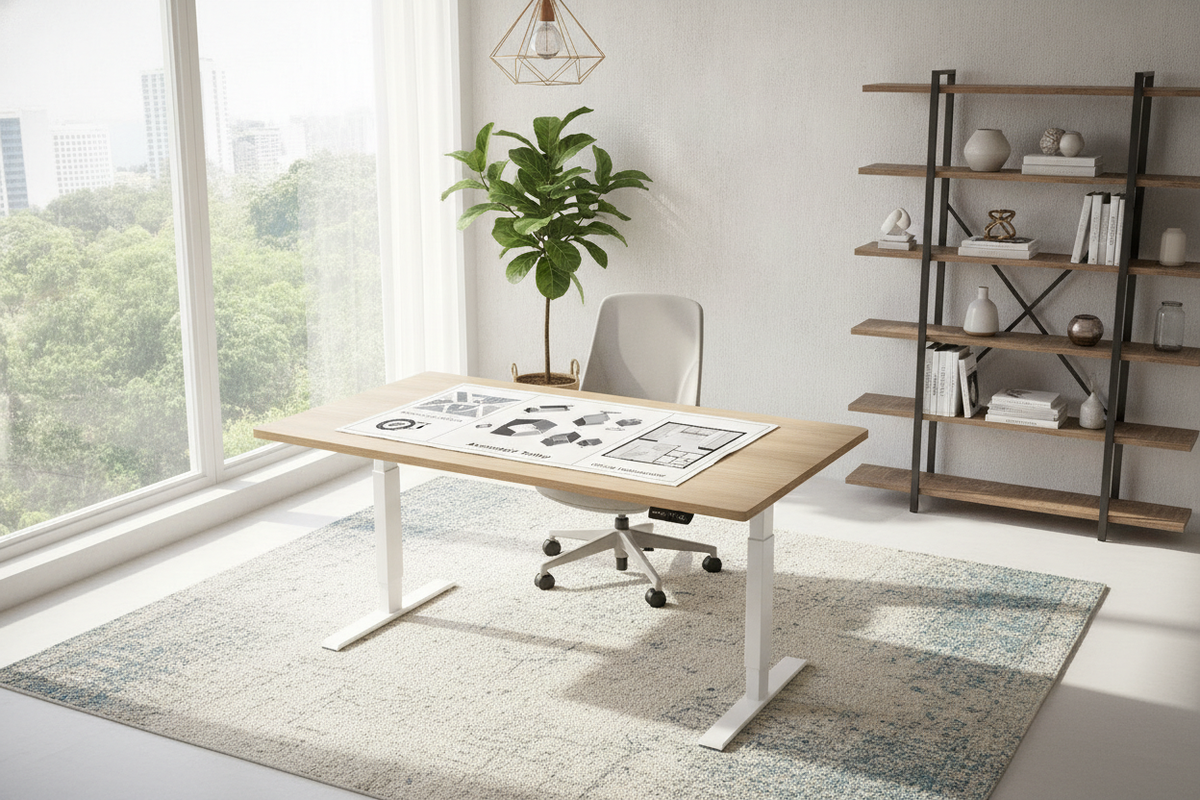
The desktop surface creates the visual baseline for your office. Rich wood grains—such as walnut, oak, and warm espresso—introduce natural texture and timeless warmth, softening the technical presence of motorized legs. In modern minimalist interiors, smooth matte finishes or crisp white laminates keep the room feeling expansive and light. Frame finishes, commonly available in powder-coated neutral tones like black, white, and brushed metallic, should harmonize with other architectural details in the room, including window trim, shelving hardware, and lighting fixtures.
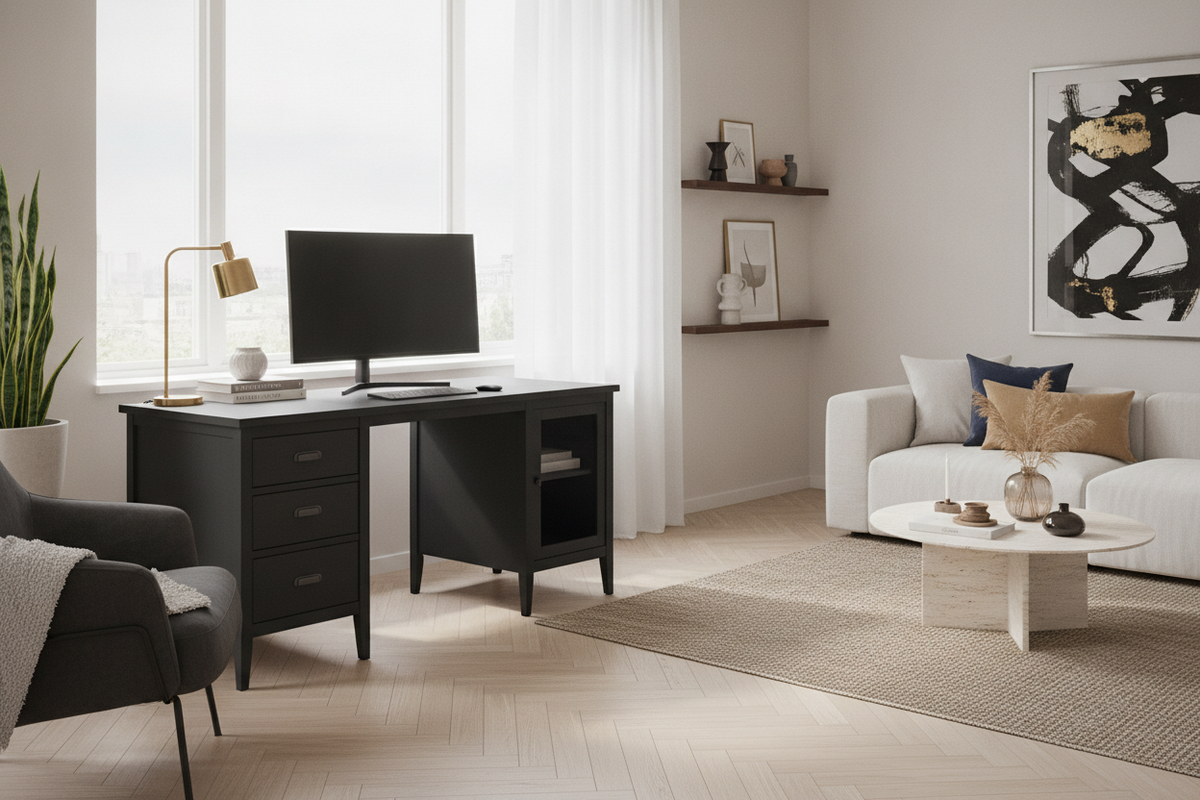
For rooms that serve multiple functions, incorporating diverse silhouettes adds visual intrigue. For example, contrasting an adjustable work table with a secondary sculptural writing desk silhouette across the room creates distinct visual zones without making the room feel repetitive or overly corporate.
Footprint Proportions and Surface Scale
The physical scale of your desk dictates the overall flow of the room. Compact widths are well suited for shared living spaces, alcoves, or multi-use guest bedrooms, offering focused utility without overwhelming the room's visual weight. Conversely, larger rectangular surfaces accommodate multi-monitor displays, analog writing pads, and decorative lighting without feeling crowded. The key is ensuring that the desk frame supports balanced proportions across the desktop, preventing top-heavy appearances when extended upward.
Curating Standing Desk Decor Ideas: Intentional Styling for Dynamic Workspaces
Styling an adjustable desk introduces unique design considerations. Because the desktop shifts positions throughout the day, accessories must be stable, intentional, and visually cohesive at every height level. Exploring thoughtful curating desk decor and organization strategies helps balance beauty and practical everyday utility.
Low-Profile Organization and Catchall Trays
Tall, fragile accessories can easily topple during elevation transitions. Instead, focus on low-profile organization tools that remain grounded and secure. Structured leather desk pads, carved wooden pencil trays, and ceramic catchalls keep everyday essentials contained while introducing tactile warmth. Grouping small items onto a dedicated tray creates clear functional zones and maintains a composed appearance whether viewed from a seated vantage point or across the room at full height.
- Ceramic or stone dishes: Ideal for paper clips, thumb drives, and compact accessories.
- Substantial desk blotters: Anchor keyboard setups, protect the work surface, and define the central focus of the work area.
- Weighted desktop accents: Solid paperweights and low brass holders provide visual interest without tipping hazards.
Biophilic Accents and Multi-Tier Task Lighting
Integrating natural elements softens the geometric lines of technology. Low-maintenance greenery—such as trailing pothos in broad-base ceramic pots, succulents, or architectural snake plants—injects vitality into the work environment. Positioning plants near the perimeter of the desk frames the primary monitor without impeding arm travel.
Lighting should similarly adapt to shifting desk heights. An adjustable articulating desk lamp mounted directly to the desk keeps illumination consistent as the surface travels. Pairing directional task lights with warm ambient background illumination, such as a floor lamp or wall sconce, prevents stark contrast and preserves an inviting atmosphere throughout the evening.
Storage Architecture for Adjustable Workstations
A primary challenge with motorized furniture is the absence of traditional pedestals and modesty panels, which can sometimes leave work surfaces vulnerable to clutter. Developing an intentional storage plan around your workstation ensures tools stay close at hand while preserving clean architectural lines.
L-Shaped Layouts and Integrated Cabinetry
For individuals managing complex workflows, extensive paperwork, or multi-screen setups, an expanded corner layout provides significant utility. An L-shaped electric standing desk with side storage offers an expansive executive presence while directly solving storage needs. Having dedicated drawer banks and shelving built into an adjacent return allows the main working surface to remain clutter-free, preserving a calm and focused atmosphere.
Mobile Pedestals and Adjacent Wall Credenzas
When working with a standard rectangular desk, detached storage pieces offer unmatched flexibility. Low-profile rolling filing pedestals slide neatly beneath the desktop when seated and remain accessible when the desk is elevated. Alternatively, positioning a matching credenza or sideboard along an adjacent wall preserves the perimeter of the room, keeping office supplies, printers, and document archives easily reachable without cluttering the moving footprint of the desk.
Room Positioning and Spatial Clearance Strategies
Where an adjustable desk sits within a room profoundly impacts both safety and design harmony. Height-adjustable furniture moves dynamically, meaning space planning must account for three dimensions rather than just a two-dimensional floor footprint.
Wall Spacing and Vertical Travel Envelopes
Positioning a desk flush against a wall requires careful attention to avoid surface scrapes and pinched cords. Leaving a modest perimeter gap prevents desktop accessories, monitor arms, and cables from contacting wall finishes, framed artwork, or window sills during height adjustments. Cable management sleeves and under-desk power strips are essential here; securing wires directly to the underside of the desk surface ensures that cables rise and lower smoothly without catching on nearby baseboards or furniture.
Floating Island Layouts Versus Perimeter Nooks
Deciding between a floating desk and a perimeter arrangement influences the broader flow of your room:
- Floating island configurations: Positioning the desk in the center of the room facing the entrance creates an executive presence. In this setup, clean cable routing and an aesthetic modesty panel or cable tray become central design elements, as the rear of the desk remains visible from the doorway.
- Perimeter and alcove placement: Tucking an adjustable desk into a recessed nook or alongside a wall optimizes square footage in compact rooms. This approach allows surrounding walls to be styled with floating shelves, pinboards, or custom wall panels that frame the desk seamlessly.
By thoughtfully coordinating surface finishes, intentional decor elements, tailored storage units, and spatial layout, a dynamic workstation transforms from a purely practical office fixture into a sophisticated, inspiring centerpiece of the home.

Laisser un commentaire
Ce site est protégé par hCaptcha, et la Politique de confidentialité et les Conditions de service de hCaptcha s’appliquent.