


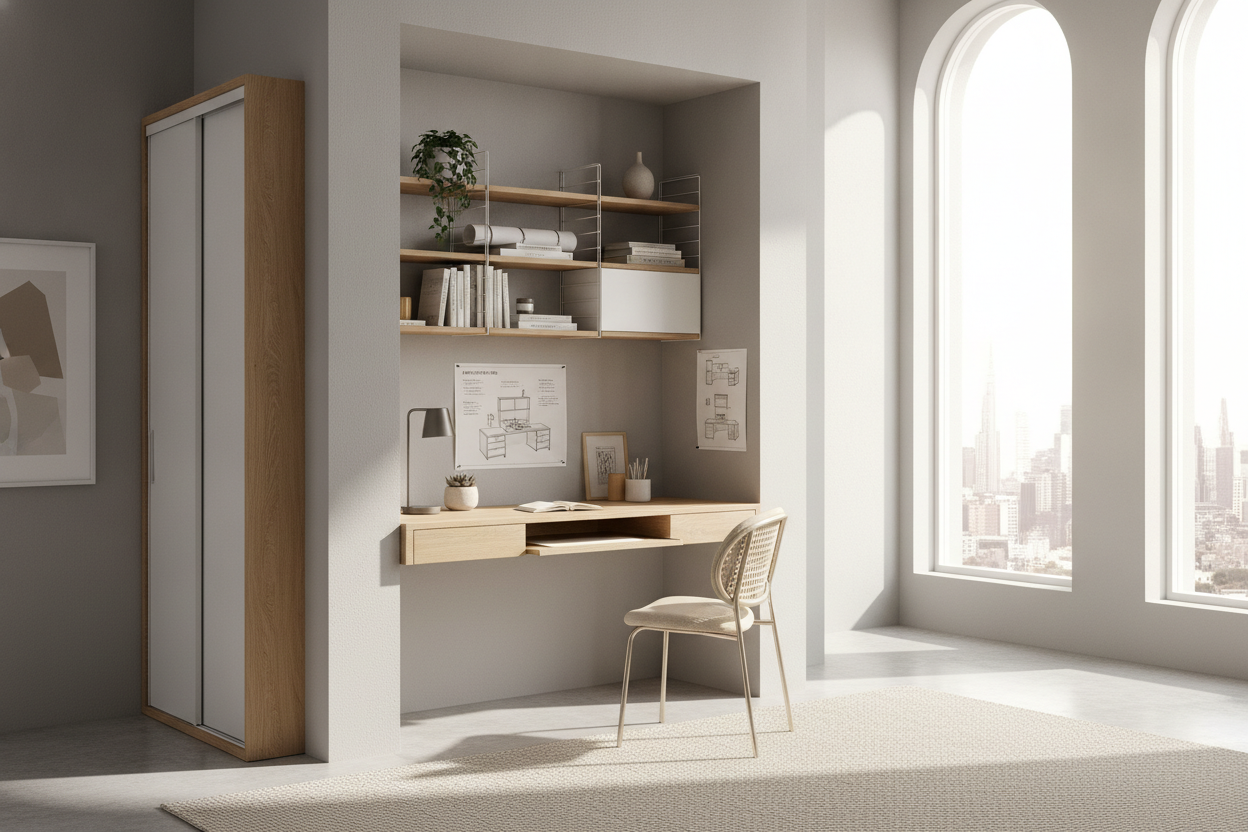
Creating a productive work zone inside a compact home requires balancing surface area with everyday movement. When square footage is tight, a desk cannot simply be placed against the nearest wall without considering circulation paths, natural light, and storage needs. Selecting the right compact workstation involves evaluating room geometry, spatial zoning, and structural desk styles.
Whether you are outfitting a studio apartment, a multi-purpose guest room, or a bedroom alcove, exploring comprehensive space saver desk guide concepts will help you craft a dedicated work area without overwhelming your living environment.
Rethinking Compact Workstations: Core Principles of Small-Space Planning
Before selecting a desk, understanding how furniture occupies physical and visual space in small rooms is essential. A desk that fits on paper can still make a room feel cramped if its proportions dominate visual sightlines.
Floor Clearance vs. Usable Surface Area
Every compact workstation represents a trade-off between the floor footprint it occupies and the desktop area it provides. Open-leg frames, floating designs, and slim side profiles keep floor surfaces visible, which helps maintain an airy feel in tight bedrooms and living rooms. Conversely, bulky side panels block floor visibility and can make compact quarters feel visually crowded.
Primary Sightlines and Visual Weight in Small Rooms
In multi-use rooms, workstations should harmonize with surrounding furniture rather than compete with it. Choosing finishes that blend with wall colors or matching wood tones across existing shelving reduces visual clutter. Positioning the workstation away from entry doorways ensures open pathways and seamless movement throughout the home.
Structural Desk Typologies for Tight Footprints
Different structural designs solve unique architectural constraints. Exploring specialized furniture from a curated small space collection can reveal functional options tailored to narrow nooks and awkward corners.
Wall-Mounted and Floating Workstations
Floating desks mount directly to wall studs, eliminating floor legs entirely. This setup frees up floor area below the worktop for small footrests, low bins, or open legroom. Floating configurations work well in shallow niches, long hallways, or bedroom corners where floor obstacles must be minimized.
Corner and Wedge Profiles for Unused Angles
Corner areas often become dead zones in compact rooms. Triangular or L-shaped corner desks utilize intersecting walls to provide generous desktop depth for monitors while keeping the outer edge unobtrusive to room traffic.
Integrated Storage Cabinets and Fold-Out Surfaces
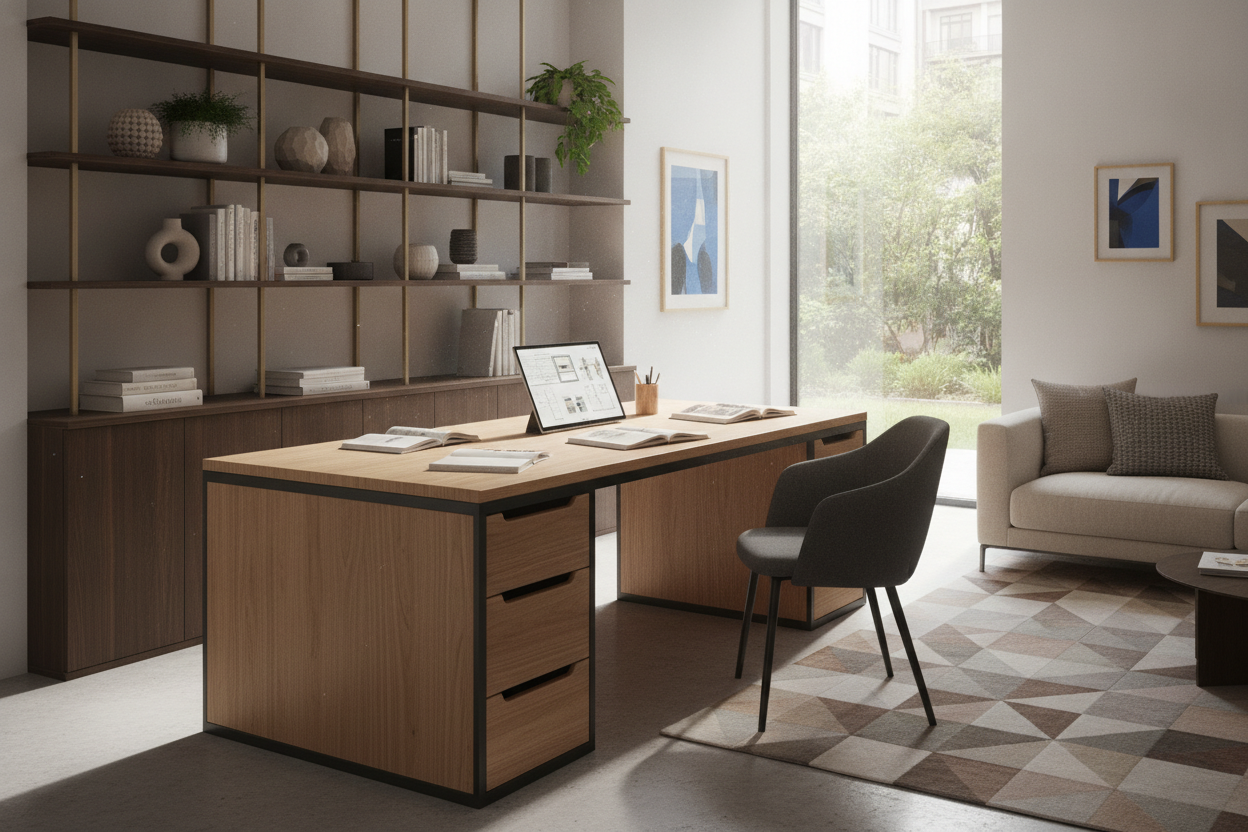
Desks paired with storage credenzas or tall cabinets provide self-contained organization. Options like an integrated office desk product consolidate document storage, stationery drawers, and a primary work surface into a single cohesive unit, reducing the need for separate side tables or filing drawers.
Shallow-Depth Desks for Hallways and Narrow Nooks
Standard executive desks often extend deep into a room, consuming precious walking clearance. Shallow-profile desks offer ample width for typing and writing while maintaining a slim depth, making them ideal alongside beds, behind sofas, or in transitional hallway alcoves.
Room-by-Room Small Desk Configurations
Adapting your desk layout to specific room functions ensures your home remains organized and comfortable during both work hours and leisure time.
Small Bedroom and Bedside Conversions
In compact bedrooms, a dual-purpose desk can serve as both a worktable and a nightstand. Placing a slim desk directly beside the bed provides space for a task lamp, alarm clock, and laptop, replacing a traditional single-function bedside table.
Living Room Multi-Zone Workstations
In open living areas or studio flats, zone division is key. Positioning a compact writing desk behind a sofa back creates a natural room divider while keeping work accessories tucked away from primary entertainment seating.
Closet and Alcove Built-In Solutions
Unused closets, recessed architectural alcoves, and spaces beneath staircases offer natural boundaries for compact offices. Fitting a desk surface into an alcove creates a distinct micro-office that can be paired with overhead floating shelves to fully exploit wall height.
Maximizing Usable Space: Vertical Organization and Under-Desk Architecture
When horizontal square footage is limited, vertical storage becomes the primary solution for maintaining a clear work surface.
Tiered Shelving, Hutches, and Overhead Racks
A desk equipped with an integrated hutch or wall-mounted shelving overhead draws organization upward. Pairing your setup with dedicated pieces from an office study collection allows reference books, secondary monitors, and decorative accents to sit elevated above the desktop, keeping the primary workspace free of clutter.
Under-Desk Knee Clearance and Mobile Pedestals
Maintaining adequate legroom is vital for seated comfort. When using storage bins or slim drawer pedestals under a desk, position them along the outer side panels so your knees and chair can slide freely beneath the center of the worktop.
Cable Routing and Surface Offloading Tactics
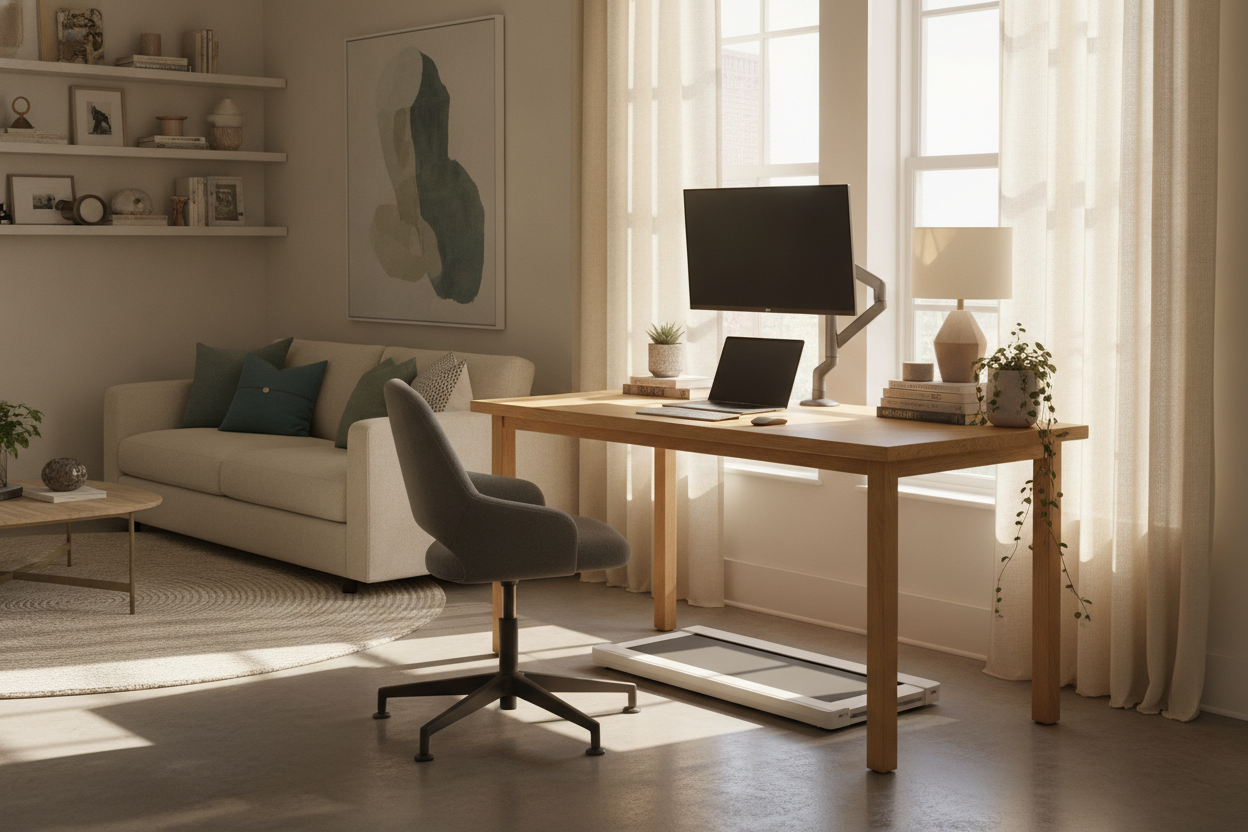
Tangled power cords and power bricks quickly clutter small desktops. Implementing under-desk cable management trays, monitor arms, and clip-on power strips lifts peripheral hardware off the desk surface. For additional organizational strategies, consult an office setup desk guide to streamline your daily workflow.
Material Selection, Frame Durability, and Assembly Considerations
Choosing durable, easy-to-clean materials ensures your compact workstation withstands daily tasks, study sessions, and creative projects.
Engineered Wood vs. Metal Framing in High-Traffic Spaces
Desks built with sturdy engineered wood surfaces and powder-coated steel leg frames combine visual warmth with structural rigidity. Metal frame braces prevent wobbling on carpeted or hard flooring, while smooth laminate surfaces resist everyday scuffs, spills, and pen marks.
Hardware Quality, Wall Anchors, and Load Distribution
For floating desks, tall hutches, or wall-anchored shelving units, securing brackets into structural wall studs is vital. Distributing weight evenly across vertical supports ensures stability when supporting books, monitors, and desk accessories.
A Systematic Decision Framework for Selecting Your Small Desk
Use this practical checklist to evaluate your space before purchasing and assembling a compact desk:
- Measure Circulation Paths: Ensure at least enough clearance behind the desk for pulling out a chair comfortably without bumping into walls or doorways.
- Account for Door Swings: Check that nearby bedroom doors, closet doors, and drawers can open fully without hitting the desk frame.
- Audit Your Daily Hardware: Match desk dimensions to your essential gear, whether using a single laptop, dual displays, or a desktop organizer.
- Plan Power Access: Position your workstation near wall outlets to minimize loose cords trailing across footpaths.
By assessing your available room geometry, prioritizing vertical storage, and choosing a desk tailored to your room layout, you can build a streamlined, highly functional workspace in any compact setting.

Laisser un commentaire
Ce site est protégé par hCaptcha, et la Politique de confidentialité et les Conditions de service de hCaptcha s’appliquent.