


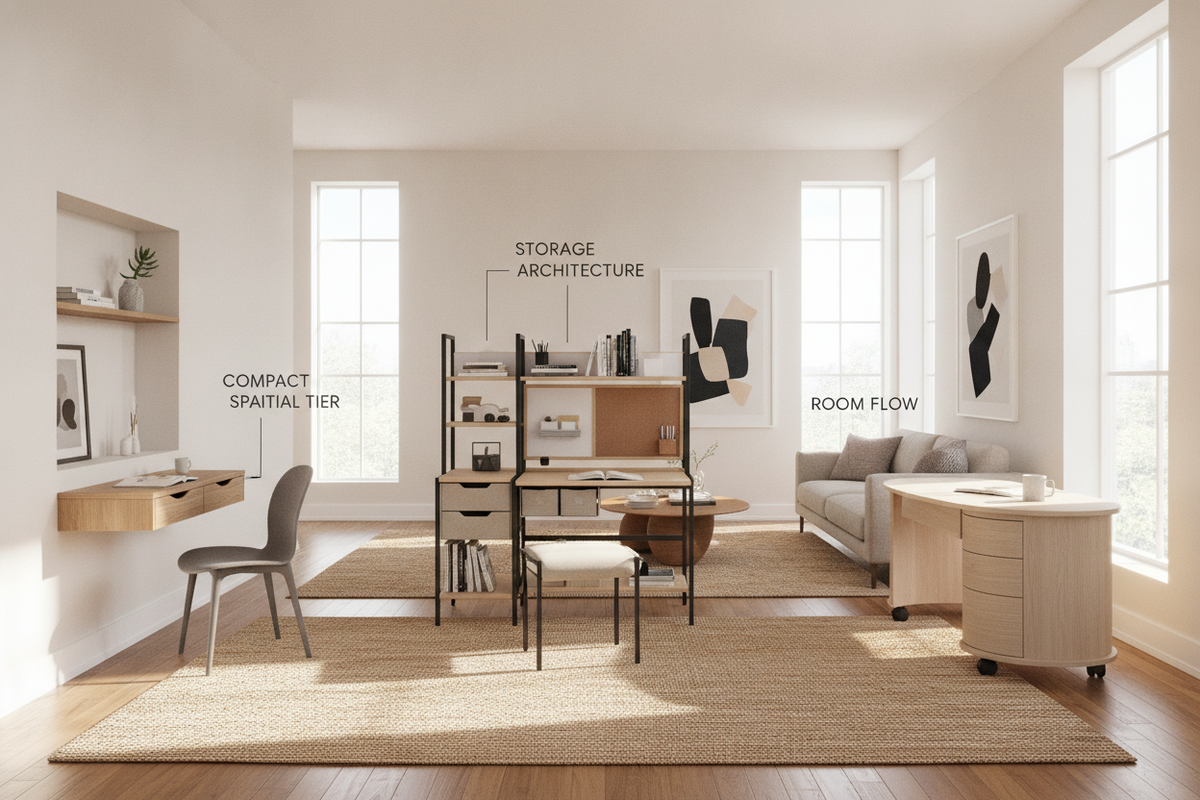
Finding the ideal small desk requires balancing compact physical dimensions with functional everyday workspace. In apartments, shared bedrooms, and multi-use living rooms, standard executive desks overwhelm floor space and disrupt daily circulation. Choosing a well-proportioned desk for compact space environments enables productive remote work and study routines without cluttering your home.
Understanding the Small Desk Footprint: Spatial Tiers and Clearance Planning
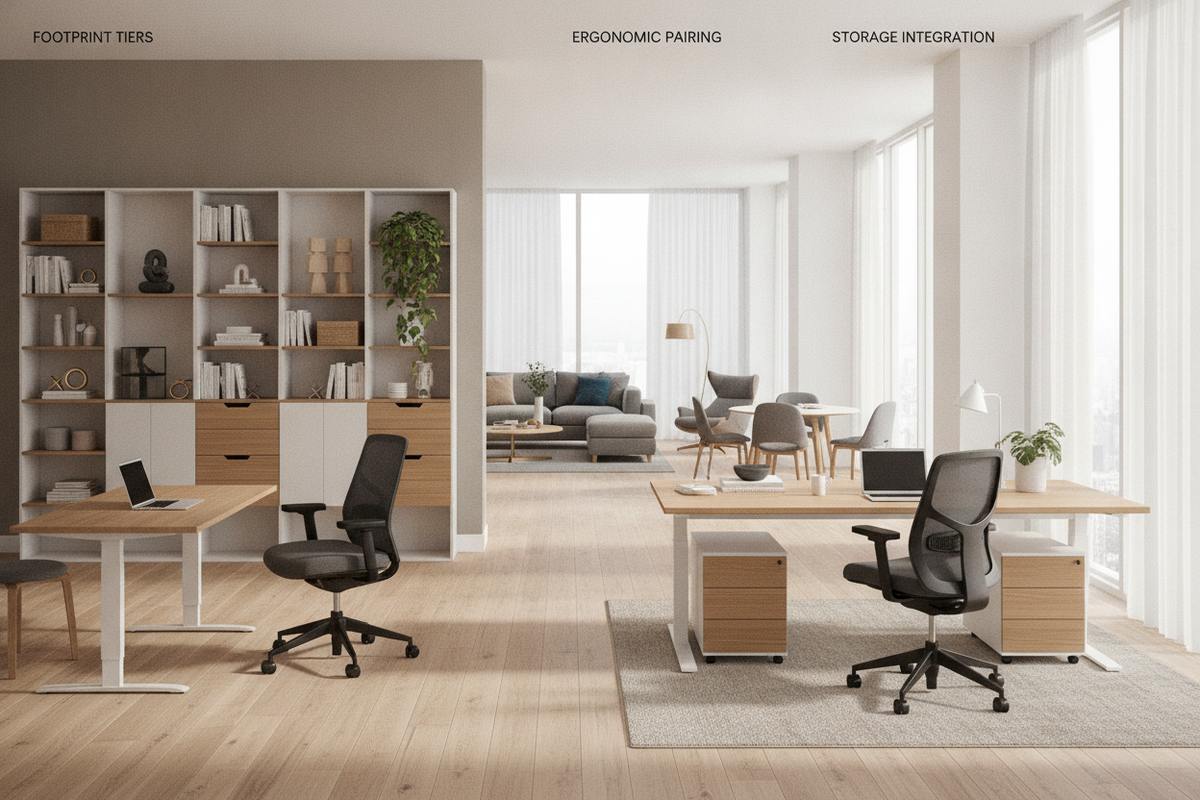
When selecting a small work desk, analyzing your room layout by spatial tiers helps prevent spatial congestion. Compact desk silhouettes generally fall into three distinct dimensional formats:
- Micro Tier: Widths under thirty-two inches. These minimalist profiles are designed for tight alcoves, narrow hallways, and bedside positions where only a laptop and notebook are required.
- Mid-Compact Tier: Widths between thirty-two and thirty-six inches. This standard footprint accommodates an external monitor, compact keyboard, and basic stationery while preserving clearance in average bedrooms.
- Small-Scale Upper Tier: Widths between thirty-six and forty inches. These desks offer expanded surface area and integrated drawer pedestals while remaining small enough for secondary bedroom corners.
Beyond desktop width, depth and peripheral clearance dictate whether a small footprint desk functions smoothly. A surface depth of twenty to twenty-four inches provides adequate monitor viewing distance while leaving walkway corridors open. For detailed micro-layout ideas, consult our tiny desk tight guide to plan precise footprint boundaries before purchasing.
Room Fit and Placement Strategies for Tight Workspaces
Integrating a desk for a small room requires thoughtful placement relative to natural lighting, door swings, and existing furniture. A dedicated small room desk can be placed in several functional zones:
- Window Cutouts: Positioning a slim desk directly beneath a window sill maximizes daylight exposure and capitalizes on often-underutilized wall perimeter space.
- Bedside Transitions: Replacing a traditional nightstand with a multipurpose small desk for small room setups provides dual-purpose utility in micro bedrooms.
- Architectural Alcoves: Recessed nooks between structural pillars or closets create natural boundary lines for a dedicated study zone.
When zoning a multifunctional bedroom, pairing your workspace with streamlined storage solutions like a compact space saving product maintains visual cohesion and prevents visual clutter from dominating the room.
Storage Architecture: Balancing Surface Area and Vertical Capacity
A major design challenge with any desk for small space with storage is maintaining an open, uncluttered writing area. When surface square footage is limited, vertical storage architecture becomes essential.
A well-engineered small space desk with storage incorporates tiered vertical hutches, floating riser shelves, or shallow under-top utility drawers. Riser shelves elevate monitors to eye level while liberating the desktop underneath for keyboards and notebooks. For setups requiring extensive document filing, supplementing your desk with dedicated units from an office study storage collection ensures your primary work surface remains dedicated strictly to active tasks.
Desk Geometry and Form Factors: Slimline, Square, Corner, and Floating
Desk geometry plays a pivotal role in room ergonomics. A narrow desk for small space applications features a slim rectangular profile that sits flush against long perimeter walls, preserving wide center walkways. Alternatively, corner-wedge desks make active use of underutilized room corners.
If your room features angled perimeter walls, exploring a minimalist office computer product can demonstrate how corner geometries wrap seamlessly around room boundaries without encroaching on central walking paths. For open-concept studios, a small square desk or modular writing console provides a clean, unobtrusive visual profile.
Material Selection, Structural Stability, and Surface Durability
Because a compact office desk experiences concentrated daily wear on a smaller surface area, material construction is critical. Premium engineered wood with scratch-resistant melamine or laminate veneers provides resistance against coffee spills, pen marks, and heat. Powder-coated steel leg chassis deliver structural rigidity without the bulky visual weight of solid panel sides.
When selecting multipurpose furniture that bridges work and dining in tight studios, comparing multi-use design approaches in our space saving sets guide can help you identify resilient materials suited for continuous everyday use.
Assembly Protocol and Ergonomic Optimization for Small Workstations
Setting up a stable small work station requires careful assembly and ergonomic alignment. Follow these foundational guidelines during installation:
- Leveling Adjustments: Utilize adjustable bottom foot glides to compensate for uneven floorboards, preventing workstation wobble.
- Hardware Fastening: Hand-tighten all cam locks and frame bolts during initial positioning, completing final torque tightening only after the desk is fully squared.
- Cable Management: Install adhesive cable clips and under-desk power strips along the rear structural rails to prevent power cords from cluttering legroom.
- Seating Clearance: Ensure your office chair arms can slide smoothly beneath the desktop apron to tuck the chair away when not in use.
By assessing dimensional tiers, prioritizing vertical storage, and selecting sturdy materials, you can create an efficient, comfortable workstation tailored to your compact home.

Laisser un commentaire
Ce site est protégé par hCaptcha, et la Politique de confidentialité et les Conditions de service de hCaptcha s’appliquent.