


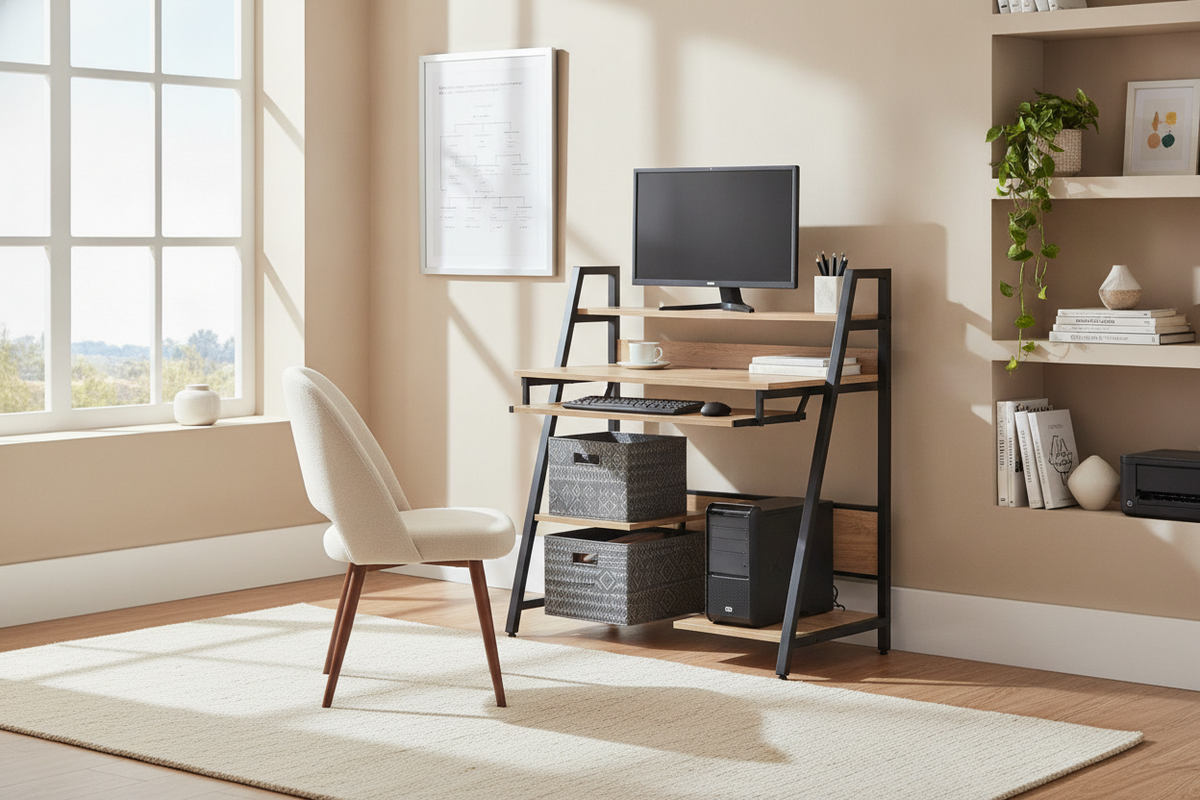
Evaluating Small Computer Desks Online: Key Space-Planning Challenges
Browsing through online listings for a small computer desk on amazon can present distinct spatial hurdles. Online product imagery often obscures true spatial proportions, making a workstation appear either expansive or impossibly miniature depending on the staging props and camera angles. Successfully buying a compact workspace begins by distinguishing between the usable desktop surface and the total architectural footprint on your floor.
When planning a home office in tight quarters, measuring floor clearance is only the initial step. You must also account for chair pullback radius, elbow room, cable drop zones, and legroom depth. A thorough online furniture selection guide emphasizes verifying dimensions across width, depth, and vertical clearance to ensure the table harmonizes with adjacent furnishings without obstructing walkways or door swings.
Dimensional Footprint Categories for Compact Workspaces
Compact workstations generally divide into distinct dimensional tiers tailored to specific computing requirements and floor allowances. Identifying the right tier prevents purchasing a surface that overcrowds an alcove or proves too cramped for your computing gear.
- Ultra-Compact Micro Tables: Engineered for single-device tasks such as laptop computing or tablet work. These narrow profiles suit tight hallway nooks or small bedroom corners where floor space is exceptionally constrained.
- Standard Compact Writing Desks: Offering a balanced middle ground, these models provide sufficient depth for a standalone monitor and compact keyboard while keeping overall width restrained. Exploring dedicated writing and computer desks within this category helps balance task utility with minimal spatial encroachment.
- Narrow-Depth Linear Workstations: Designed with extended width but slim depth, these surfaces allow multiple peripherals to sit side-by-side along an accent wall without projecting far into the room's central flow.
Fixed-Frame vs. Folding Desk Mechanics: Selecting the Right Architecture
When selecting a small computer table amazon listing, one fundamental architectural choice lies between static four-leg frames and collapsible folding structures. Each structural style addresses different living patterns and durability requirements.
Fixed-frame desks utilize continuous metal or wooden uprights, often reinforced with diagonal tension rods or crossbeams. This rigid construction minimizes lateral wobble during intensive typing and easily accommodates clamp-mounted monitor arms. Conversely, folding desks feature hinged leg assemblies that fold flat without tools. While folding models provide unmatched versatility for multi-purpose rooms or temporary study areas, they trade off some structural rigidity and weight capacity. For households prioritizing a completely concealed workstation after work hours, considering space-saving enclosed desk alternatives can also provide an elegant aesthetic solution.
Material Selection, Hardware Integrity, and Assembly Verification
The longevity and tactile quality of a compact desk depend directly on its materials and joinery hardware. Because small desks experience concentrated daily wear, scrutinizing specifications before buying is essential.
Surface Substrates and Finishes
Most compact desks feature engineered wood cores, such as medium-density fiberboard or particleboard, shielded with melamine or laminate overlays. These surfaces offer scratch resistance and easy cleaning. For those seeking classic warmth and long-term refinishing capability, investing in a solid wood writing desk provides natural grain beauty and resilient structural mass.
Framing and Leveling Components
Metal desk bases should incorporate welded joints, powder-coated steel tubing, and adjustable leveling glides. These threaded feet are crucial for stabilizing the desk on uneven hardwood or carpeted floors, eliminating unwanted rocking without requiring makeshift shims.
Integrating Storage Synergy in Small Footprint Desks
A minimalist work surface quickly becomes cluttered without dedicated storage strategies. Selecting a desk with integrated shelving or pairing it with companion organizers keeps desktop real estate open for productive tasks.
Integrated storage designs often include lower CPU platforms, elevated hutch shelving, or side storage bags. Alternatively, opting for an integrated corner desk with storage utilizes underutilized corner geometry to deliver substantial organization without encroaching outward. If your chosen desk features open leg space, pairing it with a slim mobile filing pedestal or mounting floating wall shelves above the monitor preserves an uncluttered, modern aesthetic.
Room Fit Guidelines: Bedroom Nooks, Studio Alcoves, and Living Zones
Positioning a small computer desk on amazon within mixed-use spaces requires thoughtful planning around natural lighting, electrical outlets, and room zoning.
- Bedroom Niches: Place the desk parallel to windows to maximize daylight while minimizing direct glare on display screens. Maintain comfortable clearance between the chair back and bed frame.
- Studio Alcoves: Use architectural cutouts or recessed walls to frame the workstation. Open-leg metal frames maintain visual lightness, helping small studio apartments feel spacious.
- Living Room Corners: Blend the desk finish with existing media units or sideboards to maintain a cohesive interior palette while establishing a distinct productive zone.

Laisser un commentaire
Ce site est protégé par hCaptcha, et la Politique de confidentialité et les Conditions de service de hCaptcha s’appliquent.