
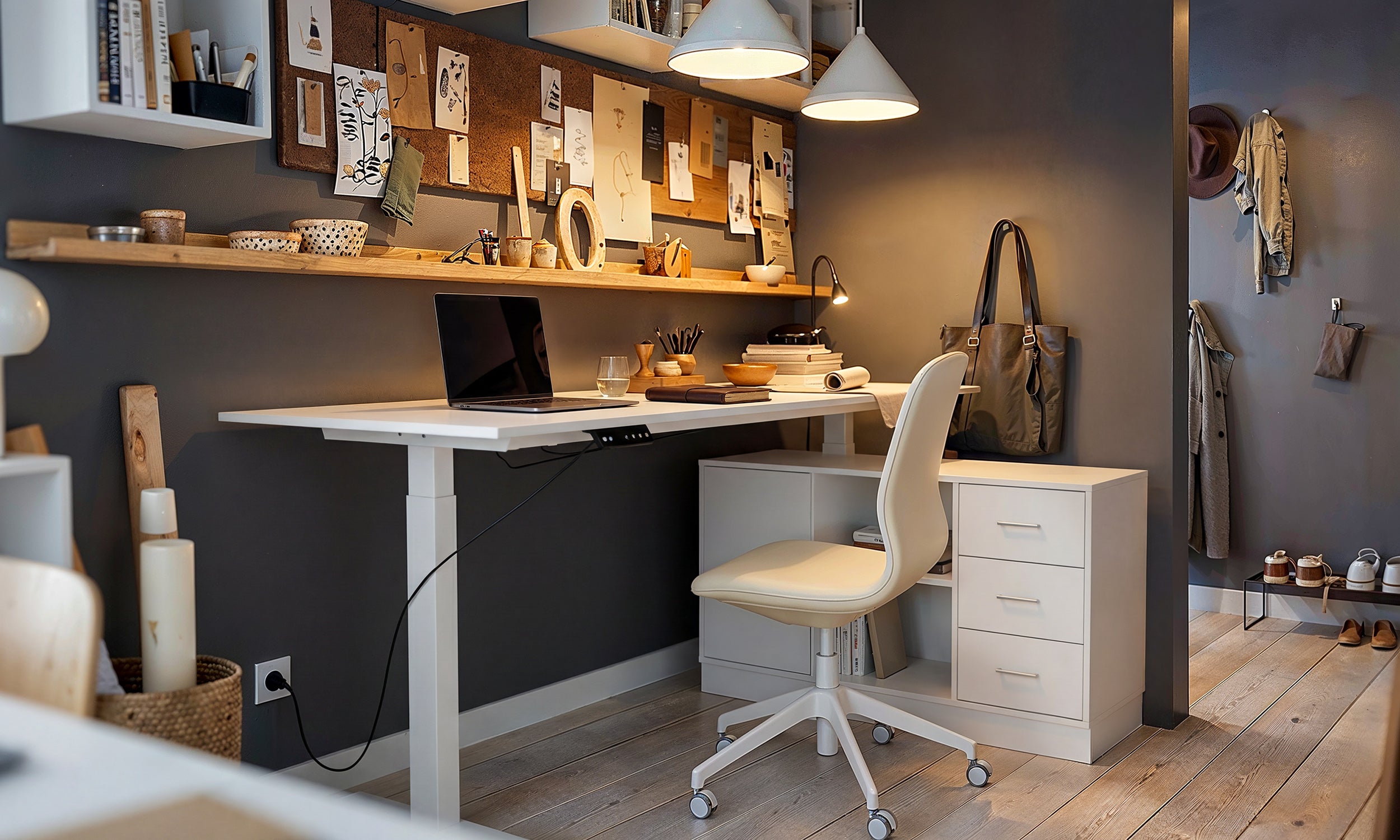
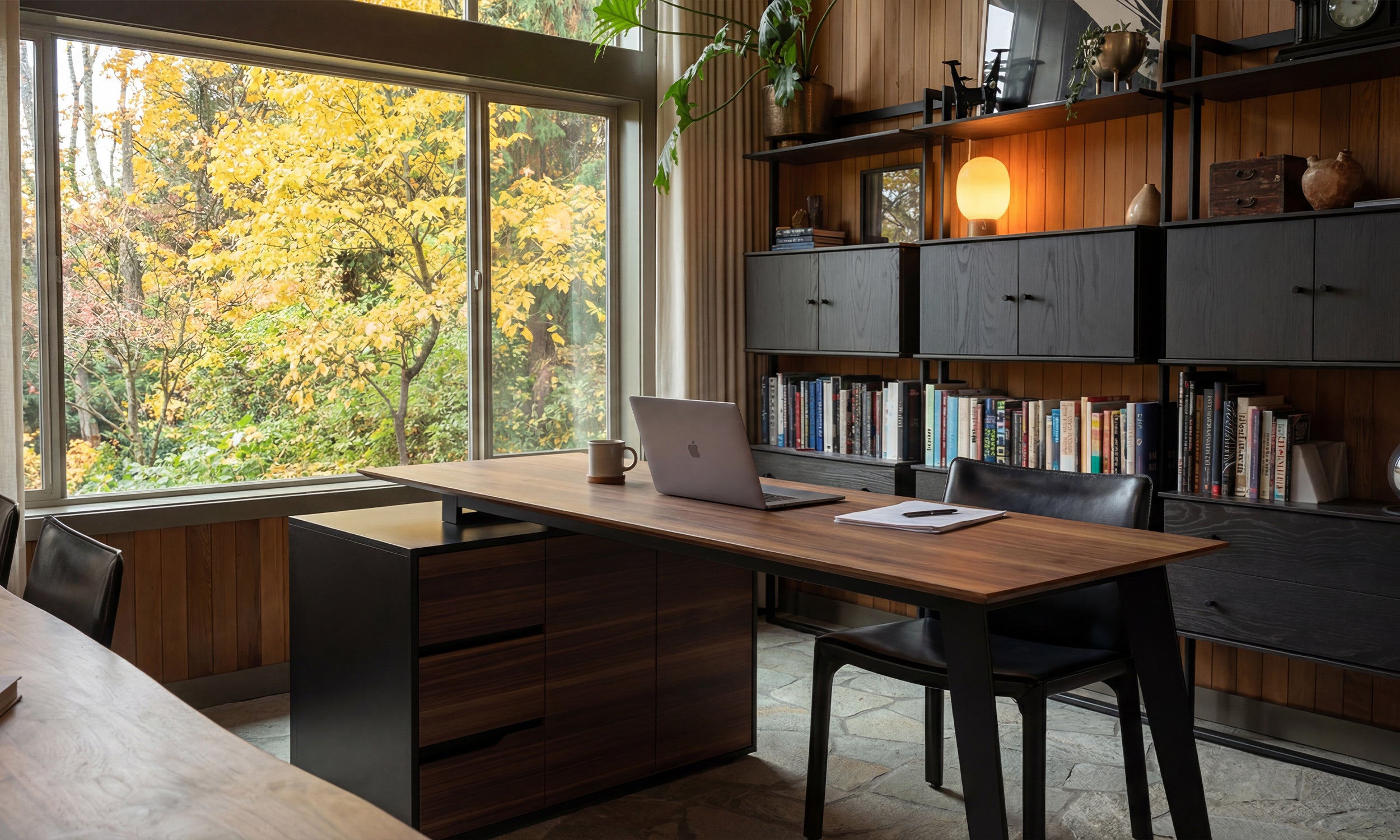
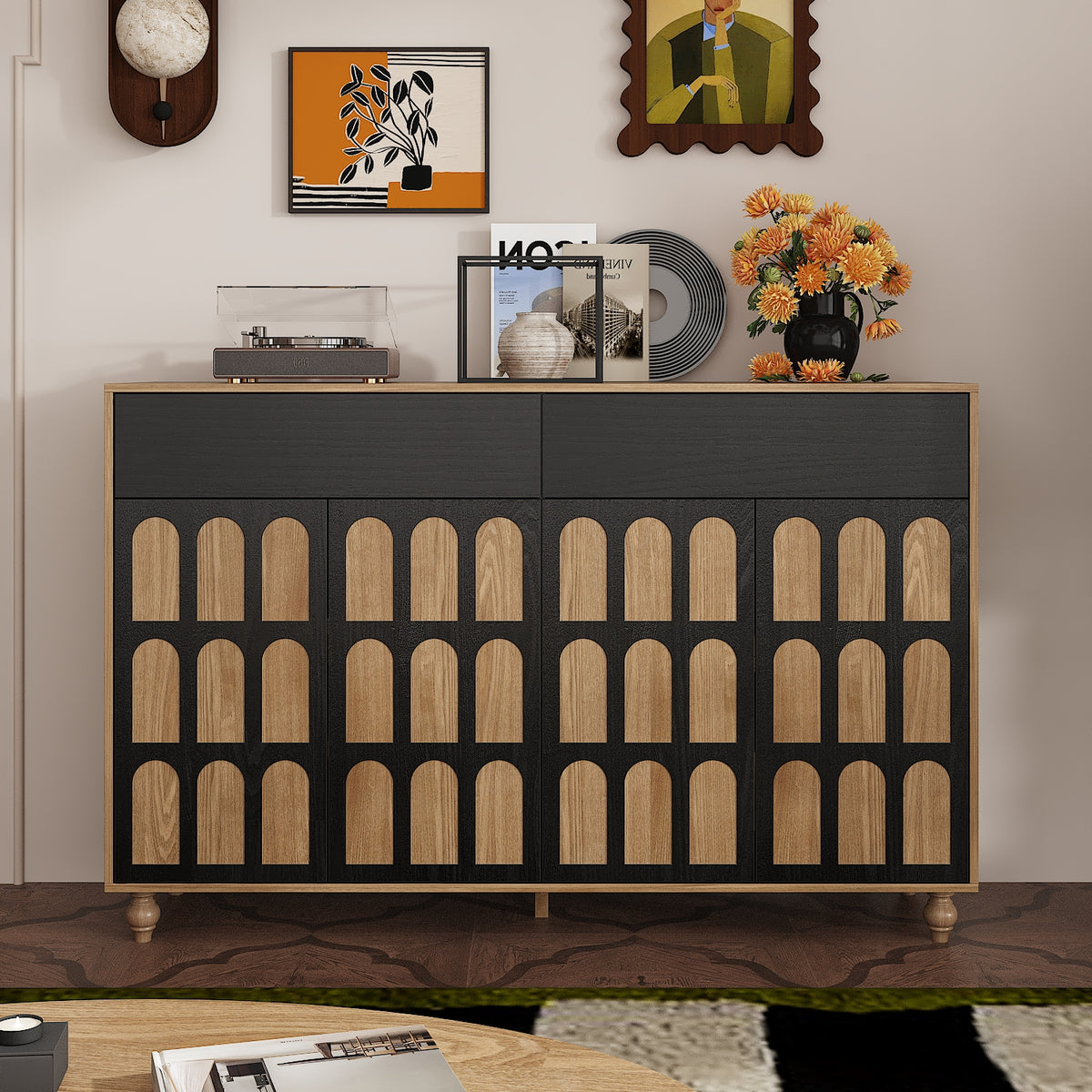
Short answer: a sideboard, a buffet and a credenza are all long, low storage cabinets, and many stores use the names interchangeably. The practical differences are height and legs: a buffet usually stands tallest (about 34 to 38 inches) on longer legs and lives in the dining room, a sideboard is typically 30 to 36 inches tall on short legs or a plinth, and a credenza is the lowest (about 25 to 30 inches), often with sliding doors and used as a media console or office storage.
The labels matter less than the measurements. Once you know the height, depth, base and storage mix you need, you can pick the right piece for any room, whatever the product page calls it. This guide compares all three side by side, adds the hutch and the console table, and shows which one suits a dining room, living room, entryway or home office. You can compare real dimensions across our sideboards and buffets collection as you read.
Sideboard vs Buffet vs Credenza: Key Differences at a Glance
The table below summarizes the typical differences. Treat the numbers as common ranges, not strict rules: furniture retailers group these storage pieces by design and intended use rather than by fixed definitions.
| Sideboard | Buffet | Credenza | Hutch | Console table | |
|---|---|---|---|---|---|
| Typical height | 30–36" | 34–38" | 25–30" | Base near sideboard height, plus an upper unit | Similar to a sideboard |
| Legs or base | Short legs or a plinth that sits directly on the floor | Longer, visible legs | Low base, short legs or none | Base cabinet with a top unit | Slim legs, very open |
| Depth | About 16–20" | About 16–22" | About 16–20" | Base similar to a sideboard | Usually shallower |
| Storage | Mix of drawers and cabinets | Cabinets and drawers, large serving surface | Enclosed storage, often sliding doors | Closed base plus shelves or glass doors above | Little or none: a drawer or lower shelf |
| Typical room | Dining room, living room, entryway | Dining room | Living room, home office | Dining room, kitchen | Entryway, behind a sofa |
| Origin of the name | 18th-century European dining furniture | French serving furniture | Italian, linked to food tasting | American English term | From the bracket-supported wall table |
What Is a Sideboard?
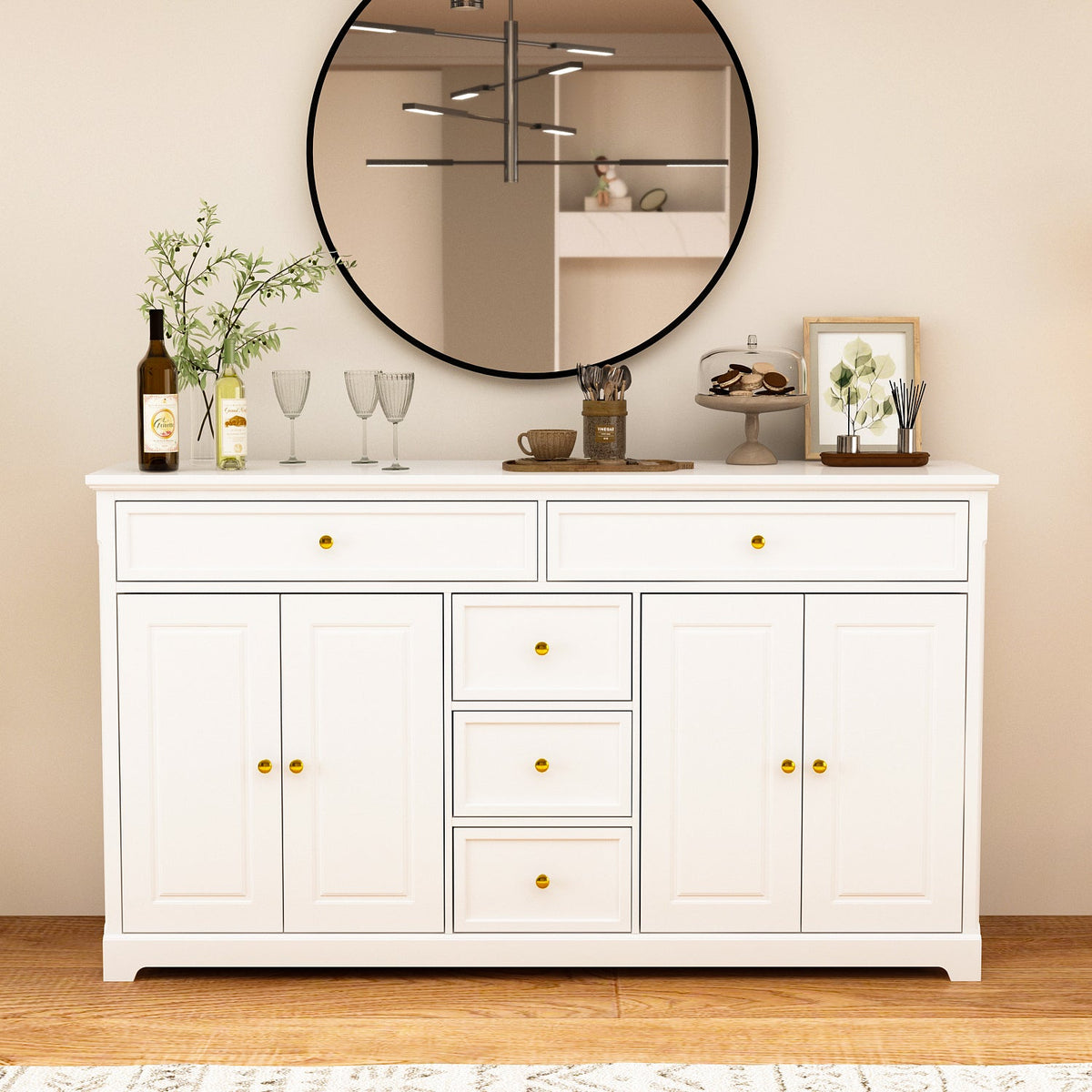
A sideboard is a long, low cabinet used for storing dishes and serving food, traditionally placed along a dining room wall. Most combine drawers for flatware and table linens with cabinet doors for serving dishes, and they stand 30 to 36 inches tall, close to dining table height. Many sit on short legs or on a plinth that rests directly on the floor, which gives them a grounded look.
According to the history of the sideboard, the versions familiar today appeared in the 18th century, with some of the earliest production in England and France, and they became popular in the 19th century as separate dining rooms spread. The same source notes that a piece with short legs or no legs is more often called a sideboard, while one with longer legs is more often called a buffet.
Because they are shallower than many cabinets (often 16 to 20 inches), sideboards are a good fit for compact dining rooms, entryways and living rooms. In the FUFU&GAGA range, most models are 13.8 to 16 inches deep and 51 of the 72 models with height data are 30 to 36 inches tall. A good example is the 59.1" contemporary buffet storage sideboard, which pairs 5 drawers with 4 doors and adjustable shelves at 33.5 inches tall.
What Is a Buffet?
A buffet is a dining room serving cabinet, usually a little taller than a sideboard (about 34 to 38 inches) and raised on longer, visible legs. The extra height makes it comfortable to serve food standing up, and the gap under the cabinet makes deeper cleaning of the floor easier. The serving surface is the point: it holds platters and serving pieces during dinner parties, with ample storage for dishware below.
The word itself comes from dining furniture. The term buffet originally referred to the French sideboard on which food was placed, and only later came to mean the self-serve meal format, as explained in this overview of the buffet's origins.

If you like the taller buffet look, the 59" mid-century sideboard with 2 drawers and 4 doors stands 39.3 inches tall on 4.7-inch legs, and our 60.2" rustic solid wood sideboard reaches 39.4 inches, so both work as a counter-height serving surface.
What Is a Credenza?
A credenza is a low-profile cabinet with concealed storage, typically 25 to 30 inches tall, often with sliding doors and a clean-lined, minimalist design. Its low height is why credenzas are so often used as a media console in living rooms or as storage behind a desk in home offices.
The name is Italian. The origin of the credenza goes back to a word for belief or trust; in the 16th century, credenza described the tasting of food and drink by a servant to test it for poison, and the name later passed to the furniture. Today the word covers both a home sideboard-style cabinet and office storage.
For a long credenza-style piece, the 94.5" six-door storage cabinet stands 35.4 inches tall, includes cable management and adjustable shelves, and spans a full media wall.

Sideboard vs Buffet: Is a Buffet Taller Than a Sideboard?
Usually, yes. The sideboard vs buffet question mostly comes down to height and legs. A buffet tends to sit on taller legs with an overall height near 34 to 38 inches, while a sideboard is closer to 30 to 36 inches and often sits closer to the floor. Beyond that, the two overlap so much that the same piece is sold under both names, and that is why our collection groups them together.
- Choose a buffet if you host often and want a taller serving surface next to the dining table.
- Choose a sideboard if you want a versatile piece that can move between the dining room, living room and entryway, or if you have a smaller space.
Buffet vs Credenza: Height and Use
The buffet vs credenza difference is clearer. A buffet is a tall dining room serving piece; a credenza is a low cabinet for living rooms and home offices. A credenza around 25 to 30 inches tall keeps a TV at a comfortable viewing height and fits under wall-mounted art or a screen, while a buffet at 36 inches or more would put a TV too high for most seating. For TV use, also check the cabinet's top weight capacity; our guide to TV stand vs media console vs entertainment center explains how dedicated media furniture differs.
Where Hutches and Console Tables Fit
Hutch
A hutch is an American term for a piece with shelves or cabinets set on top of a lower base that has a counter and drawers or doors. In effect, it is a sideboard with an upper display unit, often glass-fronted, used to display dishes and store dishware in the same piece. Choose a hutch when you need vertical storage and have the wall height for it. If you are weighing display furniture, see our guide to curio vs china vs display cabinets.
Console table
A console table is a narrow table with slim legs and little or no enclosed storage, usually one drawer or a lower shelf. It is lighter in visual weight and fits neatly in an entryway or behind a sofa, but it will not hold dishes, linens or media equipment the way a sideboard does. If you need hidden storage in a narrow spot, a shallow sideboard is the better choice.
Which One Should You Choose? Match the Piece to Your Storage Needs
Start with the room and what you need to store, then pick the height and base.
- Dining room: a sideboard or buffet. Leave about 36 inches between the dining table and the cabinet so chairs can move, and size the piece to about 60 to 75 percent of the table length. Our sideboard height and size guide has the full chart.
- Living room: a low sideboard or credenza works as a media console, bar or storage behind a sofa. See how to use a sideboard in the living room for size rules by use.
- Entryway or smaller spaces: a shallow sideboard (14 to 16 inches deep) keeps traffic flow clear. The 55" mid-century sideboard with rattan doors is only 13.9 inches deep.
- Home office: a credenza at desk height keeps files and printers out of sight.
- Display: glass doors and lighting turn any of these into a showcase. The 55" sideboard with 4 glass doors and LED lights is 29.5 inches tall, credenza height, with a sideboard's storage.
Can You Mix and Match Sideboards, Buffets and Credenzas in the Same Room?
Yes, as long as the pieces do different jobs and do not compete for the same wall. In an open-plan home, a buffet can anchor the dining zone while a low credenza holds the TV in the living area. Match sideboards to the room by repeating one element, such as wood tone, hardware finish or leg style, rather than buying an identical set. Keep the taller piece on the longer wall and the lower one where sightlines matter.
How to Care for Any Sideboard, Buffet or Credenza
Dust weekly with a soft, dry cloth, use coasters and trivets on the top, and avoid harsh chemicals that can dull painted or laminated finishes. These are furniture pieces for indoor use only. Anchor tall or heavy cabinets to the wall; the CPSC's Anchor It! campaign recommends anchoring all furniture with drawers, doors and shelves to prevent tip-overs. FUFU&GAGA includes a tip-over restraint kit with most of its sideboards.
In practice, one well-chosen cabinet can do all three jobs. The 63" modern sideboard with gold legs and fluted doors stands 31.5 inches tall on 7.1-inch legs and is rated for 300 lb on top, so it can serve as a dining buffet, an entryway sideboard or a living room console. Browse more sizes and heights in our sideboard and buffet collection.
FAQ
Are sideboards and buffets the same thing?
Mostly. Both are long, low cabinets for dining storage and serving, and retailers use the names interchangeably. When there is a difference, a buffet is taller with longer legs and stays in the dining room, while a sideboard is lower and more versatile.
Is a buffet taller than a sideboard?
Usually. Buffets typically measure about 34 to 38 inches tall on longer legs, while sideboards are about 30 to 36 inches tall. Credenzas are lower still, around 25 to 30 inches.
What is a fancy name for a sideboard?
Depending on style and use, a sideboard may be called a buffet, a credenza or a server. Modern serving versions are often sold as servers, and a sideboard with a display unit on top is called a hutch.
What do Americans call a sideboard?
Americans often call a dining room sideboard a buffet or buffet cabinet. "Sideboard" is common too, and in the living room or office the same low cabinet is usually called a credenza or media console.

Laisser un commentaire
Ce site est protégé par hCaptcha, et la Politique de confidentialité et les Conditions de service de hCaptcha s’appliquent.