


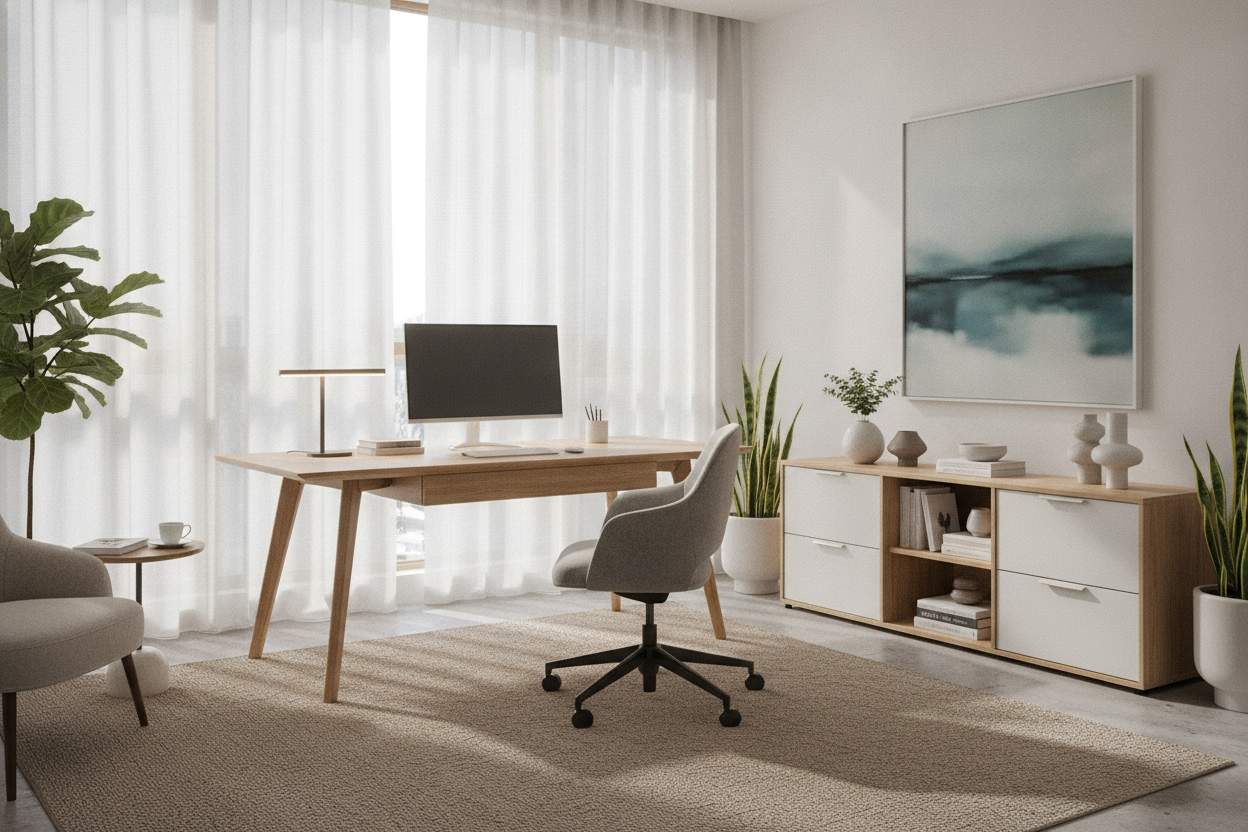
Finding a comfortable workstation often becomes a frustrating exercise when commercial furniture is engineered around broad averages. For people of petite stature or those managing tighter room layouts, conventional work surfaces frequently feel overly elevated, imposing unnecessary upper-body strain and leaving feet dangling above the floor. Selecting an intentional short office desk solves these biomechanical mismatches by bringing the working plane down to a natural forearm resting level while preserving essential legroom beneath the tabletop.
Why Standard Workstations Fail Shorter Statures
The Ergonomics of Lower Surface Profiles
Most mass-market commercial desks sit at a uniform elevation designed for taller body frames. When a smaller individual sits at a typical table, the surface forces the elbows upward and outward. Over extended work sessions, this elevated surface height requires continuous muscular compensation, drawing the arms away from the body core and creating unnecessary tension in the neck and upper back.
Shoulder Shrug and Foot Placement Dynamics
Raising an office chair to meet a high tabletop introduces a secondary dilemma: the user’s feet often lose full contact with the floor. While an adjustable ergonomic footrest can offer temporary support, it frequently consumes valuable vertical knee space under the desk. A properly proportioned short office desk addresses both issues simultaneously by allowing the chair seat to remain low enough for firm foot placement on the ground while keeping the desk surface aligned with the natural resting angle of the elbows.
Defining the Short Office Desk Archetype
In interior planning, the concept of a short desk encompasses two distinct dimensions: lower vertical height and compact horizontal footprint. A low-profile desk focuses primarily on lowering the working plane to accommodate relaxed forearm angles. In contrast, a compact-length desk optimizes horizontal space to fit tight alcoves. The ideal workstation for petite ergonomics balances both principles, ensuring proportional reach across the desktop without overwhelming the surrounding room.
Four Essential Design Pillars for Short Office Desks
1. Minimal Tabletop Thickness and Low-Profile Aprons
When lowering the overall height of a desk, vertical clearances become significantly tighter. Thick decorative aprons, bulky central drawers, and oversized support beams underneath the tabletop can press down against the thighs. A well-designed low-profile workstation prioritizes a slim, high-strength desktop with a recessed frame to maximize vertical clearance between the chair seat and the desk underside.
2. Unobstructed Knee Clearance and Footrest Compatibility
A functional leg well must accommodate both leg movement and auxiliary support tools. If you use an angled foot wedge to support your posture, the area beneath the desk must remain open and free of lower crossbars or low-hanging modesty panels. Ensuring clear, open space from front to back prevents knee contact with structural hardware during natural shifts in sitting posture.
3. Compact Depth and Natural Forearm Reach Zones
Deep executive desks create an awkward reach zone where computer monitors, task lamps, and desktop organizers sit just beyond comfortable arm extension. Shallow tabletop depths allow shorter individuals to position screens at an ideal focal distance and access everyday accessories without bending forward or rounding the lower spine.
4. Stable Frame Geometry and Lower Center-of-Gravity Engineering
A lower desk profile offers an inherent structural advantage: a reduced center of gravity. When engineered with rigid steel legs or solid foundation panels, shorter desks exhibit minimal lateral sway during vigorous typing or writing. Sturdy joints and wide leg bases further enhance stability across both hard flooring and plush carpeting.
Storage Architecture That Preserves Leg Clearance
Side-Car Cabinets vs. Integrated Pedestals
Built-in under-desk drawers often severely restrict horizontal leg movement, forcing users into fixed, rigid seating postures. Pairing a minimalist workstation with a separate office desk product featuring dedicated side-car storage keeps filing and office supplies neatly contained while keeping the main knee well entirely clear.
Vertical and Above-Desk Storage Alternatives
When managing compact floor footprints, moving organizational compartments upward preserves usable surface area. Integrating floating shelving or an organizer system, as explored in our desk office guide on vertical storage design, ensures that books, paperwork, and lighting remain easily accessible without cluttering your immediate keyboard landing zone.
Organizing Peripherals Without Cluttering Compact Surfaces
On a short office desk, surface space is prime real estate. Implementing discreet under-desk cable management trays, clamp-on monitor arms, and slimline keyboard trays frees up desktop space for essential daily tasks while maintaining a clean, distraction-free environment.
Layout Blueprints and Room Fit Scenarios
Dedicated Alcoves and Compact Nooks
Architectural alcoves, window bays, and closet conversions make natural homes for low-profile desks. Because these spaces are naturally constrained, choosing a desk with clean lines and minimal visual mass helps prevent the area from feeling enclosed or crowded.
Corner Configurations for Extended Proportional Reach
For individuals who need multiple display setups or expansive project layouts, a dedicated corner unit can provide ample work area within arm's reach. Selecting an office desk product designed for corner placement extends your horizontal work surface along two walls while preserving a central, comfortable pivot point.
Multi-Functional Living Space Integration
When your workstation must share space with a guest room, bedroom, or living area, maintaining visual harmony is paramount. Low-profile desks blend effortlessly into multifunctional rooms because their height complements standard credenzas and console tables. For shared spaces where concealing equipment is desirable, an armoire computer desk guide outlines smart methods for tucking office equipment behind cabinet doors at the end of the workday.
Material Selection, Assembly, and Longevity Considerations
Engineered Wood, Solid Timber, and Steel Leg Frames
The construction materials of your desk directly influence its everyday durability and appearance:
- Engineered Wood with Melamine or Laminate: Provides exceptional resistance to surface scratches, liquid rings, and everyday wear, making it an excellent choice for active workstations.
- Powder-Coated Steel Frames: Offers high structural rigidity with minimal physical bulk, preserving maximum open air within the leg well.
- Solid Wood: Brings natural warmth, distinct grain patterns, and long-term refinishing potential to dedicated home study spaces.
Edge Banding and Forearm Comfort Detailing
Because shorter users rest their forearms directly on the front perimeter of the desk, sharp or squared-off edges can create uncomfortable pressure points over time. Look for desks featuring smooth PVC edge banding, softly radiused corners, or subtle chamfered profiles that cushion the forearms during long typing sessions.
Assembly Checks: Hardware Alignment and Leveling Glides
During assembly, ensuring that all structural fasteners are tightened evenly prevents frame racking and wobbling. Desks fitted with adjustable threaded leveling glides allow you to compensate for uneven floorboards, ensuring a rock-solid, horizontal working plane for your monitors and desktop gear.

Laisser un commentaire
Ce site est protégé par hCaptcha, et la Politique de confidentialité et les Conditions de service de hCaptcha s’appliquent.