


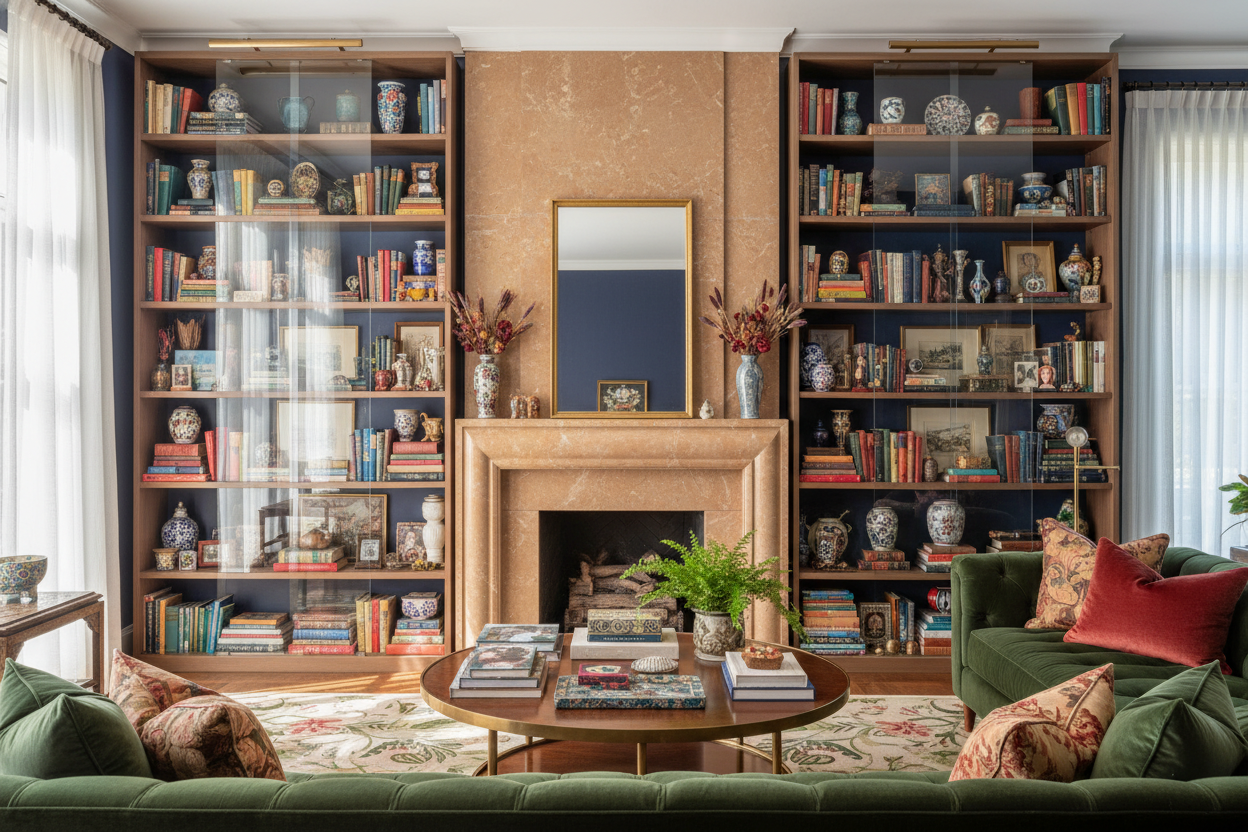
We've all been there—scrolling through 'cluttercore' tags on social media at 1 AM, convinced that if we just find one more vintage amber glass pitcher, our living room will finally feel like a curated museum. Then the pitcher arrives, you shove it onto an open ledge, and suddenly your house looks less like a boutique and more like a thrift store donation bin on a rainy Tuesday. The truth is, the gap between a 'vibey' home and a messy one is smaller than you think.
The secret isn't buying less stuff (maximalists, I see you). The secret is containment. A shelf unit with glass doors is the only thing standing between you and a home that feels like a chaotic junk drawer. It provides the structure your eclectic collection desperately needs to look intentional rather than accidental.
Quick Takeaways
- Glass doors create a visual 'frame' that instantly turns a pile of objects into a curated collection.
- Enclosed storage reduces dusting time by roughly 90%, which is vital for homes with lots of small trinkets.
- Internal lighting is the difference between a high-end display and a dark, cluttered corner.
- Always prioritize units with adjustable shelving to accommodate oddly-sized vintage finds.
The Fine Line Between 'Curated Maximalism' and 'Thrift Store Bin'
Open shelving is a trap set by people who have full-time housekeepers and zero pets. In reality, every exposed surface in a maximalist home is a magnet for cat hair, city soot, and kitchen grease. When every single item you own is out in the open, your eyes never get a break. There is too much visual noise, leading to what I call 'decor fatigue'—where you have so much cool stuff that none of it actually stands out.
This is why your living room needs a shelf unit that actually closes. By putting your treasures behind a shelf unit with glass door, you create a physical boundary. It signals to the brain that the 'stuff' is art, not just things you forgot to put away. It grounds the room and gives your eyes a place to rest on the clean, straight lines of the furniture itself, rather than the jagged silhouette of a hundred tiny vases.
Why a Shelf Unit With Glass Doors is the Ultimate Cheat Code
Think of a shelving unit with glass doors as a giant picture frame for your life. When you use something substantial, like a Large Display Cabinet Storage Shelf 3 Glass Doors, you are giving your items a stage. I’ve found that even the most random assortment of objects—old cameras, ceramic hands, and stacks of neon-colored books—looks like a deliberate gallery installation when it's enclosed behind glass.
It’s a psychological trick. The glass acts as a 'curator's lens.' It also allows you to pack things in more densely than you would on an open shelf. On an open ledge, dense packing looks messy and cluttered. Behind a shelf with clear doors, it looks like a Victorian cabinet of curiosities. You can go wild with the maximalism inside while the exterior of the unit stays sleek and orderly. Plus, there's something satisfying about the 'clink' of a glass door closing on your collection at the end of the day.
The Golden Rules for Styling a Shelf With Glass Front
If you're going to commit to the glass-front look, don't just throw things in. Use the 'rule of three' but make it maximalist—maybe the 'rule of thirteen.' Group items by color to create 'zones' of visual interest. This prevents the display from looking like a rainbow exploded. I also highly recommend looking for adjustable shelf storage. There is nothing worse than a beautiful shelf with glass front where every shelf is exactly 12 inches apart.
You need a tall space for that oversized 1970s floor vase you're using as a tabletop piece, and a short, narrow space for your collection of tiny brass animals. Layering is your best friend here. Put larger, flatter items like trays or art prints in the back and smaller, detailed trinkets in the front to create depth. This keeps the eye moving and makes the display feel like it has a story to tell.
Don't Forget the Lighting (My Biggest Mistake)
My biggest styling regret was buying a massive, deep cabinet in dark espresso and realizing it looked like a literal cave once I got it home. Dark wood or deep shelves swallow light, turning your prized possessions into vague, shadowy blobs. If you are displaying colorful vintage glassware or intricate barware, you absolutely need illumination.
I highly recommend looking for a dedicated unit like a Wine Bar Cabinet With Light. If your unit doesn't come with it, buy some warm-toned LED puck lights or strip lights. Avoid the cool-blue LEDs; they make your home look like a high-end pharmacy. Warm light hitting glass creates a glow that makes the whole room feel cozy and expensive. It turns your storage into a focal point that works even when the sun goes down.
Is a Shelving Unit With Glass Doors Worth the Smudges?
Let’s talk about the fingerprints. Yes, you will have to use a microfiber cloth and some glass cleaner occasionally. But compare that to the alternative. I once spent an entire Saturday morning individually dusting 42 tiny brass bells and a collection of vintage matchbooks. Never again. A shelving unit with glass doors keeps the dust out, meaning your fragile items stay pristine for years.
Wiping down a single pane of glass takes thirty seconds. Dusting a hundred tiny crevices on a hundred tiny objects takes a lifetime. When you consider the impact of transforming your room with a 3 shelf glass cabinet, the occasional smudge is a tiny price to pay for a room that looks this good. It’s the ultimate trade-off for anyone who loves 'stuff' but hates the maintenance that usually comes with it.
Personal Experience: The Cookbook Incident
I have a vintage collection of 1950s cookbooks. They are falling apart, they smell like old paper, and they are incredibly dusty. On an open shelf, they looked like literal trash—just a pile of yellowed paper. I moved them into a glass-fronted unit, organized them by spine color, and suddenly everyone who visits asks me where I 'curated' my library. It’s the exact same books, but the glass doors gave them the respect they deserved.
FAQ
Is tempered glass a must for these units?
Absolutely. If you have kids, pets, or just a heavy hand, tempered glass is the only way to go. It’s much stronger than standard glass and crumbles into dull pebbles if it breaks, rather than dangerous shards.
How do I stop the glass from being too reflective?
Position your cabinet away from direct windows. If that's not possible, using internal lighting is the best fix—it 'pushes' the light out from within the cabinet, which minimizes the reflections from the outside world.
Can I use glass-door units in a small apartment?
Actually, glass helps small rooms. Unlike solid wood doors, which act like a wall and stop the eye, glass lets you see through to the back of the unit. This visual depth makes the room feel larger than it actually is.


Laisser un commentaire
Ce site est protégé par hCaptcha, et la Politique de confidentialité et les Conditions de service de hCaptcha s’appliquent.