


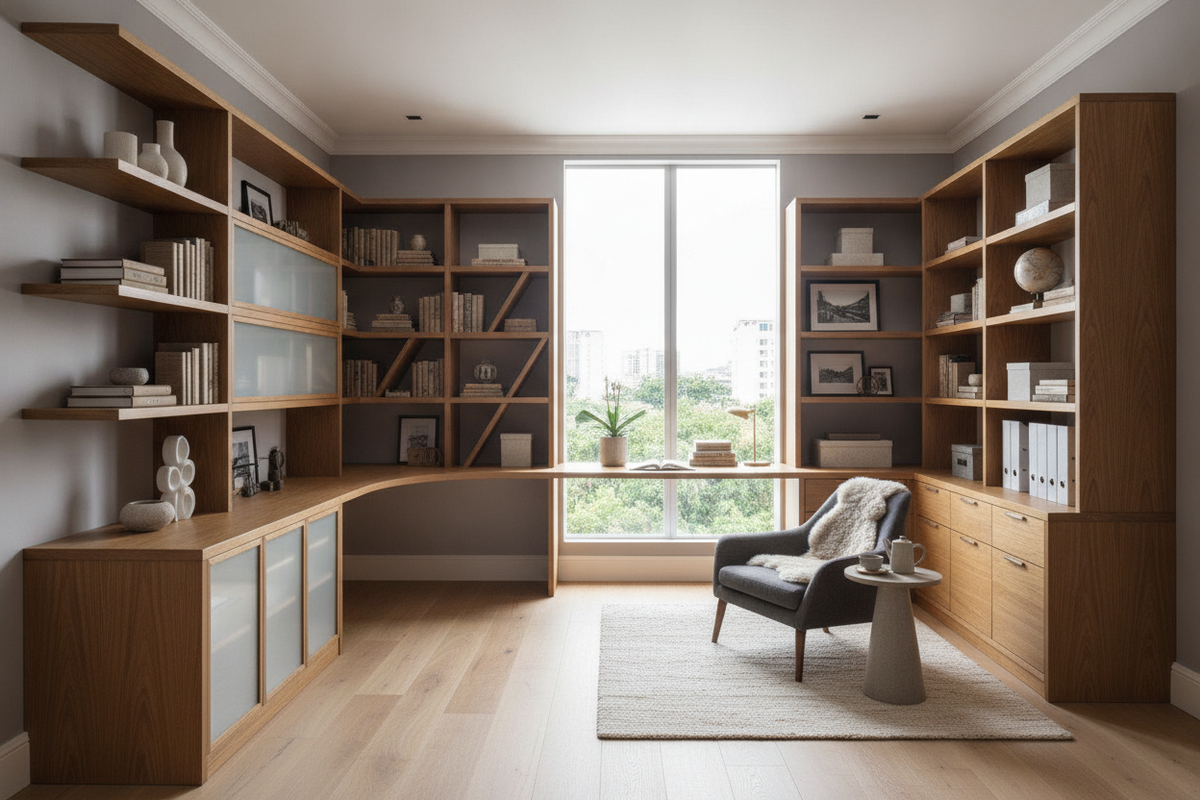
Maximizing Corner Workspace with L-Shaped Desk Shelving
Modern remote work and multifunctional home setups require efficient surface management. An corner workstation equipped with l-shaped desk shelves resolves the chronic issue of desktop clutter by expanding storage upward and downward rather than encroaching on your active work zone. By utilizing the perimeter of two perpendicular walls, an L-configured desk establishes a natural division between primary display tasks and secondary reference activities.
When peripheral hardware, reference binders, and office essentials occupy the main desktop, usable area shrinks quickly. Integrating dedicated tiers onto the desk return allows you to keep high-frequency essentials within arm's reach while preserving a clean, distraction-free primary surface. In our view, having a dedicated shelving return makes shifting between computer work and analog writing seamless and comfortable.
Integrated Shelf Formats: Under-Desk, Side Tower, and Hutch Designs
Integrated shelving configurations vary widely depending on available floor space, ceiling height, and user accessibility requirements. Selecting the right shelf format ensures that your desk supports daily workflow without creating visual clutter or impeding movement.
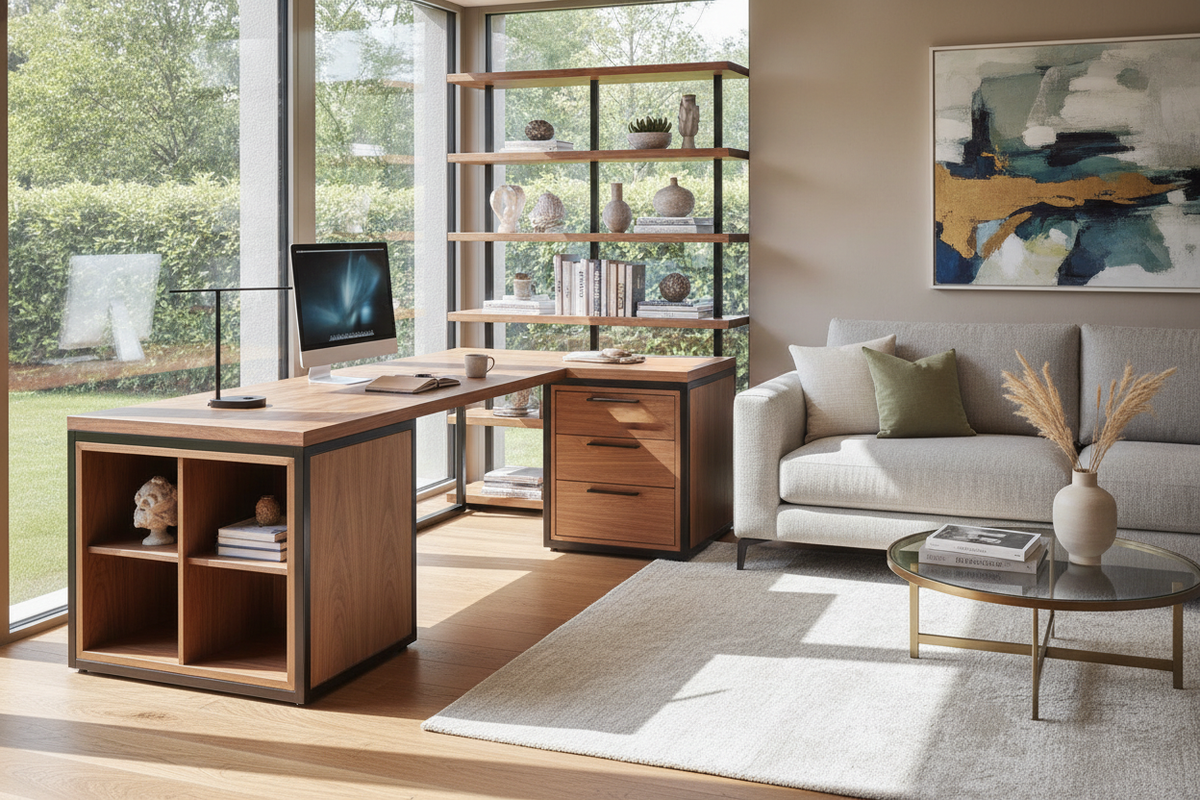
- Under-Desk Lower Tiers: Located beneath the secondary wing, these low-profile shelves accommodate computer towers, secondary storage baskets, and heavy books. They maintain an open line of sight across the room while utilizing previously wasted knee space along the wall.
- Reversible Side Shelving Towers: Many corner setups incorporate vertical shelving units at the outer edge of one wing. These reversible tiers can often be installed on either the left or right side, allowing you to adapt the workstation to corner room walls, doorways, or open floor plans.
- Overhead Hutch Shelving: Elevated hutch structures mount directly to the back edge of the desktop, taking advantage of vertical wall space. This design provides immediate eye-level storage for task lighting, monitors, and decorative displays without expanding the furniture footprint.
When comparing open tier shelving against enclosed storage combinations, consult our comprehensive desk shelf guide to evaluate access speed versus concealed organization. For setups requiring supplemental storage alongside corner desks, pairing a matching shelves shelf product creates a coordinated aesthetic across the entire room.
Dimensional Planning and Spatial Zoning for L-Shaped Desks with Shelves
Effective room integration starts with assessing your floor plan and spatial clearance. Evaluating footprint dimensions is essential when selecting a dedicated shaped desk product for tight room corners, ensuring the secondary wing does not obstruct baseboard heaters, low window sills, or wall outlets.
When measuring your room, consider the following layout factors:
- Symmetric vs. Asymmetric Profiles: Symmetric corner desks offer equal depth and length along both walls, ideal for balanced dual-monitor systems. Asymmetrical designs feature one longer credenza wing dedicated to storage, making them suitable for combining a computer workstation with an extensive l desk shelf system.
- Chair Swivel Radius and Knee Clearance: Ensure bottom shelving rungs do not impede the natural movement of your office chair. Maintain adequate distance between the central inner curve and any interior shelf supports to prevent accidental knee bumps.
- Walking Pathway Clearances: Keep clear pathways between the edge of the return shelf and adjacent doors, closet entries, or surrounding furniture to maintain open room flow.
If corner floor space is limited, comparing corner layouts with a compact desk shaped product helps define room flow before committing to a permanent workstation footprint.
Material Profiles, Frame Stability, and Load Distribution
A stable frame is vital for any desk featuring integrated shelving. Because shelves frequently hold heavy hardware, paper stacks, and peripheral devices, structural rigidity prevents wobbling and sagging over extended use.
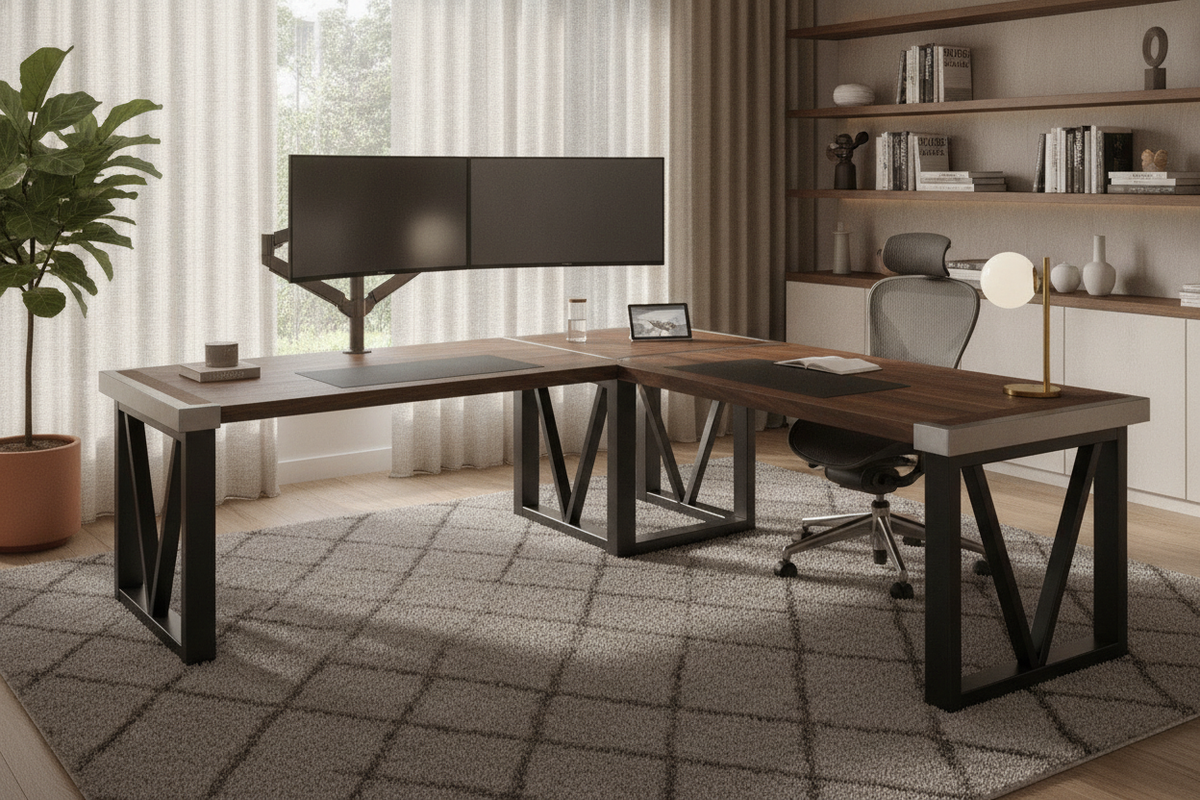
Most durable corner workstations utilize powder-coated steel framing paired with dense engineered wood tops. Steel frame designs typically incorporate diagonal X-braces or welded corner gussets along the rear of the shelving section to counteract lateral sway. Adjustable leveling feet installed beneath each leg and shelf upright compensate for uneven flooring or dense carpeting, keeping the joined desktop sections perfectly flush.
To maintain long-term stability across your l desk shelves, practice balanced weight distribution. Position heavier items, such as desktop towers or thick binders, on the lowest shelf tiers near the floor to anchor the unit's center of gravity. Reserve higher and mid-level shelves for lightweight organizers, small electronics, and reference notebooks.
Assembly, Cable Routing, and Organizational Best Practices
Assembling an L-shaped desk with multiple shelving tiers requires an orderly approach. Begin by loosely assembling the individual frame components and shelving towers before tightening the fasteners. Joining the main desktop panels on a level surface ensures tight, even seams between the primary top and the shelving wing.
Managing power and connectivity across an open-shelf layout prevents wire tangles and visual clutter. Use adhesive cable clips or hook-and-loop straps along the rear steel uprights to direct monitor, power, and charging cables down to a concealed floor-level surge protector. Storing power hubs on a dedicated lower shelf keeps cords elevated away from foot traffic while remaining easy to reach for routine maintenance.
For inspiration on customizing modular shelving units into tailored workspaces, review our desk shelves guide. By thoughtfully combining vertical storage tiers, strategic spatial planning, and organized cable routing, an L-shaped desk transforms any open corner into a productive, balanced work environment.

Laisser un commentaire
Ce site est protégé par hCaptcha, et la Politique de confidentialité et les Conditions de service de hCaptcha s’appliquent.