


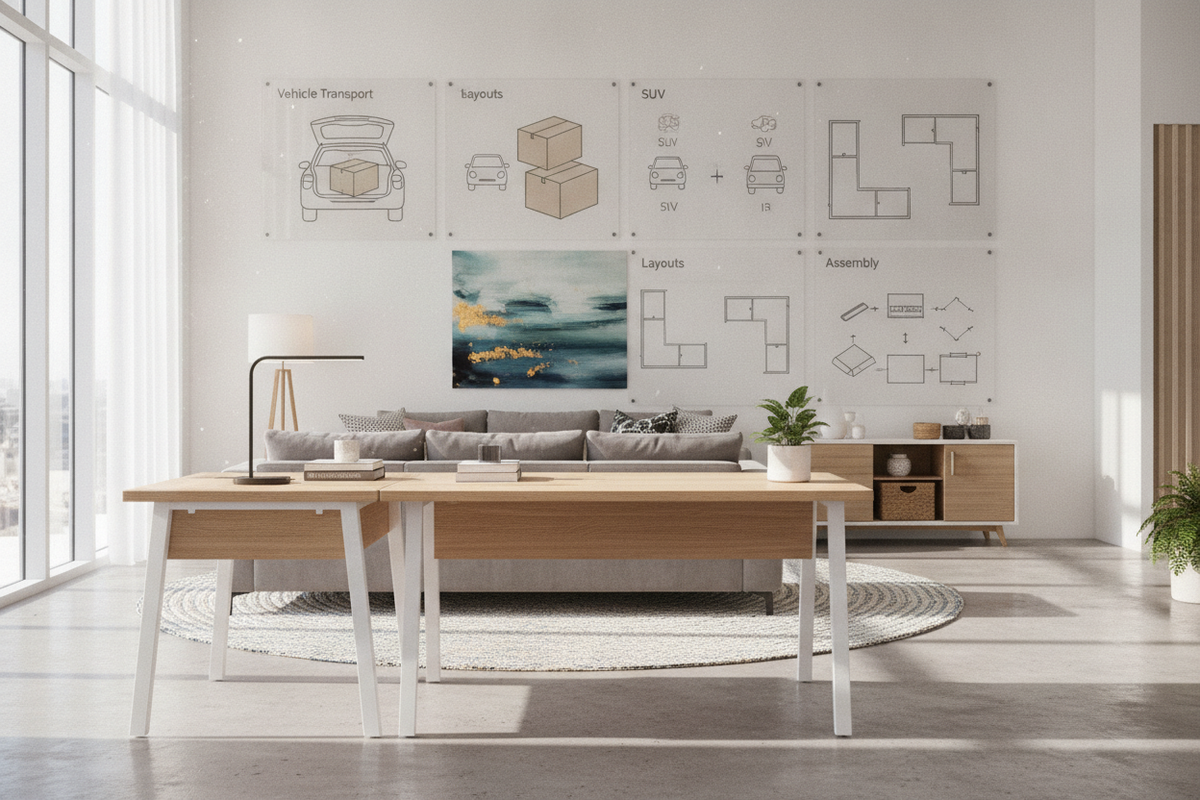
Arranging an l-shaped desk in store pick up order offers a direct way to coordinate home office upgrades on your own schedule. Corner desks provide expansive work surfaces and distinct task zones, though their substantial packaging and structural components benefit from thoughtful logistics before you arrive at the fulfillment counter.
Successfully transporting and assembling a dual-surface corner desk involves understanding carton dimensions, assessing vehicle cargo capacity, choosing the right wing orientation, and preparing your workspace. Planning your pickup strategy from retail staging to final hardware tightening helps protect your vehicle and furniture while setting up a functional workspace layout.
Why Choose In-Store Pick Up for an L-Shaped Desk?
Opting for direct store pickup addresses several practical considerations associated with large modular furniture. Standard parcel delivery routes move oversized cartons through multiple transfer points, which can introduce opportunities for carton edge wear or separated multi-box shipments.
Eliminating Transit Damage and Porch Theft Risks
When you coordinate the pickup directly, you maintain oversight of how the flat-pack cartons are handled, stacked, and positioned during travel. This approach also avoids leaving large furniture cartons unattended outside your residence during unpredictable weather or extended working hours.
Immediate Project Timelines and Immediate Inspection
Scheduled retail pickup allows you to align furniture retrieval with your planned assembly timeframe. When evaluating retail store desk options at the customer service desk, you can visually examine outer box integrity, verify corner seals, and confirm that all required packages in a multi-box set are present before loading.
Vehicle Cargo Planning: Will an L-Shaped Desk Fit in Your Car?
A frequent challenge during in-store pickup is accounting for the overall length and density of corner desk cartons. Even modest corner workstations incorporate wide desktop sections and supportive subframes that require adequate flat floor length inside the vehicle.
Flat-Pack Dimensions vs. Assembled Desk Footprint
An assembled L-shaped configuration covers a broad footprint across two walls, yet its packaged form consists of long, slender rectangular cartons. The carton length corresponds to the longest individual desktop panel or main frame rail, often exceeding standard trunk openings on compact passenger cars.
Single-Box vs. Multi-Box Packaging Configurations
Corner desks are commonly distributed in two packaging arrangements:
- Single Large Carton: Typical for open-frame or minimalist corner models. These boxes tend to be dense and require deliberate two-person lifting to navigate vehicle door openings.
- Dual Split Cartons: Common for designs featuring integrated drawer pedestals, shelving towers, or thicker surface boards. One carton generally contains structural framing and desktops, while the companion box holds storage panels.
Vehicle Types and Cargo Bed Clearance Checklist
Before heading to the collection area, compare your vehicle interior space with expected carton proportions:
- Sedans: Rear trunk pass-through apertures are often too narrow for broad tabletop boxes. Sedans may require checking rear seat legroom angles or evaluating whether folded rear seats offer sufficient diagonal clearance.
- Hatchbacks and Compact Crossovers: Folding down rear seating generally creates usable floor length, though longer boxes may extend between front bucket seats toward the console.
- Mid-Size and Full-Size SUVs: These vehicles generally accommodate flat placement across the rear cargo floor once secondary seats are folded flat.
- Truck Beds: Open truck beds provide straightforward loading space, provided boxes are secured with cargo straps and covered with a tarp in damp weather conditions.
Selecting the Right L-Shaped Desk Layout Before Pickup
Confirming your room arrangement prior to order placement ensures the selected desk matches room dimensions, walking pathways, and window orientation.
Symmetrical vs. Asymmetrical Corner Wings
Symmetrical desks provide matching wing lengths on both sides, creating a centered workstation suitable for dedicated corner spaces. Asymmetrical desks feature a primary workspace paired with a narrower side return, which works well along open walls where floor space must remain clear for foot traffic.
Reversible Return Orientation for Room Flexibility
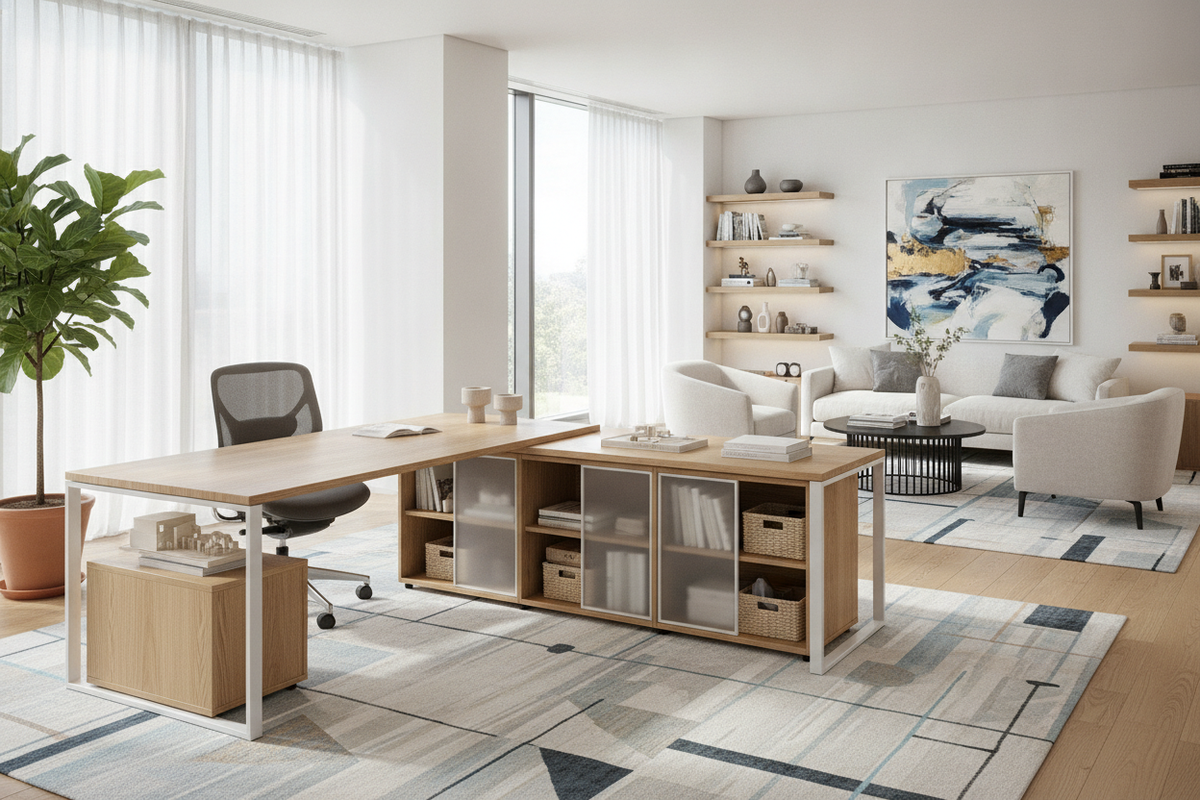
For spaces where room configurations might shift over time, an integrated storage L-shaped corner desk featuring a reversible return provides adaptable configuration choices. Reversible construction allows you to mount the secondary storage wing on either side, adjusting neatly around door swings and room light sources.
Wall Placement vs. Open-Room Floating Layouts
Determine whether the desk will sit flush against intersecting walls or extend outward into the room as an open partition. For open-room placement, confirm that modesty panels and storage backs have finished decorative surfaces on all outward-facing sides.
Storage Architecture and Functional Workspace Zoning
The primary spatial benefit of an L-shaped format is the ability to separate distinct tasks across two connected surfaces.
Under-Desk Pedestals, Drawers, and Open Shelving
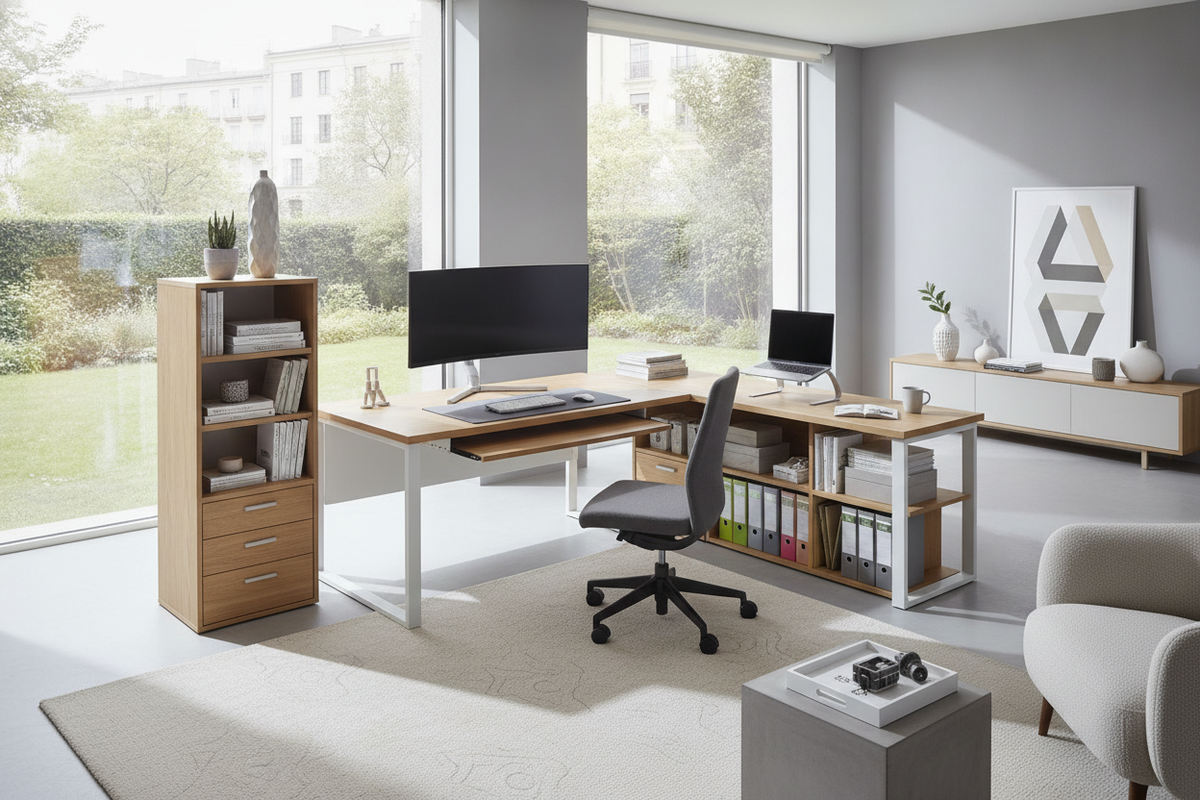
Integrated storage modules assist in keeping desktop areas clear of loose supplies. Enclosed drawers house paperwork and office tools out of sight, while open lower shelves provide space for computer towers, storage baskets, or reference items. A white corner desk with dual surface wings creates a clean visual presentation that complements smaller home offices while supplying ample layout area.
Primary Task Zones vs. Peripheral Tech Wings
Structure your everyday workflow by assigning primary monitors and input devices to the main desk surface. The adjacent wing can host secondary screens, paperwork, printers, or tabletop task lighting. This division supports organized daily movement and helps reduce awkward reaching.
Leg Clearance and Corner Seating Mobility
Review the inner corner frame layout to ensure smooth chair movement. Desks with recessed corner legs or open support bridges make it easier to swivel between surfaces without colliding with vertical structural supports.
Safe Loading, Transport, and Unboxing Strategies
Careful physical handling methods protect both vehicle interiors and furniture components throughout transit and staging.
Retail Loading Zone Etiquette and Two-Person Lifting
Utilize designated retail loading spaces to minimize transit distance between the store dock and your vehicle. Because flat-pack furniture cartons are dense and heavy, using store flatbed carts and coordinating a team lift simplifies vehicle loading.
Securing Heavy Flat-Packs Inside the Vehicle
Position cartons flat against the vehicle floor, placing the heaviest parcels on the bottom. Avoid resting long cartons across raised seat backs at steep angles, which could put pressure on packaged panels. Spreading moving blankets across car upholstery helps protect interior fabrics and trim, aligning with clean aesthetic desk design perspectives that emphasize care and order throughout setup.
Staging and Staging Area Preparation at Home
Bring unopened boxes directly into the intended room before opening them to avoid moving individual loose components through doorways. Clear an open floor area and lay down a protective blanket or flattened packaging material to safeguard panel edges during assembly.
Assembly Preparation and Long-Term Stability
Approaching assembly methodically helps ensure the completed desk remains level, stable, and rigid through regular daily use.
Hardware Inventory and Pre-Assembly Fastener Sorting
Open the hardware package and sort cam locks, bolts, wooden dowels, and brackets into separate small containers. Review parts counts against the assembly guide before beginning structural steps to ensure all necessary hardware is accounted for.
Corner Joint Alignment and Leveling Foot Tuning
When connecting adjoining desktop panels, keep frame fasteners slightly loose until the top surfaces are flush and seam lines are aligned. Once the seam sits smoothly, tighten frame connections systematically. Finally, adjust threaded leveling glides beneath each support leg to correct for minor floor unevenness and ensure a steady workspace.

Laisser un commentaire
Ce site est protégé par hCaptcha, et la Politique de confidentialité et les Conditions de service de hCaptcha s’appliquent.