


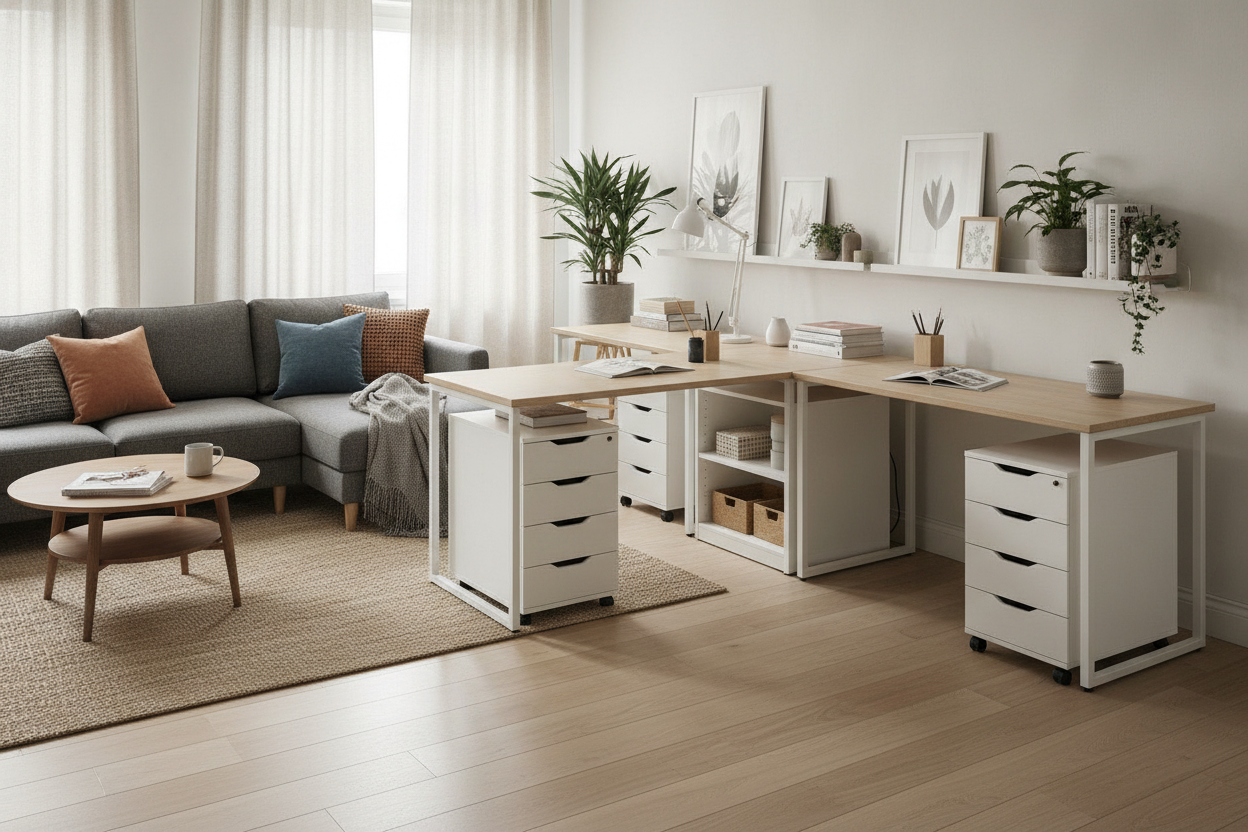
I remember staring at my massive, $600 solid mahogany desk in the middle of my second-floor walk-up, realizing it was exactly two inches wider than the bedroom door frame. I ended up selling it for forty bucks on Craigslist just so I wouldn't have to carry it back down the stairs. That was the day I swore off 'one-piece' furniture forever and committed to the ikea desk modular life.
Since then, I have moved three times. Each new floor plan was a nightmare in its own way—one had a radiator exactly where the desk should go, another was so narrow I couldn't open my chair fully. But because I stopped buying 'desks' and started buying 'parts,' I didn't have to buy a whole new office every time my lease ended.
Quick Takeaways
- Stop buying pre-assembled desks; they are a logistical nightmare for renters.
- Modular components let you swap a $30 tabletop instead of a $500 workstation.
- Use separate drawer units (like the Alex) as your foundation for maximum flexibility.
- Verticality is your best friend when square footage disappears.
- Know when to quit the DIY life and upgrade to ergonomics once you stop moving.
The Curse of the One-Piece Workstation
We have all been there. You find a gorgeous, heavy writing desk that looks like it belongs in a Victorian library. It arrives in a box that weighs 140 pounds, and after four hours of sweating, you have a beautiful piece of furniture that is essentially a dead weight. The problem starts the moment you decide to move. Traditional desks are static; they don't care that your next apartment has a weirdly placed closet door or a 45-degree angle in the corner.
Most 'standard' desks are about 30 inches deep. In a 10x10 bedroom, that 30-inch footprint is a space killer. When I moved into my first studio, my old desk blocked the path to the bathroom. I had to shimmy past my monitors every morning. It was a constant reminder that furniture designed for a 'forever home' has no business in a rental. You need something that can shrink, grow, and pivot without requiring a degree in structural engineering or a team of movers.
Why I Finally Pieced Together an IKEA Desk Modular Setup
The lightbulb moment happened when I stopped looking at the 'Desks' section of the catalog and started looking at 'Tabletops' and 'Legs' separately. By building a modular desk ikea style, I realized I was buying a system, not a product. I started with two Alex drawer units and a 59-inch Lagkapten top. It was simple, clean, and most importantly, it came apart in thirty seconds.
Breaking away from traditional pre-packaged furniture changed how I viewed my floor plan. I wasn't stuck with a fixed width anymore. If you want to see how this philosophy changes your design approach, check out this guide to custom setups. The freedom to choose individual legs—some adjustable, some fixed—meant I could finally level my desk on the sloping floors of my 1920s apartment without stuffing a folded-up matchbook under one side.
I also realized that I could mix and match materials. I didn't need a $400 slab of oak. I could use a cheap, lightweight honeycomb-core top for my 'dirty' work and a nicer bamboo finish for my computer station. If I spilled ink or scratched the surface during a move, it was a $30 fix, not a total loss. This is the ultimate renter's insurance for your home office.
Swapping Parts Instead of Buying New
Two years ago, I moved from a spacious loft to a bedroom that was basically a glorified closet. My 59-inch tabletop was physically too long to fit between the wall and the bed. In the past, I would have been forced to sell the whole desk and start over. Instead, I drove to the blue-and-yellow warehouse, spent $25 on a 47-inch tabletop, and kept my existing drawer units. I saved hundreds of dollars and about six hours of assembly time.
This is where the modularity pays for itself. You aren't just buying furniture; you're buying a kit of parts. I have used those same drawer units as nightstands, as a sewing station base, and even as a makeshift kitchen island during a particularly lean year. The tabletop is just a bridge that connects your storage units, and bridges are easy to replace.
Growing Up (Literally): Adding Storage Later
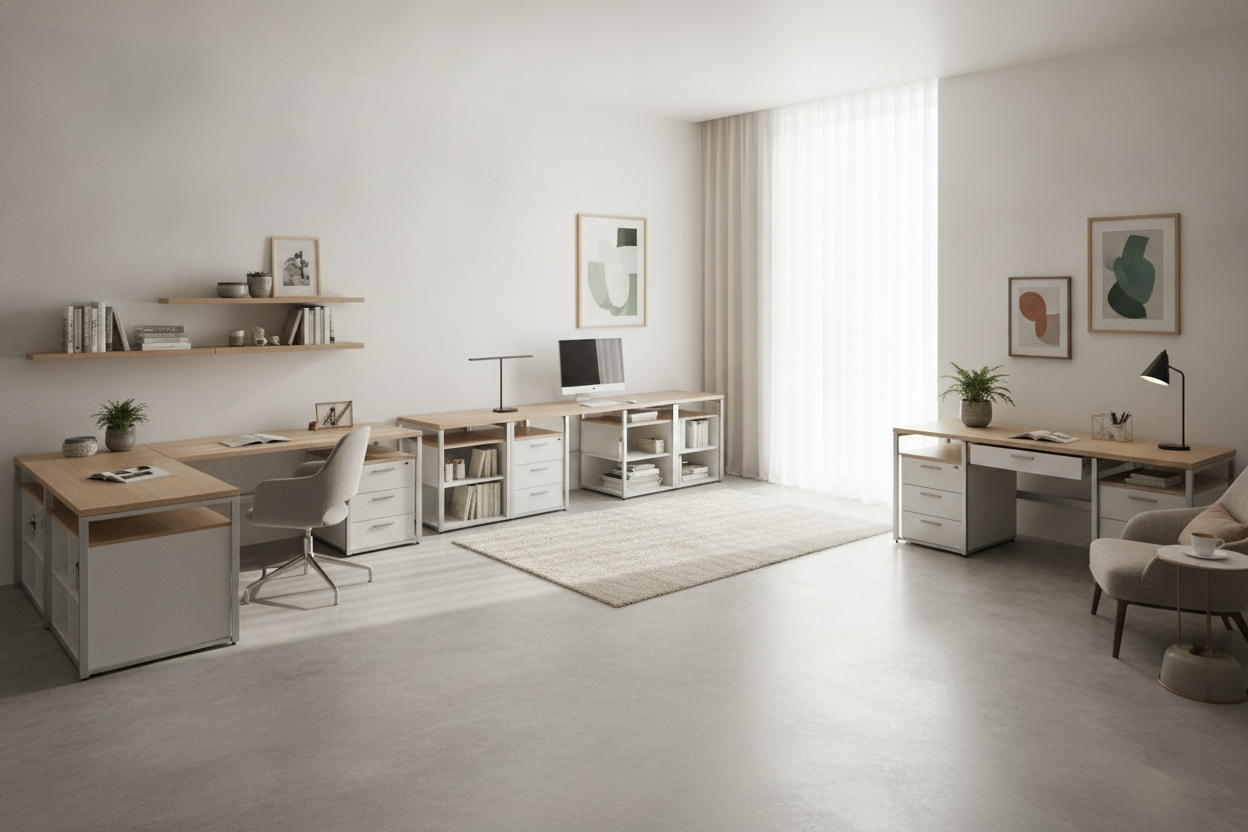
When you run out of floor space—which happens about three weeks after moving into any apartment—you have to go up. My modular setup allowed me to add shelving units that sat directly on the desk surface or mounted to the wall behind it. I stopped cluttering my actual workspace with pens, hard drives, and notebooks because I could just snap on a pegboard or a hutch.
Integrating your storage into the desk structure makes the whole room feel more cohesive. I eventually started looking into desk and bookcase combinations to create a full-wall library effect without the built-in price tag. By flanking my desk with tall, narrow bookcases, I created a 'cockpit' feel that actually helped me focus. It turned a corner of a bedroom into a legitimate office that felt separated from where I slept.
When You Outgrow the Hack: Upgrading Your Setup
I’ll be honest: the modular IKEA life isn't perfect. If you use the cheaper Linnmon or Lagkapten tops, they will eventually sag in the middle if you're mounting heavy dual-monitor arms. I learned that the hard way when my $300 monitors started leaning toward each other like they were sharing a secret. Also, fixed-height desks are a recipe for lower back pain if you're working 40+ hours a week. I’m 6'1", and a 29-inch high desk is basically a torture device for my spine.
If you've reached the point where you're no longer moving every twelve months, it might be time to graduate. For anyone starting to feel that chronic ache between their shoulder blades, a sit stand up desk with memory preset is the logical next step. It gives you the height precision that a stack of books under a modular leg never will. Alternatively, if you want that high-end, built-in look without the DIY headache of matching separate components, a computer desk with hutch and socket offers a much sturdier, all-in-one solution that won't wobble when you type.
Final Thoughts on Component Furniture
Building your own workspace from individual parts is the smartest financial move you can make while your life is still in flux. It’s about agility. You don't want to be the person crying in a U-Haul because your desk won't fit the elevator. Start with the basics, swap the tops as your rooms change, and don't be afraid to move on when your back demands better support. When you're ready to stop hacking things together and want a dedicated piece, you can find a solid writing computer desk that fits your permanent vibe. But until then? Stay modular.
FAQ
Do IKEA modular desks wobble?
If you just use four thin Olov legs, yes, they can be a bit shaky. The trick is to use at least one solid drawer unit (like the Alex) as a base. It adds weight and lateral stability that skinny legs just can't provide.
Can I use a heavy wood slab on IKEA legs?
Technically yes, but check the weight rating. Most standard IKEA legs are rated for about 110 lbs. If you're using a heavy butcher block, you'll want to use the Adils legs sparingly and consider a center support leg to prevent the middle from bowing over time.
How do I stop the tabletop from sliding on the drawers?
The drawer units usually come with small clear rubber bumpers. Use them. If you lost yours, a pack of 'museum gel' or even some simple non-slip drawer liner from the dollar store will keep that tabletop locked in place without needing to drill holes.

Laisser un commentaire
Ce site est protégé par hCaptcha, et la Politique de confidentialité et les Conditions de service de hCaptcha s’appliquent.