


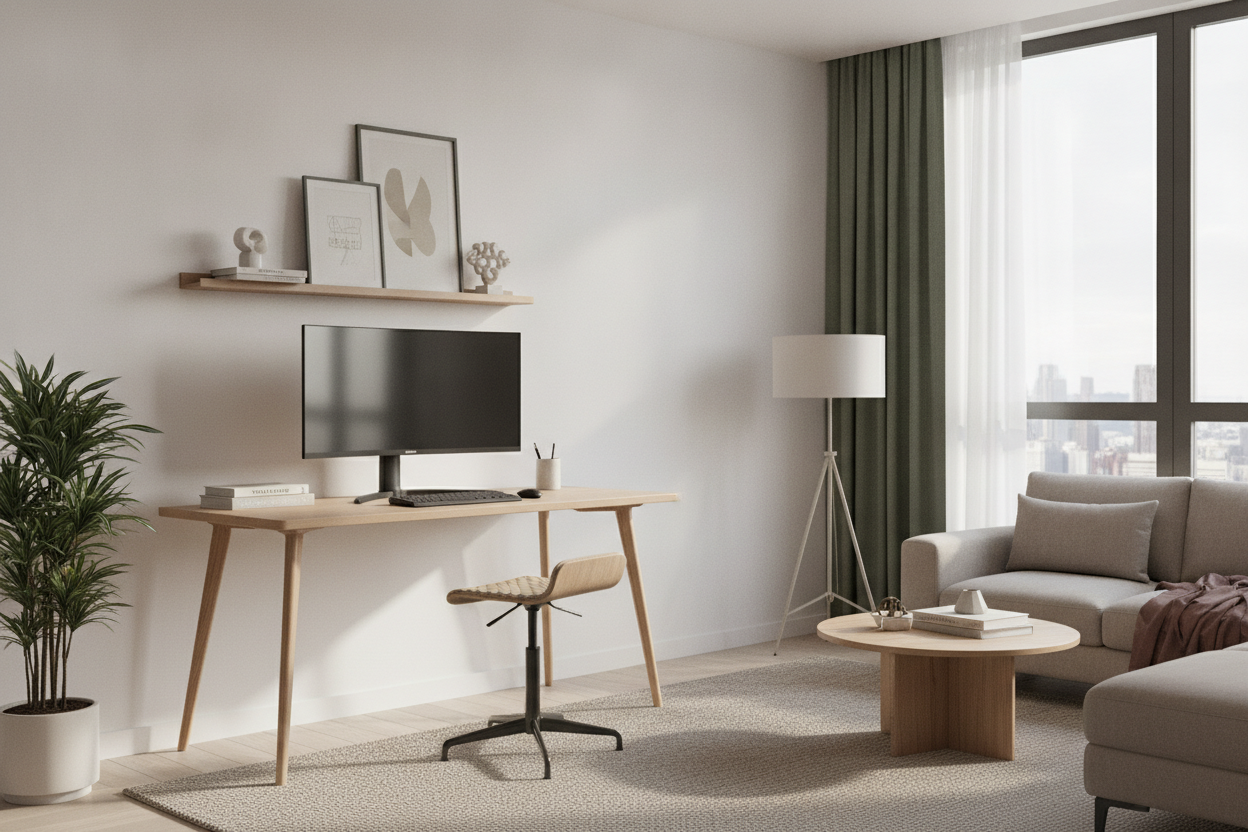
I spent three years doing a weird, sideways crab-walk every morning just to get from my bed to my closet. I’d convinced myself that my massive L-shaped desk was the peak of productivity because it tucked into a corner, but in reality, it was just a floor-space hog that made my bedroom feel like a cubicle. I finally hit my breaking point when I realized I couldn't even push my chair back to stand up without hitting the mattress. I swapped the beast for a tall computer desk for small spaces, and for the first time since moving in, I don't have bruises on my shins from navigating my own furniture.
Quick Takeaways
- Corner desks often waste more floor space than they save by forcing your chair into the center of the room.
- Going vertical allows you to keep a dual-monitor setup without needing a six-foot-wide tabletop.
- Stability is the biggest hurdle; always look for steel cross-bracing or wall-mounting hardware.
- Reducing your desk's footprint can actually improve focus by forcing you to declutter.
The L-Shaped Trap Most Apartment Renters Fall Into
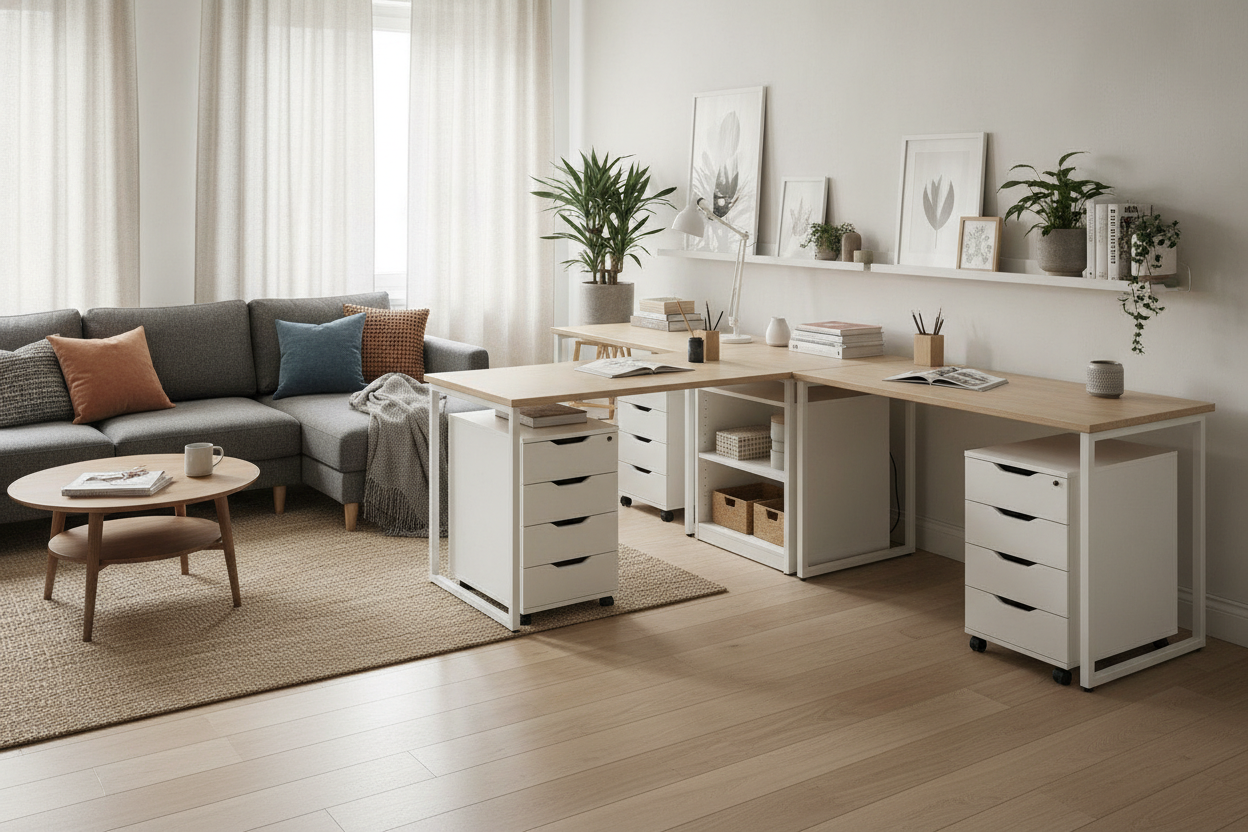
We’ve all been there. You see a floor plan and think a corner office computer desk is the smartest way to use that 'dead' space in the corner of the room. It sounds logical. But here is the reality of living with one in a tight apartment: that 'L' shape creates a massive footprint that you can't walk through. It effectively kills about 16 to 20 square feet of floor space because you need a wide 'swing zone' for your office chair to move between the two wings of the desk.
In my old place, the corner desk felt like a permanent barricade. Because the desk was so deep, my chair sat right in the middle of the walking path. Every time I wanted to grab a pair of socks, I had to tuck my chair in like I was finishing a formal dinner. It was exhausting. Many renters don't realize that a wide desk doesn't just take up wall space—it dictates the entire flow of the room. By choosing a tall computer desk for small spaces, you’re choosing to reclaim that floor for your own movement rather than dedicated it to a piece of engineered wood that you only use for eight hours a day.
Why Going Vertical Changes the Math on Square Footage
When you shift your perspective from horizontal to vertical, the math of a small room finally starts to work in your favor. Most of us have at least eight feet of vertical space that we completely ignore. By using tall desks for small spaces, you can stack your peripherals. My current setup uses a 30-inch wide footprint, but because it’s 70 inches tall, I have three tiers of storage above my primary workspace. My external hard drives, my printer, and even my oversized speakers sit on shelves above my monitor rather than cluttering the surface where my keyboard lives.
This verticality is a core principle in tiny home desk for tight spaces design. If you can fit a 27-inch monitor and a laptop side-by-side on a narrow desk by using a vertical mount, you’ve effectively halved your need for a wide tabletop. I’ve found that having my 'stuff' higher up actually makes the room feel larger. When the floor is clear, your eyes perceive more square footage. I’m currently running a dual-monitor setup on a desk that is barely wider than a nightstand, and I don't feel cramped at all because my gear is layered, not sprawled.
The Threat of the 'Top-Heavy Wobble' (And How to Avoid It)
I’ll be honest: not all tall desks are built the same. If you buy a cheap, spindly unit made of thin particle board, you’re going to experience the 'top-heavy wobble.' This is when your monitor shakes every time you type a Slack message or move your mouse. It’s incredibly distracting and, frankly, a little scary if you have expensive gear sitting six feet in the air. To avoid this, you need to look at the frame construction. A sturdy tall desk should have a powder-coated steel frame, ideally with an X-brace on the back to prevent lateral swaying.
Don't settle for those 0.5-inch hollow metal tubes; you want something with a bit of heft. I also highly recommend using the wall anchors that come in the box. I know, we all hate putting holes in apartment walls, but a 72-inch tall desk with a high center of gravity is a tipping hazard. A single heavy-duty anchor into a stud makes the desk feel like a built-in part of the architecture. If you can't drill holes, look for a model with adjustable leveling feet. Even a 2mm difference in your floor's level can cause a massive tilt at the top of a tall desk.
My Exact Setup: Shelves, Monitors, and Reclaiming My Floor
My transition to a vertical setup was a 'lightbulb' moment. I chose a ladder-style desk with a deep bottom shelf for my actual work surface and two shallower shelves above it. My 32-inch monitor is mounted to the frame, which keeps the desk surface completely clear for my keyboard and coffee. Because the desk only sticks out 18 inches from the wall, my bedroom door can finally open all the way without scraping against the back of my chair. It sounds like a small win, but it changed the entire energy of my morning routine.
The one downside? Cable management is a bit more visible when you go vertical. You can't just hide a rat's nest of wires behind a bulky corner desk anymore. I had to spend an afternoon with velcro ties and a cable raceway to keep the 'ladder' look clean. But even with that extra work, the trade-off is worth it. I have my floor back, my room feels like a bedroom again instead of a storage unit, and I’m no longer hitting my head on a shelf every time I try to reach for a sweater in the closet.
FAQ
Will a tall desk feel too imposing in a small room?
Actually, it’s the opposite. Because tall desks usually have open shelving and a smaller footprint, they feel 'lighter' than a solid, bulky desk that blocks your line of sight across the floor.
Can I use a monitor arm on a tall ladder desk?
It depends on the frame. If the desk has a solid wood or thick MDF top, a C-clamp arm works great. If it’s a very thin surface, you’re better off using the integrated shelves or a wall mount.
Are tall desks hard to assemble alone?
They can be awkward because of the height. I’d recommend having a friend hold the side rails steady while you bolt in the shelves, otherwise, you’ll be doing a lot of balancing acts with your knees.

Laisser un commentaire
Ce site est protégé par hCaptcha, et la Politique de confidentialité et les Conditions de service de hCaptcha s’appliquent.