


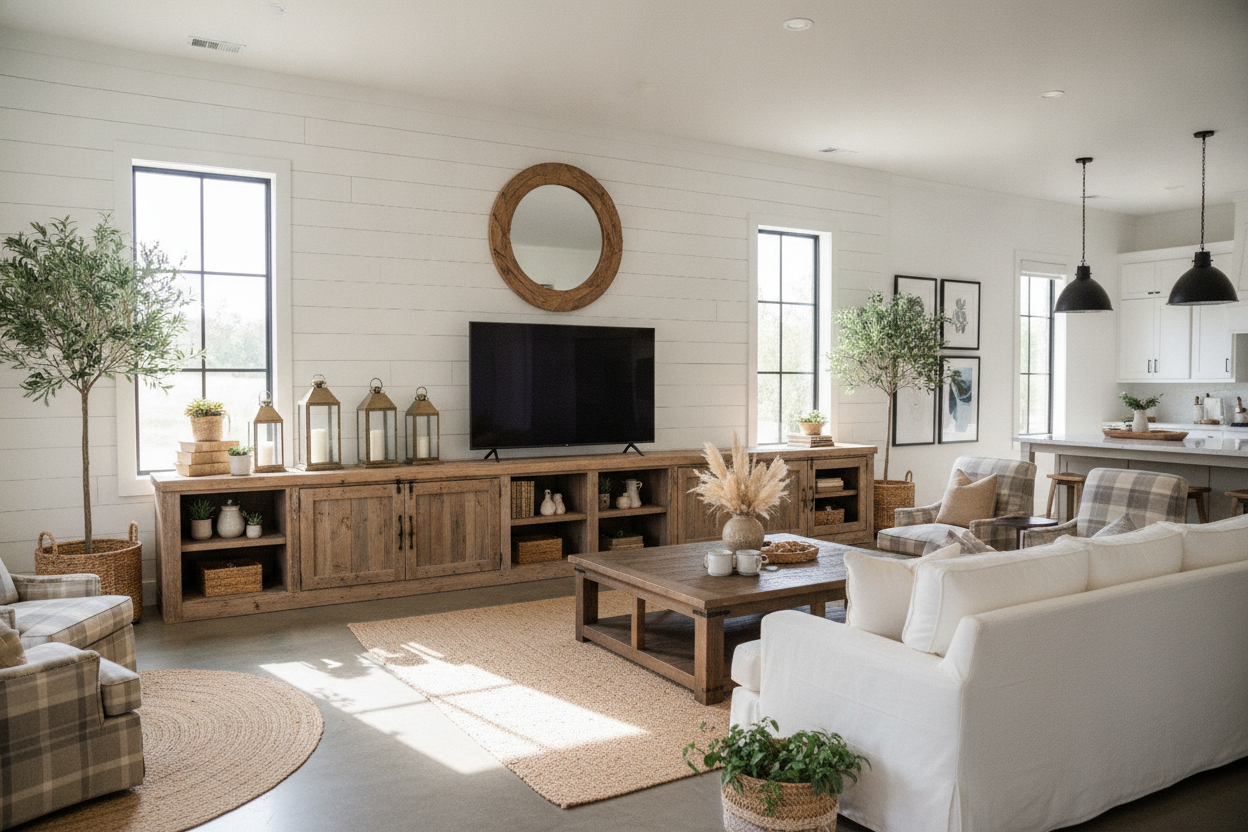
I remember standing in my new living room, staring at a 20-foot expanse of beige drywall that made my 55-inch TV look like a postage stamp. I’d spent all my money on the down payment and a decent sofa, leaving me with a cavernous echo and a serious case of 'big wall syndrome.' I desperately typed tv stand rustic farmhouse into my search bar, hoping for something with enough visual weight to stop the room from feeling like a high school gym.
Quick Takeaways
- Scale is everything; if the wall is big, the furniture needs to be even bigger to anchor the space.
- Rustic textures hide the inevitable scratches and dust of real life better than high-gloss finishes.
- Avoid the 'themey' look by skipping the word art and distressed signs in favor of modern accents.
- Solid construction or heavy-duty reinforced MDF is a must for supporting today's 75-inch+ screens.
The Curse of the Giant, Empty Open-Concept Wall
The problem with modern open-concept floor plans is that they assume you have a museum-grade art collection or a 100-inch projector screen to fill the space. Most of us just have a TV and maybe a couple of struggling succulents. When I first moved in, I tried to make a standard 60-inch console work. It was a disaster. It looked like dollhouse furniture against the vastness of the room.
The scale was so off that the ceiling felt ten feet higher than it actually was, which sounds great until you realize the room feels cold and uninviting. You need something that commands attention, not something that cowers in the corner. A thin, spindly media console in a massive room is the interior design equivalent of wearing a tuxedo with flip-flops. It just doesn't track.
Why a Long Farmhouse TV Stand Actually Works
This is where the long farmhouse tv stand comes in. It is about physics and visual grounding. A piece with significant horizontal length creates a visual anchor that stops your eyes from wandering aimlessly up the blank wall. If you have an 85-inch screen, putting it on anything less than 90 inches of surface area makes the whole setup look top-heavy and precarious.
I eventually stopped looking at the 'standard' sizes and searched for an extra long barn door TV stand. At nearly eight feet wide, it finally made the wall look intentional. The heft of the wood—even if you go with a high-quality laminate over kiln-dried timber—provides a physical warmth that drywall and glass simply cannot replicate. It fills the 'visual volume' of the room without requiring you to buy twenty different pieces of small decor.
Hiding the Awkward Tech Clutter
Let’s talk about the mess. My living room is a hub for a PS5, an Xbox, and a subwoofer that looks like a small jet engine. In a 'minimalist' glass or metal stand, that's just a tangle of black plastic and spaghetti cords for everyone to see. The beauty of the rustic look is those deep, opaque cabinets. You can shove the router, the power strips, and the controllers behind a solid door and never think about them again. It’s the ultimate lazy person’s design hack that still looks like you have your life together.
How to Style a TV Stand Rustic Farmhouse (Without Mason Jars)
To keep your space from looking like a 2014 Pinterest board, you have to be disciplined. No 'Bless This Mess' signs. No burlap. I like to see what designers actually think about this, and most agree: contrast is your friend. If the furniture is chunky and textured, your decor should be sleek and smooth.
Pair that heavy wood with matte black hardware and structured accents. I stack heavy, linen-bound art books on one end and a sculptural ceramic lamp on the other. Use the top of the stand to display things that feel 'now'—think abstract sketches in thin black frames rather than rustic clocks. If the stand is 'country,' the styling should be 'gallery.'
Still Skeptical? Other Ways to Get the Proportion Right
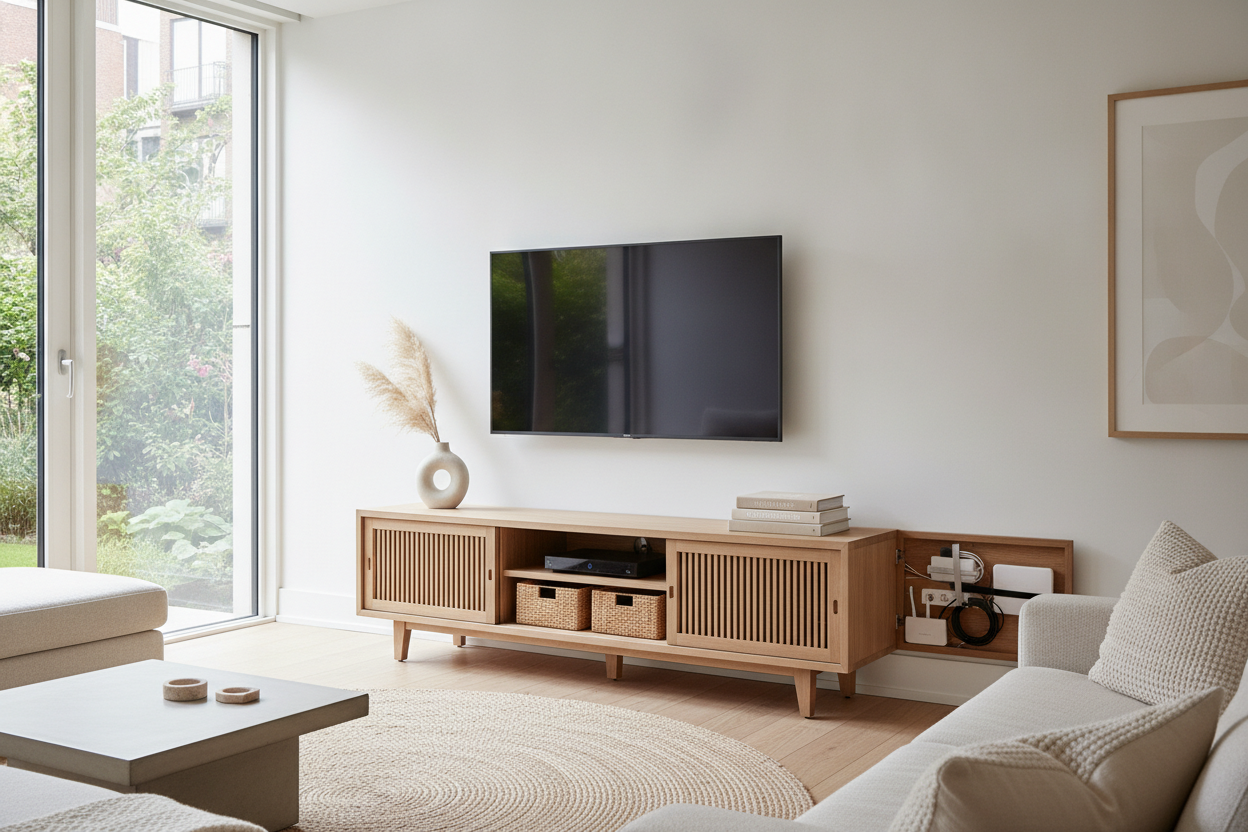
If you still can't get over the 'farmhouse' label, there are ways to cheat the system. You can go for a floating rustic TV stand. It gives you that warm, textured wood grain but keeps the floor clear, which feels much more modern and prevents the room from feeling cramped. It's the best of both worlds for the farmhouse-hesitant.
Or, if you are totally over the wood look but still need to fill that 20-foot wall, you can browse other TV stands that offer the same massive dimensions in mid-century or industrial finishes. The goal is the footprint, not necessarily the barn doors. Just don't settle for something small because you're afraid of a little texture.
Personal Experience: The Splinter Incident
I once bought a 'reclaimed' rustic stand that was so distressed it actually gave me a nasty splinter during assembly. Lesson learned: look for 'wire-brushed' or 'smooth-touch' finishes rather than true raw reclaimed wood if you have kids or value your skin. Also, always check the weight capacity. I once saw a cheap 1.5 lb density MDF stand bow in the middle because a 75-inch TV was just too heavy for the lack of center support legs. If it’s long, it needs at least five or six legs, not four.
FAQ
How long should my TV stand be?
Ideally, your stand should be at least 10-12 inches wider than your TV on both sides. This prevents the 'lollipop' look where the screen hangs over the edges.
Is farmhouse style going out of fashion?
The 'shabby chic' version with distressed white paint is fading, but natural, heavy wood textures are timeless. It's about the material, not the trend.
Can I put a farmhouse stand in a modern apartment?
Absolutely. The juxtaposition of a rugged, textured wood piece against clean white walls and floor-to-ceiling windows is actually a classic high-end designer move.

Laisser un commentaire
Ce site est protégé par hCaptcha, et la Politique de confidentialité et les Conditions de service de hCaptcha s’appliquent.