


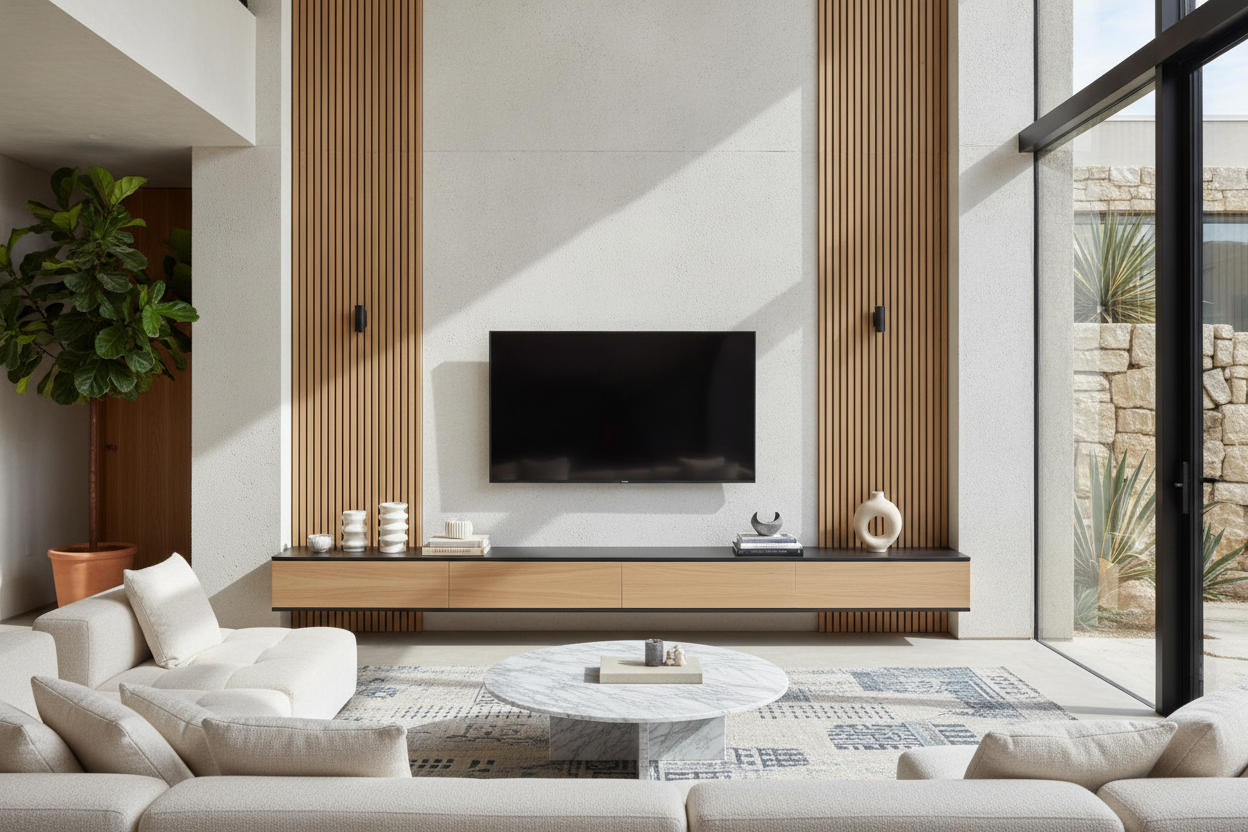
I spent three weeks staring at a 65-inch OLED sitting on two stacked moving boxes against a hand-cut limestone wall. It looked ridiculous. Like I’d parked a Tesla in the middle of a mission-era chapel. Finding a tv stand san antonio architecture doesn't reject is harder than it looks when your home is full of terracotta, plaster, and heavy timber.
Quick Takeaways
- Choose warm wood tones like acorn or walnut to bridge the gap between modern tech and rustic stone.
- Look for texture—slatted doors or ribbed details mimic the rhythm of historic architectural features.
- Scale is everything; a stand that is too narrow will look dwarfed by high ceilings and thick walls.
- Integrated cord management is a must in older homes where outlets are often in awkward spots.
The 'Spaceship in a Hacienda' Problem
San Antonio homes have a specific soul. Whether you are in a King William historic house or a newer build in the Hill Country, there is usually a lot of texture—plaster, limestone, and dark wood. When you drop a sleek, high-gloss white media console into that environment, it looks like a spaceship landed in your living room. It’s too sterile, too flat, and it completely ignores the warmth of the room.
My living room has these incredible 12-inch thick limestone walls that eat up light. A standard minimalist stand just looked flimsy against them. I realized I needed a piece that had enough visual weight to hold its own without being a literal block of stone. The goal was to find something that felt contemporary enough for the TV but grounded enough for the house. You want a piece that looks like it was curated over time, not just ordered during a late-night scrolling session.
Why I Stopped Hunting in Local Antique Shops
I really wanted to go the vintage route. I spent weekends scouring the shops on McCullough and in Olmos Park, looking for that perfect mid-century credenza that screamed 'Texas Modern.' I found plenty of beauties, but the reality of 1960s furniture versus 2024 technology is brutal. Most of those vintage pieces are only 15 or 16 inches deep. My modern TV stand legs would have been hanging off the edge like a cliffhanger.
Then there is the bowing issue. A vintage sideboard was built for china and linens, not a 75-pound screen. In the San Antonio humidity, I’ve seen old wood do some weird things, and I didn't want to risk a $1,200 heirloom 'smiling' under the weight. Plus, the lack of cord management was a dealbreaker. I didn't want to take a hole saw to a piece of history just to hide my PS5 cables. I eventually pivoted to looking at dedicated Tv Stands that combine that vintage aesthetic with actual structural integrity for heavy electronics. It was a relief to find something that didn't feel like a compromise on quality.
The Slatted Wood Compromise That Saved the Room
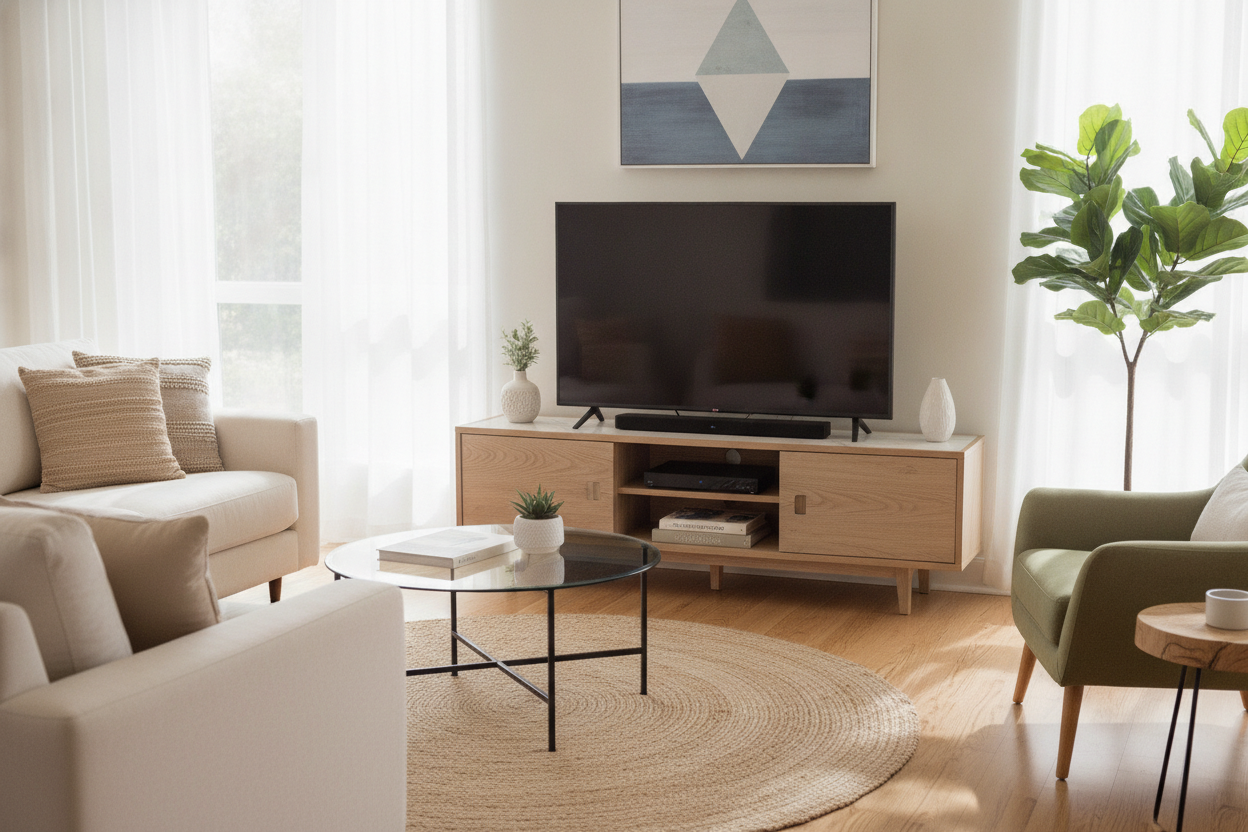
The breakthrough was texture. I needed something that echoed the vertical lines of the wood beams in my ceiling without looking like a 'rustic' barn-door cliché. I eventually landed on a Mid Century Modern Tv Stand With Slatted Doors Open Shelves And Cable Management. The slatted doors are the secret weapon here—they provide a tactile, organic feel that complements the rough-hewn stone of my walls. It feels less like a piece of furniture and more like a built-in architectural element.
The warm wood tone (I went with a rich acorn) matched the warmth of the terracotta tiles perfectly. It didn't try to be invisible like a glass stand would; it felt like it belonged to the architecture. The slats also have a practical benefit: they allow infrared signals from remotes to pass through while keeping the messy black boxes of my cable setup hidden. I was worried about assembly—usually, these things are a nightmare—but this one used solid hardware that didn't strip the moment I looked at it. The storage space inside is actually deep enough for a proper receiver, which is a rarity these days.
Balancing the Visual Weight of Limestone Walls
If you live in a home with massive stone fireplaces or high, vaulted ceilings, you cannot buy a small console. It will look like a toy. I’ve seen so many people put a 65-inch TV on a 60-inch stand, and it makes the entire wall feel top-heavy and anxious. You want at least 6 to 10 inches of breathing room on either side of your screen to keep the proportions from feeling cramped.
I spent a lot of time Choosing The Perfect Tv Stand For Style And Function by mapping out the proportions of my wall. Because my limestone walls are so dominant, I needed a stand with a solid base rather than spindly legs that might look too fragile. The extra height of a media-specific console also meant I wasn't craning my neck while sitting on the sofa—a mistake I made in my last apartment where the TV was practically on the floor. When your furniture matches the scale of your architecture, the whole room finally starts to breathe.
Frequently Asked Questions
How high should my TV stand be?
Aim for the center of the screen to be at eye level when you are seated. For most San Antonio living rooms with standard sofas, a stand between 22 and 28 inches tall is usually the sweet spot. If you have a low-profile sofa, lean toward the shorter end.
Will dark wood make my room look smaller?
Not if you have enough light. In a room with limestone or light plaster, a darker wood stand actually provides a nice focal point. It anchors the space so the TV doesn't look like a floating black void against a pale wall.
How do I hide cables if my outlets are high up?
Look for stands with a tall back panel or use paintable cable raceways. If you have those classic Texas high ceilings, keeping the cables tucked behind the stand's legs or inside the integrated management ports is the only way to keep the setup from looking like a cluttered mess.

Laisser un commentaire
Ce site est protégé par hCaptcha, et la Politique de confidentialité et les Conditions de service de hCaptcha s’appliquent.