


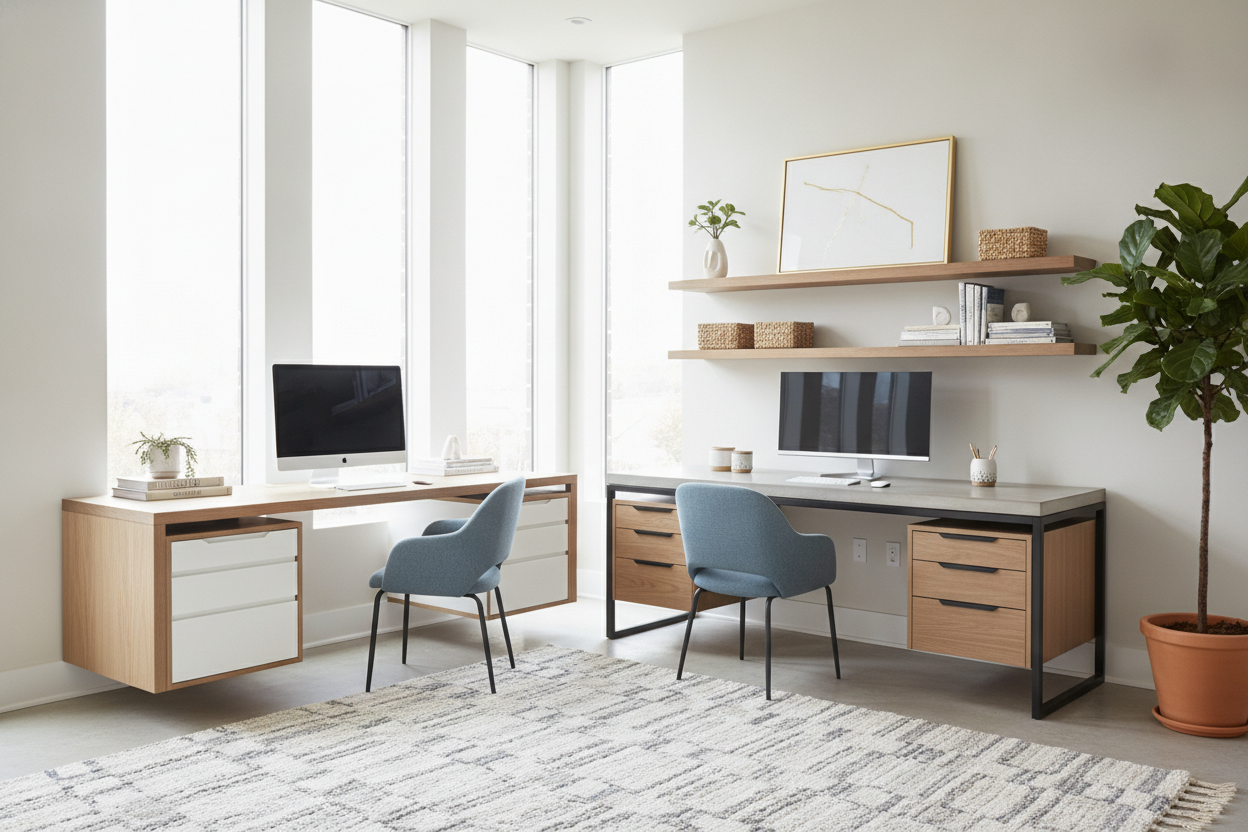
I remember the day I finally gave up on my 'aesthetic' writing desk. It was a beautiful slab of reclaimed wood on thin hairpin legs, and it looked like a million bucks in my Instagram feed. But after a week of working there, my floor was littered with tangled laptop chargers, my pens were living in a coffee mug because there wasn't a single drawer, and my physical mail was piling up like a small mountain. I realized that a desk without a place to put things isn't a workstation—it's just a table with an identity crisis.
Quick Takeaways
- Avoid 'writing desks' if you need to house a printer, scanner, or more than one notebook.
- L-shaped designs are the best way to hide storage without making a room feel cramped.
- Look for vertical storage (hutches) to keep the floor footprint small in tiny apartments.
- Always check the 'apron' height—some storage desks leave zero room for your actual legs.
The Minimalist Desk Trap (And Why I Fell For It)
We've all been seduced by those Pinterest-perfect setups. You know the ones: a clean white surface, a single succulent, and a MacBook. They look airy and light, but they are a total trap for anyone who actually works for a living. When I switched to desks with storage, I felt like I was admitting defeat, like I was moving back into a corporate cubicle. But the reality is that a computer desk with storage is the only thing that keeps my brain from short-circuiting.
Without a drawer or a shelf, your desk becomes a magnet for 'surface clutter.' Once you have a designated home for your external hard drives and sticky notes, your actual work surface stays clear. It turns out that a computer storage desk doesn't have to be a vibe-killer; it just needs to be smarter than a flat piece of wood.
Why Do Traditional Office Desks Usually Look So Bad?
Most of us have collective trauma from those heavy, honey-oak particleboard monsters our parents had in the 90s. They were massive, they weighed as much as a small car, and they had those weird keyboard trays that never slid out properly. People avoid an office storage desk because they think it has to look like a corporate relic. Choosing the wrong one is a common desk with storage mistake that can make even a large room feel suffocating and dark.
The trick is finding a balance. You want an office desk with storage that uses 'negative space'—meaning it has legs or a frame that lets you see the floor, rather than a solid block of wood that sits flat on the carpet. This keeps the room feeling open while still giving you a place to hide your stapler.
3 Ways to Hide Clutter Without Sacrificing Style
You don't need a cheap storage desk that falls apart in six months to get organized. Modern silhouettes focus on hiding the mess while keeping the profile slim. Here is how I narrow down the search for desks with storage for home office use.
The Sleek L-Shape Strategy
If you have a corner to spare, an L-shape is the ultimate cheat code for home office desks and storage. You get two distinct zones: one for your monitor and keyboard, and a 'return' side that can house all your filing cabinets. Using a corner desk with large storage allows you to tuck the bulky stuff out of your direct line of sight. I personally love these because I can keep my printer on the side and never have to look at it while I'm actually typing.
The Modern Executive Comeback
The executive desk is back, but it's been to the gym. Today's versions have streamlined profiles and better tech integration. Instead of a solid wall of drawers, you'll find a home office desk with storage that includes ventilated cabinets for computer towers and built-in power strips. If you're looking for a executive desk with computer storage, look for one with cord management holes so you don't have a 'cable waterfall' spilling off the back.
Going Vertical With Built-In Shelving
When you're short on square footage, a desk with storage on top is your best friend. I'm talking about ladder desks or workstations with integrated hutches. By drawing the eye upward, you make the ceiling feel higher. A workstation desk with storage that utilizes vertical shelving gives you a place for books and decor without eating up your floor space. It’s the perfect home storage desk for a bedroom-turned-office.
My Pre-Purchase Checklist for Workstations
Before you hit 'buy' on that home desks with storage, do a quick reality check. First, measure the height from the floor to the bottom of the drawers. If it's less than 25 inches, you're going to be banging your knees all day. Second, check if the drawers are full-extension; there is nothing worse than a storage table desk where you can't reach the stuff at the very back.
I also recommend looking for work desks with storage that offer a mix of open and closed spaces. You want drawers for the ugly stuff (cables, tax documents) and open shelves for the things you actually use. Browse through different home office study storage options to see which configuration fits your specific workflow. If you're a paper-heavy worker, you need a desk for home office with storage that includes a deep file drawer. If you're all digital, a simple desk table with storage for your headphones and a tablet is plenty.
FAQ
Is a desk with storage space better than a separate cabinet?
Usually, yes. Built-in storage saves floor space and keeps your most-used items within arm's reach. A separate cabinet often ends up being a 'junk collector' across the room.
How do I find a desk with lots of storage that isn't ugly?
Look for 'floating' drawers or desks with metal frames. The more floor you can see underneath the desk, the less bulky it will look, regardless of how many drawers it has.
Are cheap storage desks worth it?
Only if you don't plan on moving them. Inexpensive particleboard desks tend to wobble after one or two moves. If you can, spring for a desk with a solid wood top or a reinforced steel frame.

Laisser un commentaire
Ce site est protégé par hCaptcha, et la Politique de confidentialité et les Conditions de service de hCaptcha s’appliquent.